
Brain Games for Kids: Free Puzzles That Build Real Thinking Skills
Games
-
 Brain Games for Kids — Free Brain Kids 4+
Brain games for 5 year olds: 50 quick picture puzzles — odd one out, …
-
 Brain Games for Kids, Grades 1–2 — Free Brain Kids Pro 6+
Brain games for 7 year olds: 50 mini-games of real grade 1-2 logic and …
-
 Memory Games for Kids — Build It From Memory 5+
Memory games that go past matching pairs: study the blueprint, watch it vanish, then …
-
 Riddles for Kids Game — Guess by the Campfire 6+
The riddles for kids game, free online: picture riddles, number riddles and thinking puzzles …
-
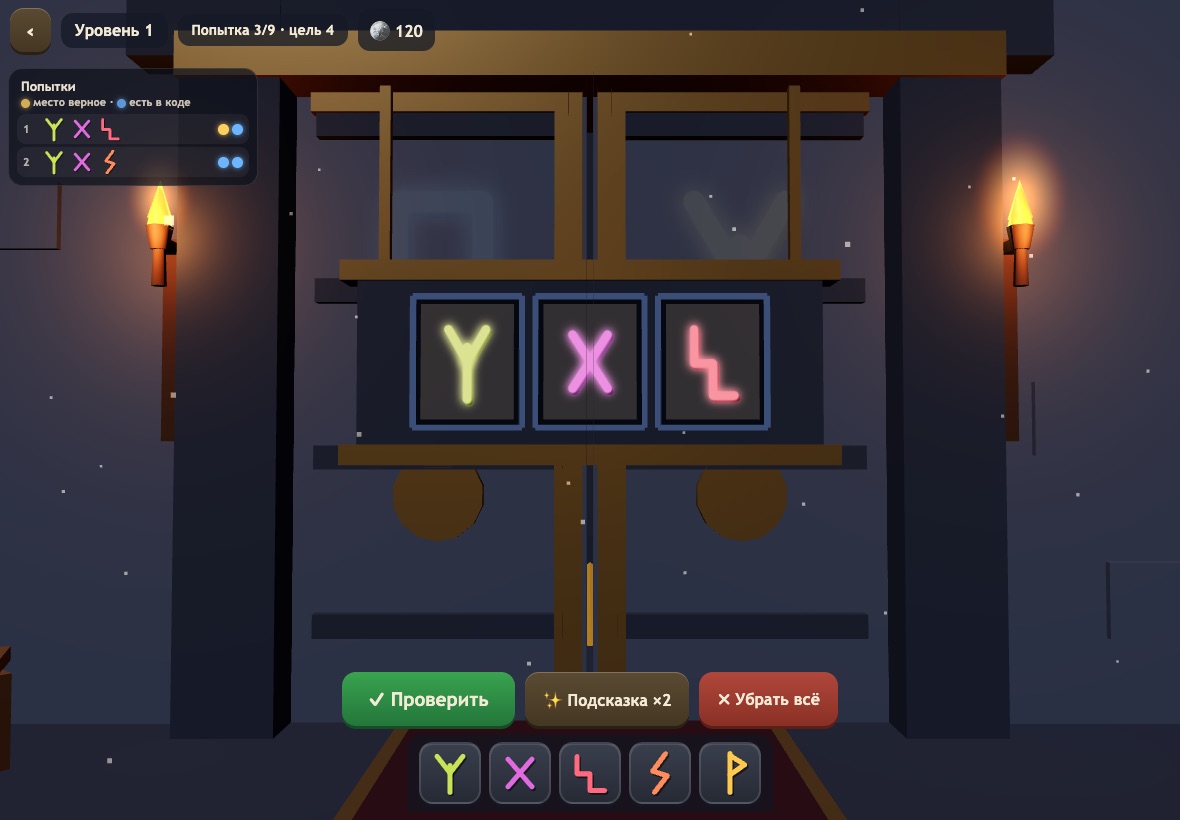 Mastermind Game Online — Rune Gates Code Breaker 7+
Play the mastermind game online free: crack the secret rune code by deduction — …
-
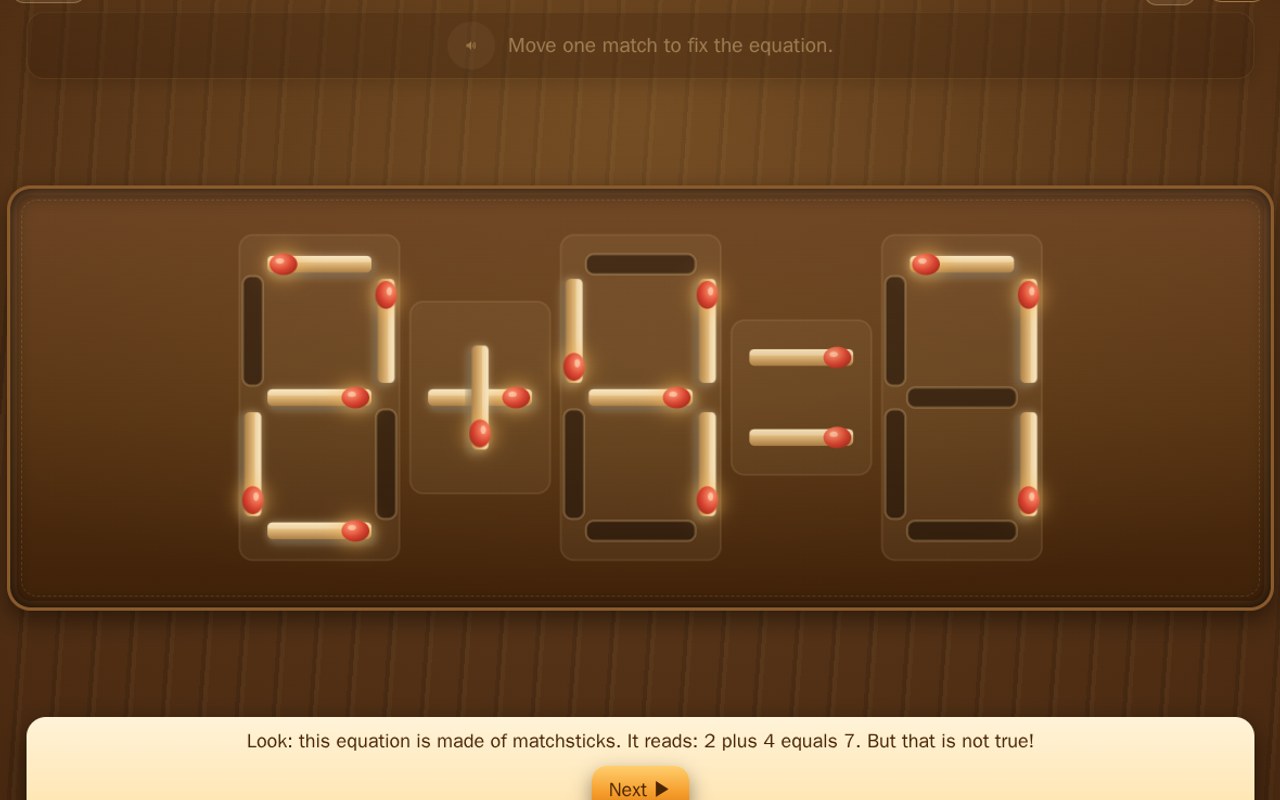 Matchstick Math Puzzles for Kids — Play Online 6+
Play matchstick puzzles online free: every digit is built from lit matches, and moving …
-
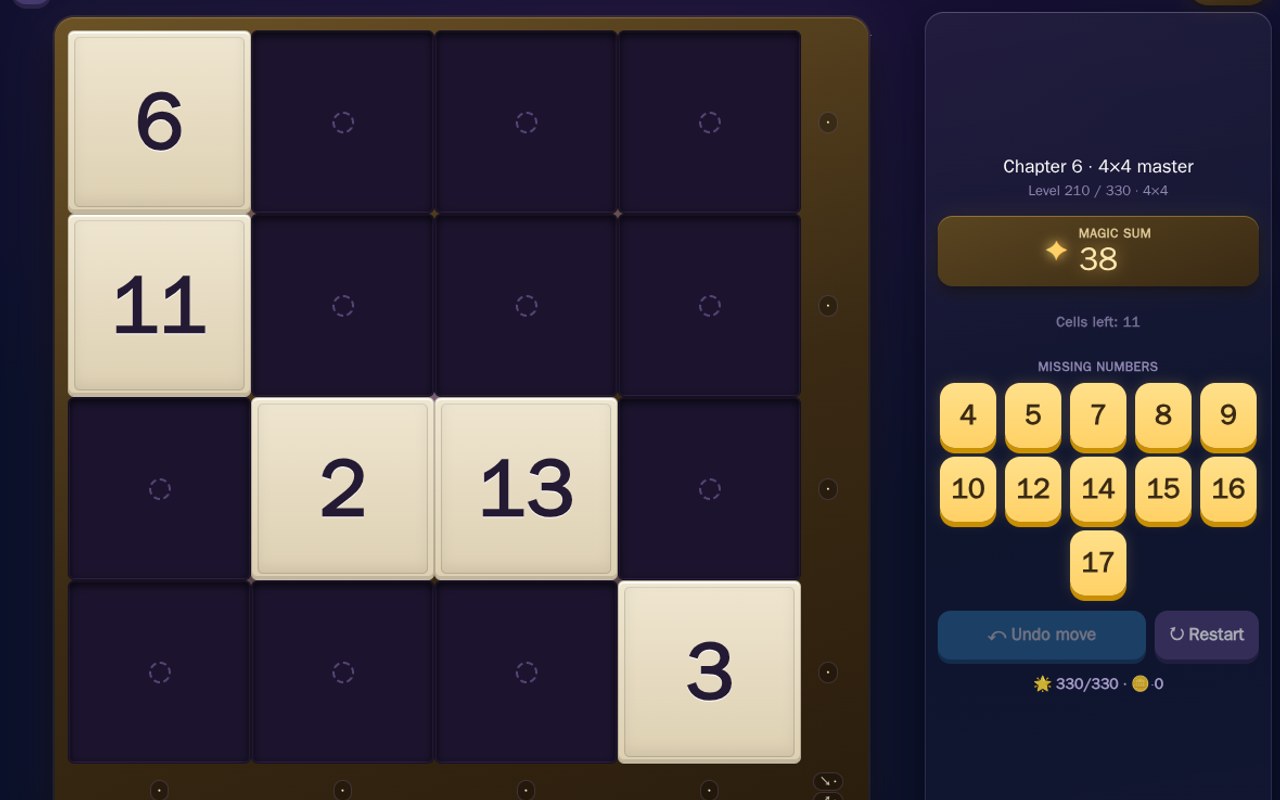 Magic Square Game for Kids — Play Online 7+
Play magic square puzzles online free: fill the empty cells so every row, column …
-
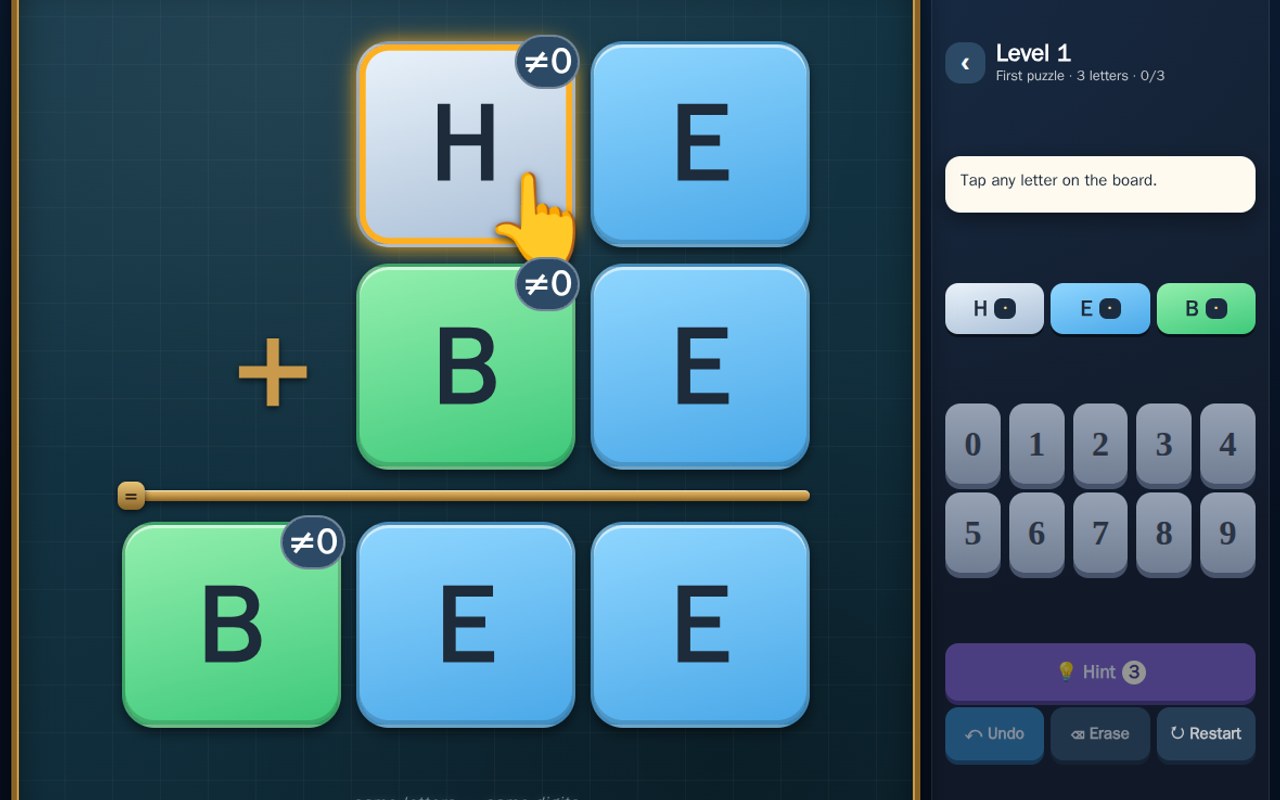 Cryptarithm Game for Kids — Letters Are Digits 6+
Play cryptarithm puzzles online free: HE+BE=BEE letter addition where each letter hides a digit …
-
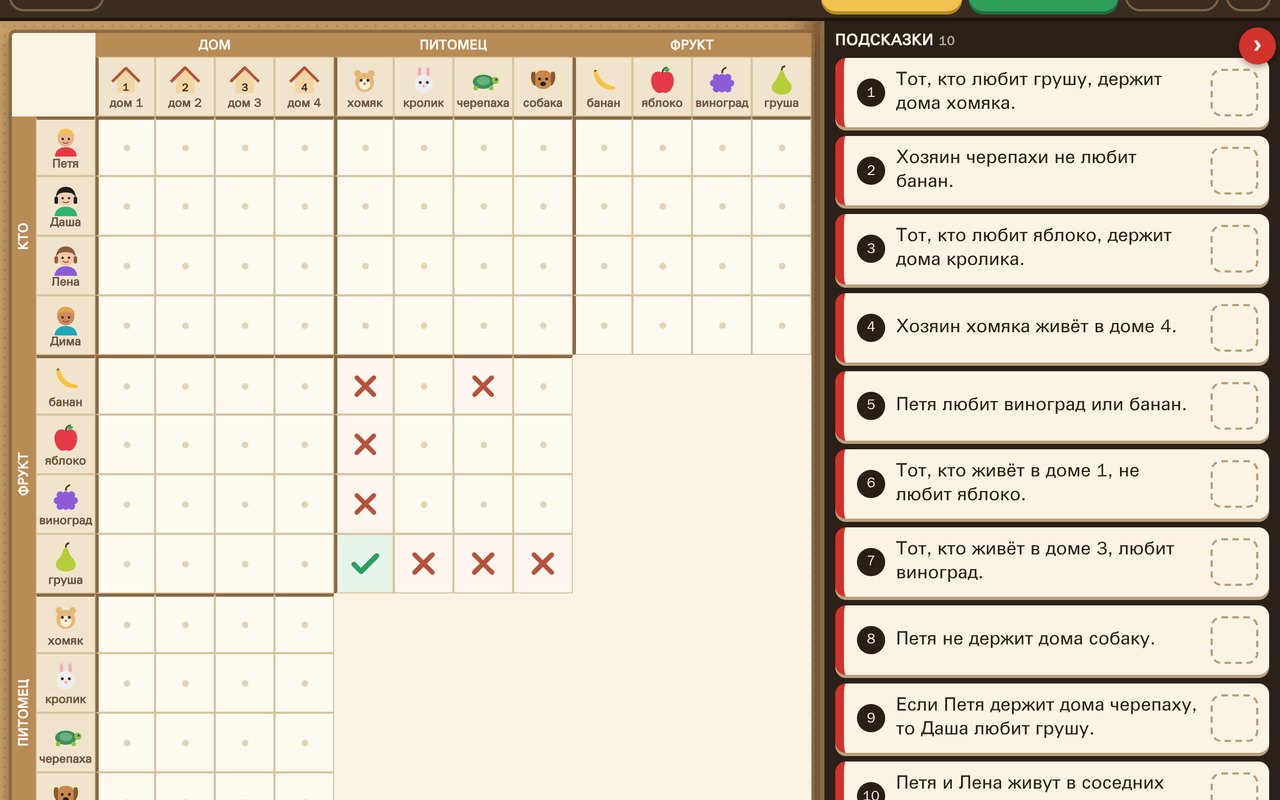 Logic Grid Puzzles for Kids — the Detective's Board 7+
Solve logic grid puzzles online free: read the clues, mark ✗ and ✓ on …
-
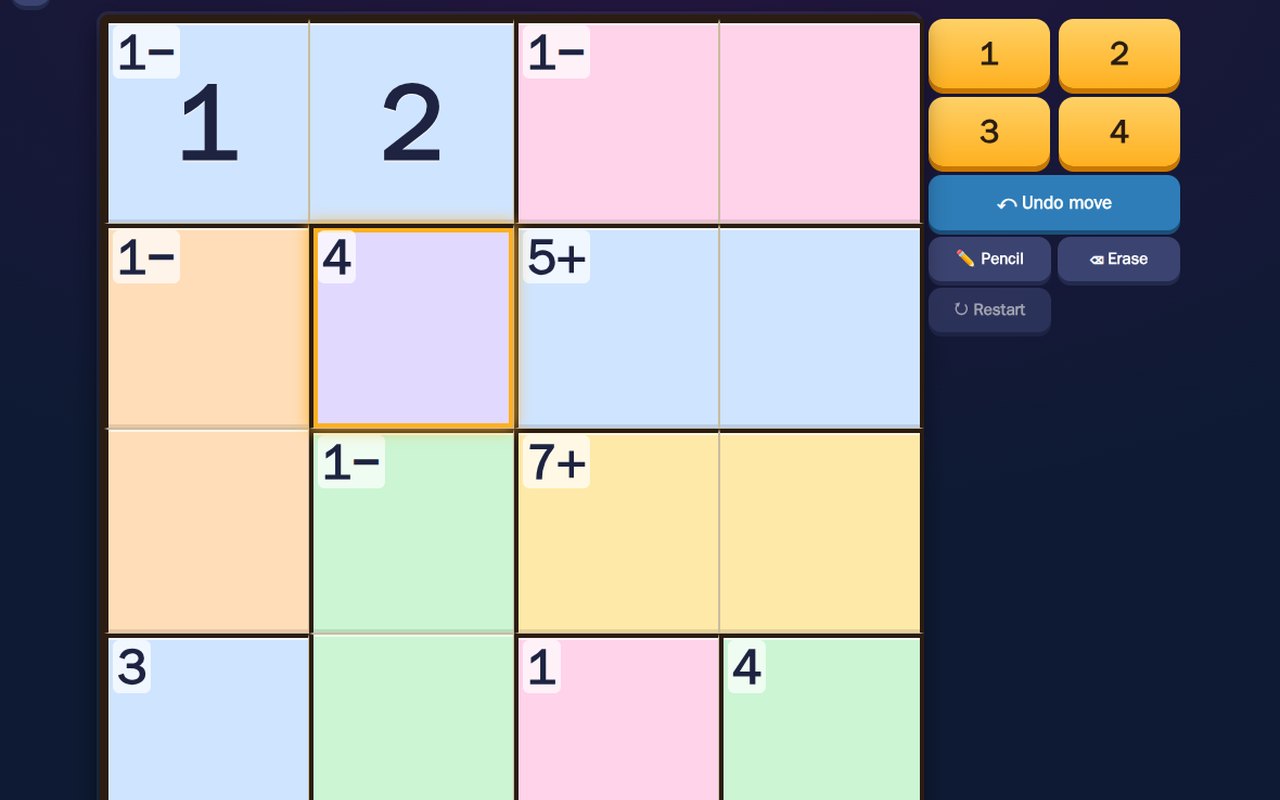 KenKen Puzzles Online — Sum Cages for Kids 6+
Play KenKen puzzles online free: fill the grid so each row and column has …
-
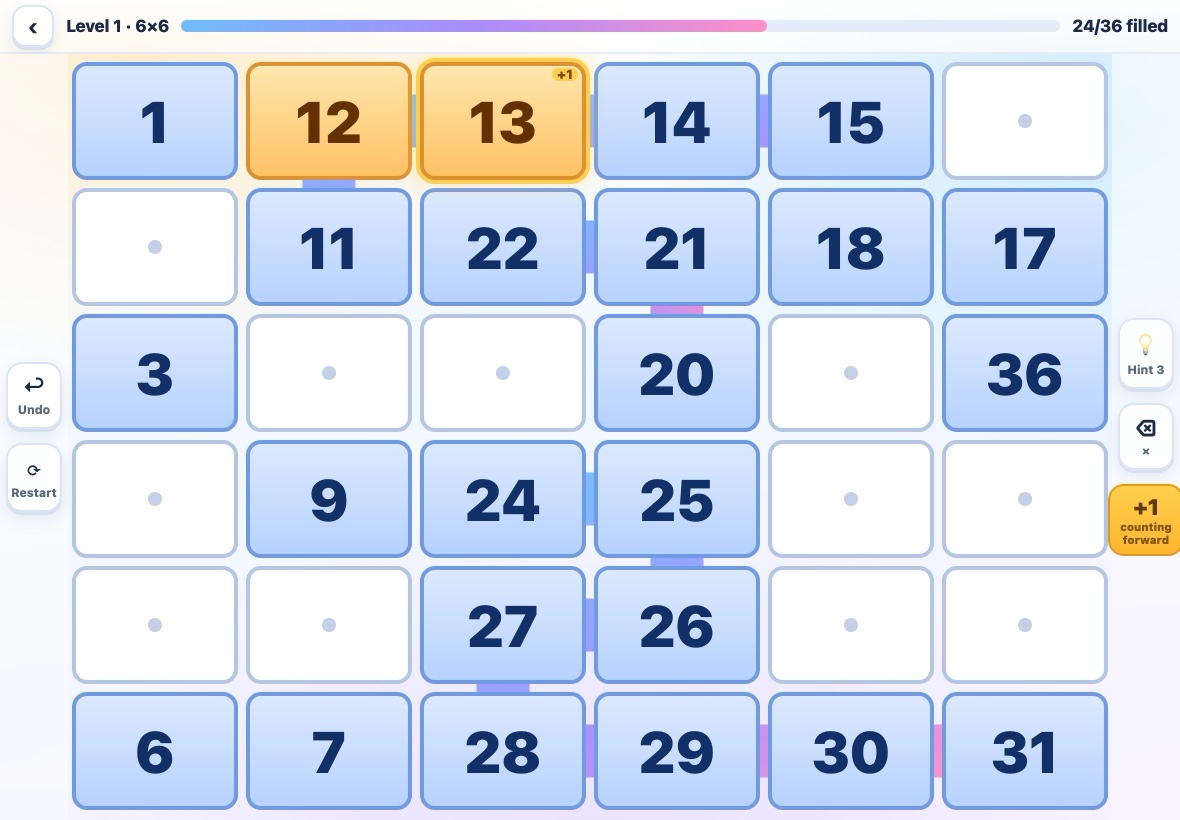 Hidoku — Free Number Path Puzzle for Kids 6+
Hidoku, a free number path puzzle: a few numbers are on the grid and …
-
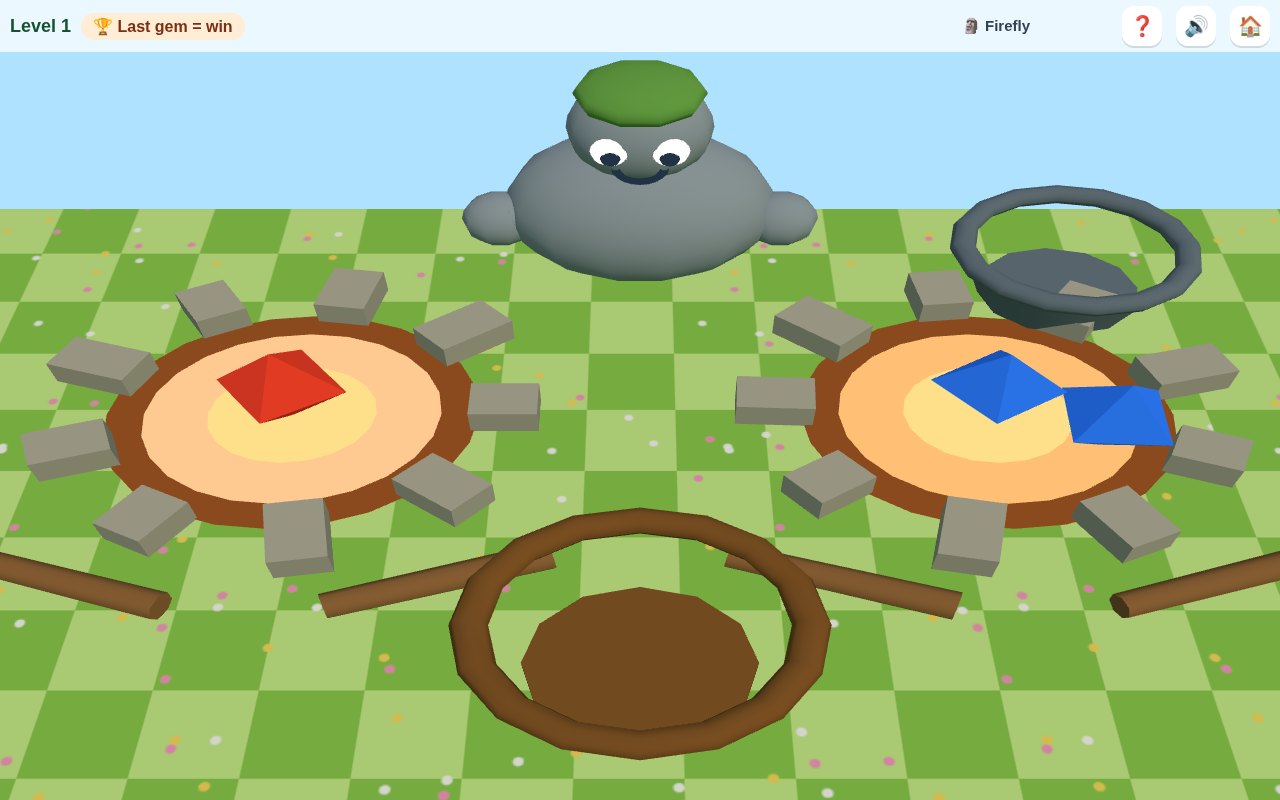 Nim Game Online — Campfire Gems 6+
Play the nim game online free: take gems from the campfires — any number, …
-
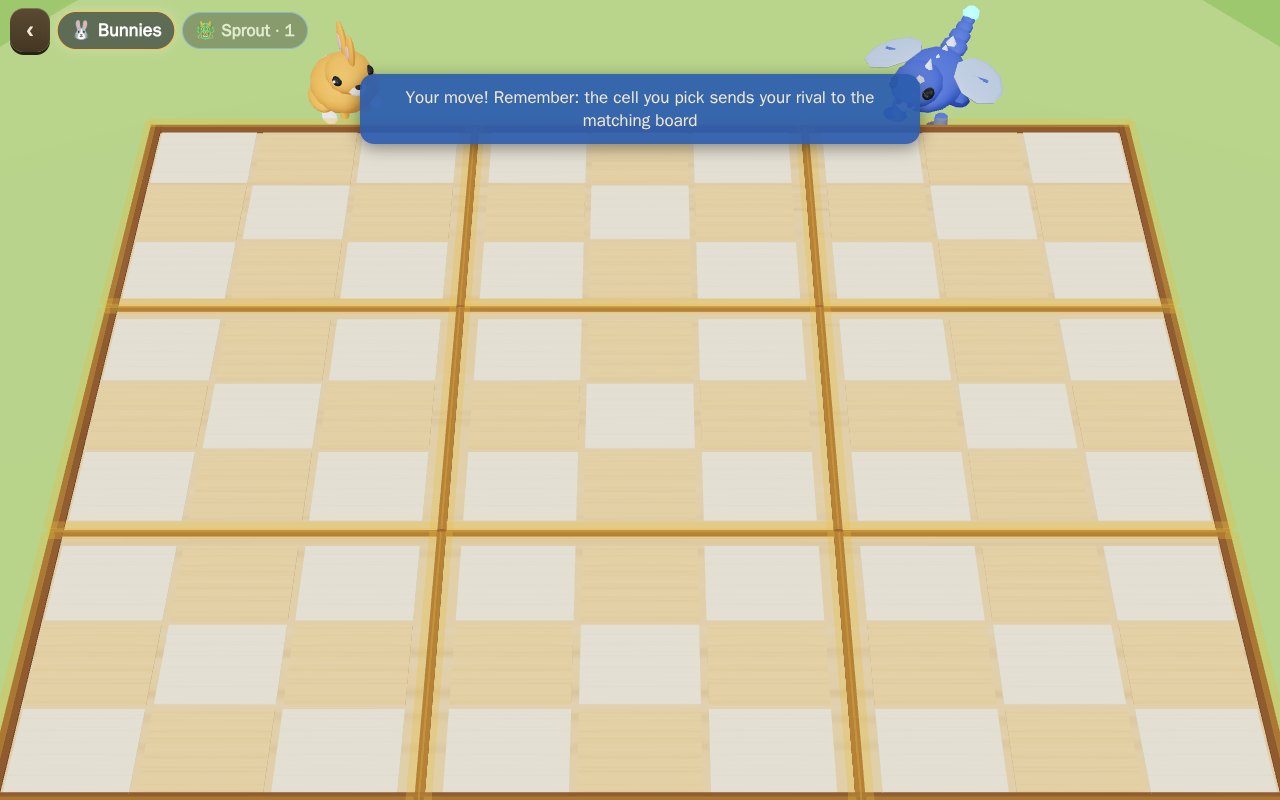 Ultimate Tic Tac Toe Online — Nine Boards in One 6+
Play ultimate tic tac toe online free: nine little boards inside one big one, …
-
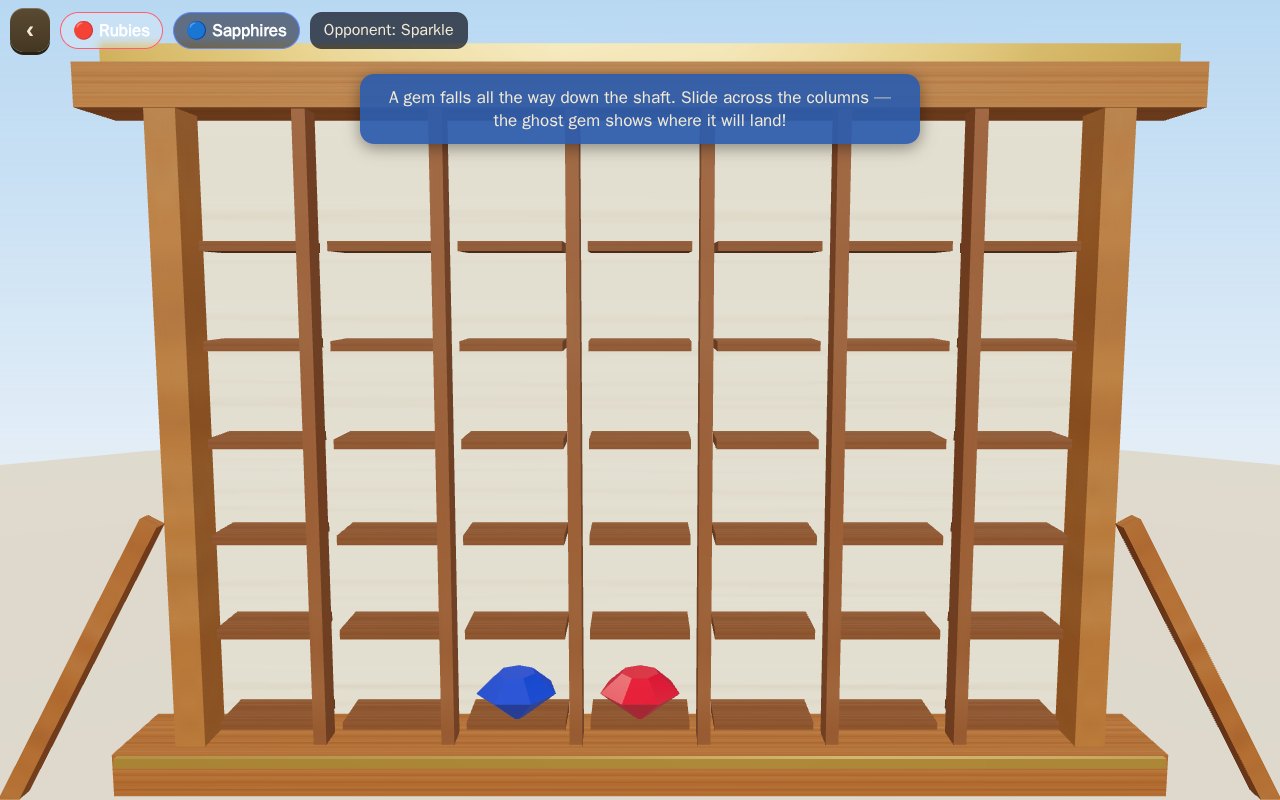 Connect 4 Online — Four in a Row in the Gem Mine 5+
Play the connect four game online free: drop faceted gems down the shafts of …
Explore
Brain games for kids are short, playful challenges that stretch the mental skills children use every day: remembering, focusing, spotting patterns, planning ahead, and solving problems one step at a time. The best ones never feel like homework. Your child thinks they are just playing a fun game, while underneath they are practicing concentration, working memory, and logical reasoning. On this page we have gathered our favorite free brain games and explained what each one actually trains, so you can pick the right challenge for your child instead of guessing.
What "brain games" really mean
A good brain game targets a specific thinking skill and gradually makes it harder as your child improves. Most of the games we recommend strengthen one or more of these core abilities:
- Working memory — holding information in mind, like remembering a sequence of shapes or a short rule, while doing something else.
- Focus and attention — staying on one task and ignoring distractions, which is the foundation of almost all learning.
- Logic and pattern recognition — noticing what comes next, sorting things into groups, and predicting outcomes.
- Problem-solving and planning — thinking a few moves ahead and adjusting when the first idea does not work.
When a game keeps adjusting its difficulty to your child's level, it stays in that sweet spot where it is challenging but not frustrating. That is exactly where learning happens fastest.
Our pick for fast thinking: Space Commander
If your child enjoys quick decisions and a bit of adventure, start with our Space Commander brain game. It puts kids in the captain's seat of a spaceship where they have to read the situation, choose the right command, and react before the moment passes. Behind the fun, it is training attention, quick recall, and decision-making under gentle time pressure.
Why it works for younger players
The challenges start simple and build up, so a child who is new to thinking games can succeed early and stay motivated. Because each round is short, it fits naturally into a ten-minute play session without overwhelming kids who are still building their attention span.
How to choose the right brain game for your child
The "best" game depends less on the label and more on the match between the challenge and your child's age and mood. A few simple rules help:
- Match the skill to the gap. If your child rushes and misses details, choose attention and memory games. If they give up on tricky tasks, choose logic and planning puzzles that reward patience.
- Start easy, then climb. Early wins build confidence. Games that ramp up gradually keep kids in the challenge zone without tipping into frustration.
- Keep sessions short. Ten to fifteen focused minutes beats an hour of half-attention. Brain training works through frequent, bite-sized practice, not marathons.
- Talk about the thinking. Ask "How did you figure that out?" Naming the strategy out loud helps your child reuse it in new situations.
A simple weekly rhythm
You do not need a strict schedule. Aim for a few short sessions across the week, mix a couple of different game types so different skills get practiced, and let your child revisit favorites. Variety keeps the brain flexible, and revisiting a known game lets kids feel mastery as they beat their earlier scores.
Setting realistic expectations
Brain games are genuinely useful, but they are one ingredient, not magic. The skills they build, like focus, memory, and persistence, transfer best when paired with everyday learning: reading together, board games, building things, and plenty of free play. The goal is not a "smarter" score on a single app but a child who enjoys thinking, sticks with hard problems, and trusts that effort pays off. Used that way, a few minutes of well-designed play each day adds up to real, lasting habits of mind.
Every game on Dad4Kids is free to play, designed for children, and chosen because it teaches something real. Browse our picks, watch what makes your child light up, and build from there.
What these games actually train
Working memory, attention and the ability to hold a rule while doing something else. Those are real, measurable things, and they are also the things that make a child look "clever" in class — not because they know more, but because they lose the thread less often. It is worth being honest about the limits: a puzzle that improves working memory improves working memory. It does not raise a child's IQ, and any site that tells you otherwise is selling something.
The useful kind of hard
A brain game is doing its job when a child can see the goal, cannot yet see the route, and believes the route exists. Too easy and nothing is being trained; too hard and the child learns that thinking is unpleasant. Everything here starts several steps below where a child of that age will end up, which looks patronising for about ninety seconds and then stops.
Sit on your hands
The most valuable minute in a puzzle is the one where nothing appears to be happening. Adults find it unbearable and step in, and in doing so remove the entire point of the exercise. If you must help, ask a question — "what have you already tried?" — rather than pointing at the answer.
Number puzzles as thinking, not arithmetic
Magic squares, matchstick problems and cage puzzles use small numbers but demand real deduction. They are an unusually good fit for a child who is confident at arithmetic and bored by it, and equally for one who dislikes math but likes riddles — the arithmetic sneaks in as a side effect.
Frequency beats duration
Fifteen minutes twice a week keeps the habit alive without turning it into homework. If your child asks for a second round, that is the signal the level is right. Related sections: logic games, tangram and block puzzles, chess for kids.
The science behind the games
Every Dad4Kids game is built on one simple truth: children want to play, not study — so we turn learning into a game worth replaying. The method draws on peer-reviewed research in game-based learning, motivation, and how memory works.
- Prins et al. (2013). “Braingame Brian”: toward an executive function training program with game elements. Games for Health Journal.
- Tokac et al. (2019). Effects of game-based learning on students' mathematics achievement: A meta-analysis. Journal of Computer Assisted Learning.
- Alotaibi (2024). Game-based learning in early childhood education: a systematic review and meta-analysis. Frontiers in Psychology.
- Lampropoulos & Sidiropoulos (2024). Impact of gamification on students' learning outcomes and academic performance: a meta-analysis. Education Sciences.
- Taylor & Boyer (2019). Play-based learning: evidence-based research to improve children's learning experiences. Early Childhood Education Journal.
- Gottfried (1990). Academic intrinsic motivation in young elementary school children. Journal of Educational Psychology.
FAQ
What are brain games for kids?
Brain games for kids are short, playful challenges designed to exercise specific thinking skills such as memory, focus, logic, and problem-solving. Unlike random entertainment, a good brain game targets one or more of these abilities and gets gradually harder as the child improves.
Which games are best for a child's brain development?
The best games match your child's age and target the skill they need most: memory and attention games for kids who rush, and logic or planning puzzles for kids who need patience. Games that adjust difficulty automatically, like Space Commander, keep children in the challenging-but-doable zone where learning happens fastest.
Do brain games actually work?
Brain games genuinely build the specific skills they practice, such as focus, working memory, and persistence, especially with short, frequent sessions. They work best as one part of a rich routine that also includes reading, real-world play, and conversation, rather than as a standalone shortcut to being smarter.
How long should my child play brain games each day?
Ten to fifteen focused minutes a day is plenty for most children, and several short sessions across the week beat one long marathon. Brain training relies on regular, bite-sized practice, so consistency matters far more than total time.
What age can kids start playing brain games?
Children as young as four or five can enjoy simple matching, memory, and pattern games, while older kids handle multi-step logic and planning challenges. Choose games that start easy and ramp up, so early wins keep your child confident and motivated.
By Evgeny Arsentiev, PhD · Last updated: September 2026