
Games for 8 Year Olds: Division, Fractions and Real Science
Games
-
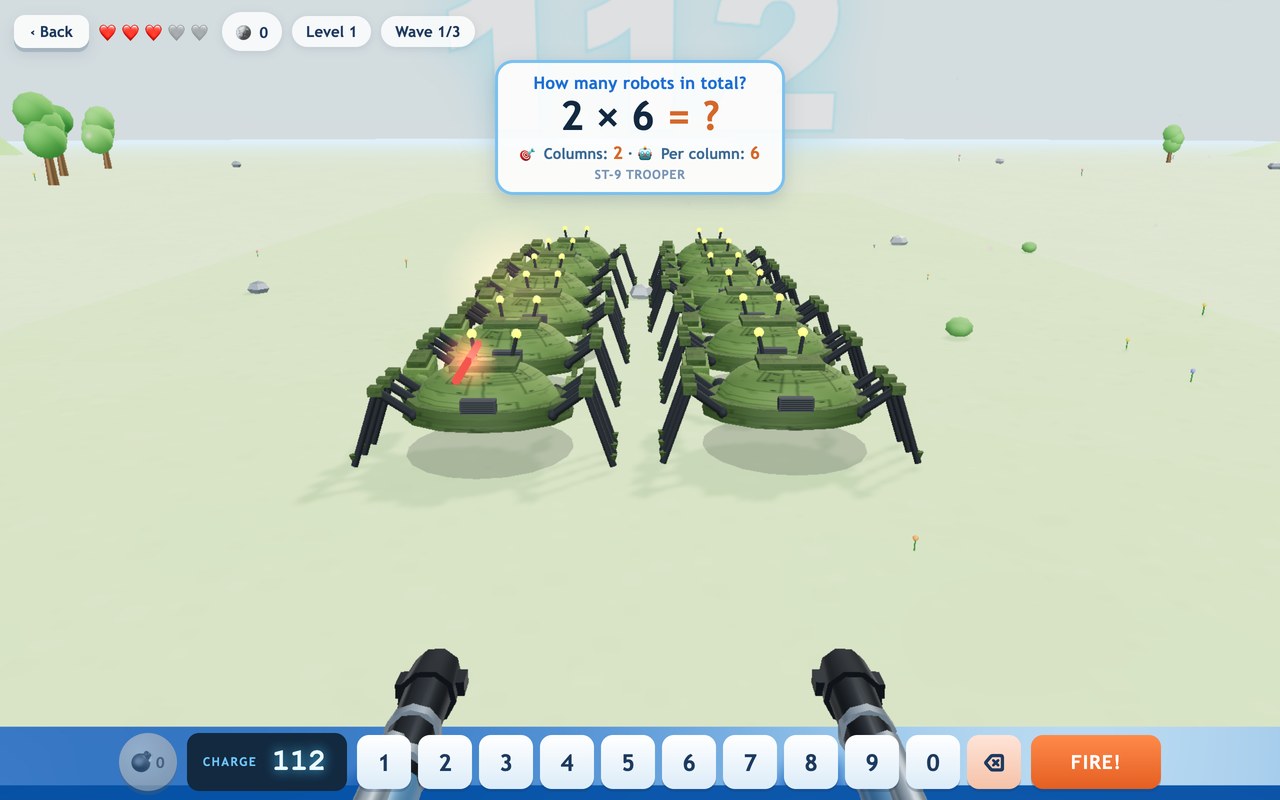 Multiplication Table Game — Free Divide & Conquer 7+
A multiplication table game where the answer is on screen: count the robot formation, …
-
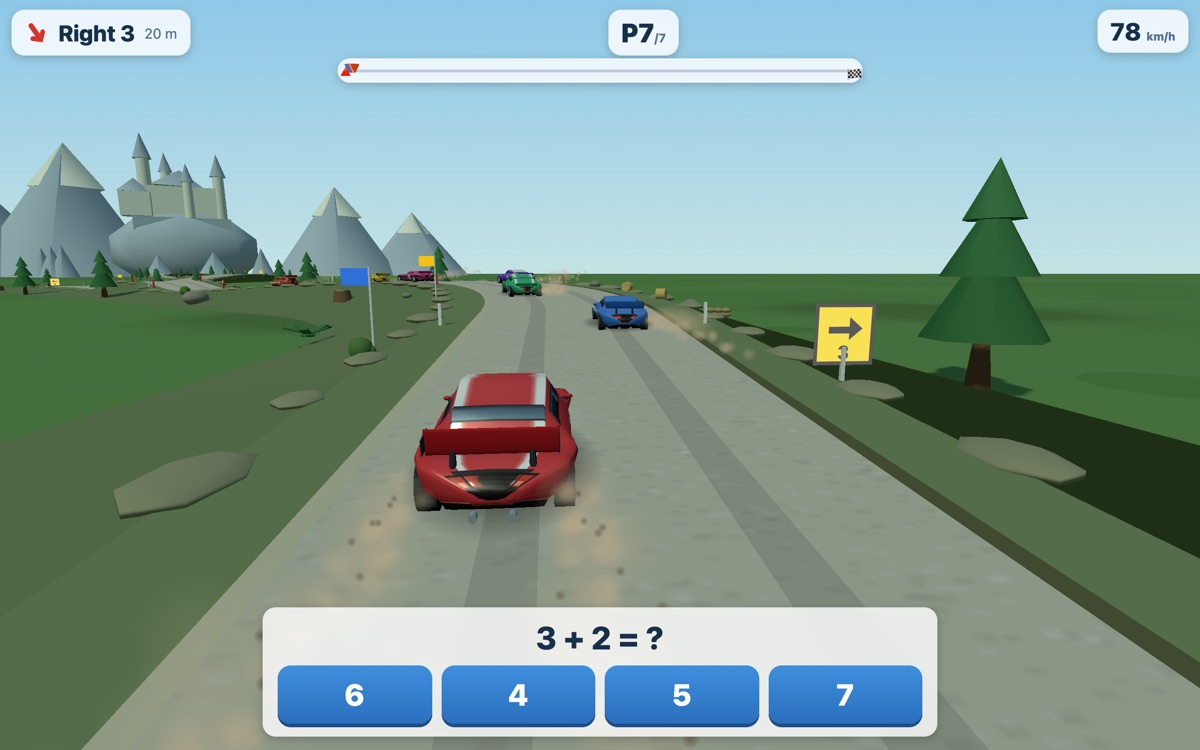 Number Games for Kids: Answer Right and the Car Pulls Away 7+
Number games for kids where solving is the accelerator: answer and your rally car …
-
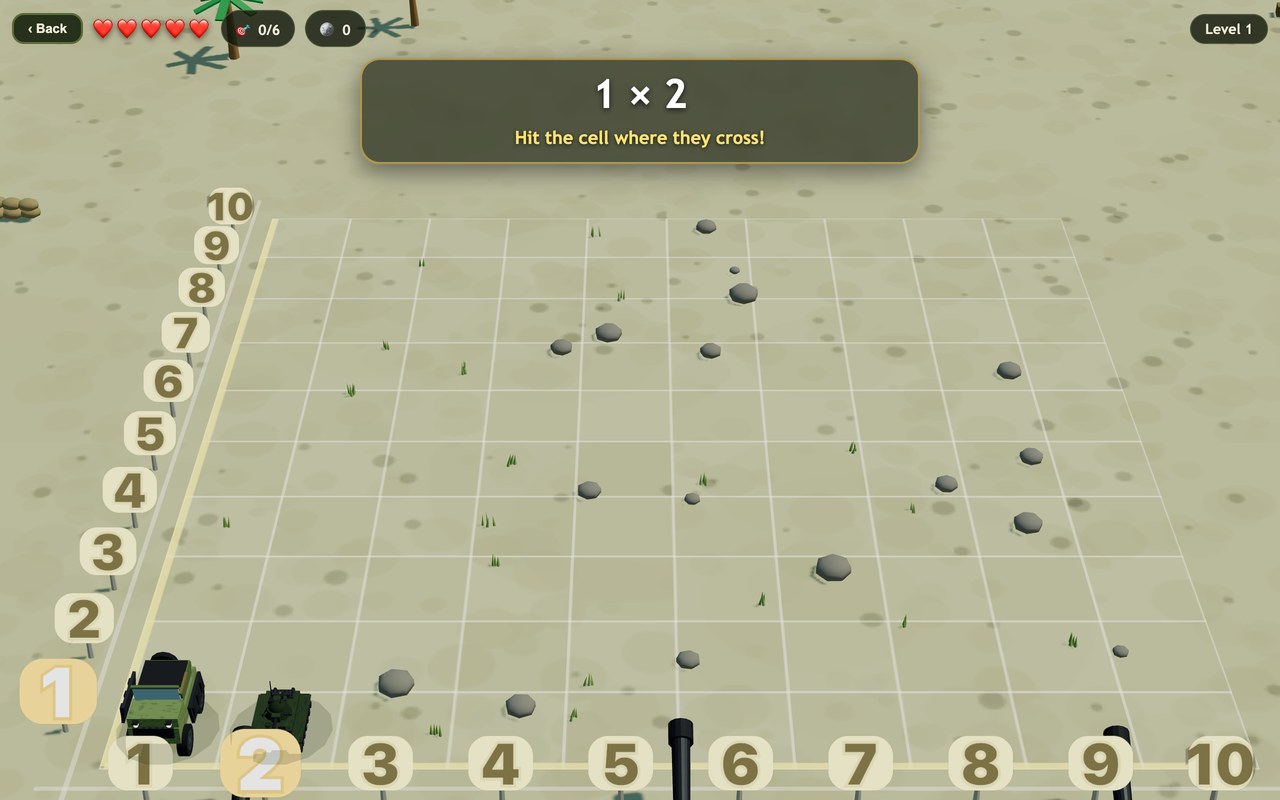 Multiplication Facts — Free True Aim Artillery Game 7+
Practise multiplication facts one row at a time: 2s, 5s and 10s first, then …
-
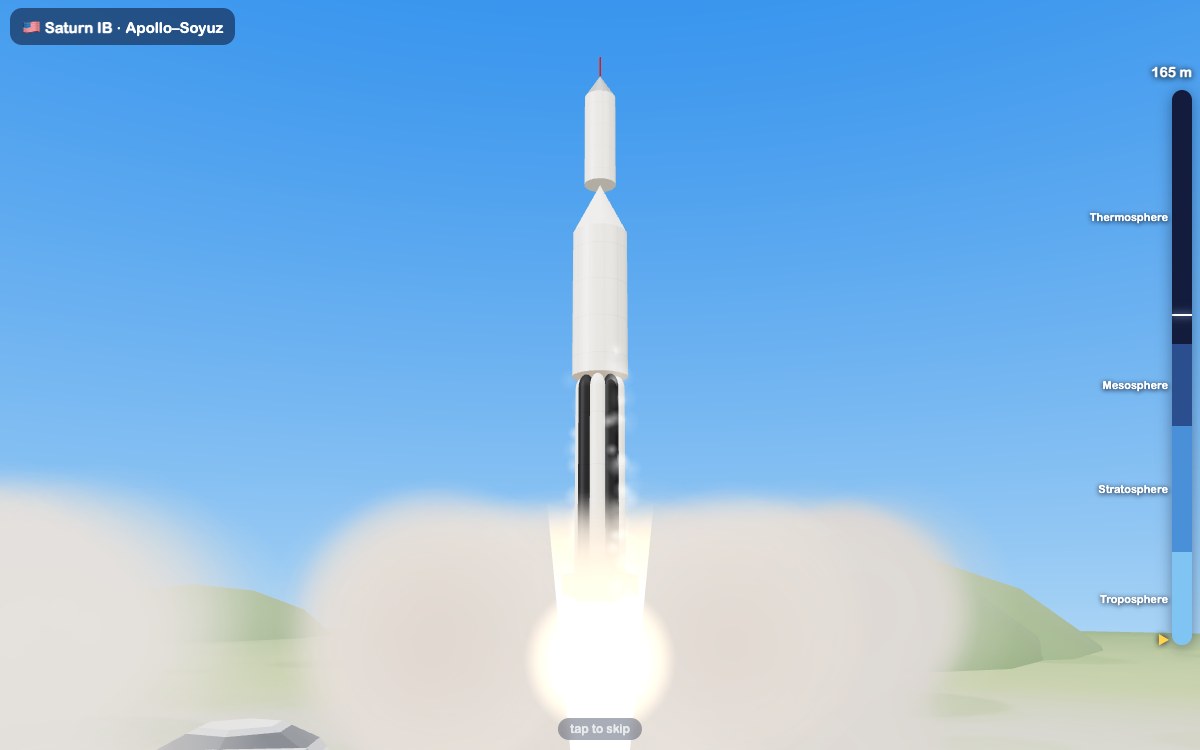 Rocket Games: Build and Launch Real Rockets 7+
Free rocket games for kids: build 24 real rockets — from the V-2 to …
-
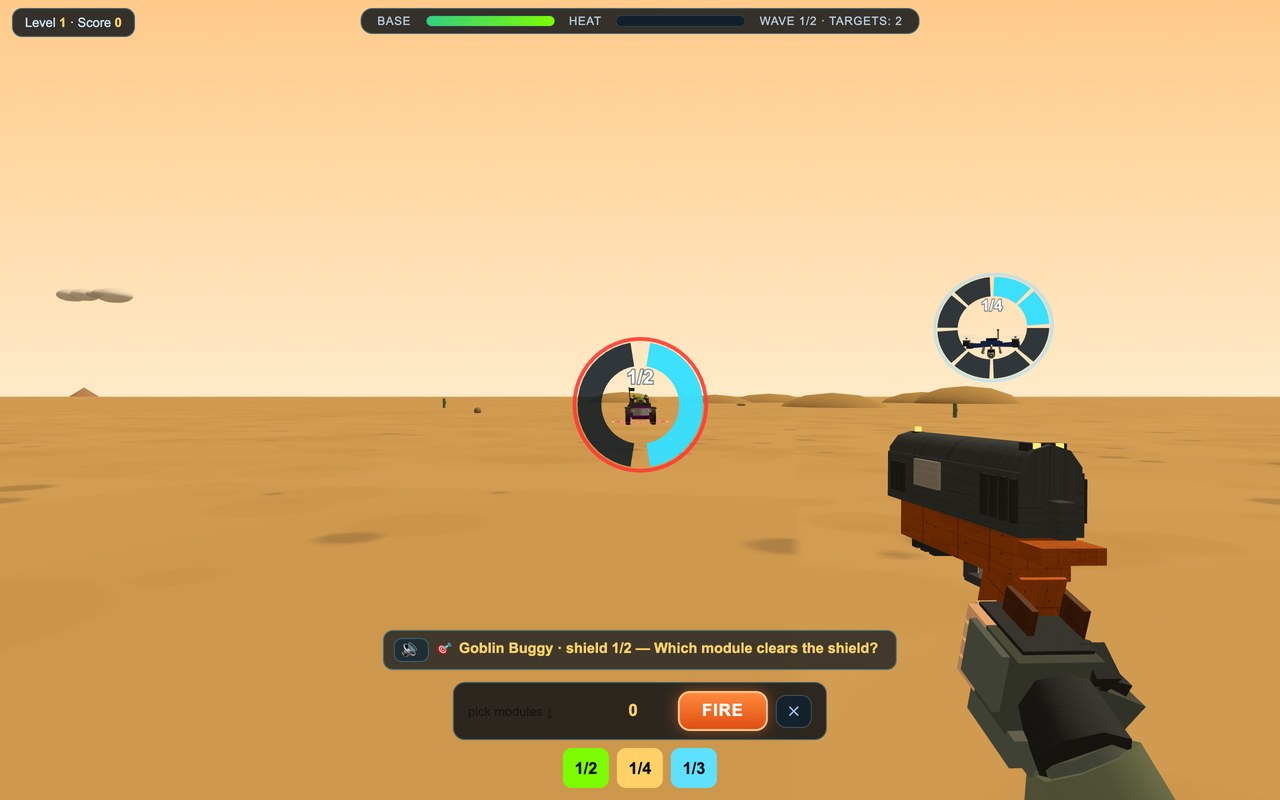 Equivalent Fractions — Free Game With 500 Levels 7+
Equivalent fractions practice: pick the round that matches the shield and fire. 1/2 = …
-
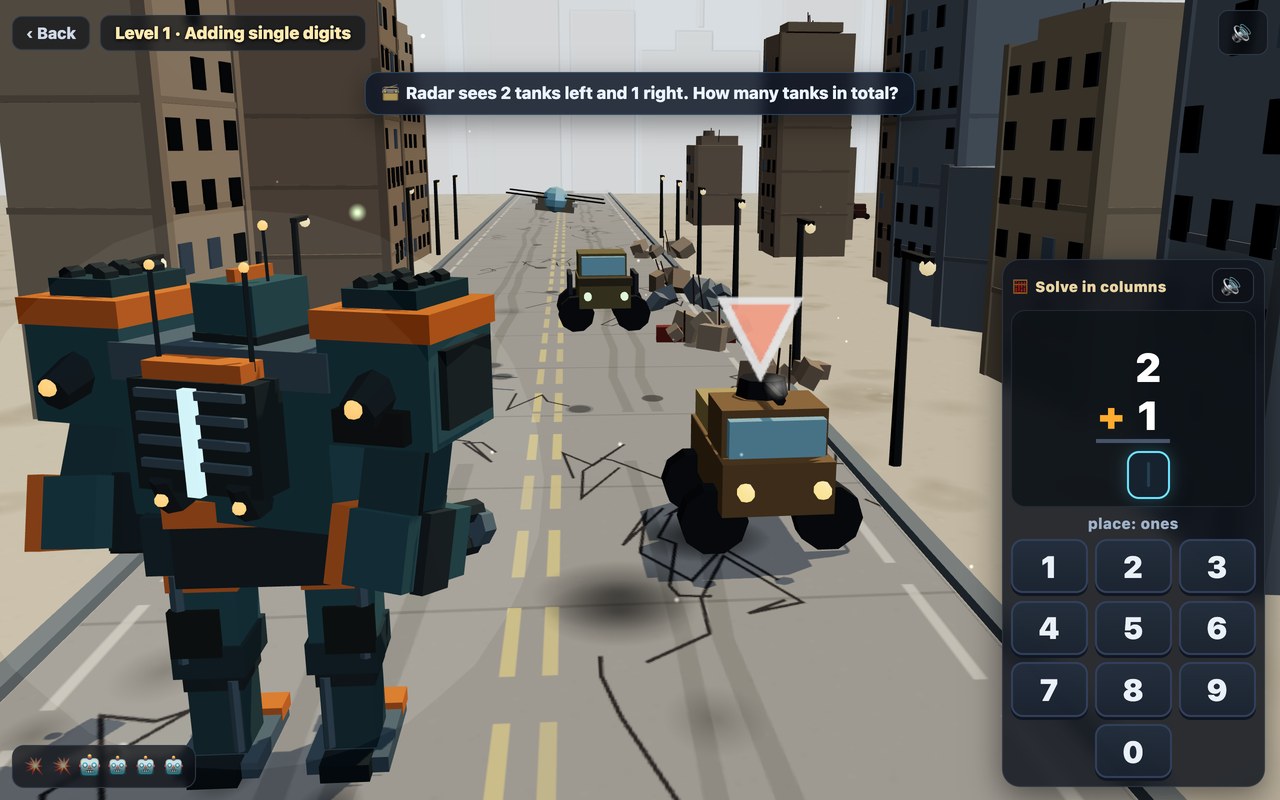 Long Division & Column Math Game for Kids — Free 7+
A long division game for kids that also drills column addition, borrowing and long …
-
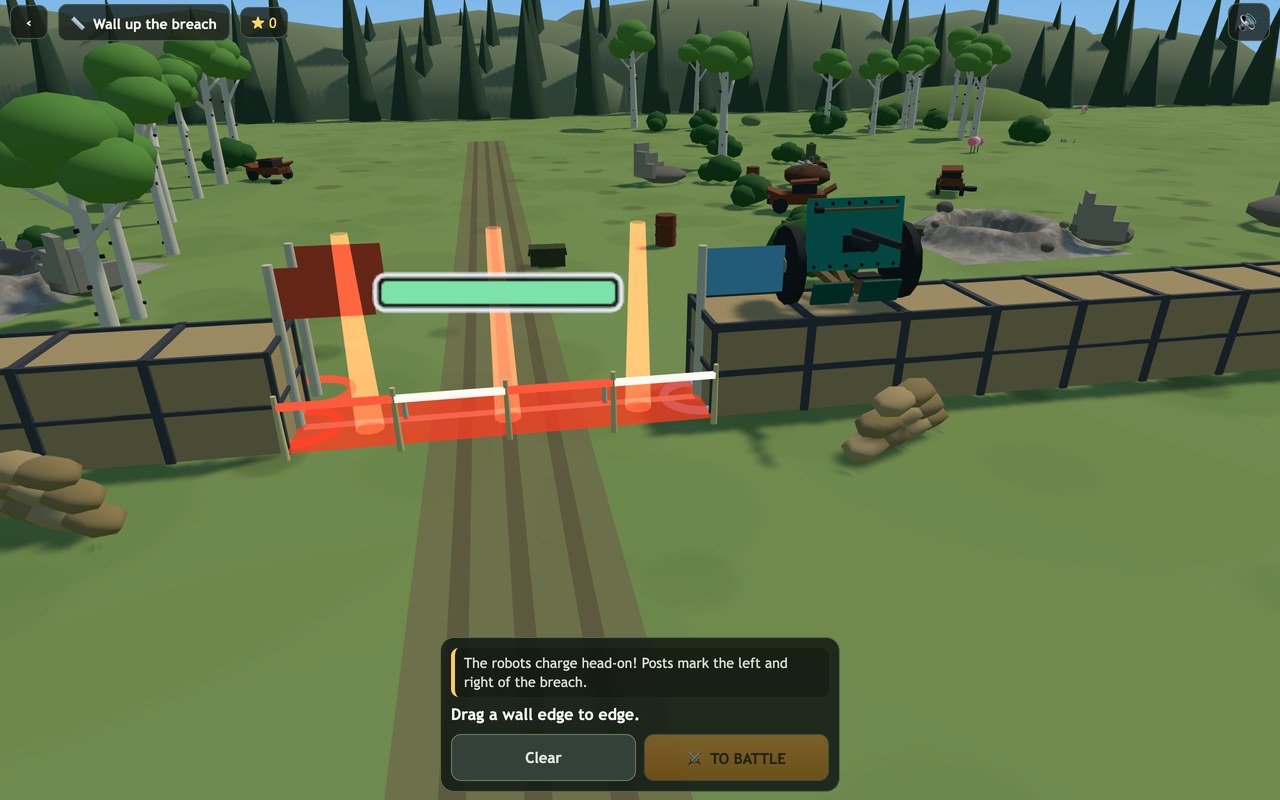 Area and Perimeter — Free Geometry Game for Kids 6+
Area and perimeter on a building grid: fence the yard, floor the warehouse, then …
-
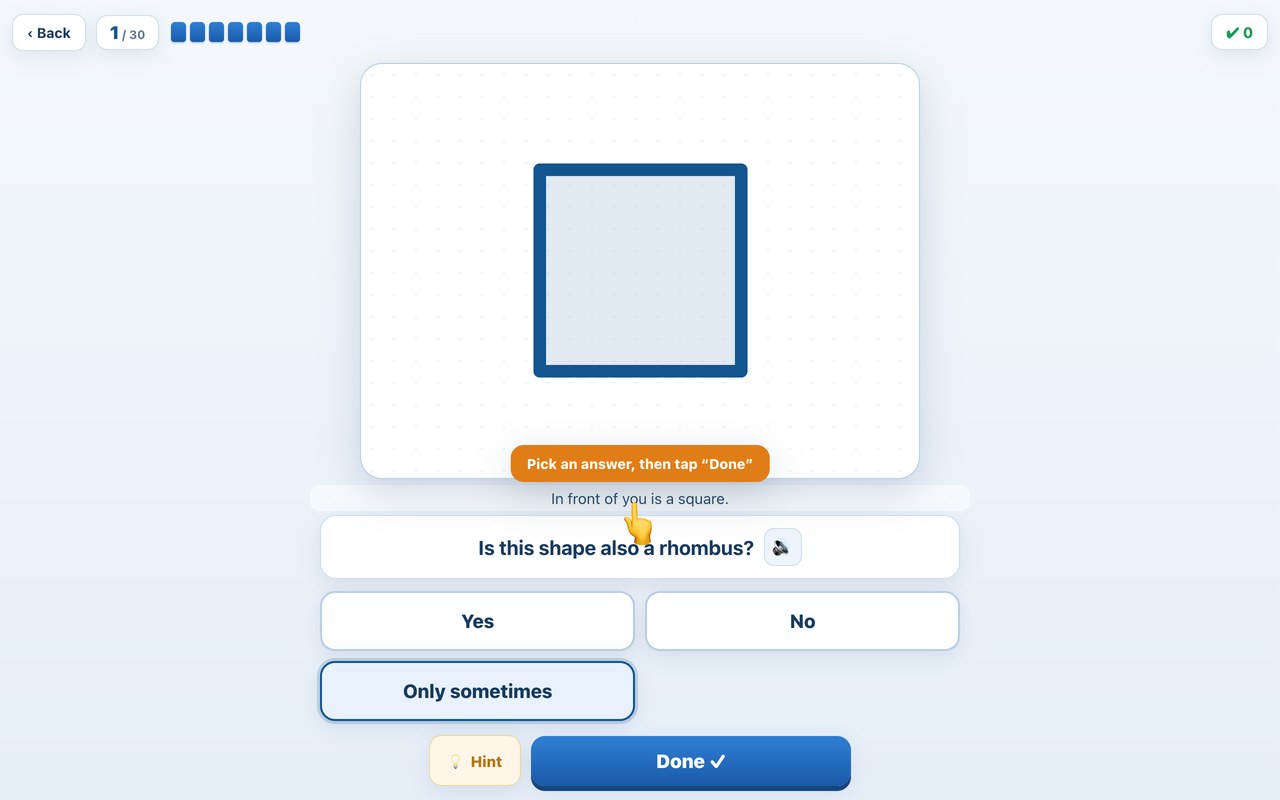 Geometry Games for Kids — Free Angle Assault 8+
Geometry games for kids where the answer is the attack: measure angles, name shapes, …
-
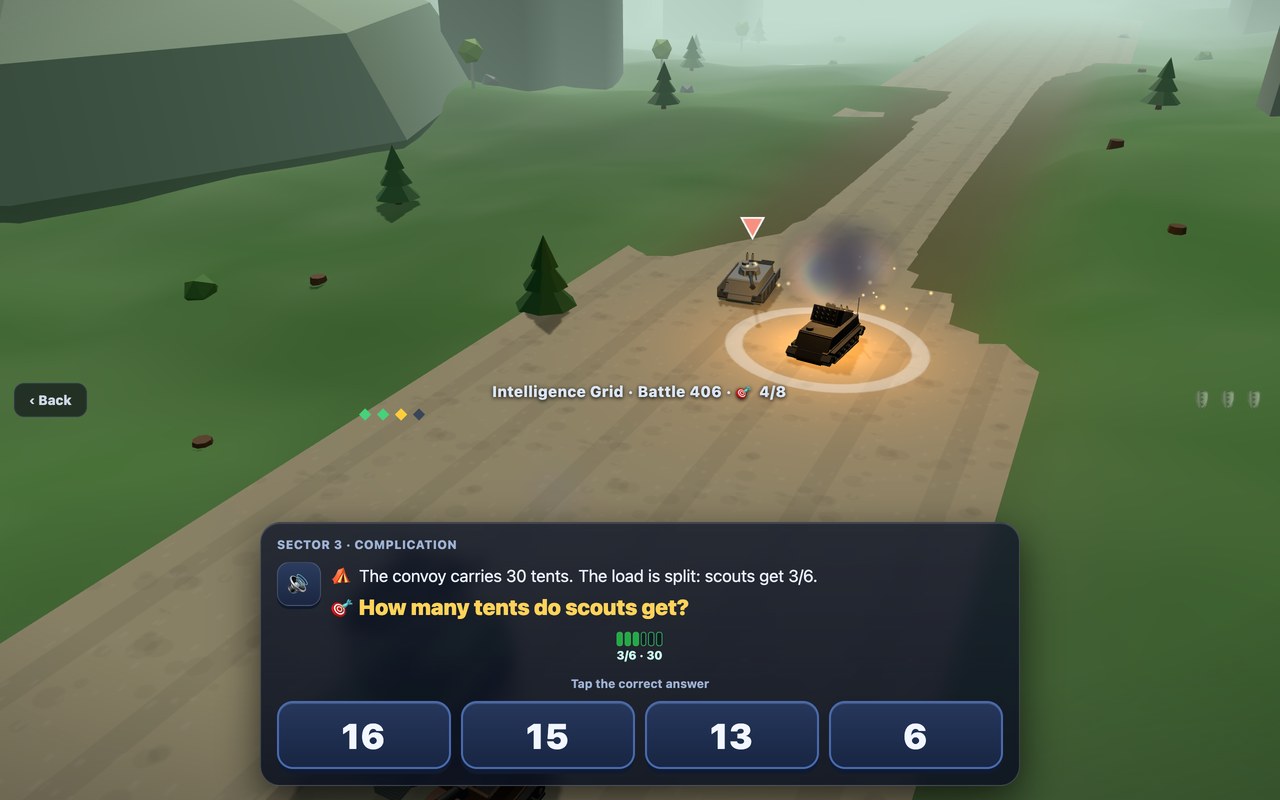 Math Word Problems for Kids — Convoy Frontline 7+
Math word problems for kids turned into a convoy fight: read the story, build …
-
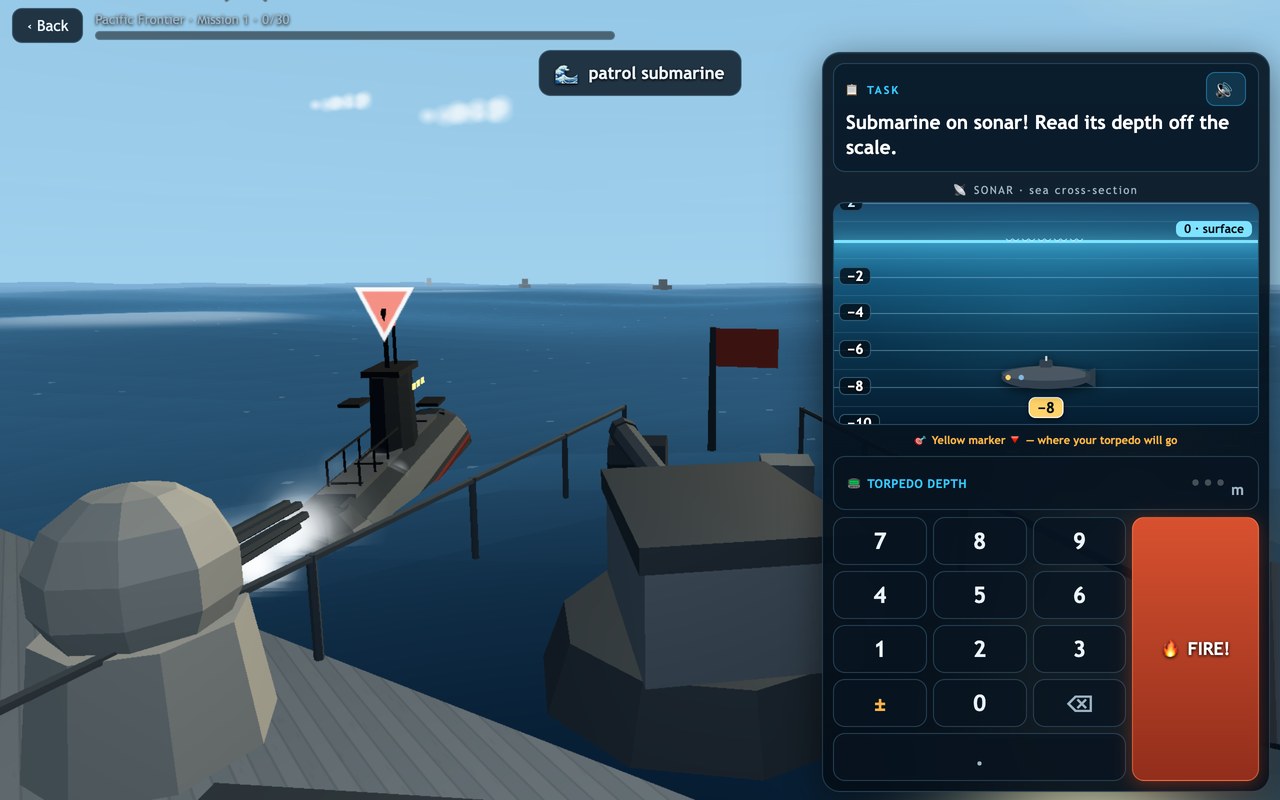 Math Games for 6th Graders — Free Deep Number 8+
Math games for 6th graders on a submarine depth scale: negative numbers, opposites, comparing …
-
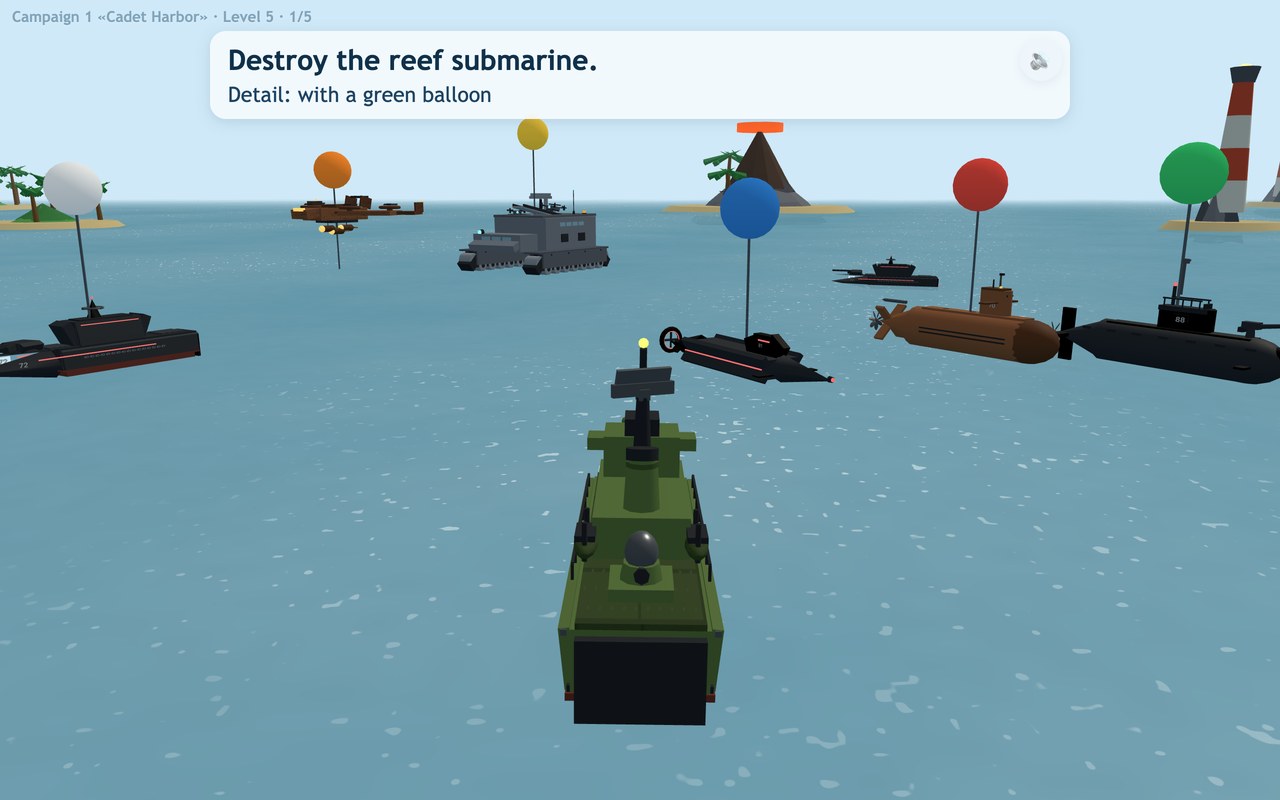 Reading Comprehension Games for Kids — Free Online 8+
Reading comprehension games for kids: read the report, find the evidence and follow written …
-
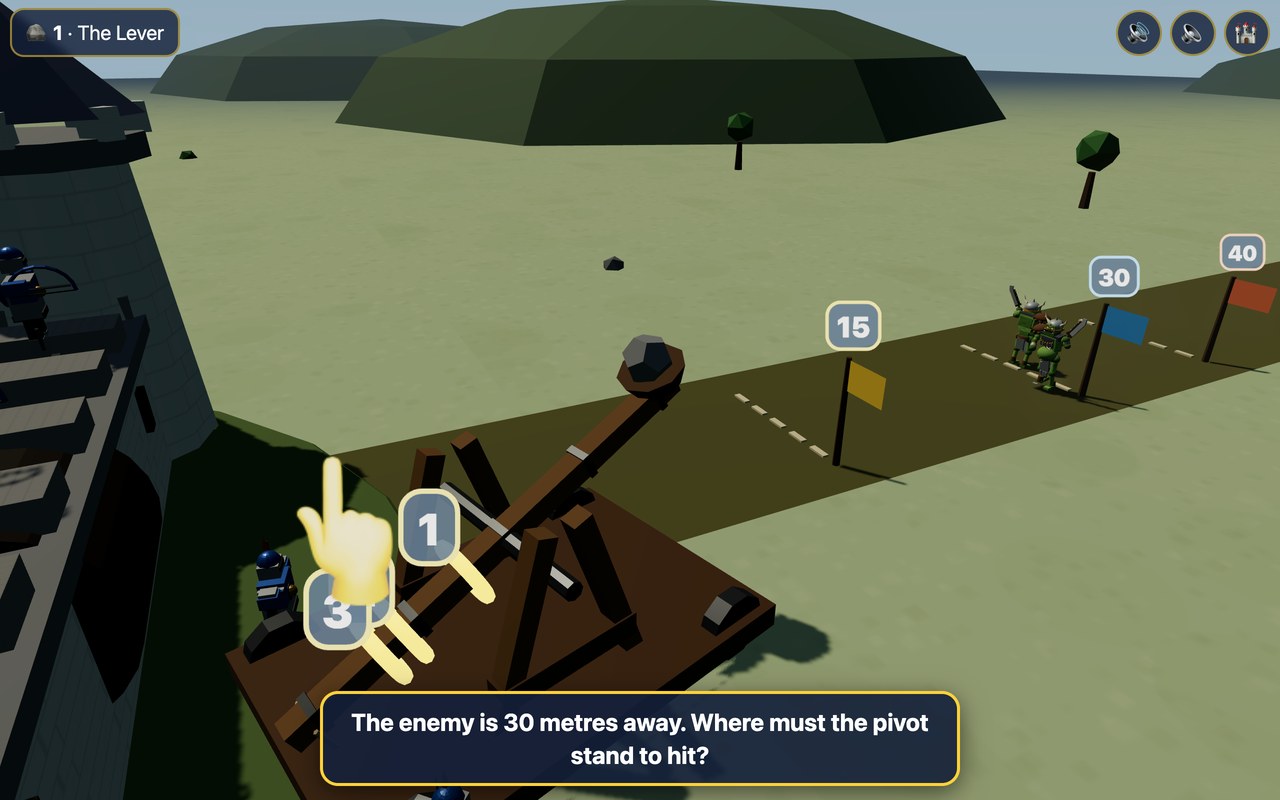 Physics Games for Kids — Free Force Forge 8+
Physics games for kids where real forces decide: use levers, pulleys, gears and center …
-
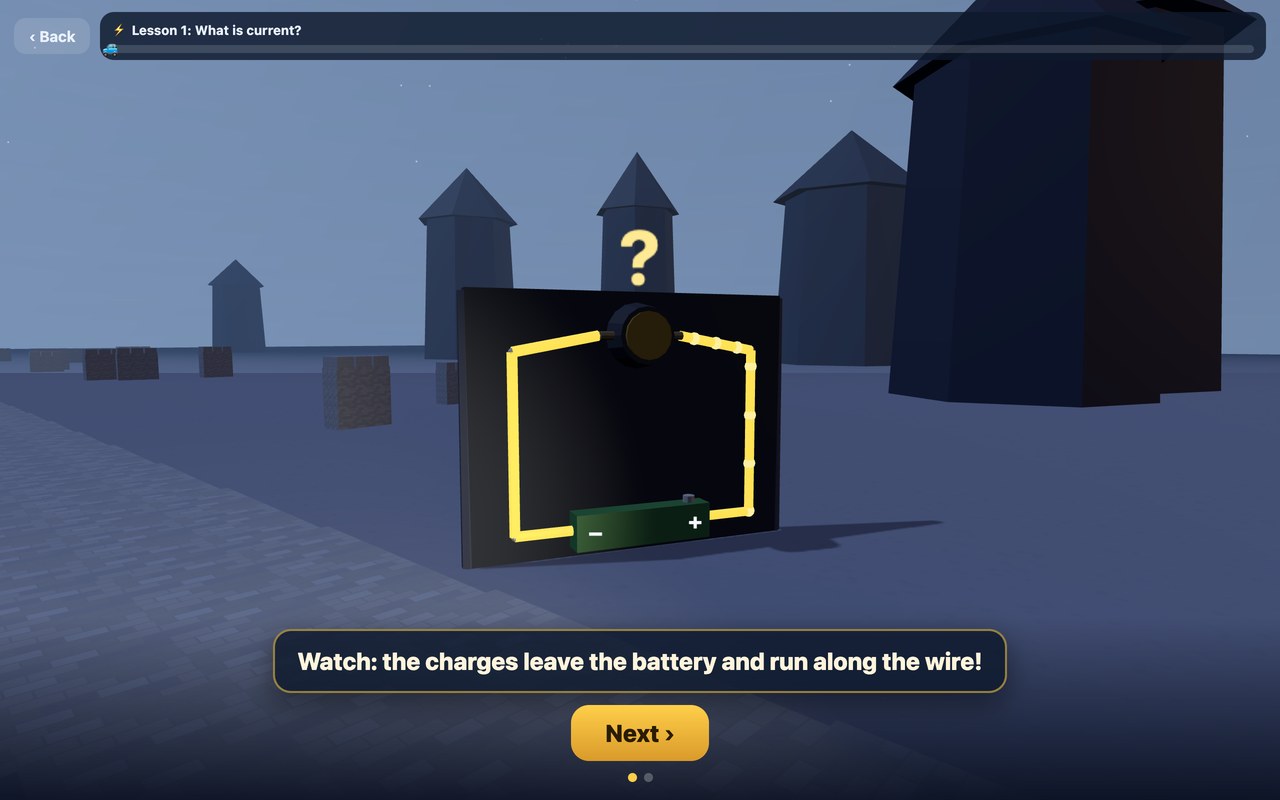 Electric Circuit Games for Kids — Free Circuit Bastion 8+
Electric circuit games for kids: wire real circuits with batteries, switches and resistors to …
-
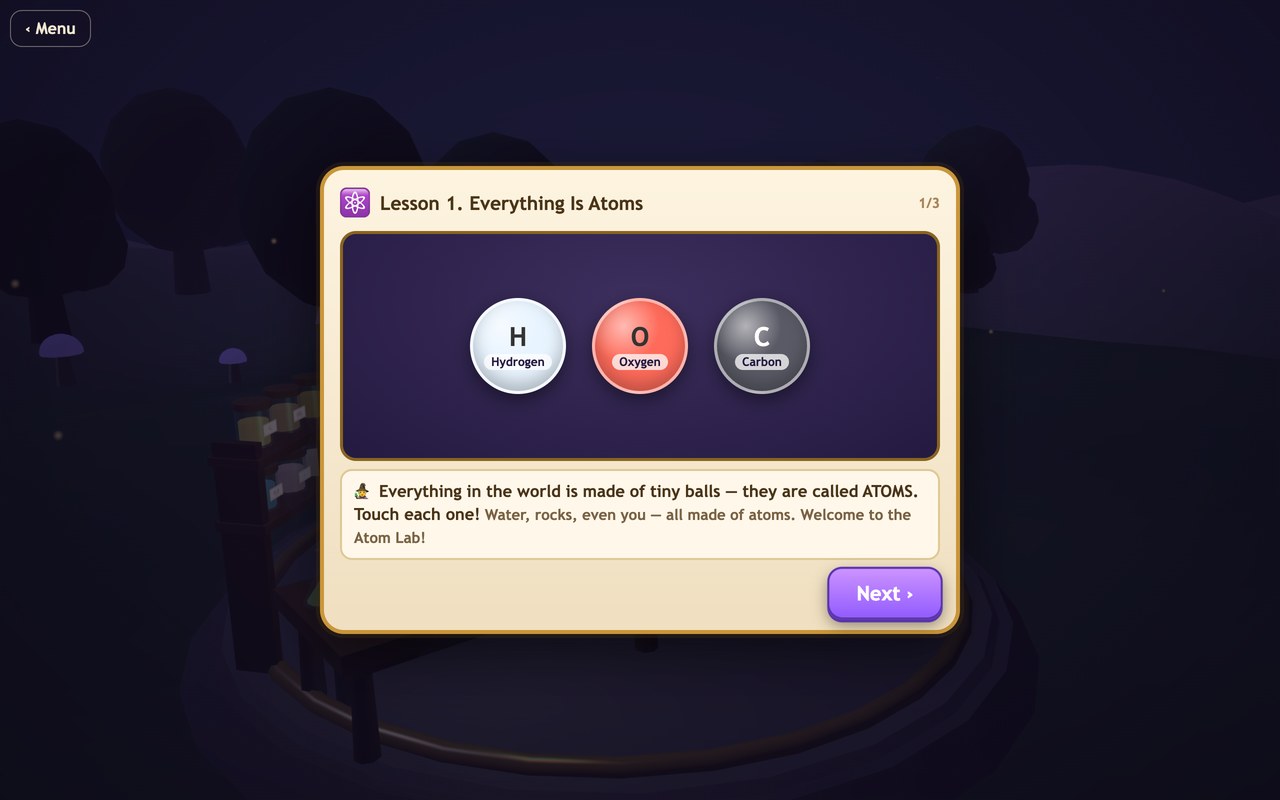 Chemistry for Kids: Atom Lab — Free Online 8+
Chemistry for kids aged 6-10: baking soda and vinegar foam, dissolving salt, rust, melting …
-
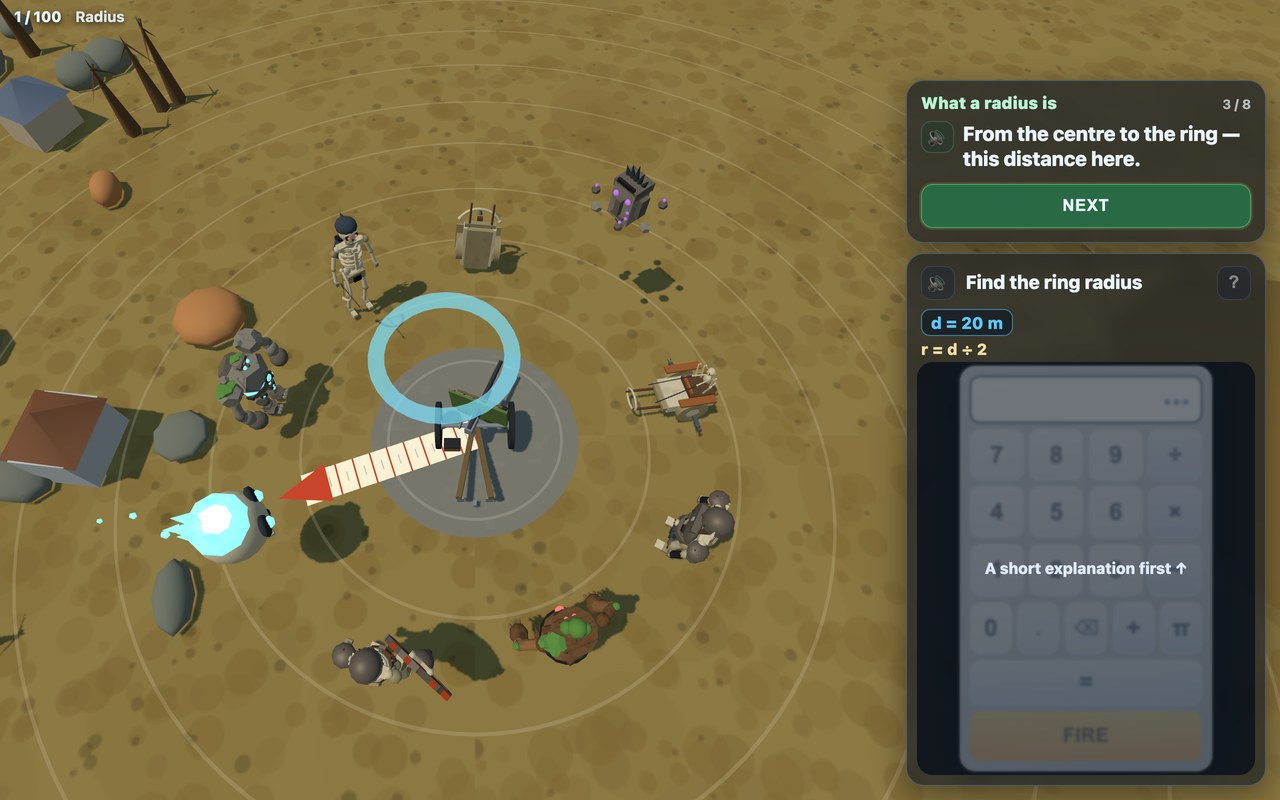 Circumference of a Circle: Formula, Pi and Worked Examples 8+
The circumference of a circle is C = 2πr (or πd). See where pi …
-
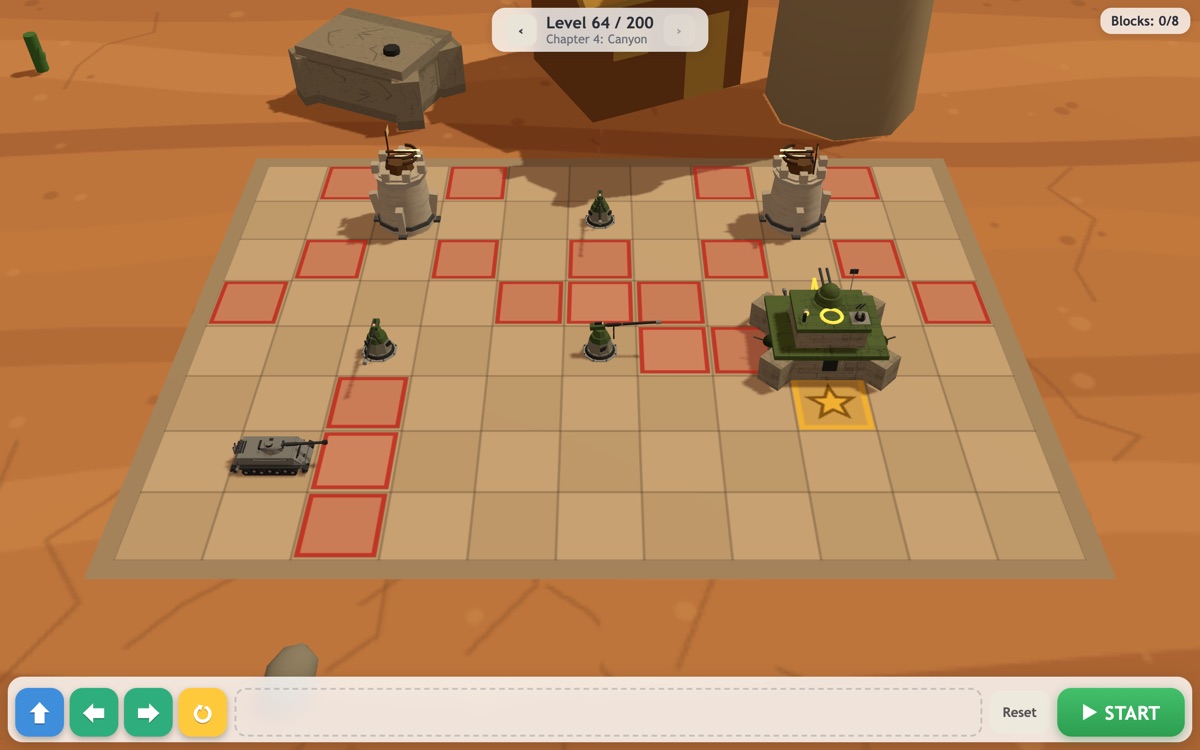 Coding Game “Tank Raid” — Free in Your Browser 5+
Coding games for kids in the browser: work out a safe route past the …
Eight is when maths stops being about counting and starts being about structure. A fraction is not a small number, it is a relationship. Division is not sharing sweets, it is the question "how many groups fit". An angle is not a corner, it is an amount of turn. Children who never make these shifts are the ones who quietly drop out of maths around age eleven.
Fractions, the honest version. 1/2 and 2/4 are the same amount because you cut the same cake twice as finely and took twice as many pieces. Once a child can see that on a bar, comparing 3/4 and 2/3 stops being a guess. The fraction game here shows the bar first and removes it once the child stops looking at it.
Division. Every division fact is a multiplication fact read backwards: 42 ÷ 6 is answered by "6 times what is 42". Children who learn division as its own separate table take twice as long and forget it twice as fast.
Geometry with a number in it. Area and perimeter get confused constantly, so this page keeps them in the same game: perimeter is the fence, area is the grass. Angles get a protractor on screen and a target that only falls if the angle is right.
Science that is actually science. A circuit that does not light unless the loop is closed. A force that produces the trajectory you predicted. An atom whose shells fill in a fixed order. Nothing here is decoration around a quiz.
Tip for the grown-up. At eight, "I already know this" usually means "I can do it slowly". Ask for ten facts in thirty seconds; that is the difference between knowing and knowing cold.
Continue with games for 3rd graders, division facts, types of angles and STEM games.