
Brain Games for Kids, Grades 1–2 — Free Brain Kids Pro 6–8
 New from Dad4Kids
Clean YouTube for kids
For families with traditional values, hand-picked by parents.
Open →
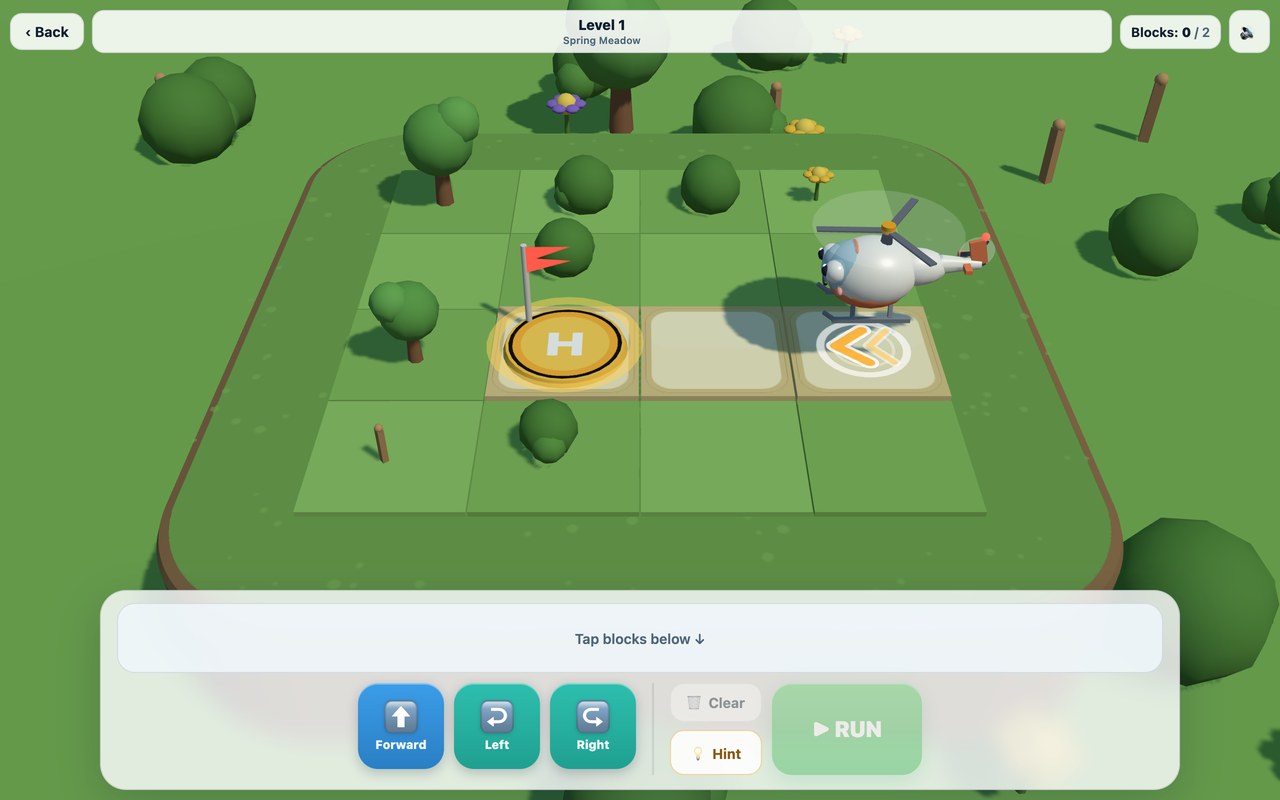
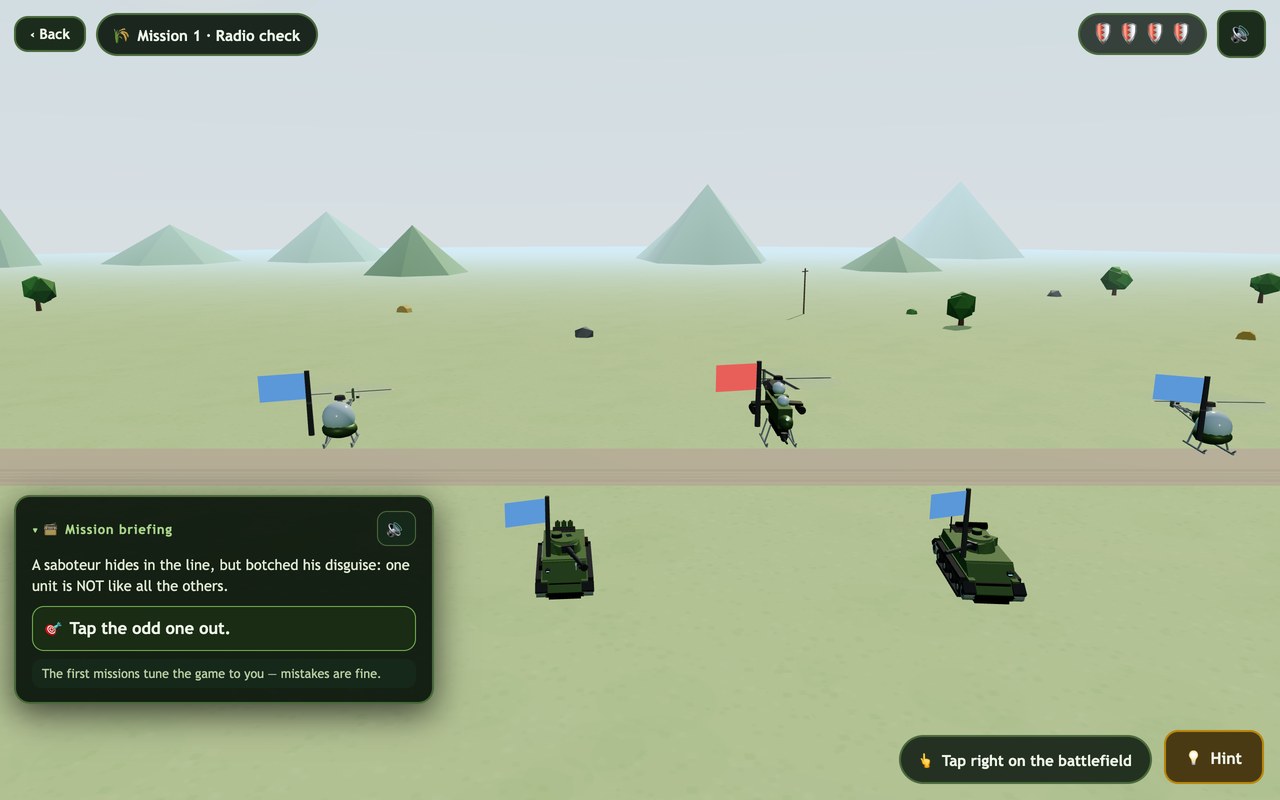
Brain Kids Pro is a set of brain games for 7 year olds — a real grade 1-2 workout for ages 6-8. Fifty short mini-games go well beyond toddler puzzles: addition and subtraction to 100, times tables and division, number sequences with a rule, word problems, reading-based odd-one-out and 'which is not a…', verbal analogies, opposites, step-by-step deduction, digit span, mental rotation and coordinates. Difficulty steps up as your child improves.
Younger child? Brain Kids has the same friendly style with gentle picture puzzles for ages 4–5.
How to play
Pick the daily workout or tap any game tile. Read each task, choose the answer or type it on the number pad, and earn stars and coins. Harder levels unlock as you go.
What your child learns
Builds real arithmetic fluency, logical reasoning, reading-for-meaning, working memory and spatial skills — the thinking that underpins first- and second-grade school work.
The science behind the games
Every Dad4Kids game is built on one simple truth: children want to play, not study — so we turn learning into a game worth replaying. The method draws on peer-reviewed research in game-based learning, motivation, and how memory works.
- Prins et al. (2013). “Braingame Brian”: toward an executive function training program with game elements. Games for Health Journal.
- Tokac et al. (2019). Effects of game-based learning on students' mathematics achievement: A meta-analysis. Journal of Computer Assisted Learning.
- Alotaibi (2024). Game-based learning in early childhood education: a systematic review and meta-analysis. Frontiers in Psychology.
- Lampropoulos & Sidiropoulos (2024). Impact of gamification on students' learning outcomes and academic performance: a meta-analysis. Education Sciences.
- Taylor & Boyer (2019). Play-based learning: evidence-based research to improve children's learning experiences. Early Childhood Education Journal.
- Gottfried (1990). Academic intrinsic motivation in young elementary school children. Journal of Educational Psychology.
FAQ
What age is it for?
Built for ages 6–8 (grades 1–2). Tasks use real reading and arithmetic and get harder as your child improves. For ages 4–5, try Brain Kids.
How is it different from Brain Kids?
Brain Kids (4–5) is picture-only and very gentle. Brain Kids Pro (6–8) adds real math — sums to 100, times tables, number rules — and reading-based logic, analogies and deduction.
Is it free?
Yes — free, no ads, no purchases, right in your browser.
How many games are there?
50 mini-games across logic, math, memory and spatial thinking.
More free games for kids
By Evgeny Arsentiev, PhD · Last updated: September 2026