
Memory Games for Kids — Build It From Memory 5+
 New from Dad4Kids
Clean YouTube for kids
For families with traditional values, hand-picked by parents.
Open →
Most memory games stop at turning over pairs of cards. This one asks for something a child can feel getting stronger: look at a machine, watch the blueprint disappear, and build it again from a pile of parts that includes decoys.
Eight ways to make it harder
The first six levels are a straight blueprint. Then rotation arrives — the machine you memorised comes back turned. Then Mirror, where only one side is ever shown and both must be built. Then Layers, Order, Repair (it comes back damaged and you must spot what changed), Motion, and finally Angle, where the platform has swung a full 180 degrees.
What it is really training
Visual working memory and mental rotation — the two things that make geometry, spelling and mental arithmetic feel easy later. 500 levels, and nothing to read, so it works before a child reads fluently.
Free, in the browser
No download, no account, no ads. Every question is read aloud, and progress is saved on the device.
More games that train the head, not the reflexes
- maze games — levers, gates and one path that works
- learn to type — home row first, the way U.S. keyboarding classes teach it
- coding for kids — sequences, loops and conditions — a real block-code drone
- logic puzzle for kids — slide the cars out of the jam in the fewest moves
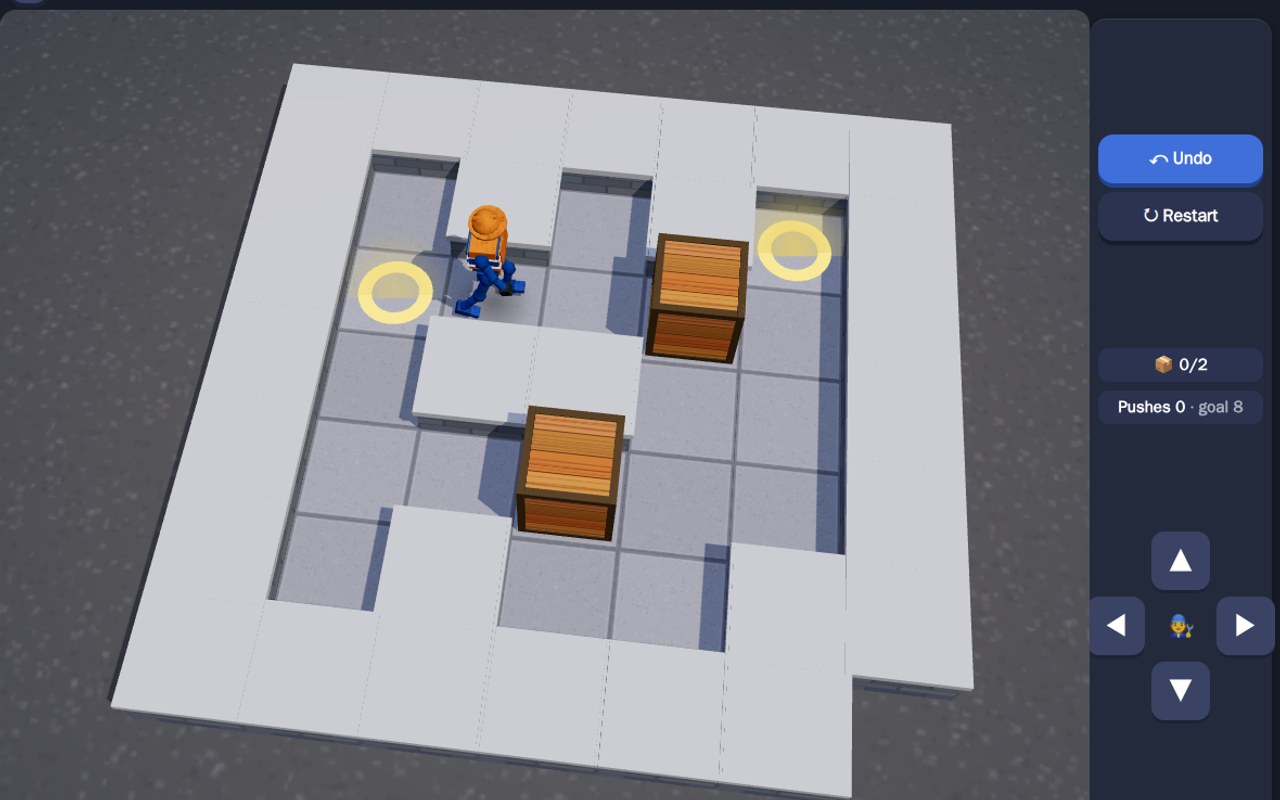
- puzzle games for kids — route the rescue robot around a station full of obstacles
- tower of hanoi puzzle — move the stack one disc at a time, never a big one on a small
How to play
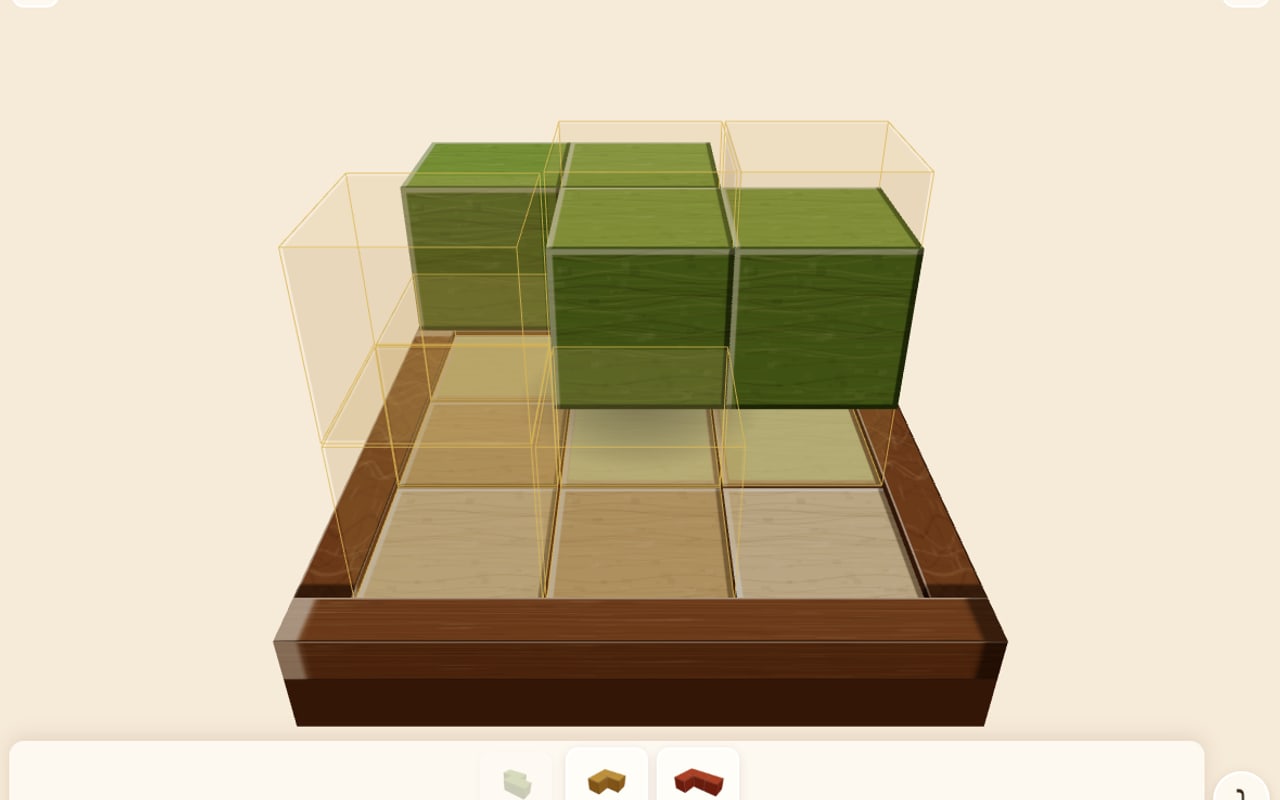
Watch the blueprint carefully while the timer runs. When it disappears, tap a part card at the bottom, then tap a glowing socket on the machine. Rotate the platform with the ⟲ ⟳ buttons or by dragging. Stuck? Replay the blueprint — but replays are limited, and building without them earns a bonus star. When every socket is filled, press TEST SYSTEMS and watch the machine activate.
What your child learns
Working memory and visual concentration dressed as engineering: remembering positions, colors and shapes, mirrored layouts, layered structures and assembly order. The game quietly adapts — whichever skill lags, more of those puzzles appear at a gentler level. A parent dashboard shows growing skills positively, and practice labs train visual memory, symmetry, rotation and sequences separately.
The science behind the games
Every Dad4Kids game is built on one simple truth: children want to play, not study — so we turn learning into a game worth replaying. The method draws on peer-reviewed research in game-based learning, motivation, and how memory works.
- Prins et al. (2013). “Braingame Brian”: toward an executive function training program with game elements. Games for Health Journal.
- Tokac et al. (2019). Effects of game-based learning on students' mathematics achievement: A meta-analysis. Journal of Computer Assisted Learning.
- Alotaibi (2024). Game-based learning in early childhood education: a systematic review and meta-analysis. Frontiers in Psychology.
- Lampropoulos & Sidiropoulos (2024). Impact of gamification on students' learning outcomes and academic performance: a meta-analysis. Education Sciences.
- Taylor & Boyer (2019). Play-based learning: evidence-based research to improve children's learning experiences. Early Childhood Education Journal.
- Gottfried (1990). Academic intrinsic motivation in young elementary school children. Journal of Educational Psychology.
FAQ
What games improve memory for kids the most?
Games that make the child actively rebuild something from memory work best — which is exactly Memory Forge's loop: study a blueprint, watch it vanish, then place every part from memory before testing the machine.
Is it a flash-card memory game?
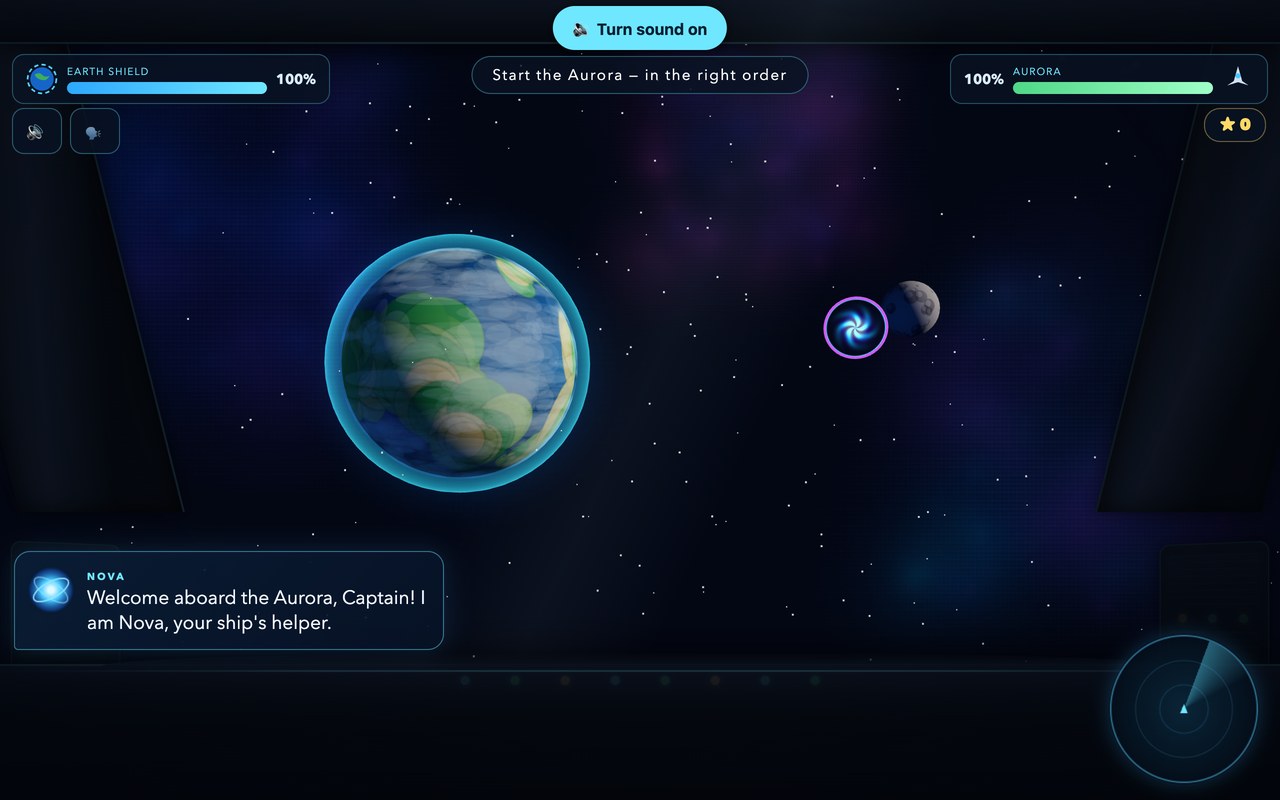
No. Every level is a small engineering mission in a living sci-fi scene: blueprints glow, platforms rotate, and a correctly assembled machine actually powers up — engines flame, radars spin, shields hum. Memory is the skill, machines are the reward.
What happens when my child makes a mistake?
Nothing scary: the machine simply doesn't start, red rings mark the trouble spots, and a friendly character names one part to reconsider. Retries are unlimited and there are no timers pressuring the child.
How hard does it get?
From four-part rovers with ghost outlines to ten-module starships with decoy parts, mirrored sides and strict assembly order. Difficulty rises smoothly and adapts to the child.
More free games for kids
By Evgeny Arsentiev, PhD · Last updated: September 2026