
Learn to Read Spanish — Free Word Tanks 5+
 New from Dad4Kids
Clean YouTube for kids
For families with traditional values, hand-picked by parents.
Open →
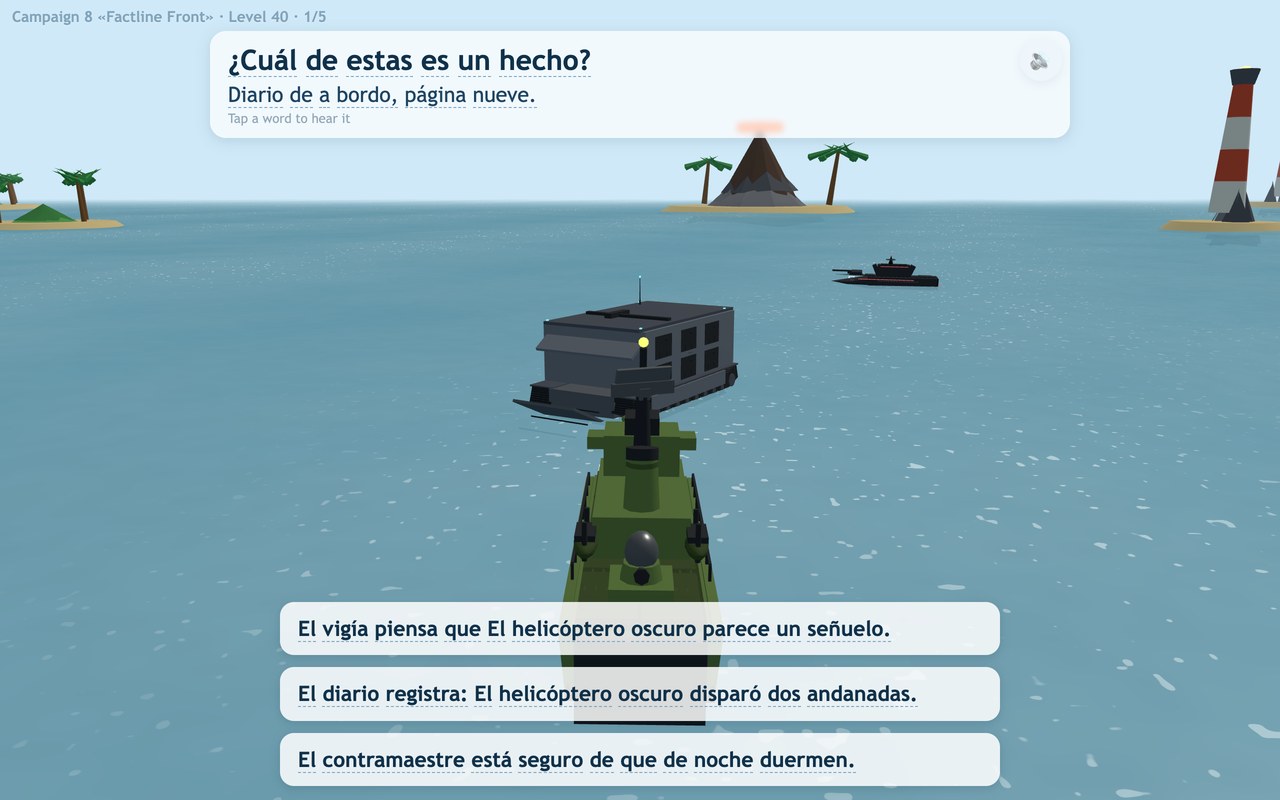
Spanish reading practice through play with Word Tanks: a first-person 3D tank campaign where building a word from its syllables fires the tank and rolls it on to the next target. The game speaks a Spanish word aloud, your child builds it from syllable tiles and reads it — from open syllables to whole words.
Why Spanish is a great first reading language
Spanish is almost perfectly phonetic and syllabic (ma-me-mi-mo-mu): once a child knows the sounds, the spelling just works, with very few exceptions to trip them up. That makes reading by syllables fast and rewarding, and this game leads your child from simple open syllables to real words step by step.
Reading is the whole game
Because each word read moves the action forward, children read far more than they would on a worksheet — and short, playful sessions build the sound-to-letter links that make reading Spanish fluent.
How to play
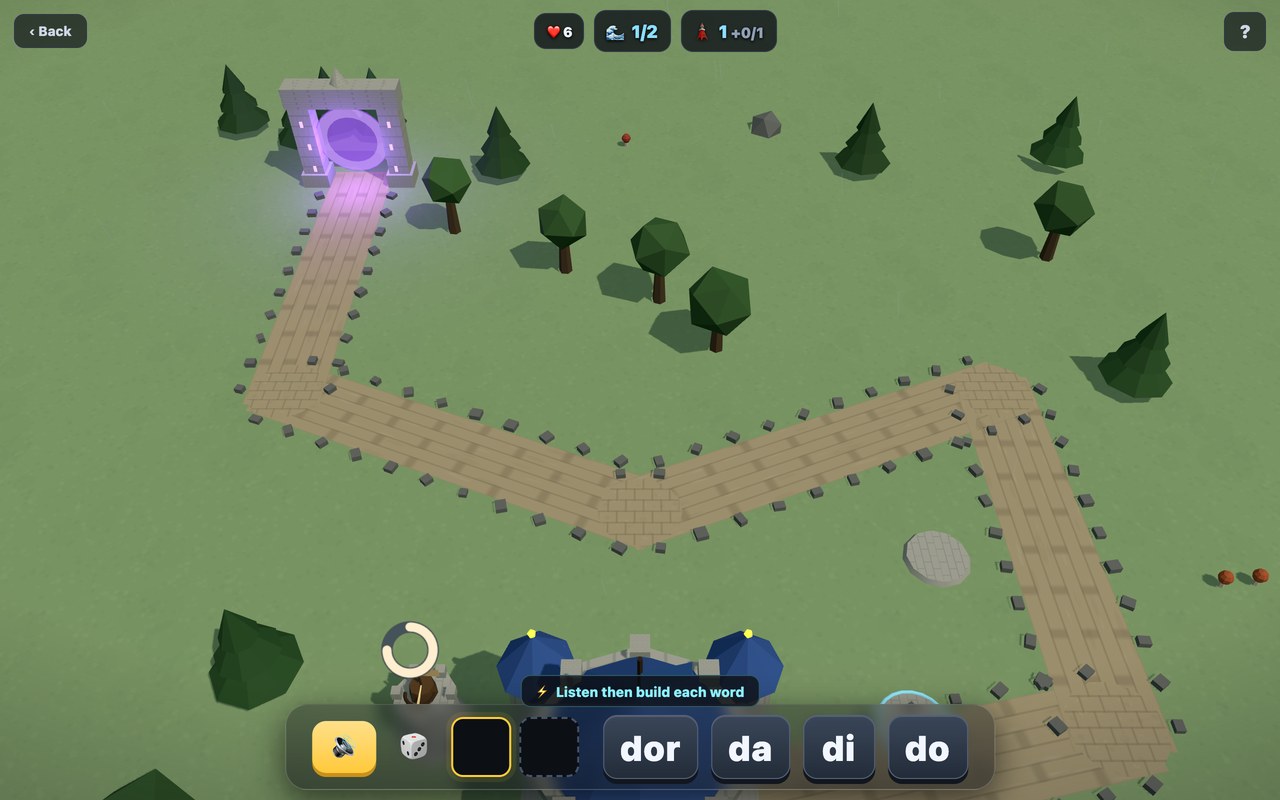
The game says a word aloud 🔊 — build it from the syllable tiles in order. A correct word fires the tank and drives it on to the next target, so your child reads their way through the whole campaign.
What your child learns
Builds Spanish decoding: letter–sound links, blending syllables into words, and word recognition — the foundations of fluent reading in a highly phonetic language.
The science behind the games
Every Dad4Kids game is built on one simple truth: children want to play, not study — so we turn learning into a game worth replaying. The method draws on peer-reviewed research in game-based learning, motivation, and how memory works.
- Tokac et al. (2019). Effects of game-based learning on students' mathematics achievement: A meta-analysis. Journal of Computer Assisted Learning.
- Alotaibi (2024). Game-based learning in early childhood education: a systematic review and meta-analysis. Frontiers in Psychology.
- Lampropoulos & Sidiropoulos (2024). Impact of gamification on students' learning outcomes and academic performance: a meta-analysis. Education Sciences.
- Taylor & Boyer (2019). Play-based learning: evidence-based research to improve children's learning experiences. Early Childhood Education Journal.
- Gottfried (1990). Academic intrinsic motivation in young elementary school children. Journal of Educational Psychology.
- Yang et al. (2018). Enhancing learning and retrieval of new information: a review of the forward testing effect. npj Science of Learning.
FAQ
What is the best way for a child to learn to read Spanish?
Because Spanish spelling is so regular, the fastest route is learning the syllable sounds (ma-me-mi-mo-mu) and blending them into words. This game does exactly that through play — it speaks a word and your child builds it syllable by syllable.
What is the best age to teach a child to read Spanish?
Around age 4-6 is a natural time to start blending syllables, but there’s no rush. The game begins with the simplest open syllables and grows gently, so beginners and more confident readers both fit.
Can my 4 year old learn to read Spanish?
Yes. Spanish’s regular sounds make it one of the easiest languages to start reading, and every word here is spoken aloud, so a young beginner can play and learn at the same time.
Does my child need to know Spanish already?
No. Every word is spoken aloud and the game starts from the very first sounds, so a complete beginner can play.
Do I need a microphone?
No — the game reads the word aloud and your child taps the tiles to build it. It works on any device, including iPhone and iPad.
Is it free to play?
Yes — completely free, no ads, right in the browser on a tablet, phone or computer.
More free games for kids
By Evgeny Arsentiev, PhD · Last updated: September 2026