
Ordered Pairs: Reading (x, y) Without Getting Them Backwards
Games
-
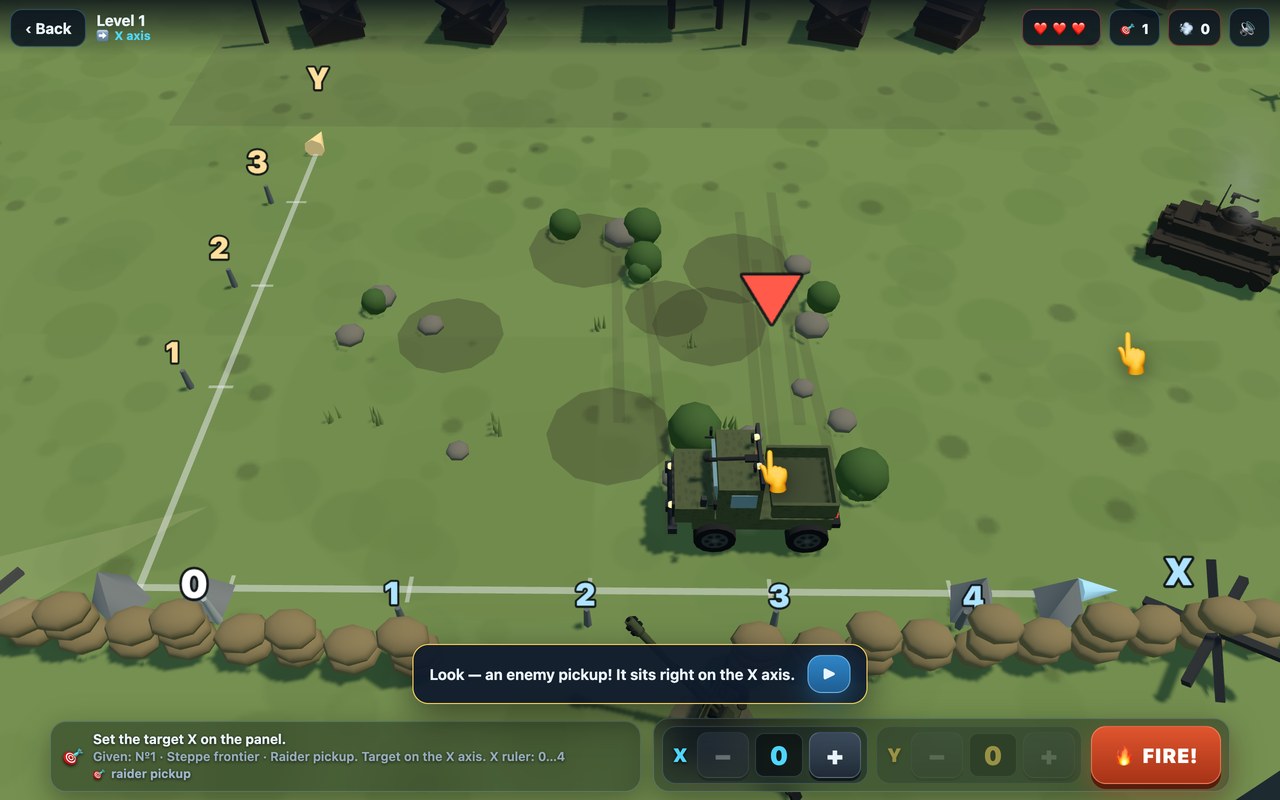 Coordinate Grid — Free Grid Artillery Game for Kids 7+
A coordinate grid game where the point is the target: read it, call it …
-
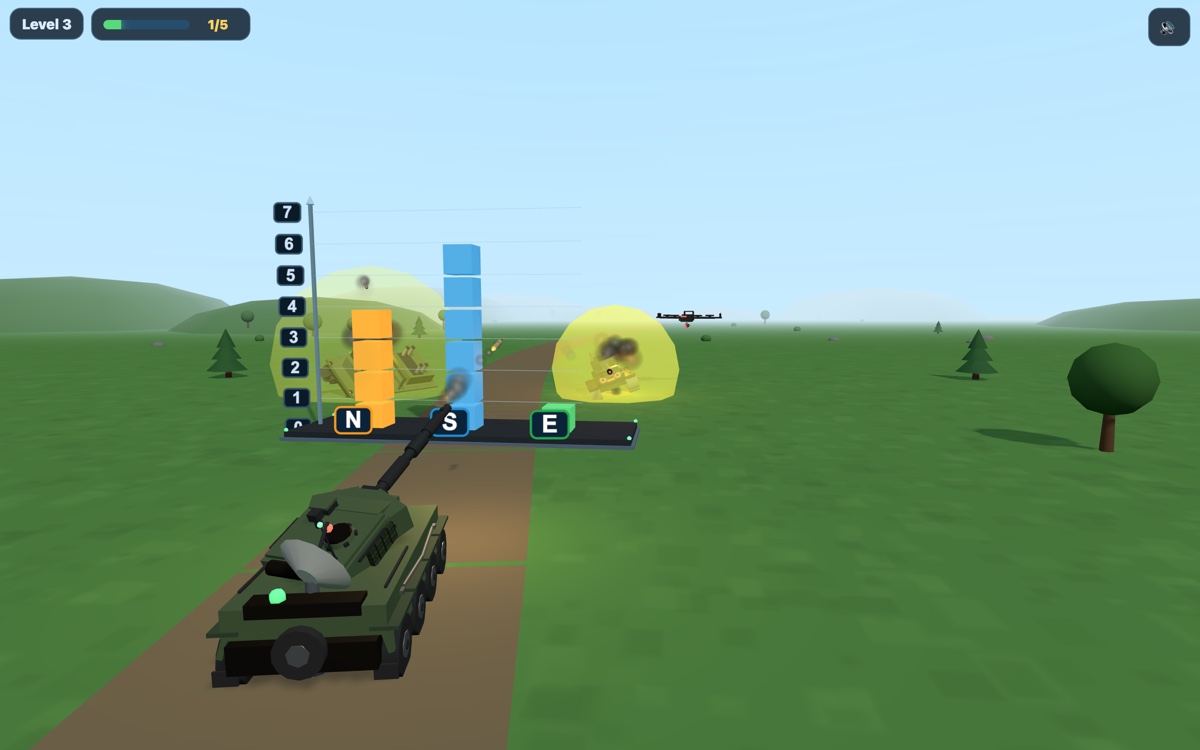 Graphing & Data Games for Kids — Free Last Radar 7+
Graphing games for kids on a radar screen: read charts, tables, bar graphs and …
-
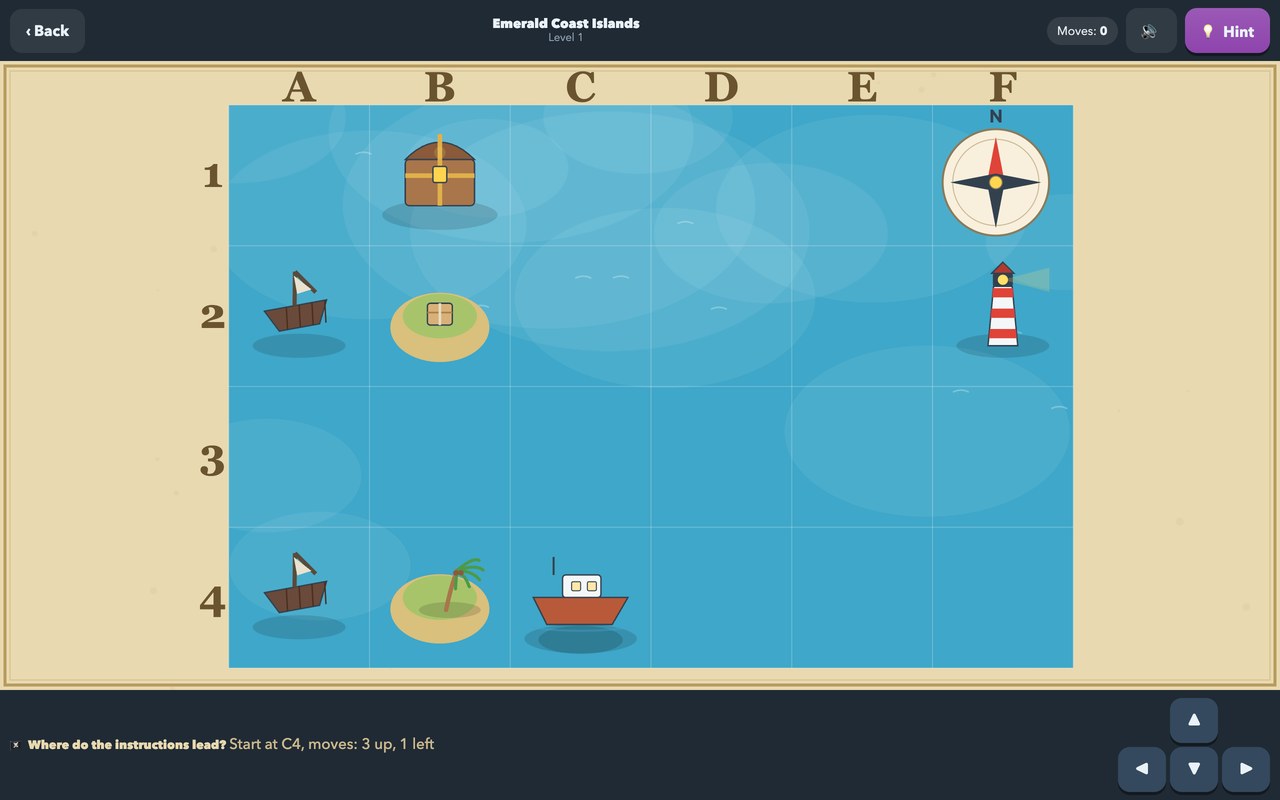 Cardinal Directions — Free Treasure Map Game for Kids 6+
Cardinal directions on a treasure map: north, south, east and west, then grid squares, …
-
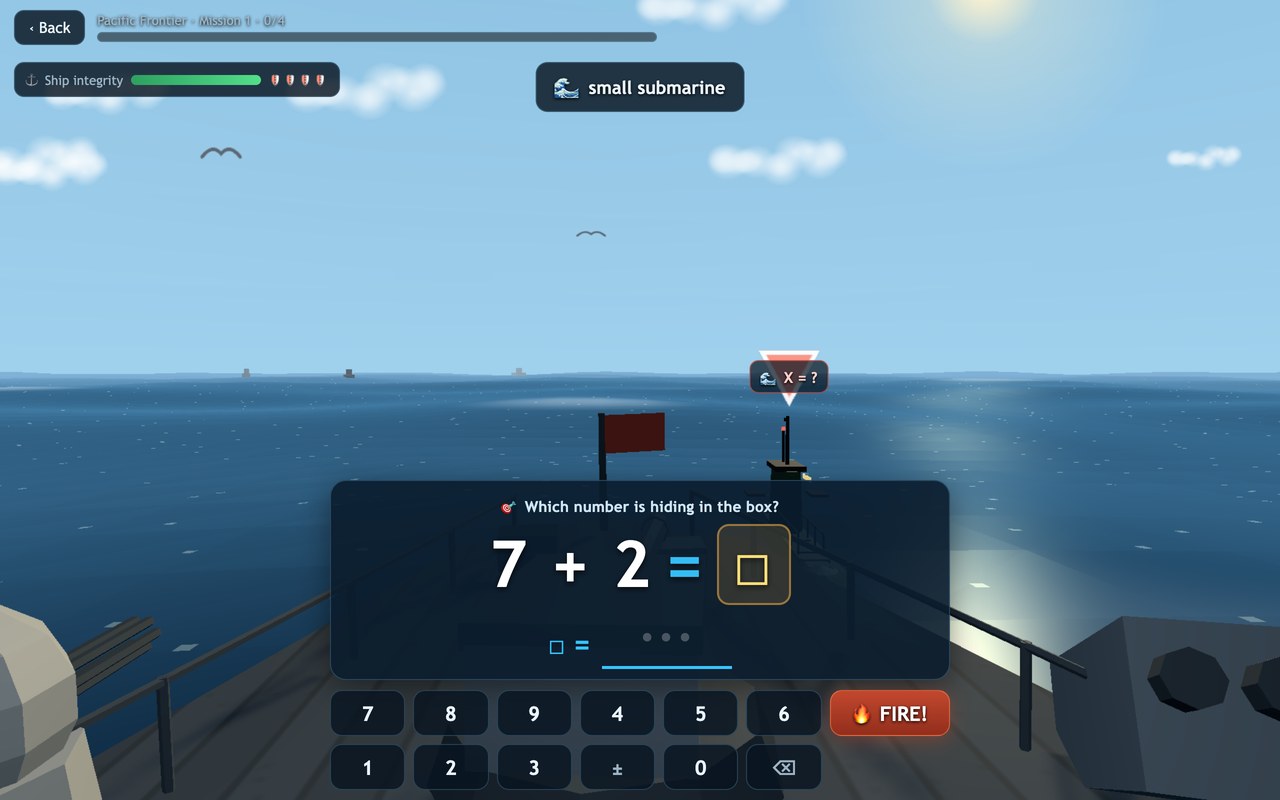 Algebra Games for Kids — Free Sea Battle: Find X 6+
Algebra games where solving is the trigger: work out the hidden enemy's position, type …
-
 Capitals of the World — Free Globe Game for Kids 7+
Capitals of the world on a real 3D globe: it turns to the region, …
An ordered pair is two numbers that give one place: (3, 5). The word that matters is ordered — swap them and you are somewhere else entirely. (3, 5) and (5, 3) are different points, and telling children that early saves a year of quiet errors.
The rule that actually sticks. Along the corridor, then up the stairs. The first number is how far you walk across; the second is how far you climb. Say it out loud every single time until the child says it themselves. "x before y" fails because both letters are abstract; the corridor is not.
The two axes. The x-axis runs across, the y-axis runs up. They cross at the origin, (0, 0). A point on the y-axis has x = 0 — that is worth checking, because "0" feels to a child like "nothing there".
Four quadrants, and why the signs work. Once negative numbers arrive, the plane splits into four regions. Top right is (+, +). Top left is (−, +): you walked backwards but still climbed. Bottom left is (−, −). Bottom right is (+, −). Nothing needs memorising if the child reads each coordinate as a direction rather than a sign.
Where it goes next. Plotting a handful of points and joining them is the first step to a graph, and a graph is how every function, every experiment and every data set will be shown from here on. A child who is confident with (x, y) at nine finds straight-line graphs at twelve almost obvious.
The games here give the coordinate a job — the shot lands where you say it lands. See also function machine games, types of angles, adding integers and games for 5th graders.
The science behind the games
Every Dad4Kids game is built on one simple truth: children want to play, not study — so we turn learning into a game worth replaying. The method draws on peer-reviewed research in game-based learning, motivation, and how memory works.
- Tokac et al. (2019). Effects of game-based learning on students' mathematics achievement: A meta-analysis. Journal of Computer Assisted Learning.
- Alotaibi (2024). Game-based learning in early childhood education: a systematic review and meta-analysis. Frontiers in Psychology.
- Lampropoulos & Sidiropoulos (2024). Impact of gamification on students' learning outcomes and academic performance: a meta-analysis. Education Sciences.
- Taylor & Boyer (2019). Play-based learning: evidence-based research to improve children's learning experiences. Early Childhood Education Journal.
- Gottfried (1990). Academic intrinsic motivation in young elementary school children. Journal of Educational Psychology.
- Yang et al. (2018). Enhancing learning and retrieval of new information: a review of the forward testing effect. npj Science of Learning.
By Evgeny Arsentiev, PhD · Last updated: August 2026