
Eight Queens Puzzle Game for Kids — Play Online 6+
 New from Dad4Kids
Clean YouTube for kids
For families with traditional values, hand-picked by parents.
Open →
The eight queens puzzle game is a classic: place queens on a chessboard so that no two share a row, column or diagonal. Here it grows from a gentle 4×4 up to the full 8×8, with the queen count always matching the board's side.
Between the queen chapters sit knight's-tour chapters: start a knight on a marked square and visit every free square exactly once, moving only in legal knight jumps. 312 levels across nine chapters, each checked by an independent solver so exactly one arrangement — or one tour — is correct.
A placed queen under attack is never rejected: the board lights the attacking rays so the child sees exactly what's wrong and fixes it themselves.
How to play
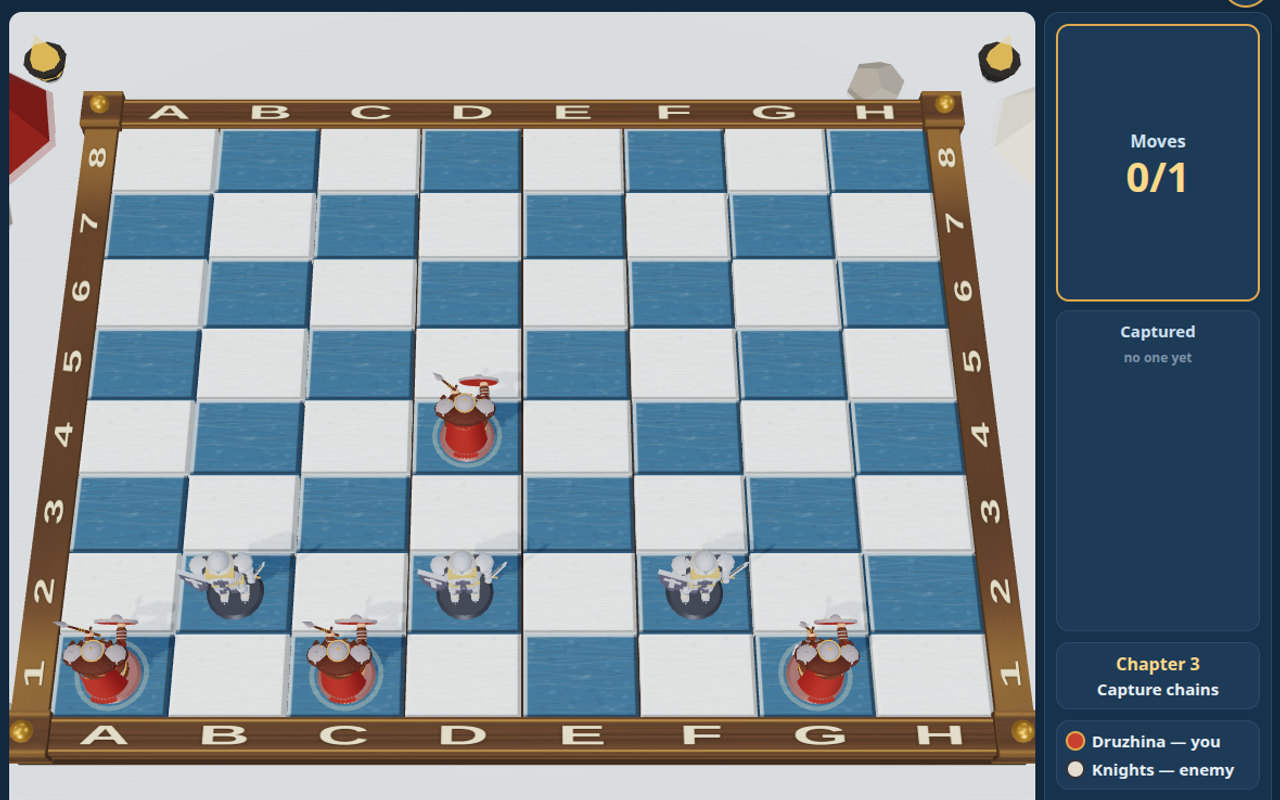
Tap a square to place a queen. If it's attacked, red rings and flat attack rays mark the new queen and everyone it clashes with — the queen stays on the board, nothing is blocked except a physically impossible move (a rock, off the board, the piece limit). Tap an undo to take back the last move.
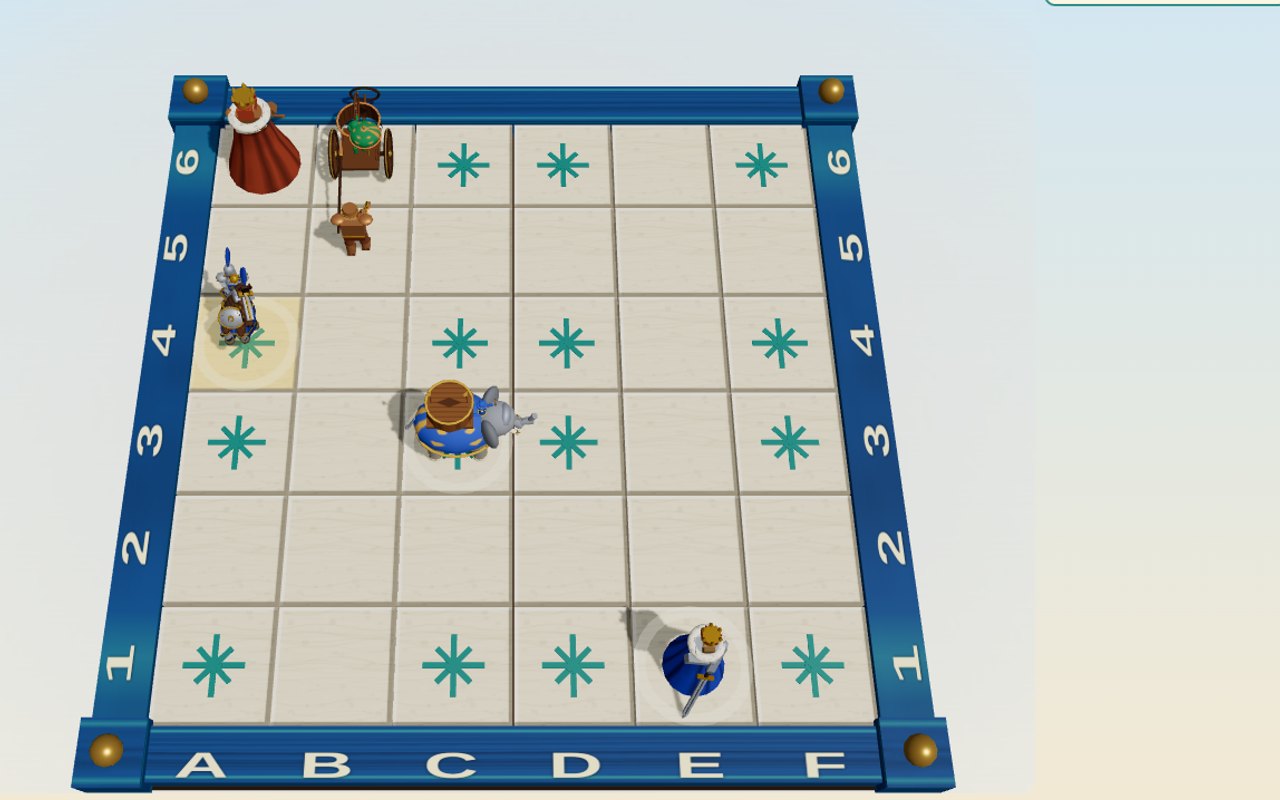
On a knight level, legal jumps glow turquoise and the knight arcs from square to square leaving an amber trail. The very first level of each mode is a voiced lesson right on the live board, shown exactly once: attack rays first, then one glowing square to place on, then the child finishes alone. A hint always gives one square, never the answer.
What your child learns
The queens chapters train checking three lines at once — row, column, diagonal — and backtracking when a locally fine move turns out to block everything else. The knight chapters add graph thinking: which squares are still reachable, and does a move now strand a square no future jump can reach — the same reasoning behind pathfinding and scheduling problems later on.
The science behind the games
Every Dad4Kids game is built on one simple truth: children want to play, not study — so we turn learning into a game worth replaying. The method draws on peer-reviewed research in game-based learning, motivation, and how memory works.
- Prins et al. (2013). “Braingame Brian”: toward an executive function training program with game elements. Games for Health Journal.
- Tokac et al. (2019). Effects of game-based learning on students' mathematics achievement: A meta-analysis. Journal of Computer Assisted Learning.
- Alotaibi (2024). Game-based learning in early childhood education: a systematic review and meta-analysis. Frontiers in Psychology.
- Lampropoulos & Sidiropoulos (2024). Impact of gamification on students' learning outcomes and academic performance: a meta-analysis. Education Sciences.
- Taylor & Boyer (2019). Play-based learning: evidence-based research to improve children's learning experiences. Early Childhood Education Journal.
- Gottfried (1990). Academic intrinsic motivation in young elementary school children. Journal of Educational Psychology.
FAQ
What is the eight queens puzzle?
A classic puzzle: place queens on a chessboard so no two attack each other along any row, column or diagonal. This game starts smaller, at 4×4, and grows step by step to the full 8×8.
Does the game show the answer?
No. A queen under attack stays on the board with the attacking rays highlighted, and a knight jump that would trap the tour is marked as a dead end — the child always works out the fix themselves.
What age is this for?
The 4×4 queens chapter and the first knight chapter carry a voiced lesson and suit six-year-olds; the 7×7 and 8×8 chapters, with fewer starting clues and more rocks, are a real challenge from 9–11.
Is every level solvable?
Yes — all 312 levels are checked by an independent solver: each queens board has exactly one arrangement and each knight board exactly one complete tour.
More free games for kids
By Evgeny Arsentiev, PhD · Last updated: September 2026