
Rocket Games: Build and Launch Real Rockets 7+
 New from Dad4Kids
Clean YouTube for kids
For families with traditional values, hand-picked by parents.
Open →
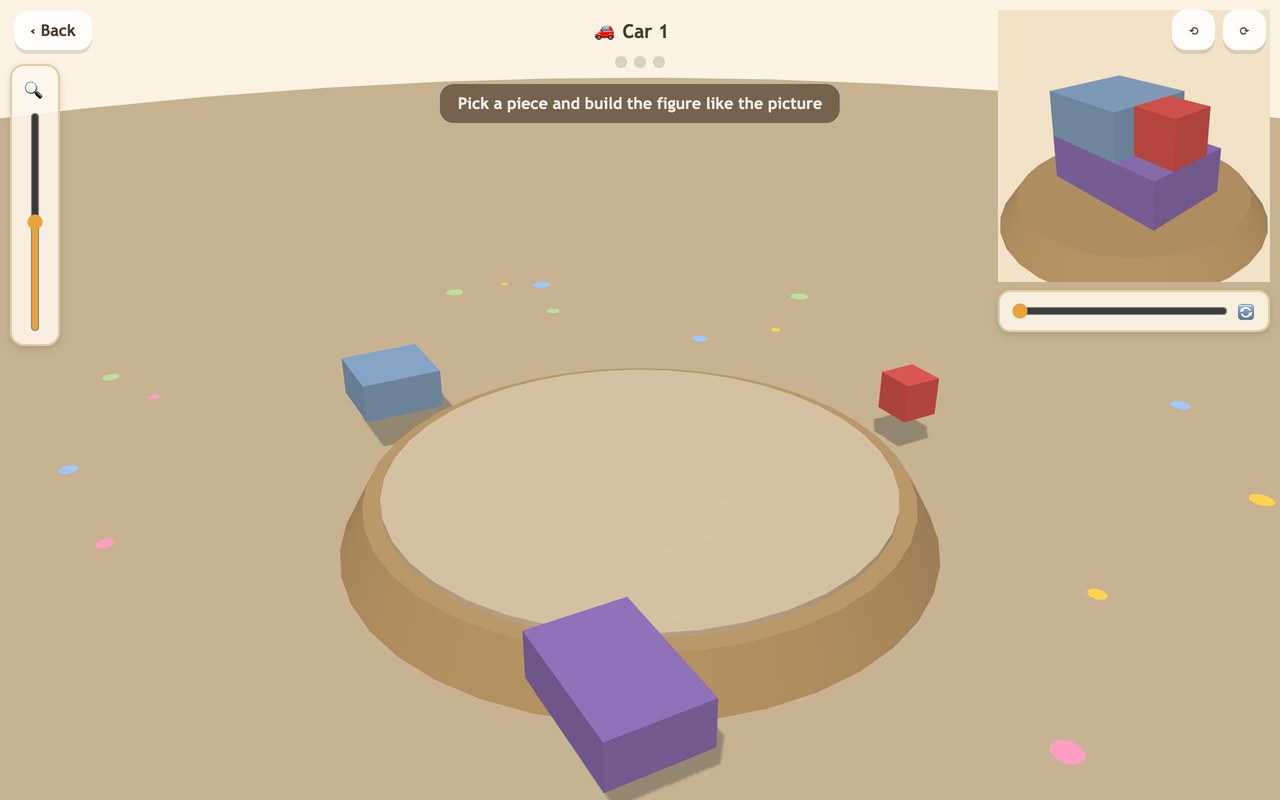
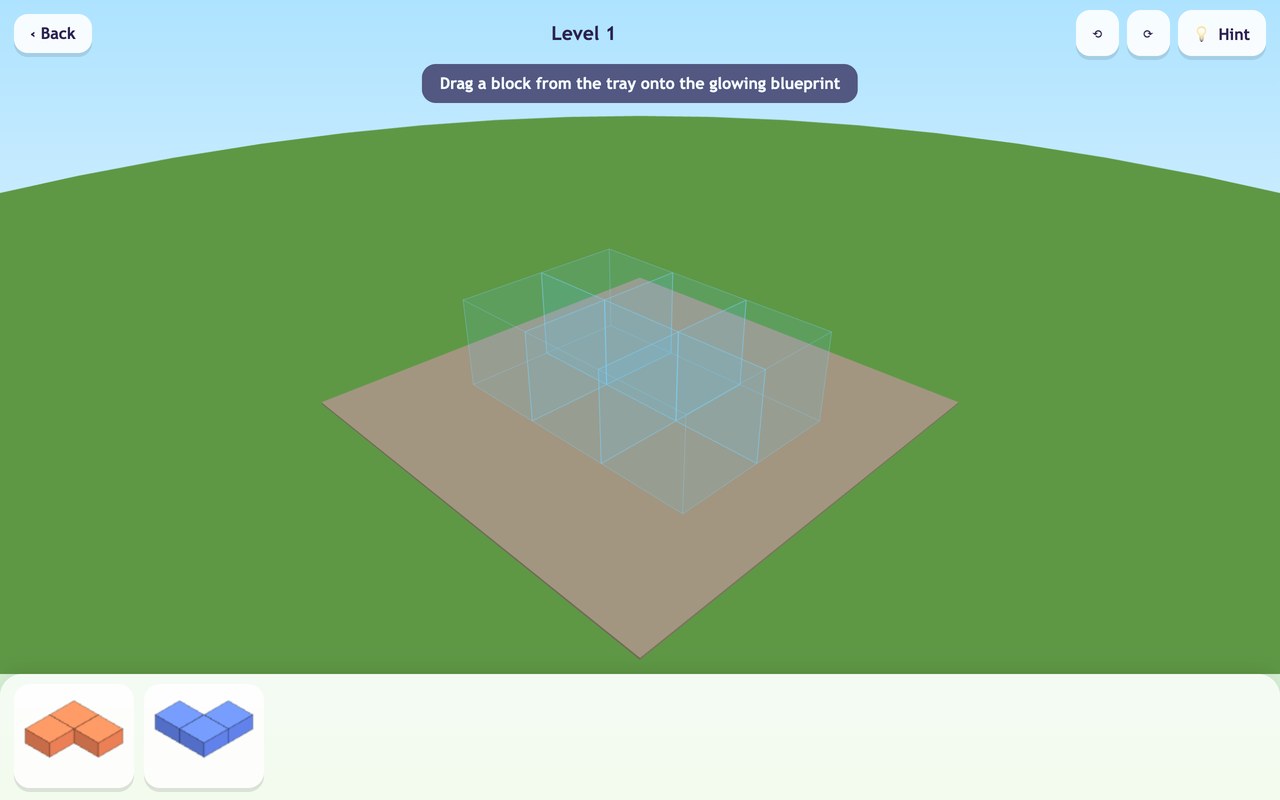
Rocket Lab is one of those rocket games that is really about real machines: 24 rockets you can recognize by silhouette — the V-2, Korolev’s R-7, Saturn V, the Space Shuttle, Energia–Buran, Falcon 9 and Starship. A see-through model of the rocket stands on the pad; the child looks at it and builds the real rocket piece by piece — boosters, stages, fins, nose cone — in any order, just like a tangram in 3D.
Then comes the launch, and it is beautiful for real: smoke at the pad, liftoff, the sky fading from blue to black, true-scale atmosphere layers on the altitude bar and the round Earth below. While the rocket flies, a short story plays about what this machine did for space history — Sputnik, Gagarin, Apollo 11, reusable boosters. 120 launches across six eras of spaceflight.
How to play
Pick a launch — there are 120, era by era: the first rockets, humans in space, to the Moon, winged space, the whole world flies, the new era. Look at the see-through model on the left, take any piece and set it where it belongs — a green ring shows the fit. Build every piece, press LAUNCH and ride the altitude bar past the troposphere, stratosphere and mesosphere — up to the Kármán line at 100 km, where space begins.
What your child learns
How rockets work: stages, boosters, fairings and engines and why rockets drop parts as they climb. Spatial skills: matching shapes and sizes against a model — 3D tangram thinking. Plus the real layers of the atmosphere at true altitudes and the history of spaceflight from Sputnik to Starship.
The science behind the games
Every Dad4Kids game is built on one simple truth: children want to play, not study — so we turn learning into a game worth replaying. The method draws on peer-reviewed research in game-based learning, motivation, and how memory works.
- Tokac et al. (2019). Effects of game-based learning on students' mathematics achievement: A meta-analysis. Journal of Computer Assisted Learning.
- Alotaibi (2024). Game-based learning in early childhood education: a systematic review and meta-analysis. Frontiers in Psychology.
- Lampropoulos & Sidiropoulos (2024). Impact of gamification on students' learning outcomes and academic performance: a meta-analysis. Education Sciences.
- Taylor & Boyer (2019). Play-based learning: evidence-based research to improve children's learning experiences. Early Childhood Education Journal.
- Gottfried (1990). Academic intrinsic motivation in young elementary school children. Journal of Educational Psychology.
- Yang et al. (2018). Enhancing learning and retrieval of new information: a review of the forward testing effect. npj Science of Learning.
FAQ
Are the rockets real?
Yes — all 24 are real machines with honest proportions: the V-2 is 14 meters tall, the Saturn V is 110, Starship is 121. The missions are historic too: Laika, Gagarin, Apollo 11, Buran, Falcon Heavy.
How do rockets work?
A rocket pushes gas down and the gas pushes the rocket up. Most of a rocket is fuel tanks — that is why rockets fly in stages: when a stage burns out, it drops off, and the rocket gets lighter and faster. In the game you build those stages with your own hands.
What are the stages of a rocket?
The first stage is the biggest — it lifts the rocket off the pad. Upper stages fire next, one by one, until only the payload is left flying to orbit. Boosters on the sides help at liftoff and drop away first.
Is it free?
Yes — free, no ads, right in the browser. Best on a tablet or a computer.
More free games for kids
By Evgeny Arsentiev, PhD · Last updated: September 2026