
Shatranj Online — Play the Ancient Persian Chess 6+
 New from Dad4Kids
Clean YouTube for kids
For families with traditional values, hand-picked by parents.
Open →
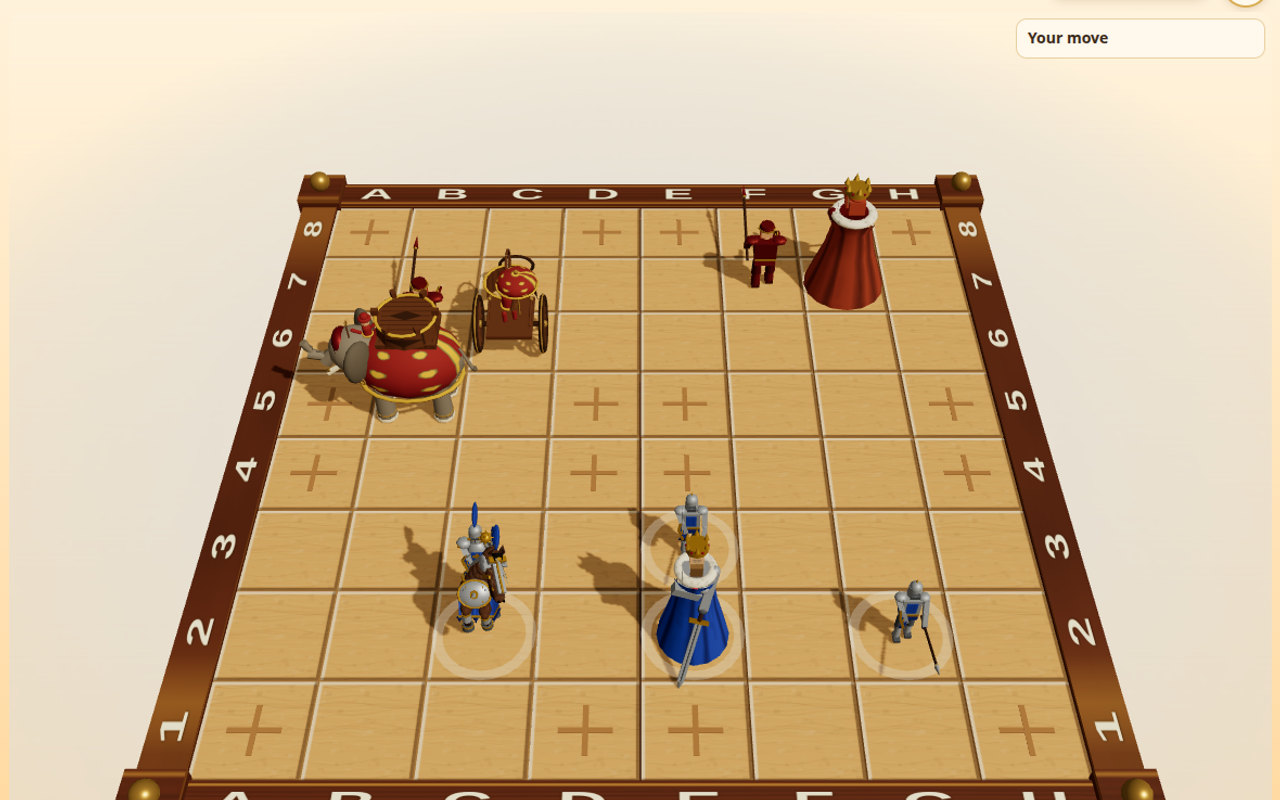
Shatranj is a game you play right here, free in the browser — this is not another article about Persian chess history. It is the medieval game modern chess grew out of, and it is a far kinder teacher: the vizier steps one square, the alfil jumps over heads, the pawn has no double first move, so a six-year-old can hold the whole board in their head from the very first minute.
Eighty puzzles are built as a ladder: a tiny 4×4 board where a single piece hunts the guards, then the knight and the jumping alfil on 6×6, then the full board with its three Persian ways to win, and at the end the real mansubas — mate in two, paid for with a sacrificed rook.
How to play
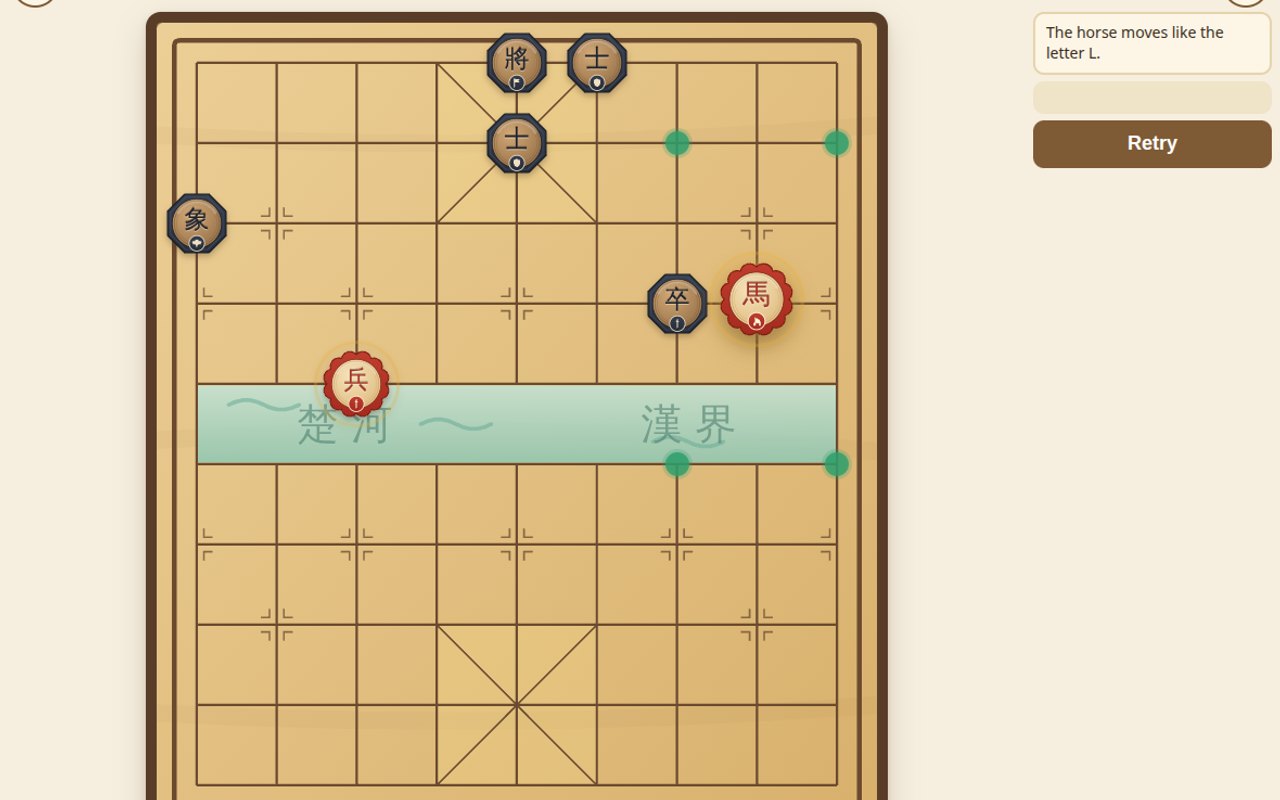
- Tap a piece — the board lights up every square it may go to.
- Take the guards or deliver mate: every puzzle has exactly one right plan, proved by the solver.
- Step wrong and the piece just shakes its head and names the rule out loud — no crosses, no buzzer, nothing lost.
What your child learns
- The moves of six Persian pieces: shah, vizier, rook, knight, alfil, pawn.
- Thinking a move ahead — and then two: mate in one, then mate in two.
- Seeing danger: a square that is guarded is a square you do not step on.
- Order matters — the same captures in the wrong order lead nowhere.
- Three ways to win a Persian game: mate, stalemate, and baring the king.
The science behind the games
Every Dad4Kids game is built on one simple truth: children want to play, not study — so we turn learning into a game worth replaying. The method draws on peer-reviewed research in game-based learning, motivation, and how memory works.
- Prins et al. (2013). “Braingame Brian”: toward an executive function training program with game elements. Games for Health Journal.
- Tokac et al. (2019). Effects of game-based learning on students' mathematics achievement: A meta-analysis. Journal of Computer Assisted Learning.
- Alotaibi (2024). Game-based learning in early childhood education: a systematic review and meta-analysis. Frontiers in Psychology.
- Lampropoulos & Sidiropoulos (2024). Impact of gamification on students' learning outcomes and academic performance: a meta-analysis. Education Sciences.
- Taylor & Boyer (2019). Play-based learning: evidence-based research to improve children's learning experiences. Early Childhood Education Journal.
- Gottfried (1990). Academic intrinsic motivation in young elementary school children. Journal of Educational Psychology.
FAQ
Can I actually play shatranj here, or is this a history page?
How is shatranj different from chess?
Does my child need to know chess first?
Can a puzzle be solved by tapping at random?
What happens when a child makes a wrong move?
More free games for kids
By Evgeny Arsentiev, PhD · Last updated: September 2026