
Reading a Clock: Hands, Fives and the Half Past Problem
Games
-
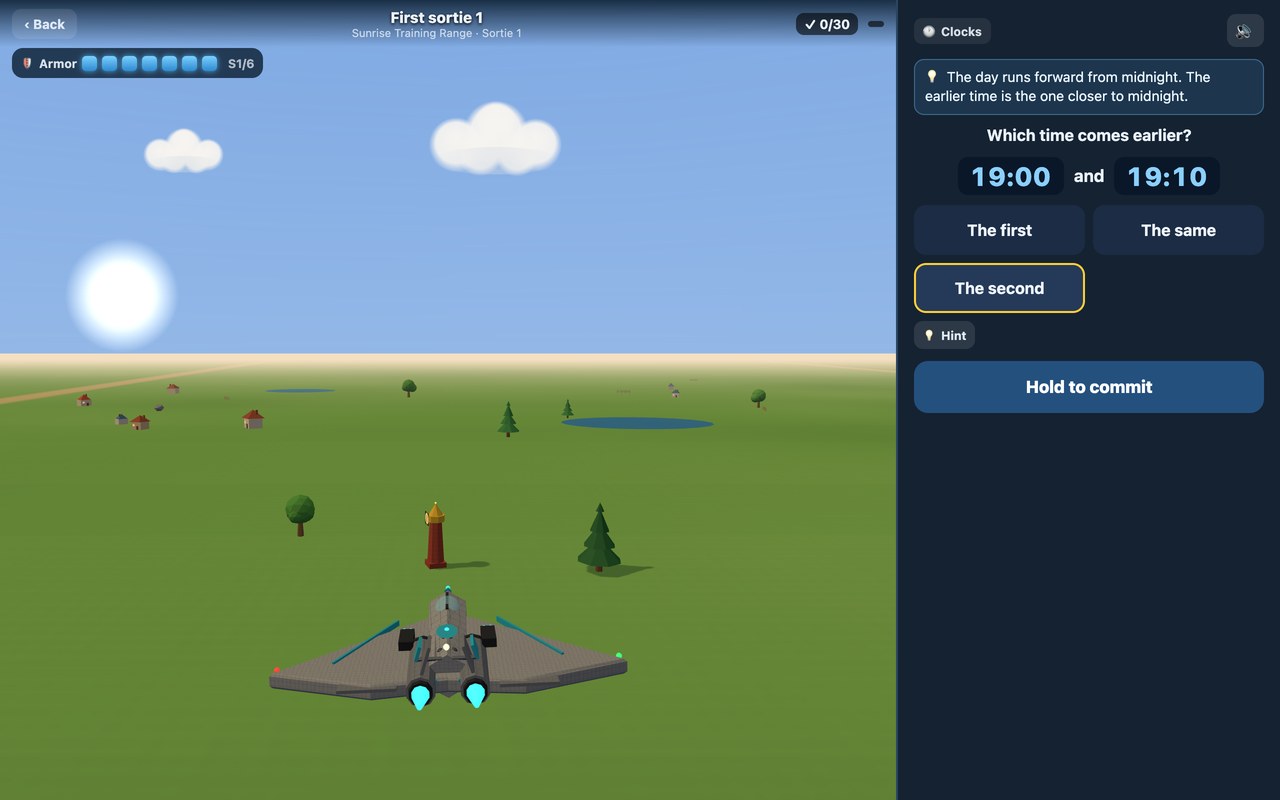 Telling Time — Free Chrono Wing Game for Kids 7+
Telling time from the clock face on: count the minutes, measure how long something …
-
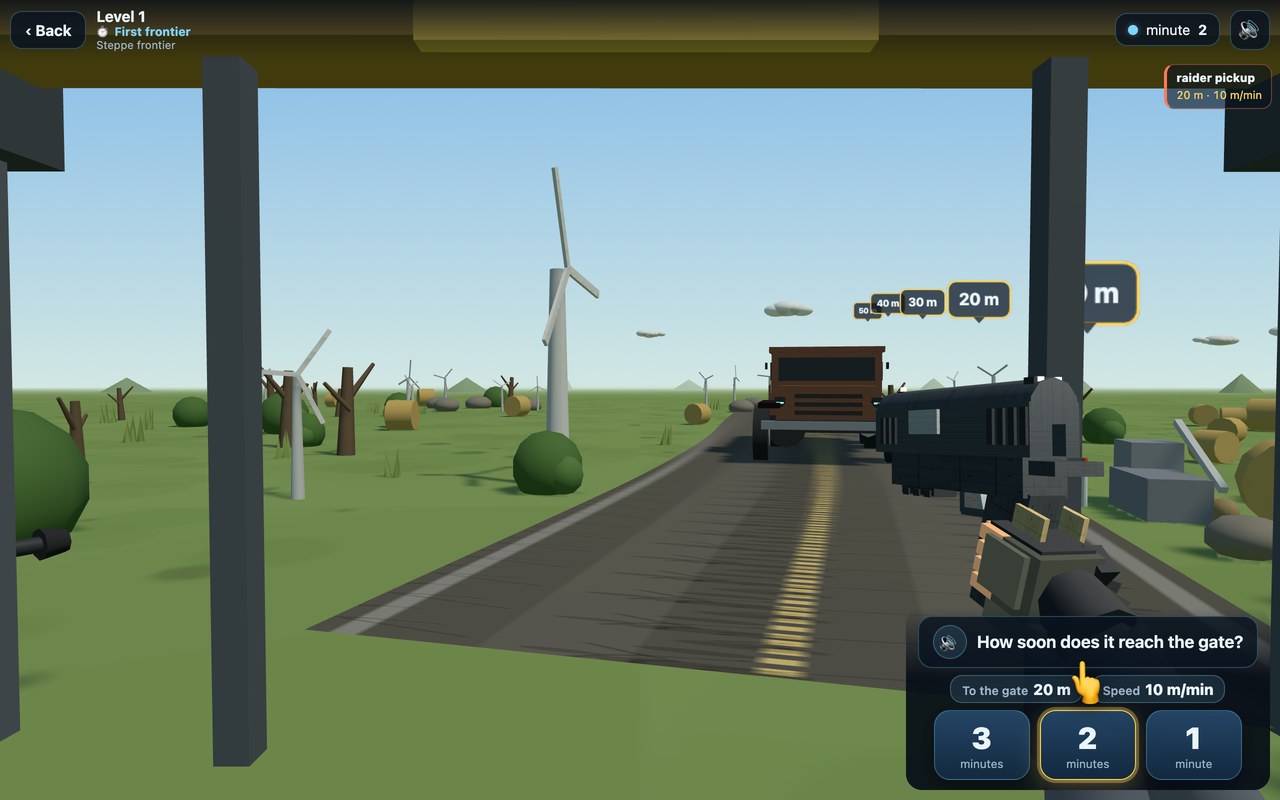 Speed, Time and Distance Game — Free Base Commander 7+
Speed distance time word problems as a defense mission: track a moving target, predict …
-
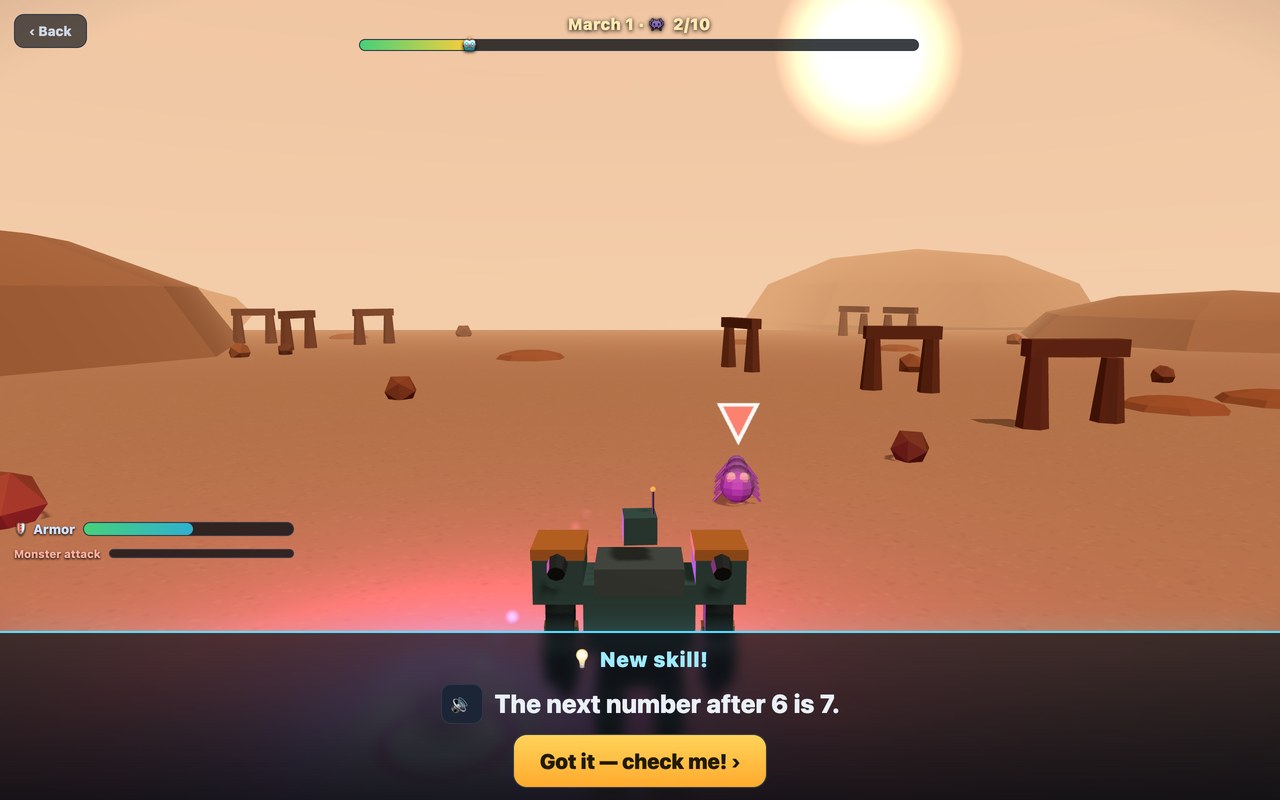 Math Facts Games — Free Star Mech Fluency Drill 7+
Math facts games with a real mastery rule: five right in a row retires …
-
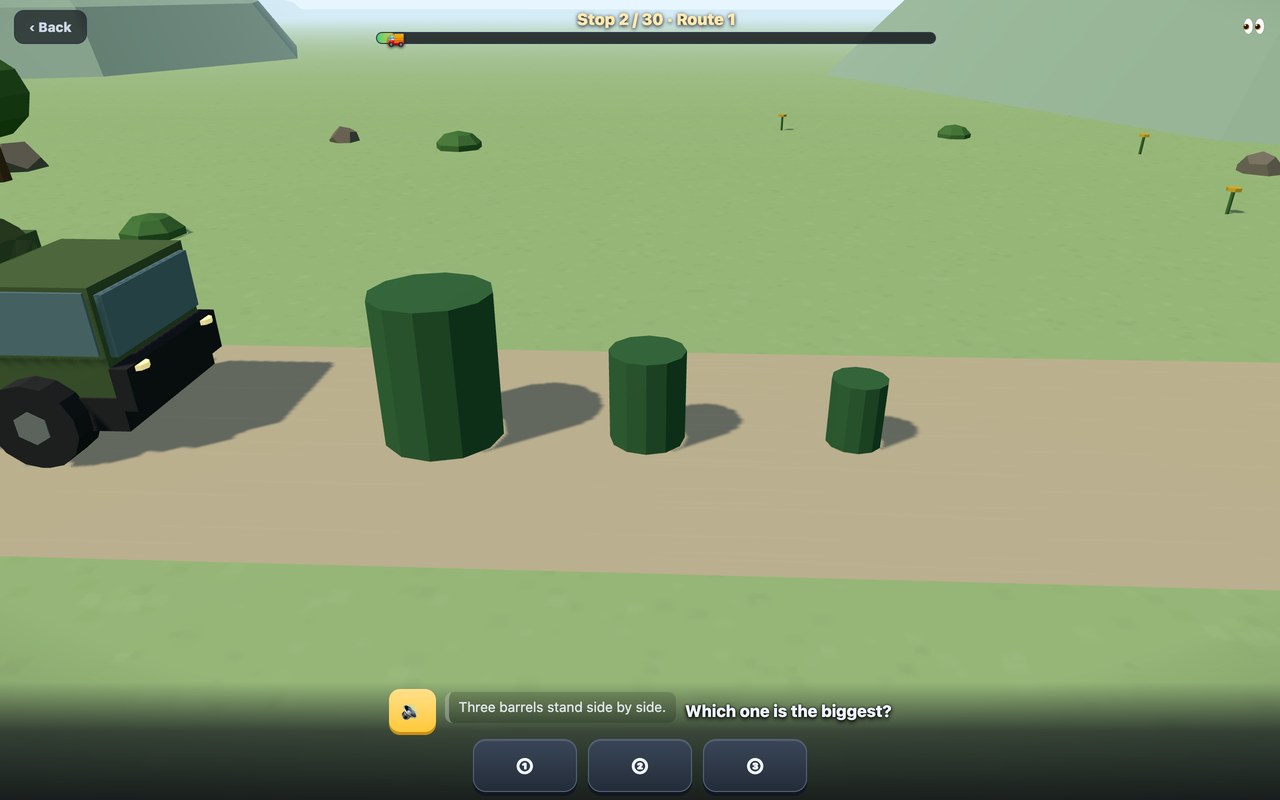 Measuring Length — Free Supply Command Game for Kids 6+
Measuring length on a ruler and a tape measure, then converting cm to m, …
An analog clock is the strangest measuring device a child ever meets: two hands of different lengths, moving at different speeds, over a scale of twelve numbers that must sometimes be read as sixty. It is genuinely hard, and children are not slow for finding it so.
Take the hands one at a time. Start with the hour hand alone. Cover the minute hand and ask only "which number has it passed?" A child who can say "it's a bit after 3" already knows most of what telling time is for. Add the minute hand only when the hour hand is automatic.
The minute hand needs fives, not numbers. The 4 does not mean four minutes, it means twenty. This is the single biggest source of error, and it is a skip-counting problem in disguise. If your child cannot count 5, 10, 15, 20 … 60 fluently around a circle, fix that first — the clock will follow.
Then the language. Half past, quarter past, quarter to. "Quarter to seven" is worse than it looks: the hour hand is near the 7 but the hour we say is six-forty-five. Say both forms every time — "6:45, quarter to seven" — until they are one thing.
Elapsed time is the last step and the one schools test hardest: "the film starts at 2:40 and lasts 55 minutes". Do it by jumping to the next hour first — 20 minutes to 3:00, then 35 more, so 3:35. Never by subtracting in columns; 60 is not 100 and column subtraction lies.
Am and pm take five minutes to explain and a month to become automatic. Tie them to the child's own day: school is am, dinner is pm.
See also 2nd grade math games, counting coins, customary units and games for 7 year olds.
The science behind the games
Every Dad4Kids game is built on one simple truth: children want to play, not study — so we turn learning into a game worth replaying. The method draws on peer-reviewed research in game-based learning, motivation, and how memory works.
- Tokac et al. (2019). Effects of game-based learning on students' mathematics achievement: A meta-analysis. Journal of Computer Assisted Learning.
- Alotaibi (2024). Game-based learning in early childhood education: a systematic review and meta-analysis. Frontiers in Psychology.
- Lampropoulos & Sidiropoulos (2024). Impact of gamification on students' learning outcomes and academic performance: a meta-analysis. Education Sciences.
- Taylor & Boyer (2019). Play-based learning: evidence-based research to improve children's learning experiences. Early Childhood Education Journal.
- Gottfried (1990). Academic intrinsic motivation in young elementary school children. Journal of Educational Psychology.
- Yang et al. (2018). Enhancing learning and retrieval of new information: a review of the forward testing effect. npj Science of Learning.
By Evgeny Arsentiev, PhD · Last updated: August 2026