
Function Machine: The Easiest Way Into Algebra
Games
-
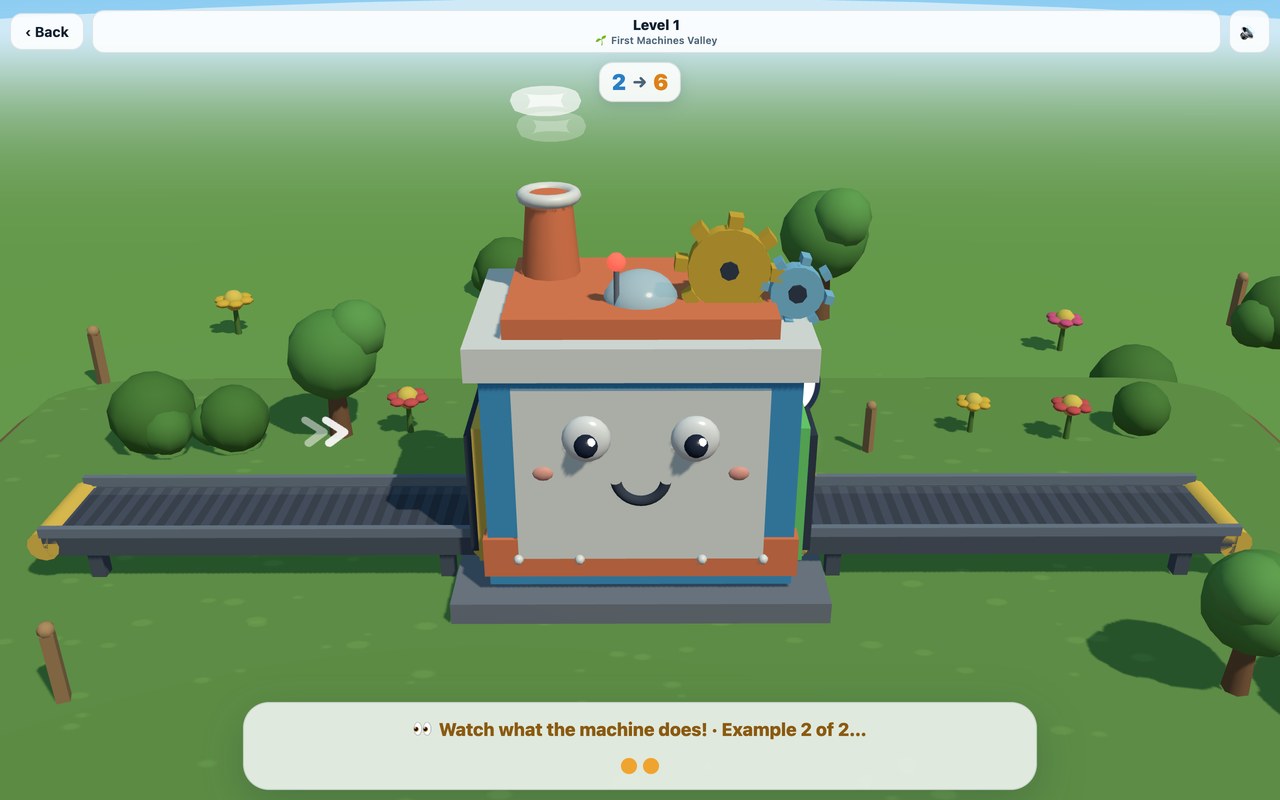 Function Machine Game — Free Function Forge Academy 7+
Function tables made visible: drop an input into the machine, watch the output, fill …
-
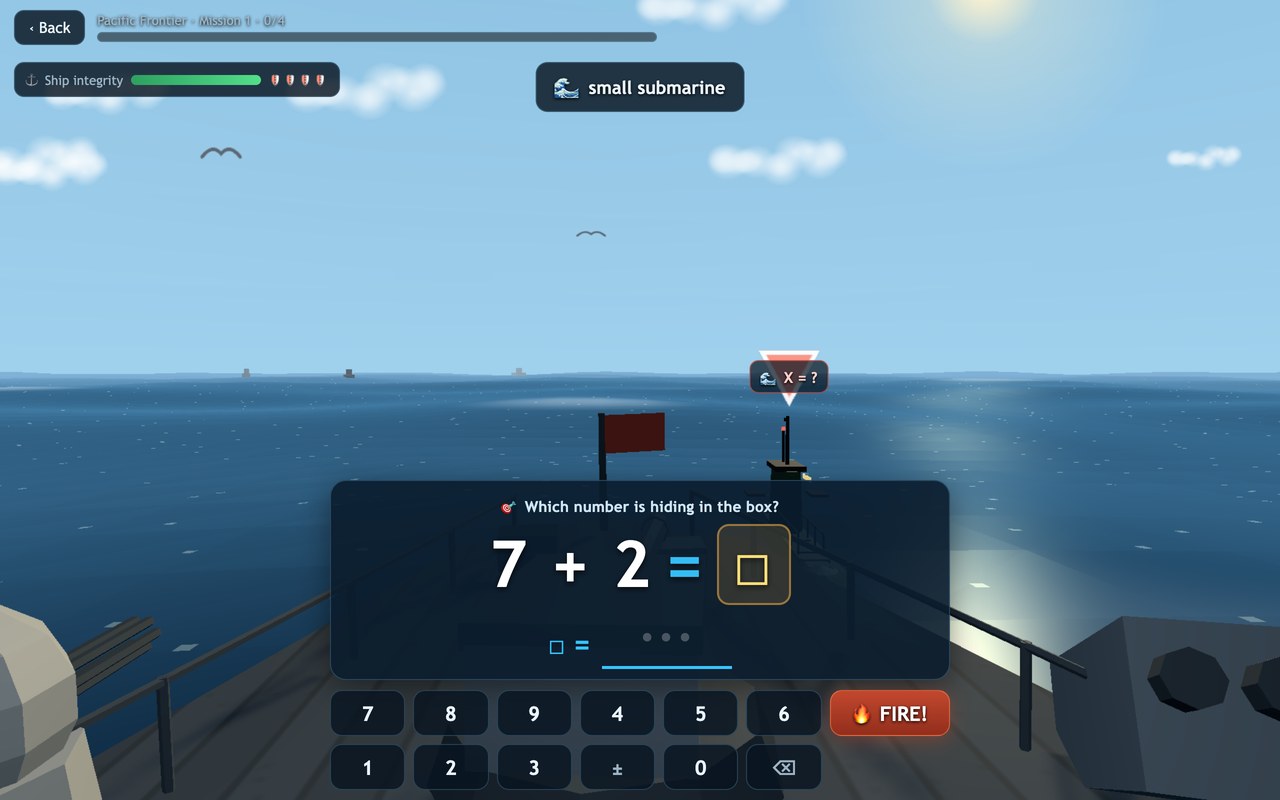 Algebra Games for Kids — Free Sea Battle: Find X 6+
Algebra games where solving is the trigger: work out the hidden enemy's position, type …
-
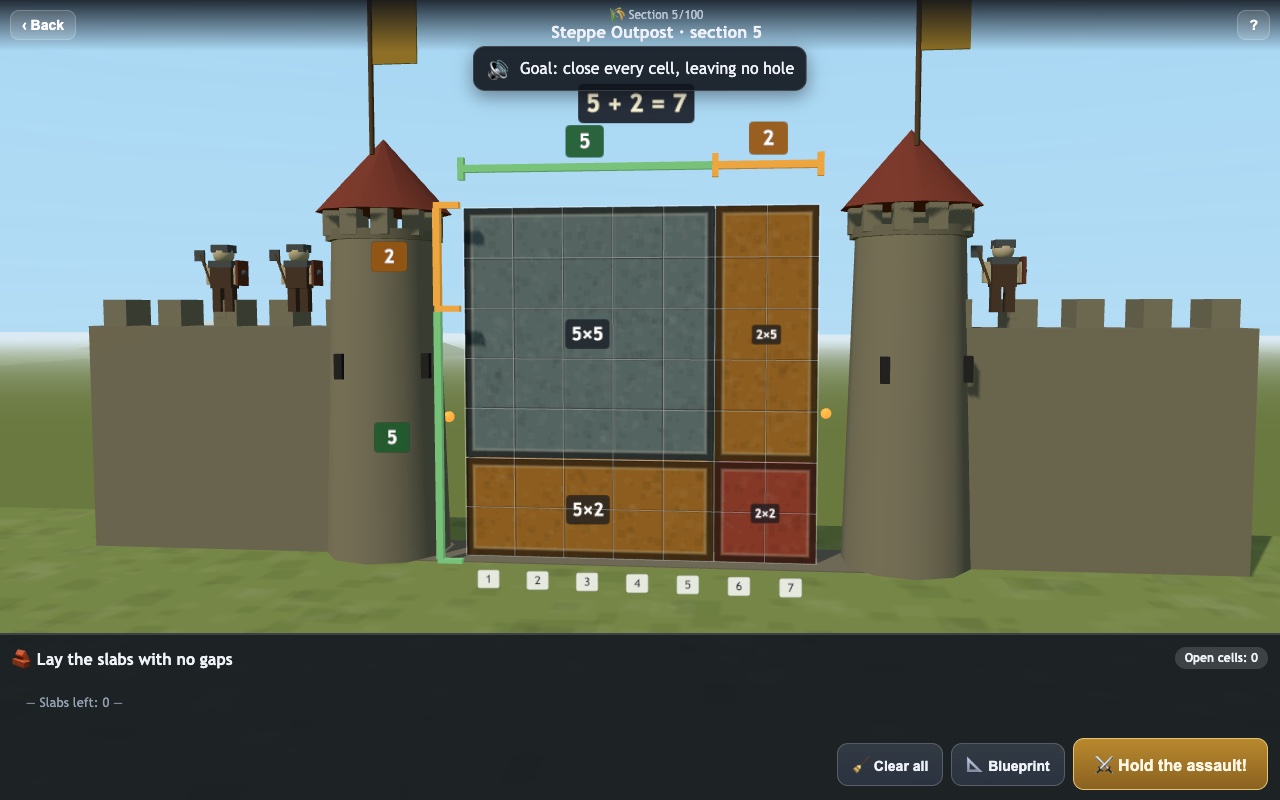 Difference of Squares and the Perfect Square Formula — Explained 7+
Difference of squares a² − b² = (a − b)(a + b) shown with …
-
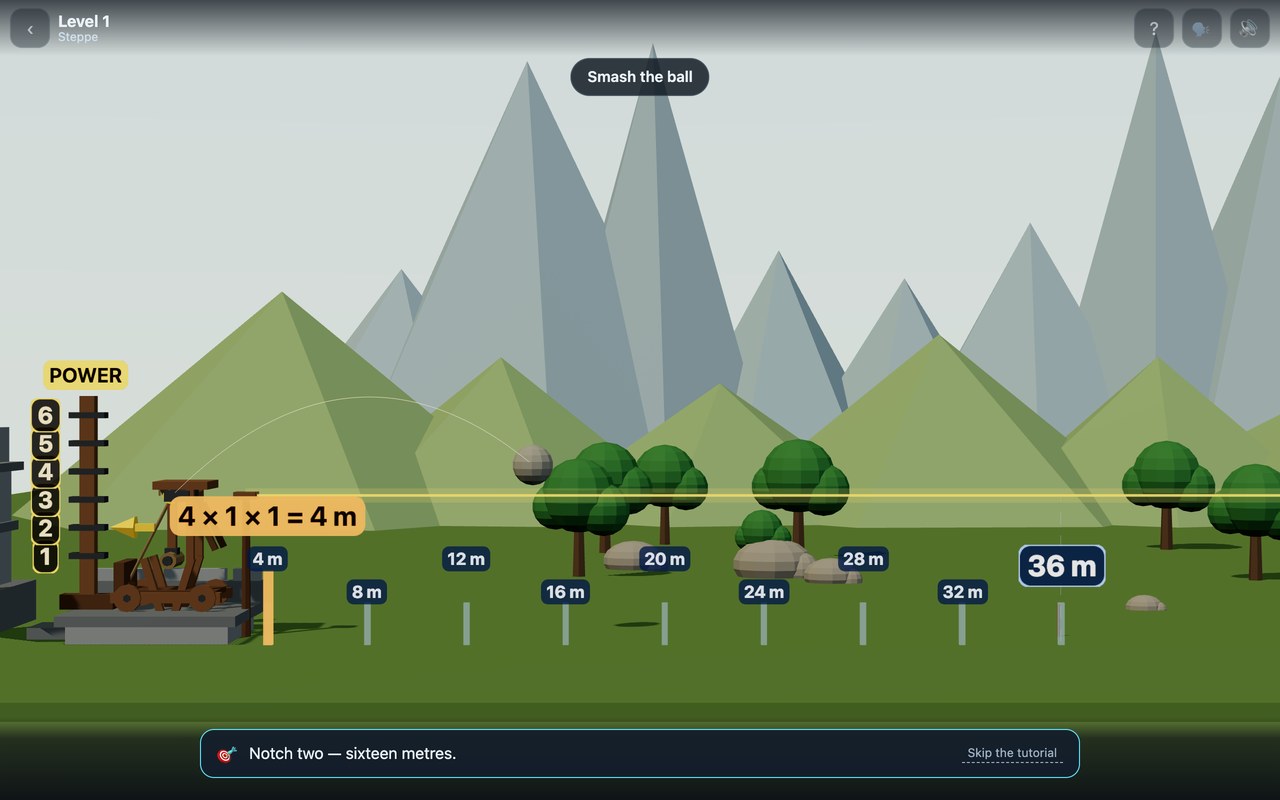 Parabola and Quadratic Equations — Explained, With a Free Game 7+
A parabola is the path of a thrown stone. Vertex, roots, the discriminant and …
-
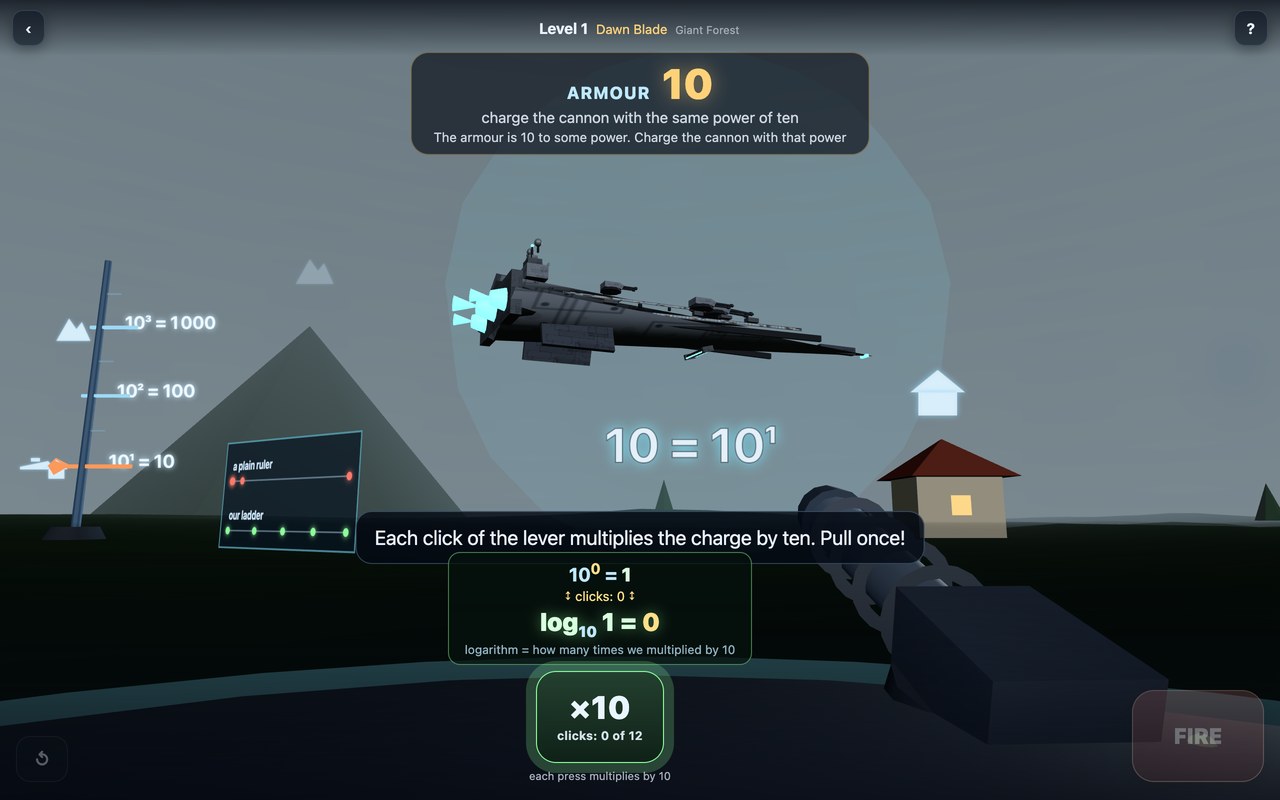 Properties of Logarithms — Explained, With a Free Practice Game 7+
Properties of logarithms in plain English: a logarithm counts how many times you multiplied. …
-
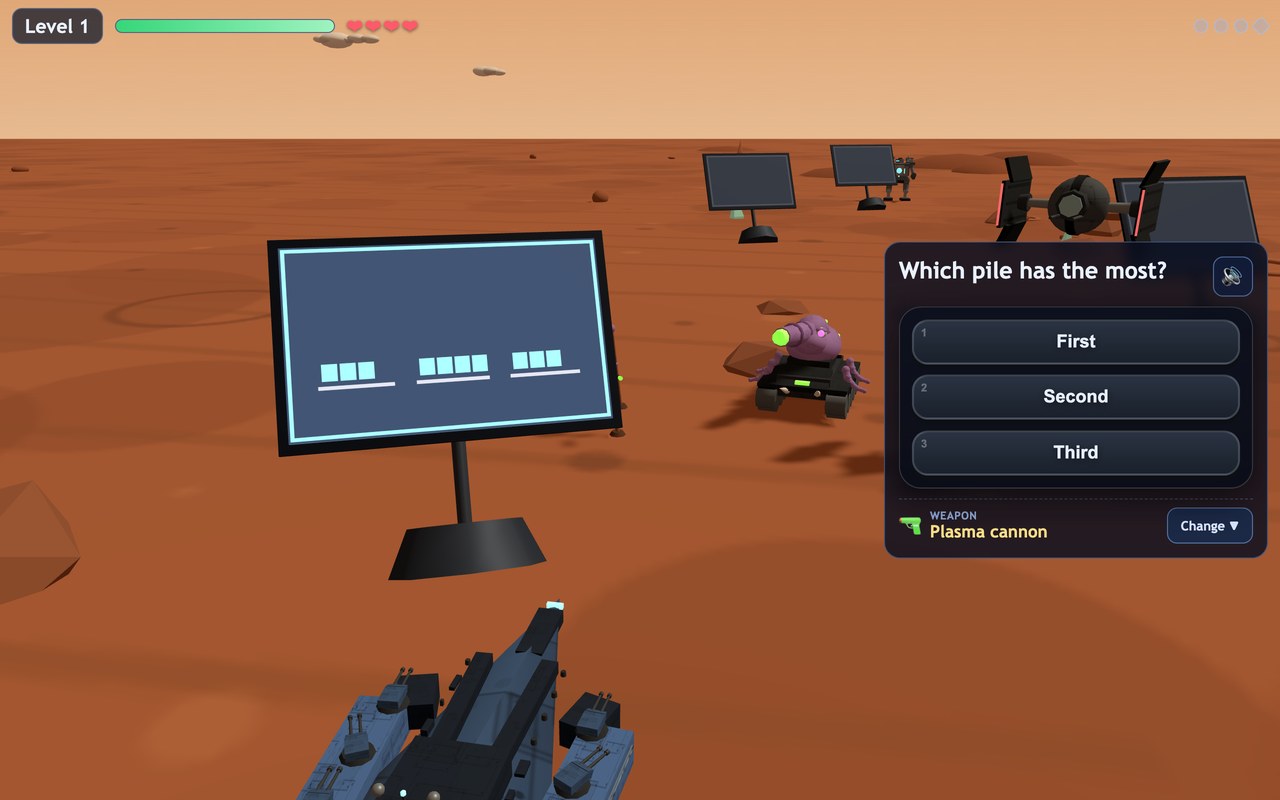 Proof Math Game for Kids — Free Proof Architects 7+
Proof Architects: a proof math game where kids prove answers, not guess them. 10 …
A function machine is a box. You drop a number in, something happens inside, a number comes out. Put in 3, get 7. Put in 5, get 11. Put in 10, get 21. What is the machine doing?
(Doubling, then adding one. Most children get it on the third pair, and they get it by reasoning, which is the entire point.)
Why this is the right door into algebra. Written the usual way, y = 2x + 1 looks like a code to be decrypted. As a machine it is a rule to be guessed — and guessing rules is something children do for fun. The letters can be introduced weeks later, once the idea is already comfortable, and by then x is obviously "the number that goes in".
Then run the machine backwards. Out came 15 — what went in? Now the child is solving an equation: 2x + 1 = 15. They undo the last thing first (subtract 1), then the first thing (halve). That is inverse operations, learned without the word.
The balance picture goes next to it. An equation is a pair of scales. Whatever you do to one side you must do to the other, or it tips. Children who hold both pictures — machine and balance — do not develop the classic habit of "moving the number across and changing the sign", which works right up until it doesn't.
What comes after. Tables of in/out values become points on a grid, points become a straight line, and the rule becomes its equation. Curved rules — squares and parabolas — follow the same logic with the same machine.
Related: ordered pairs, adding integers, ratios and proportions and games for 5th graders.
The science behind the games
Every Dad4Kids game is built on one simple truth: children want to play, not study — so we turn learning into a game worth replaying. The method draws on peer-reviewed research in game-based learning, motivation, and how memory works.
- Tokac et al. (2019). Effects of game-based learning on students' mathematics achievement: A meta-analysis. Journal of Computer Assisted Learning.
- Alotaibi (2024). Game-based learning in early childhood education: a systematic review and meta-analysis. Frontiers in Psychology.
- Lampropoulos & Sidiropoulos (2024). Impact of gamification on students' learning outcomes and academic performance: a meta-analysis. Education Sciences.
- Taylor & Boyer (2019). Play-based learning: evidence-based research to improve children's learning experiences. Early Childhood Education Journal.
- Gottfried (1990). Academic intrinsic motivation in young elementary school children. Journal of Educational Psychology.
- Yang et al. (2018). Enhancing learning and retrieval of new information: a review of the forward testing effect. npj Science of Learning.
By Evgeny Arsentiev, PhD · Last updated: August 2026