
Ratios and Proportions: Comparing by Division, Not Difference
Games
-
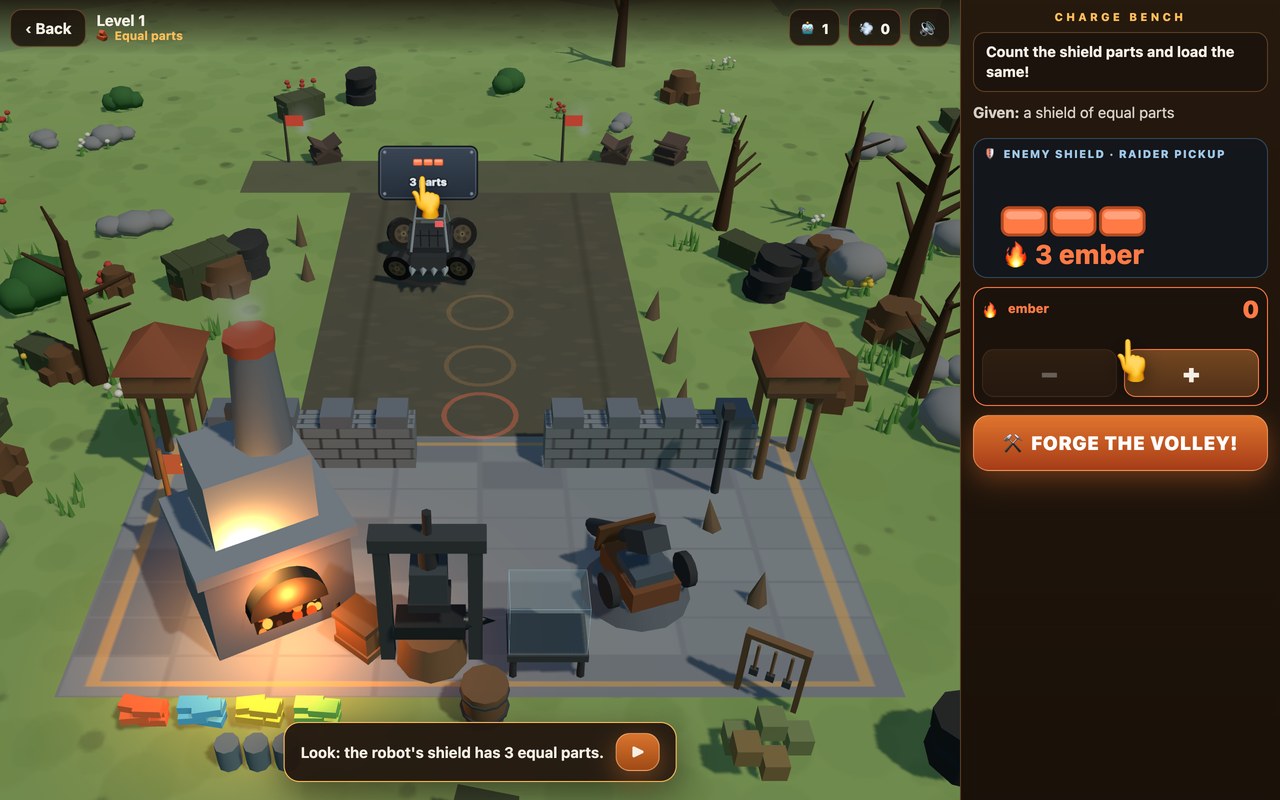 Ratio & Proportion Games for Kids — Free Ratio Forge 9+
Ratio games for kids where the math is the weapon: use ratios, unit rates …
-
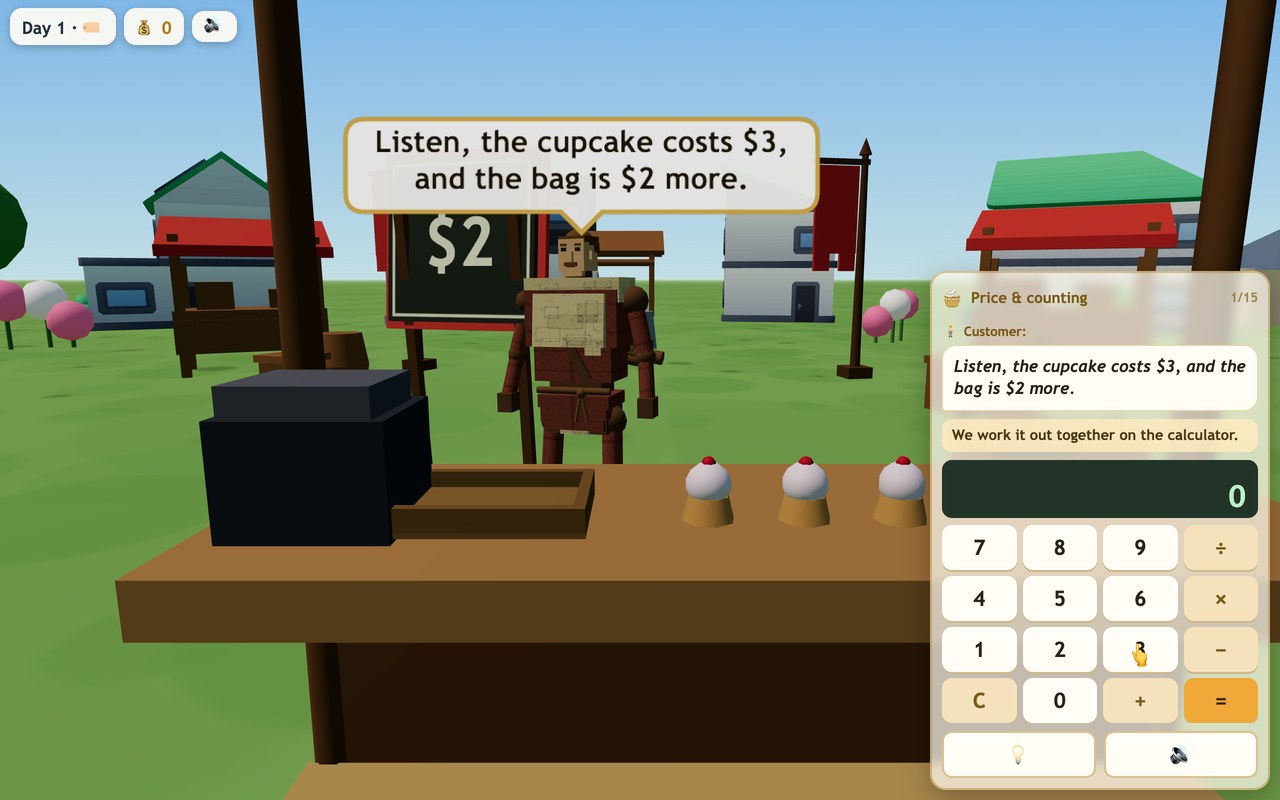 Business Game for Kids — Free Venture City 7+
Business games for kids built on real money math: use the built-in calculator to …
-
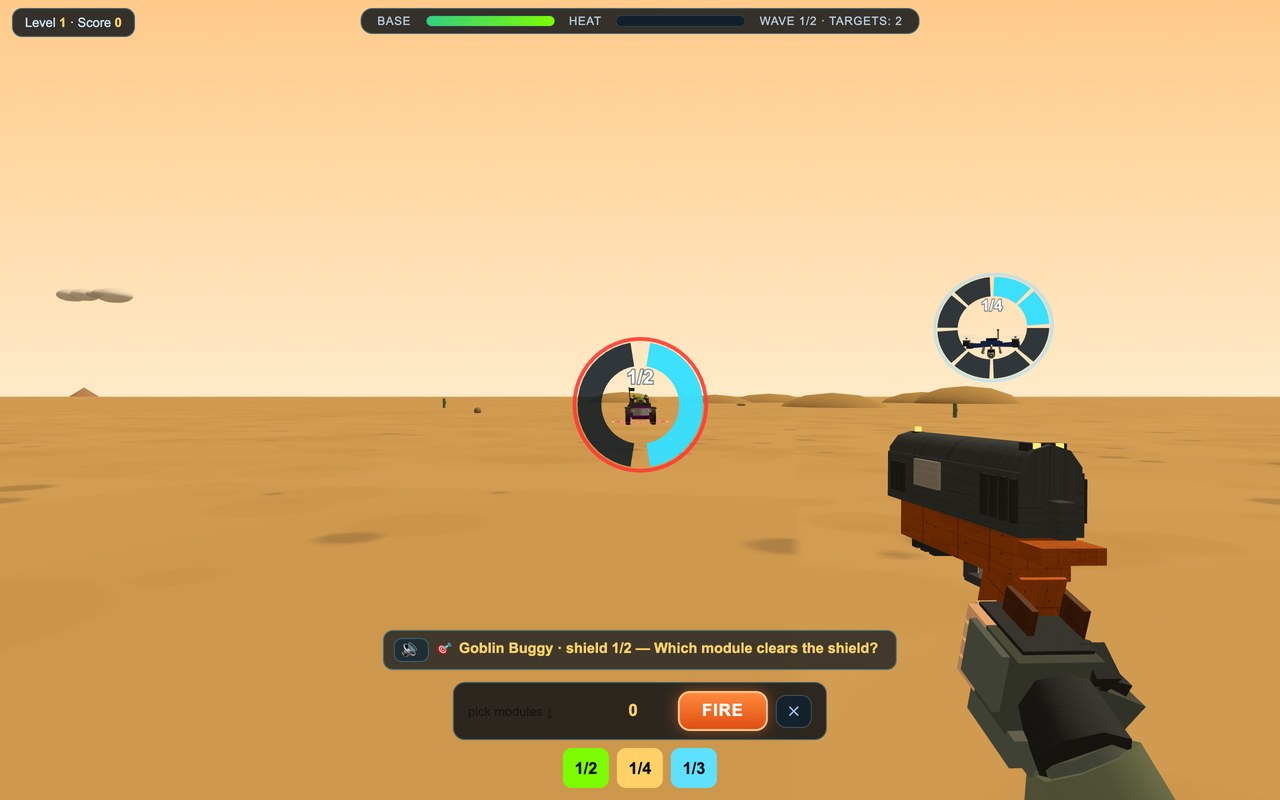 Equivalent Fractions — Free Game With 500 Levels 7+
Equivalent fractions practice: pick the round that matches the shield and fire. 1/2 = …
-
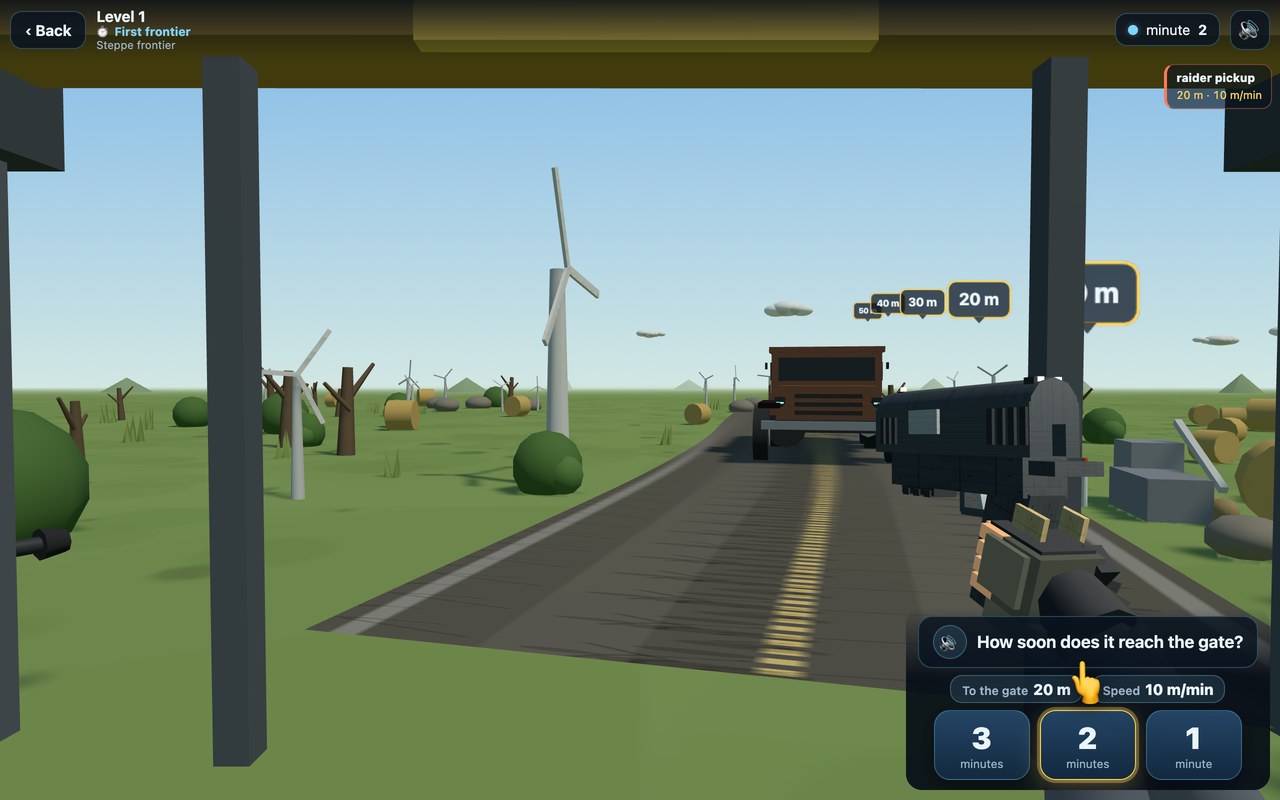 Speed, Time and Distance Game — Free Base Commander 7+
Speed distance time word problems as a defense mission: track a moving target, predict …
-
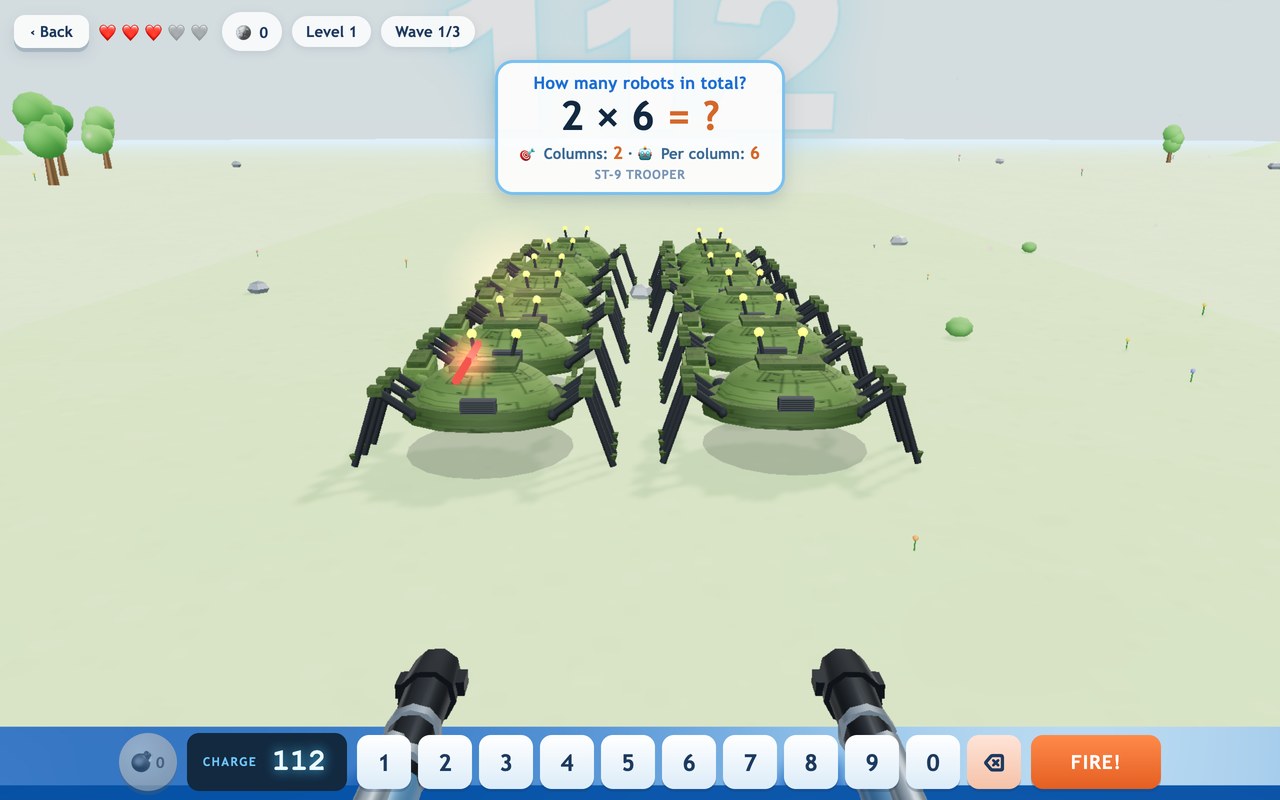 Multiplication Table Game — Free Divide & Conquer 7+
A multiplication table game where the answer is on screen: count the robot formation, …
A ratio compares two quantities by division, not by subtraction — and that one sentence is the whole topic. If a recipe uses 2 cups of flour to 3 cups of milk, the ratio 2:3 stays true for 4:6, 20:30 and 1:1.5. What stays constant is not the gap, it is the multiplier.
Why children get this wrong. Asked "if 2 pencils cost 60¢, what do 5 cost?", many children add: 60 + 3 = 63. They are using difference where they need scaling. The fix is to make them find the one first: one pencil is 30¢, so five are 150¢. Unit rate first, always.
A proportion is two equal ratios. 2/3 = 8/12. Solve it by asking "what did the top get multiplied by?" — not by cross-multiplying, which works but teaches nothing at this age.
Percentages are ratios out of 100, which is why they are so useful for comparison: 17 out of 20 and 43 out of 50 are impossible to compare until you make them 85% and 86%. Start with 10% (divide by ten) and 50% (halve), then build the rest: 30% is three lots of 10%, 25% is half of half.
Where ratios really live. Recipes scaled up for guests, map scales, mixing paint, gears, speed, exchange rates and every price-per-unit label in a supermarket. Ratio is the most-used maths topic in adult life and one of the least practised in primary school.
Continue with division facts (unit rate is division), math word problems, customary units and games for 5th graders.
The science behind the games
Every Dad4Kids game is built on one simple truth: children want to play, not study — so we turn learning into a game worth replaying. The method draws on peer-reviewed research in game-based learning, motivation, and how memory works.
- Tokac et al. (2019). Effects of game-based learning on students' mathematics achievement: A meta-analysis. Journal of Computer Assisted Learning.
- Alotaibi (2024). Game-based learning in early childhood education: a systematic review and meta-analysis. Frontiers in Psychology.
- Lampropoulos & Sidiropoulos (2024). Impact of gamification on students' learning outcomes and academic performance: a meta-analysis. Education Sciences.
- Taylor & Boyer (2019). Play-based learning: evidence-based research to improve children's learning experiences. Early Childhood Education Journal.
- Gottfried (1990). Academic intrinsic motivation in young elementary school children. Journal of Educational Psychology.
- Yang et al. (2018). Enhancing learning and retrieval of new information: a review of the forward testing effect. npj Science of Learning.
By Evgeny Arsentiev, PhD · Last updated: August 2026