
Learn Spanish for Kids — Free Spanish Academy 5–10
 New from Dad4Kids
Clean YouTube for kids
For families with traditional values, hand-picked by parents.
Open →
Spanish Academy is a whole school to learn Spanish for kids — thousands of words in game form. Words are grouped into 26 clear topics (animals, food, colors, numbers, body, clothes, home, nature and more) so association does the work: the child learns words in groups, not at random.
Learn first, then play
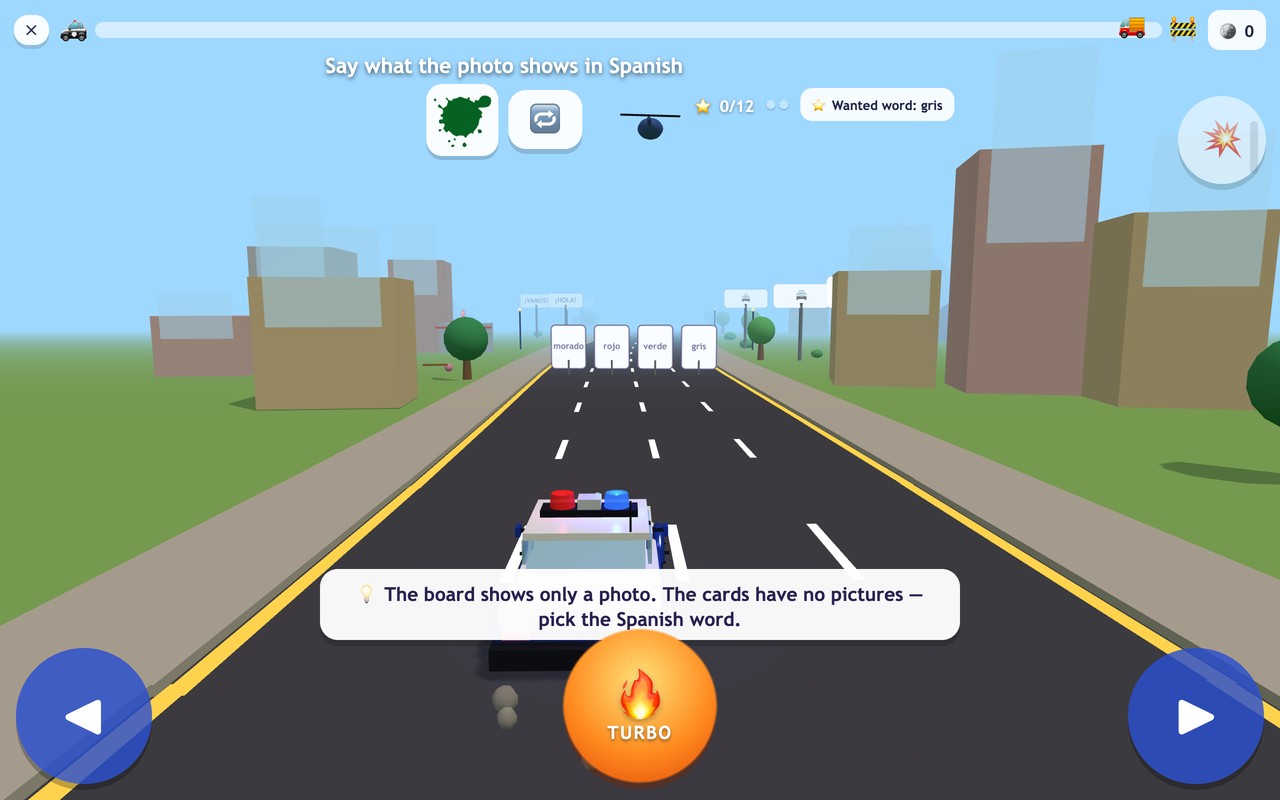
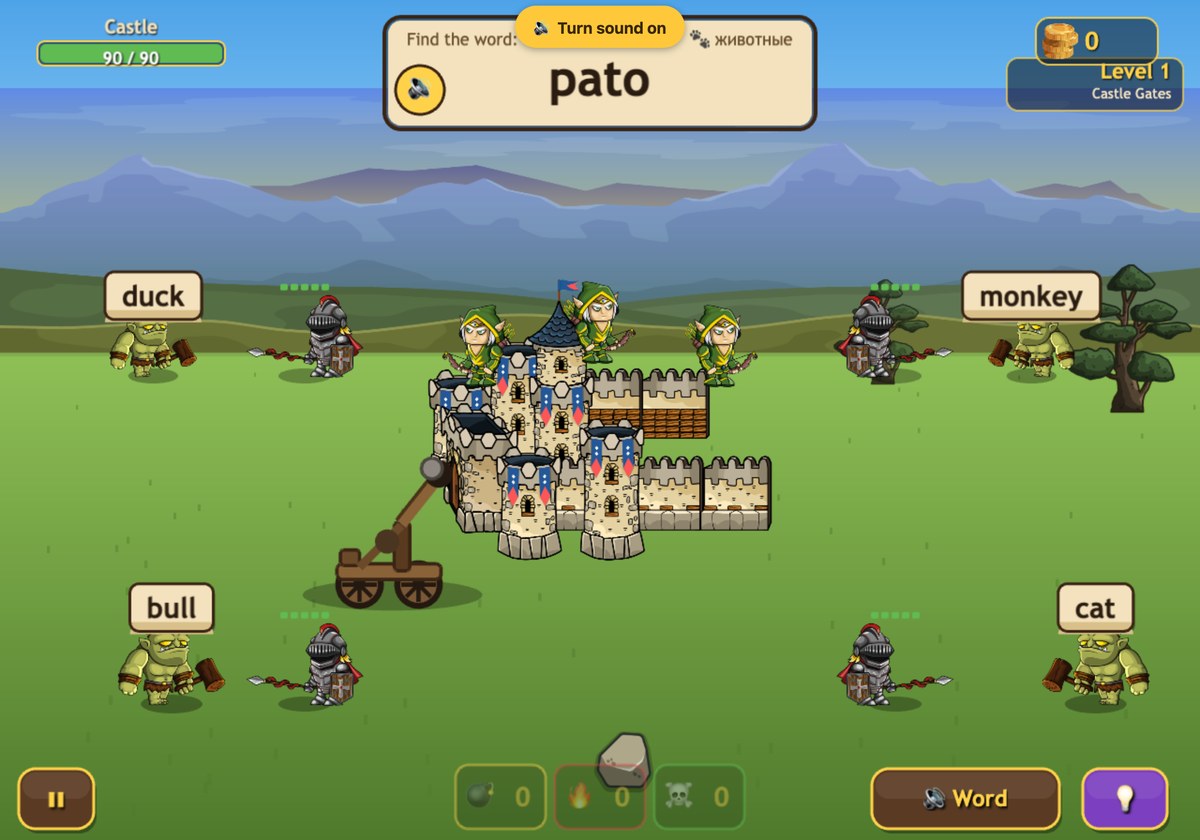
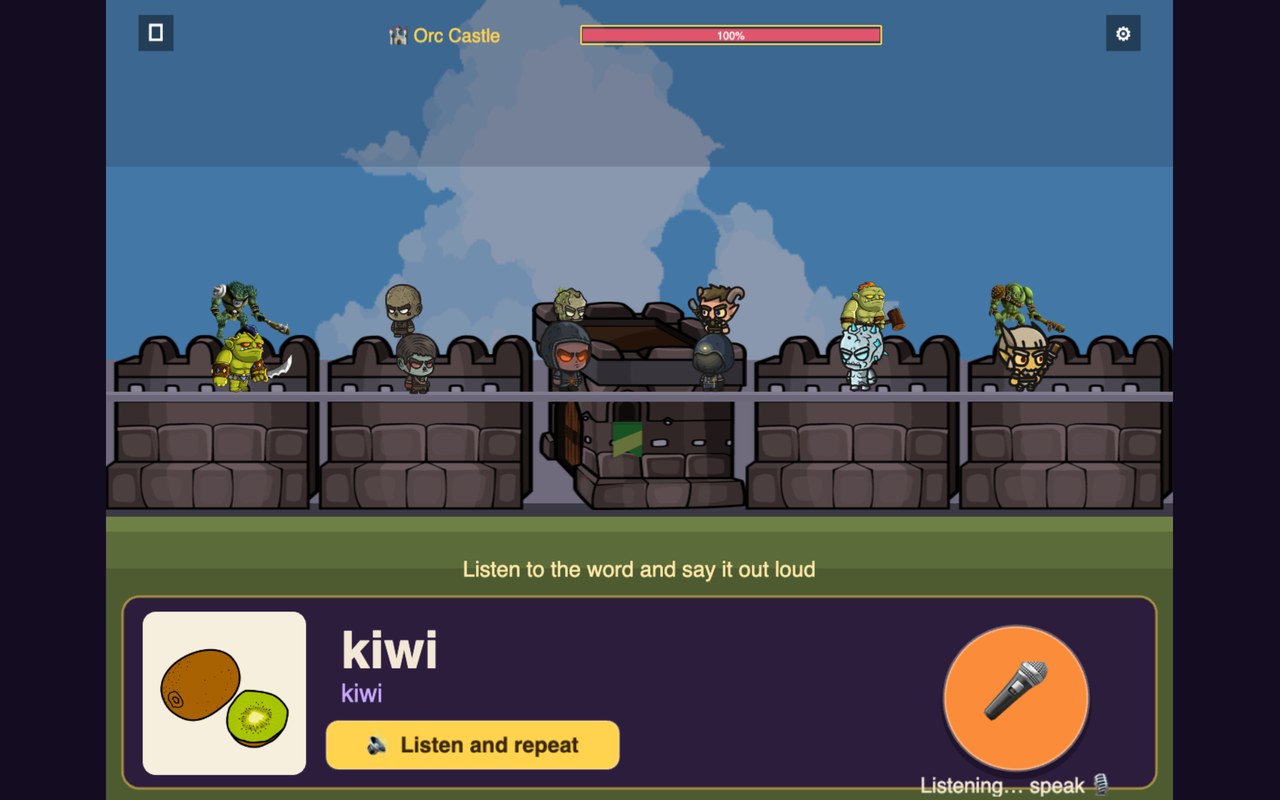
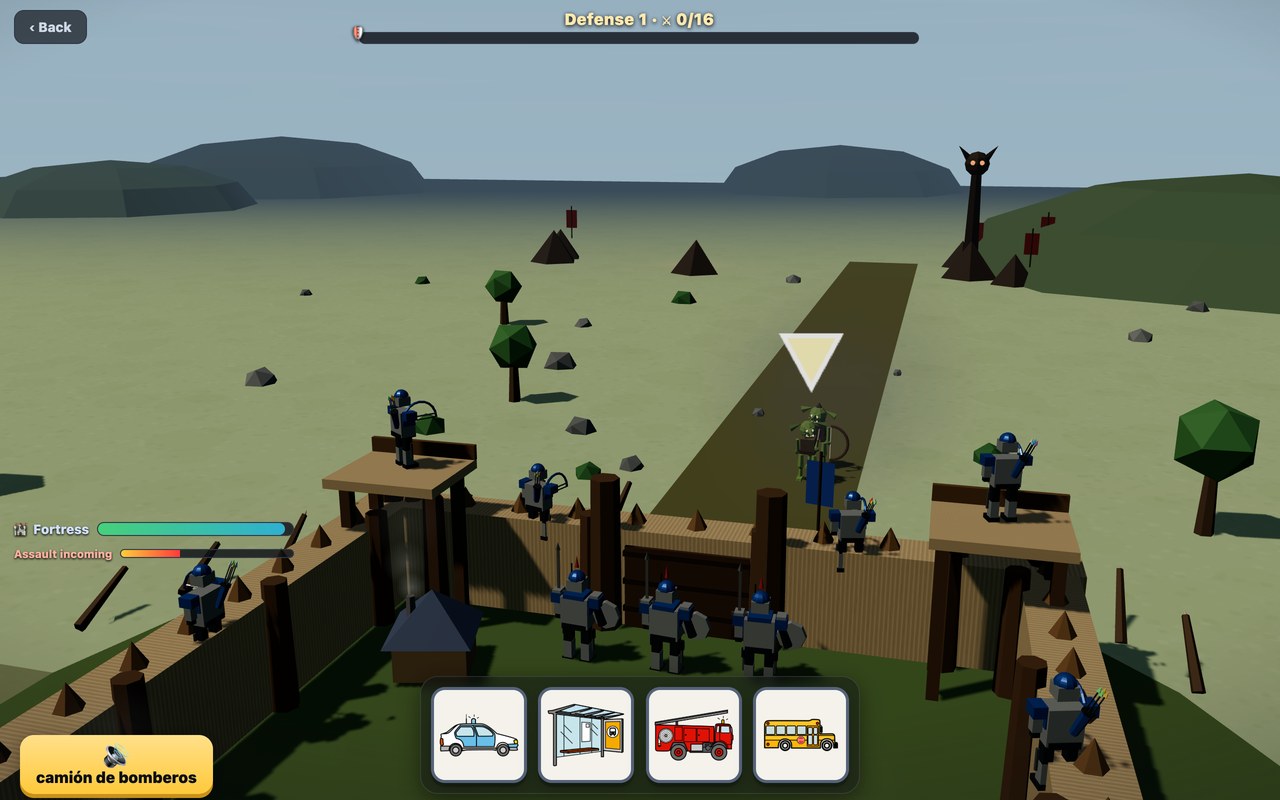
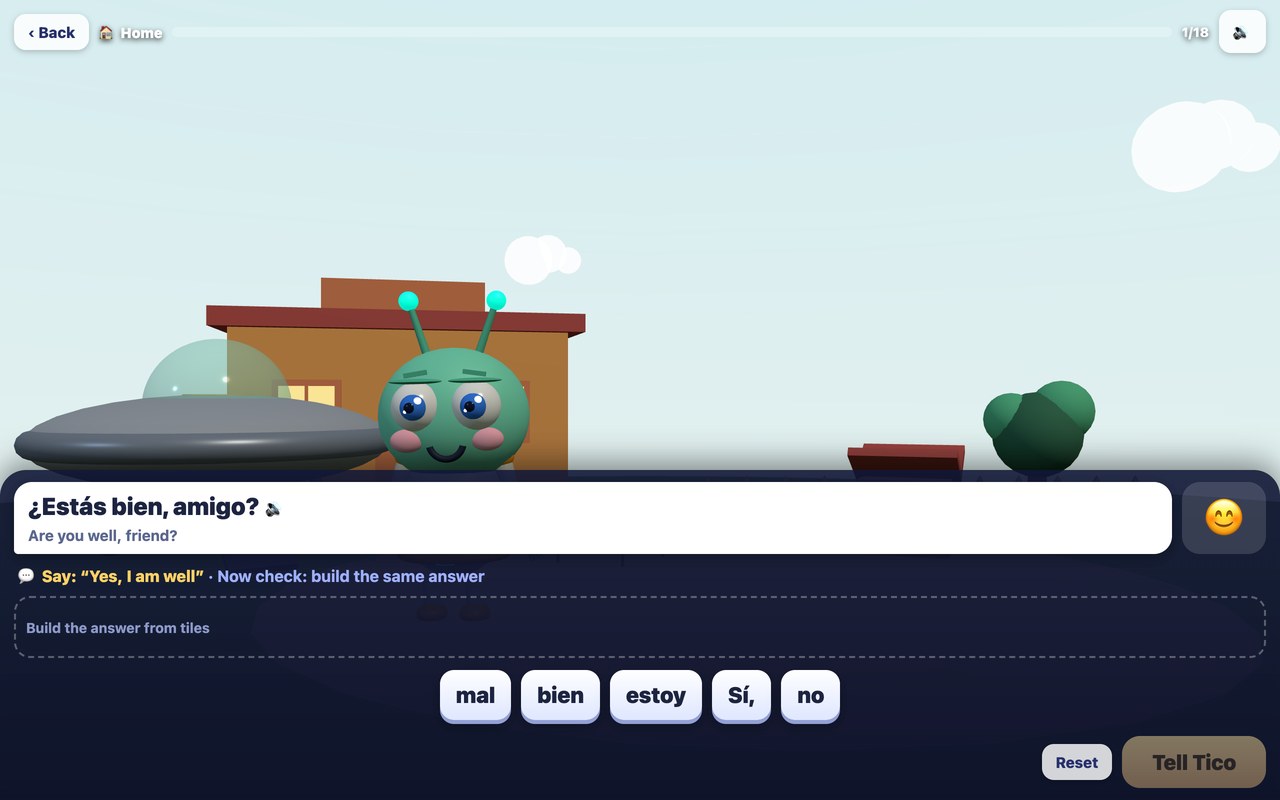
Every lesson opens with teaching flashcards: a picture and the Spanish word, spoken aloud in Spanish. Once the new words are shown, the fun mini-games begin on those same words: find the right picture by ear, feed the monster the right word, pop the right balloon, match picture and word, slice the right card. The word gets locked in through many different formats.
Pictures + audio = memory
Every word has a clear picture and native-style audio. The child sees the image, hears the Spanish word and picks the answer — a great way to learn Spanish for kids before they can read.
Progress and rewards
Finished lessons earn coins, and coins unlock a sticker collection in the shop. Topics and lessons open gradually, from easy to hard.
How to play
Pick a topic. First watch and listen to the new words on flashcards. Then, in the mini-games, find the right picture when you hear the Spanish word. Finish lessons, collect coins and stickers!
What your child learns
Builds Spanish vocabulary by ear and by sight through pictures, listening comprehension and first-word recognition. Words are grouped by topic for associative memory, across 26 topics, 109 mini-games and a teach-then-play lesson structure.
The science behind the games
Every Dad4Kids game is built on one simple truth: children want to play, not study — so we turn learning into a game worth replaying. The method draws on peer-reviewed research in game-based learning, motivation, and how memory works.
- Chen et al. (2016). The effectiveness of digital game-based vocabulary learning: a framework-based view. British Journal of Educational Technology.
- Sundqvist (2019). Commercial-off-the-shelf games in the digital wild and L2 learner vocabulary. Language Learning & Technology.
- Nakata (2015). Effects of expanding and equal spacing on second language vocabulary learning. Studies in Second Language Acquisition.
- Nakata & Webb (2016). Does studying vocabulary in smaller sets increase learning?. Studies in Second Language Acquisition.
- Tokac et al. (2019). Effects of game-based learning on students' mathematics achievement: A meta-analysis. Journal of Computer Assisted Learning.
- Alotaibi (2024). Game-based learning in early childhood education: a systematic review and meta-analysis. Frontiers in Psychology.
FAQ
Does my child need to read?
No. Words are shown as a picture and spoken aloud, and the child answers by picture. Reading comes in gradually through the matching games.
What age is it for?
About 5 and up. Each lesson starts with a teaching flashcard stage, then simple recognition games.
How many words are there?
Thousands of Spanish words across 26 topics, split into short lessons of about 8 words each, with 109 different mini-games.
Is it free?
Yes — free, no ads, right in the browser on a tablet, phone or computer.
More free games for kids
By Evgeny Arsentiev, PhD · Last updated: September 2026