
Math Word Problems: Turning a Sentence Into a Sum
Games
-
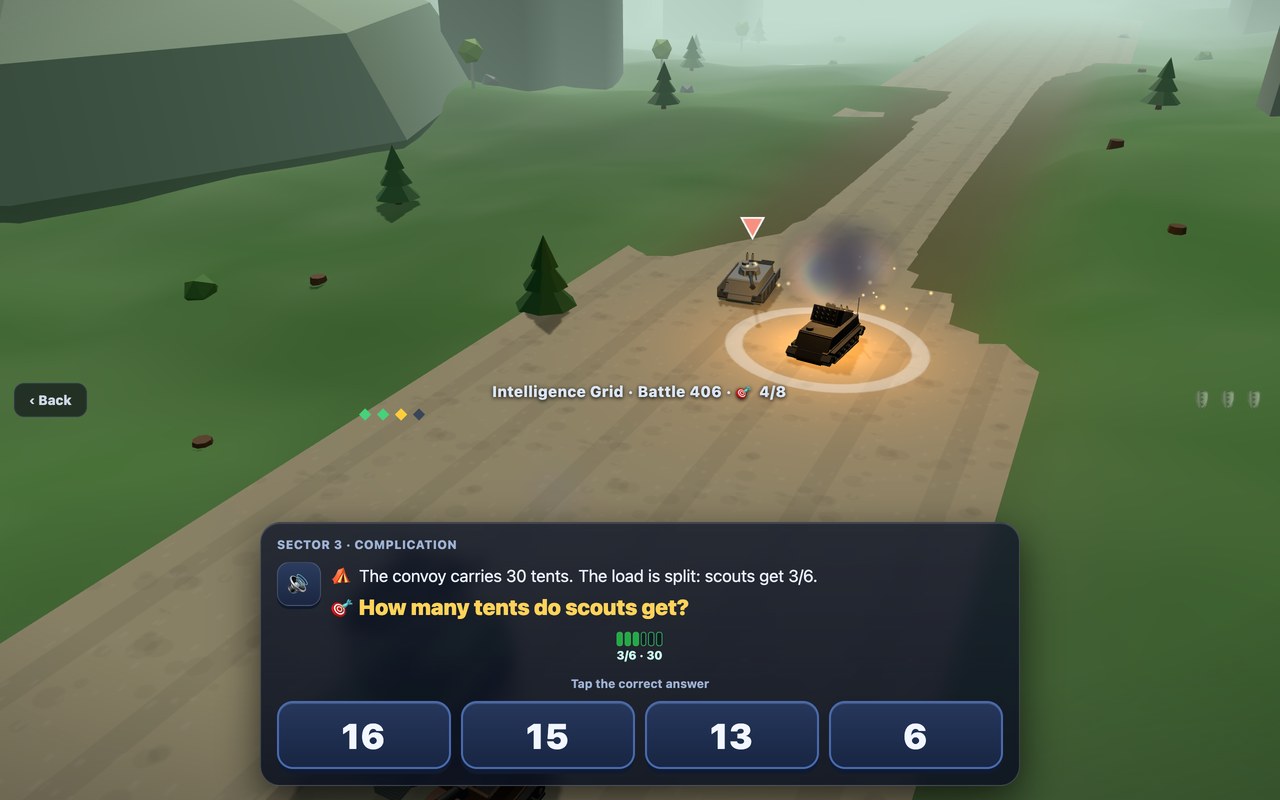 Math Word Problems for Kids — Convoy Frontline 7+
Math word problems for kids turned into a convoy fight: read the story, build …
-
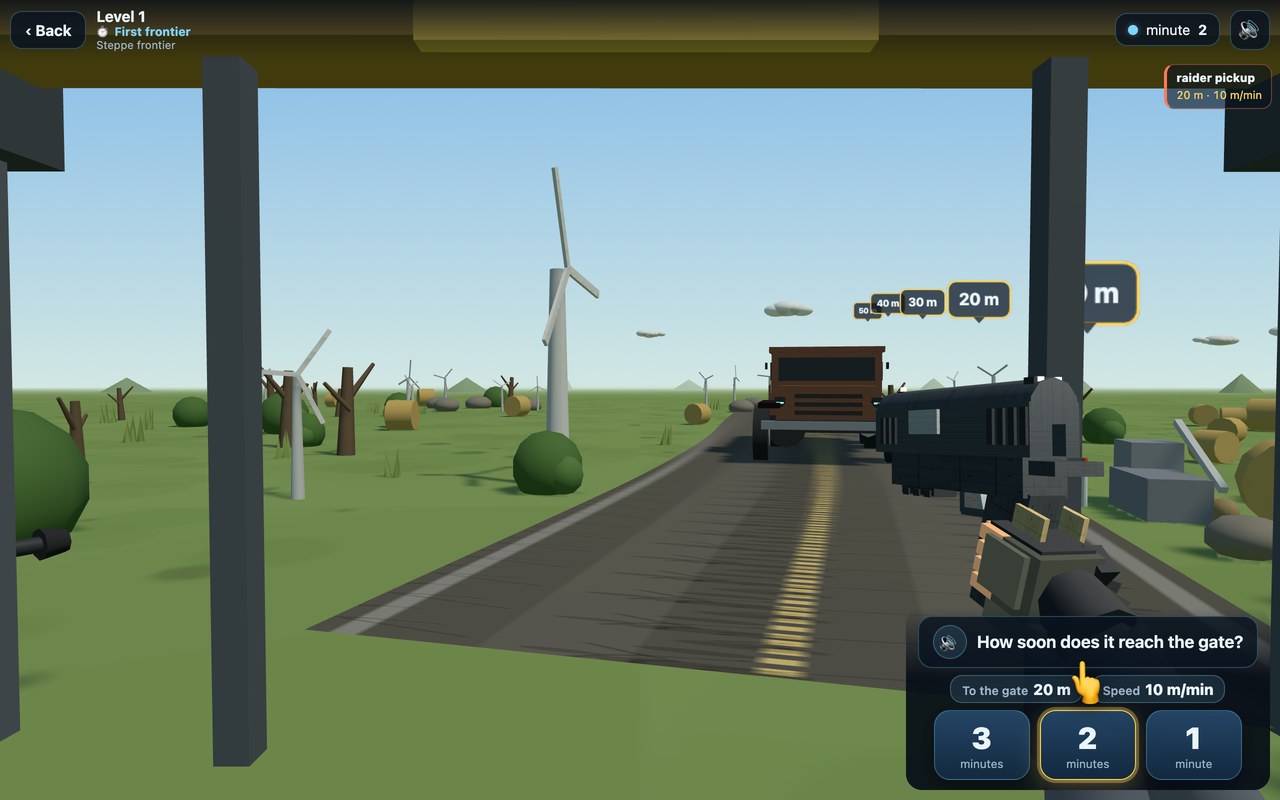 Speed, Time and Distance Game — Free Base Commander 7+
Speed distance time word problems as a defense mission: track a moving target, predict …
-
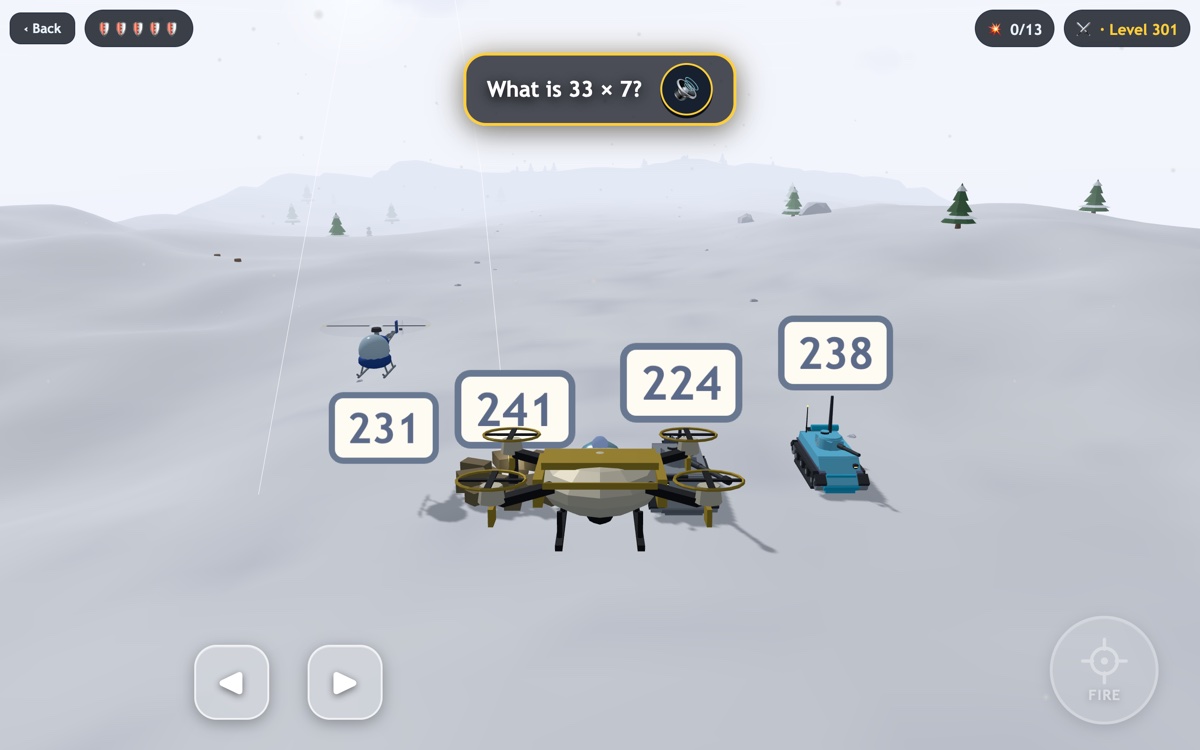 Math Games for 4th Graders — Free Drone Patrol 9+
Math games for 4th graders: multi-digit multiplication, division with remainder, factors, equivalent fractions and …
-
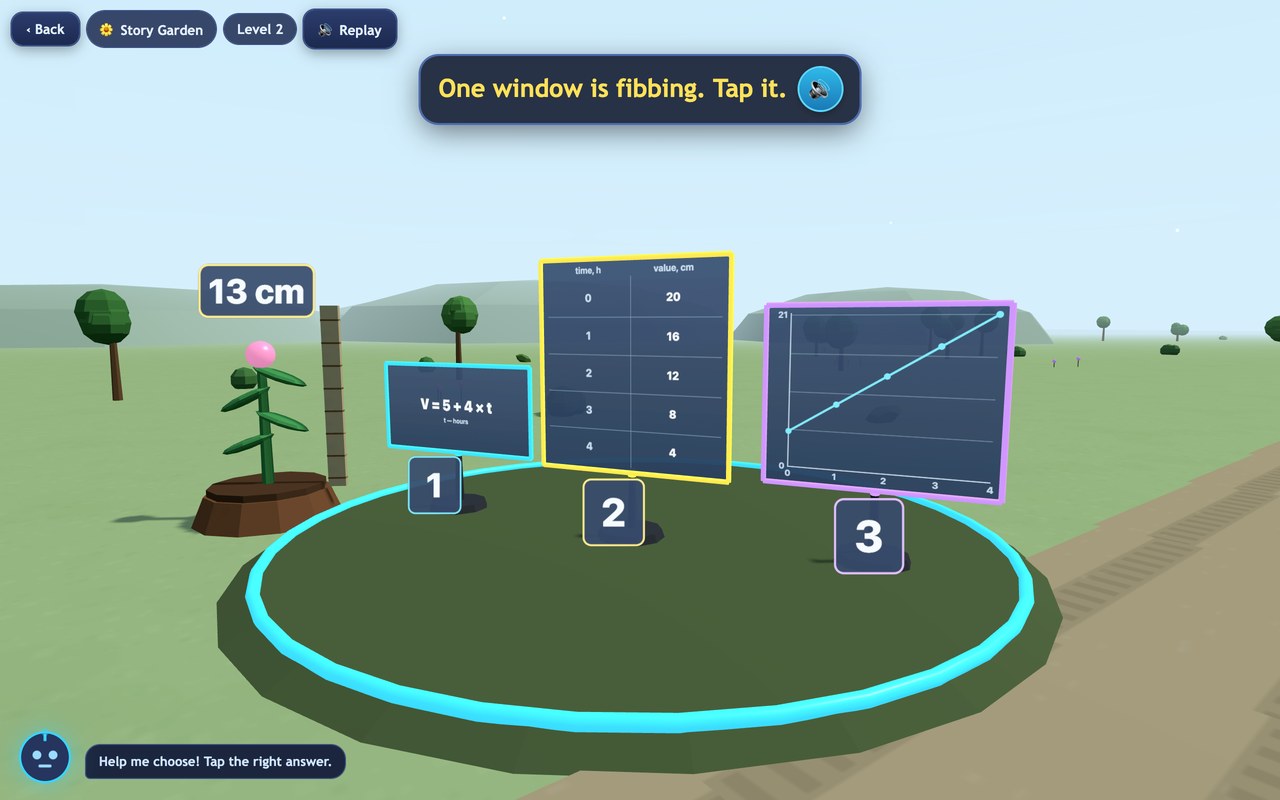 Story, Table & Graph Games — Free Modelverse Lab 8+
Math games for 7th graders that tie one story to a table, a graph …
-
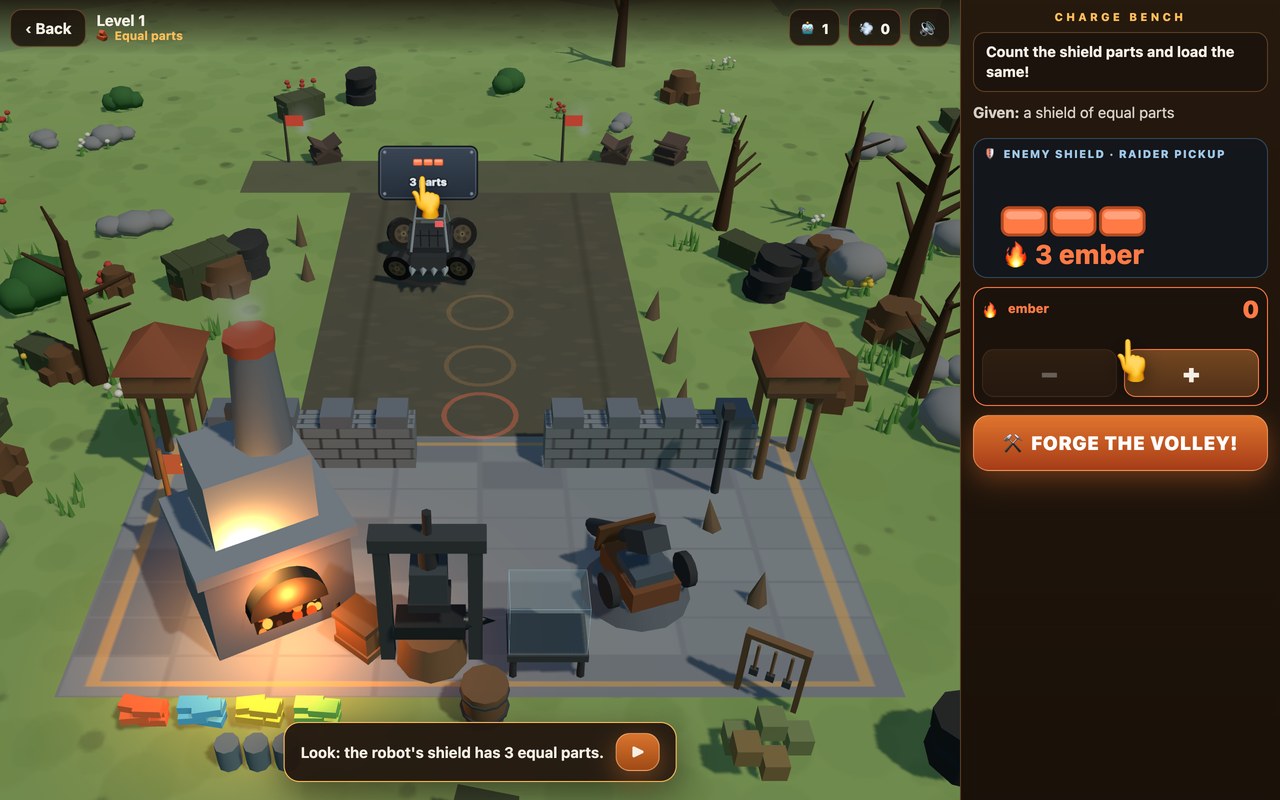 Ratio & Proportion Games for Kids — Free Ratio Forge 9+
Ratio games for kids where the math is the weapon: use ratios, unit rates …
Almost no child fails a word problem because of the arithmetic. They fail because they cannot decide which arithmetic to do — and reading it again more slowly does not help.
Three questions, in this order.
1. What is being asked? Have the child say the question in their own words, without numbers. "How many are left." "How much altogether." If they cannot, no method will save the answer.
2. Are things joining, separating, grouping, or sharing? Joining is addition. Separating or comparing is subtraction. Equal groups is multiplication. Splitting into equal groups is division. Four situations, four operations — this is more reliable than keyword lists.
3. Is the answer bigger or smaller than the numbers given? Estimating first catches most errors before they happen.
The keyword trap. Children are often taught that "more" means add. Then they meet "Tom has 5 more than Ann; Tom has 12; how many has Ann?" and add. Keywords are a shortcut that fails on exactly the problems that matter. Situations do not fail.
Multi-step problems add a memory load: there is an intermediate answer that is not the answer. Insist it gets written down and labelled. Half of all multi-step errors are a correct middle number that was forgotten.
Practical tip. Occasionally give a problem with a missing number or an impossible one and ask whether it can be solved. Children who only ever see solvable problems learn to grab numbers and combine them; children who have to check learn to read.
See also ratios and proportions, division facts, counting coins and games for 3rd graders.
The science behind the games
Every Dad4Kids game is built on one simple truth: children want to play, not study — so we turn learning into a game worth replaying. The method draws on peer-reviewed research in game-based learning, motivation, and how memory works.
- Tokac et al. (2019). Effects of game-based learning on students' mathematics achievement: A meta-analysis. Journal of Computer Assisted Learning.
- Alotaibi (2024). Game-based learning in early childhood education: a systematic review and meta-analysis. Frontiers in Psychology.
- Lampropoulos & Sidiropoulos (2024). Impact of gamification on students' learning outcomes and academic performance: a meta-analysis. Education Sciences.
- Taylor & Boyer (2019). Play-based learning: evidence-based research to improve children's learning experiences. Early Childhood Education Journal.
- Gottfried (1990). Academic intrinsic motivation in young elementary school children. Journal of Educational Psychology.
- Yang et al. (2018). Enhancing learning and retrieval of new information: a review of the forward testing effect. npj Science of Learning.
By Evgeny Arsentiev, PhD · Last updated: August 2026