
Physics Games for Kids — Free The Siege Line 7+
 New from Dad4Kids
Clean YouTube for kids
For families with traditional values, hand-picked by parents.
Open →
The Siege Line is a physics puzzle game, not a physics lesson with shooting bolted on. The child is a young battlefield engineer, and physics is the most powerful weapon: to loft a shell over a ridge, crack a beetle's armor, anchor a cannon against recoil, or topple a tower — you must understand the law, not memorise it.
Predict → fire → compare → discover the rule
Before firing, the game asks: too short, on target, or too far? After firing, a slow-motion replay shows the arc, the velocity arrow, the apex, the impact point and the numbers. And almost every mission compares two cases — the same shot on the Moon and a heavy world, the same charge on a light and a heavy shell, a slow-heavy hit versus a fast-light one. You see exactly what changed, and why.
Discoveries you earn
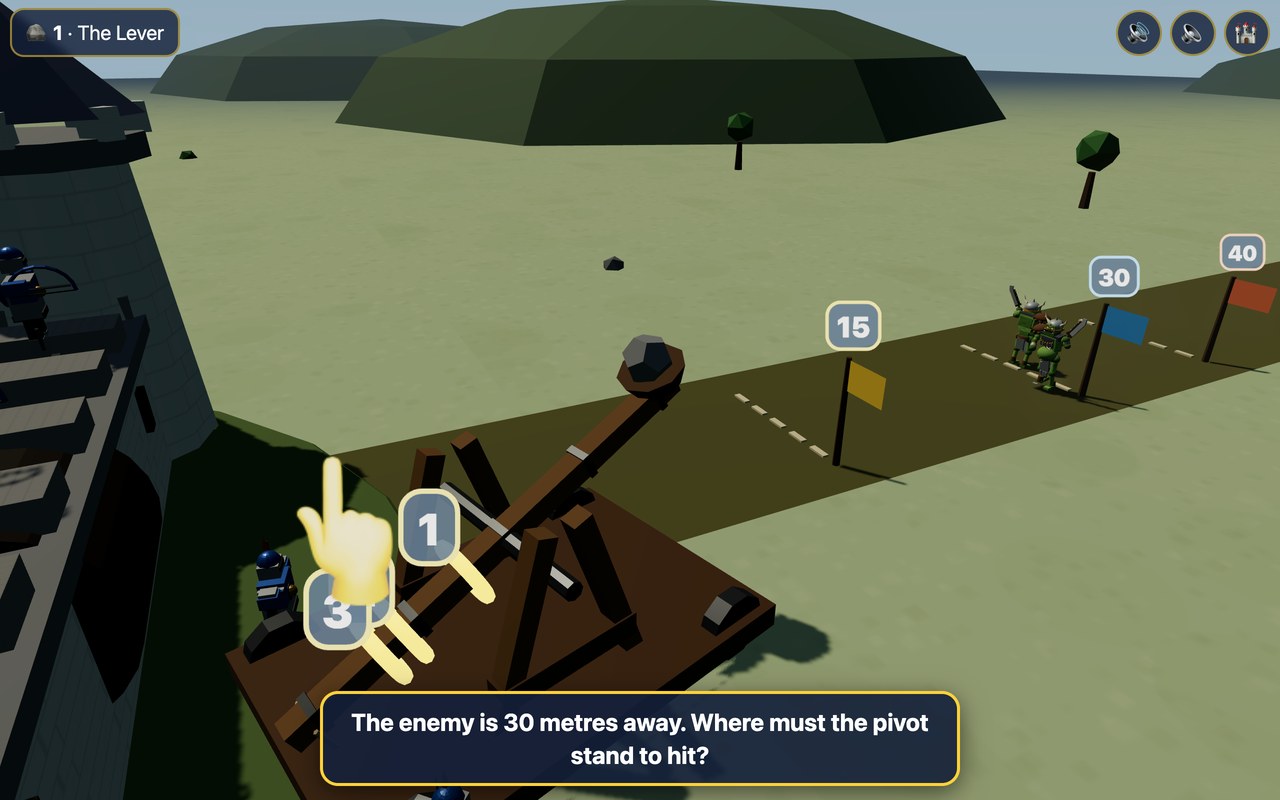
Each law gets three names: a combat name (Arc Strike Protocol, Recoil Pact, Lever Breaker, Impact Reserve, Momentum Ram, Gravity Map), a plain-language explanation, and the real scientific name (projectile motion, Newton's laws, kinetic energy, momentum, friction, torque). Discoveries collect in a Field Manual with mini-experiments — drag the sliders and watch what changes.
Chapter 1: The Siege Line
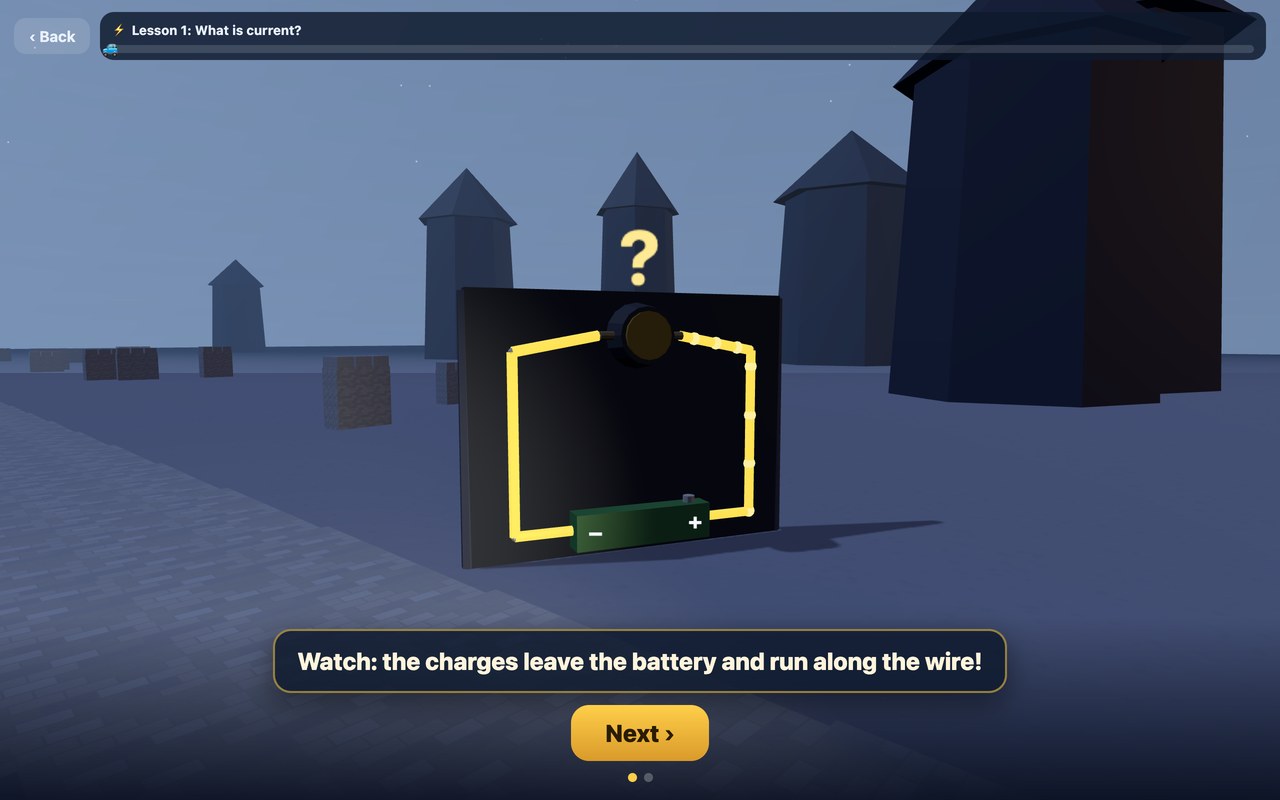
Motion, force, arcs, gravity, mass, friction, recoil, leverage, energy and momentum — through defending a colony from giant beetles. More chapters are planned: pressure and fluids, electricity and magnets, light and sound, and a final orbital campaign against a hive mothership.
How to play
Read the field: a beetle behind a ridge or in armor. Predict the result, set the angle and power, pick a shell — and fire. Watch the replay with the arc and numbers. In compare missions, fire A and B and answer what changed. Discover the law — and reuse it in later battles.
What your child learns
Real mechanics in practice: ballistics, inertia, F=ma, action-reaction, gravity, friction, torque, kinetic energy, momentum. Plus the scientist's core skill: predict, test, compare, and derive the rule.
The science behind the games
Every Dad4Kids game is built on one simple truth: children want to play, not study — so we turn learning into a game worth replaying. The method draws on peer-reviewed research in game-based learning, motivation, and how memory works.
- Tokac et al. (2019). Effects of game-based learning on students' mathematics achievement: A meta-analysis. Journal of Computer Assisted Learning.
- Alotaibi (2024). Game-based learning in early childhood education: a systematic review and meta-analysis. Frontiers in Psychology.
- Lampropoulos & Sidiropoulos (2024). Impact of gamification on students' learning outcomes and academic performance: a meta-analysis. Education Sciences.
- Taylor & Boyer (2019). Play-based learning: evidence-based research to improve children's learning experiences. Early Childhood Education Journal.
- Gottfried (1990). Academic intrinsic motivation in young elementary school children. Journal of Educational Psychology.
- Yang et al. (2018). Enhancing learning and retrieval of new information: a review of the forward testing effect. npj Science of Learning.
FAQ
What age is it for?
For curious kids around 7+ who love numbers, battles and puzzles. Early missions are simple and visual; it grows harder.
Is it a physics lesson?
No. Here physics is how you win — loft a shell, crack armor, hold against recoil. The rule is shown in battle first, then as an experiment, and only then named scientifically.
Does it need a mic or internet?
No. Everything is computed in the browser with honest physics; it plays offline on tablet, phone or computer.
Is it free?
Yes — free, no ads, no purchases.
More free games for kids
By Evgeny Arsentiev, PhD · Last updated: September 2026