
Spanish for Kids: Fun, Free Ways to Start Learning
Games
- Spanish Vocabulary Game for Kids — Free Online 4+ Free Spanish vocabulary game for kids: match each Spanish word to its picture and …
-
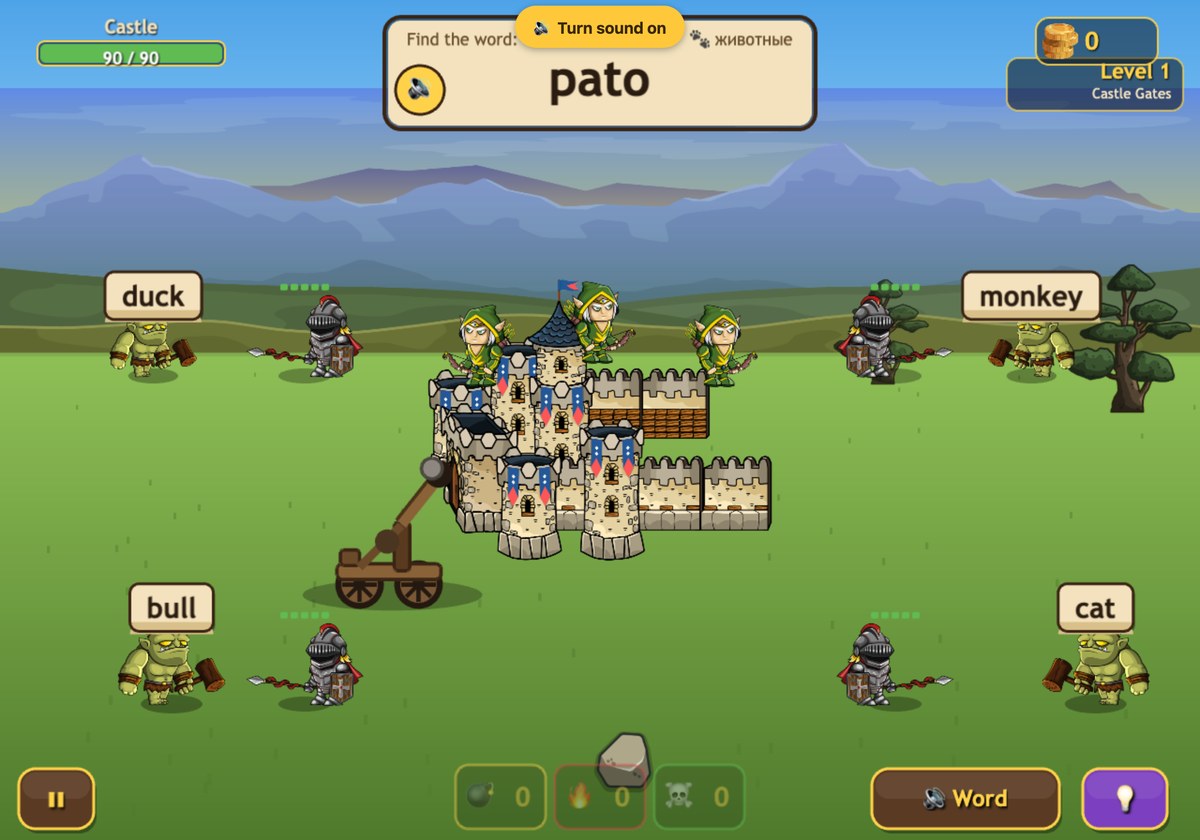 Spanish Words Game for Kids — Free Online 5+
A free Spanish words game for kids: defend the castle by tapping the right …
-
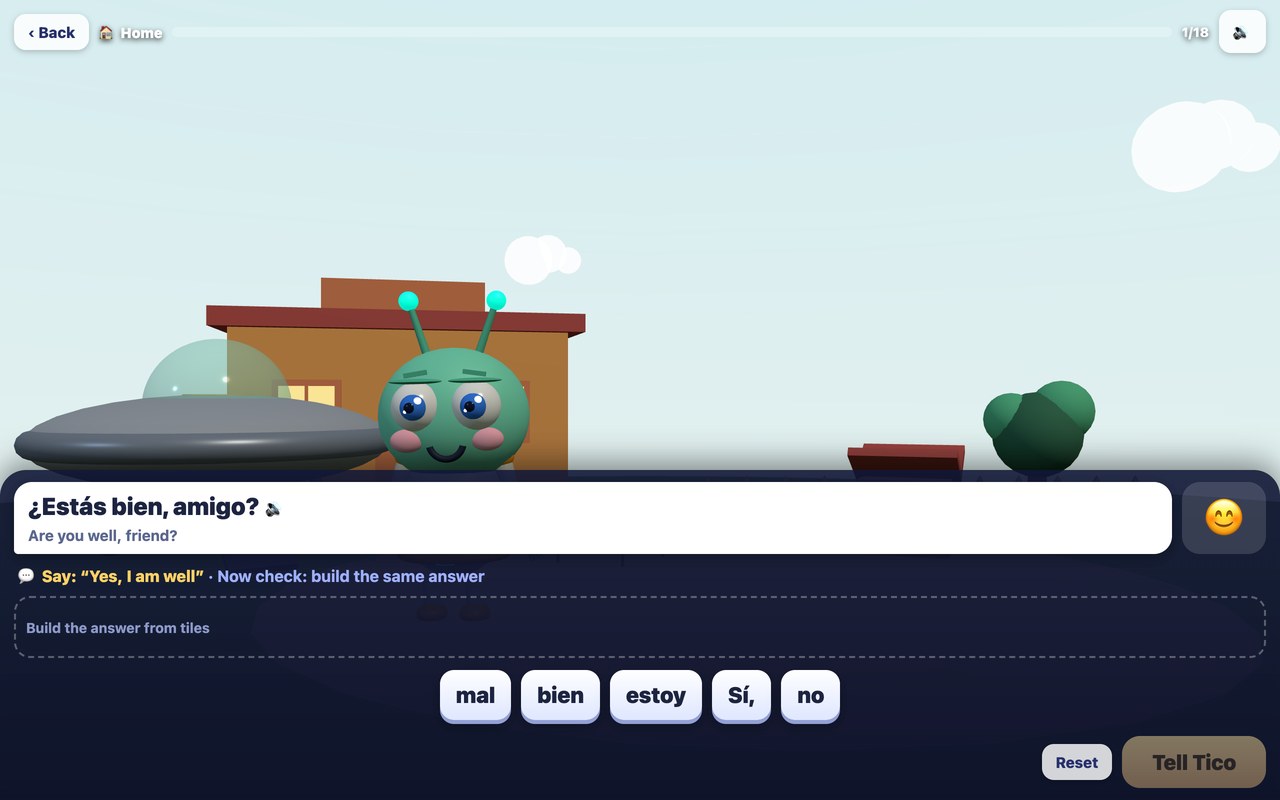 Spanish Games for Kids — Free Online 6+
Spanish games for kids with a real conversation: build Spanish sentences to talk with …
-
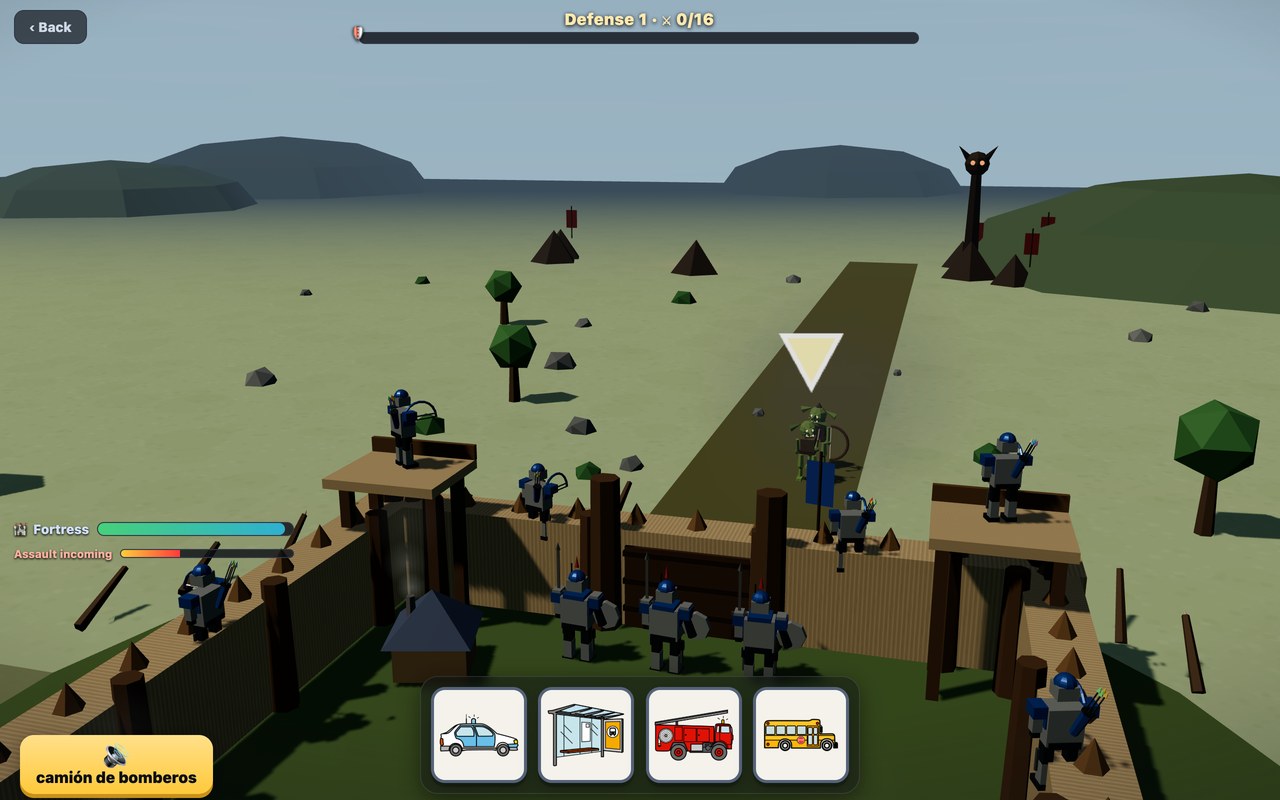 Learn Spanish for Kids — Free Word Fortress 5+
Spanish word games as tower defense: hear a Spanish word, tap the monster carrying …
-
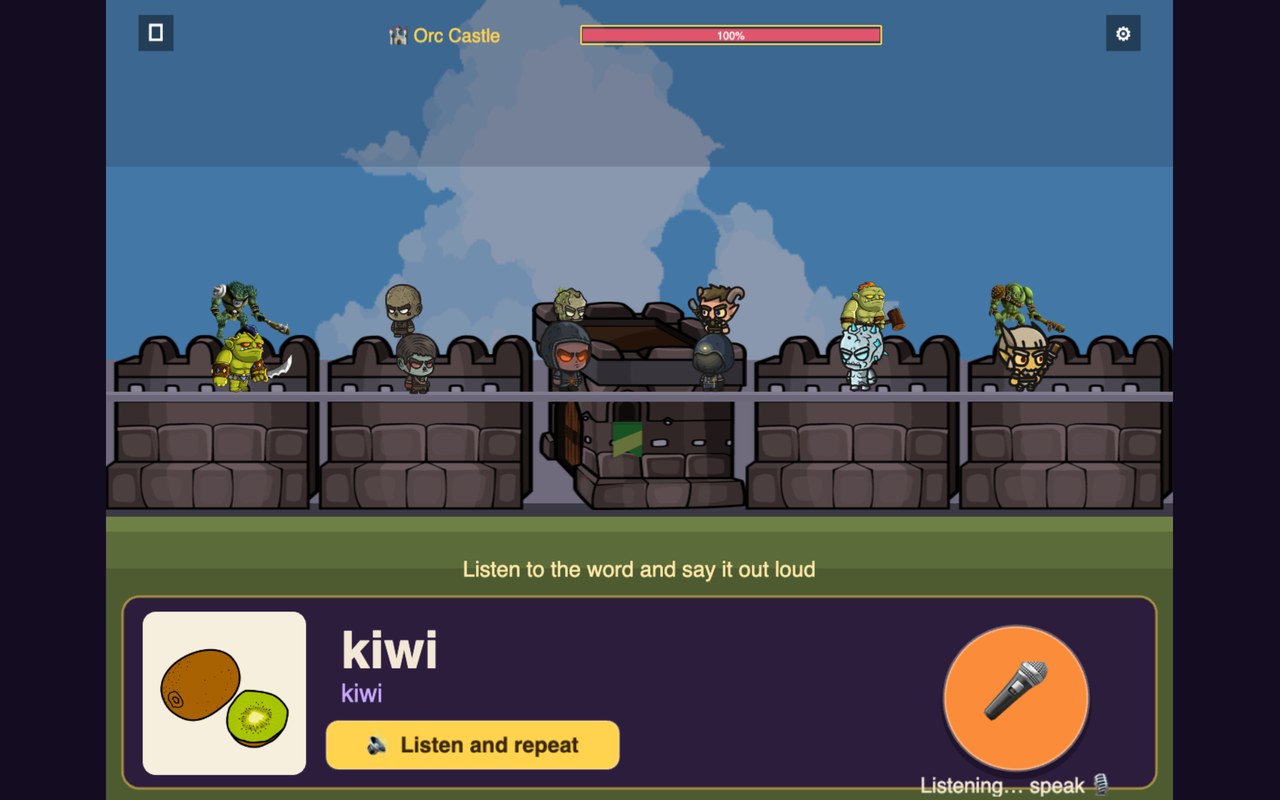 Learn Spanish for Kids — Free Castle Siege 4+
Spanish pronunciation practice out loud: see a picture, hear the Spanish word, say it …
-
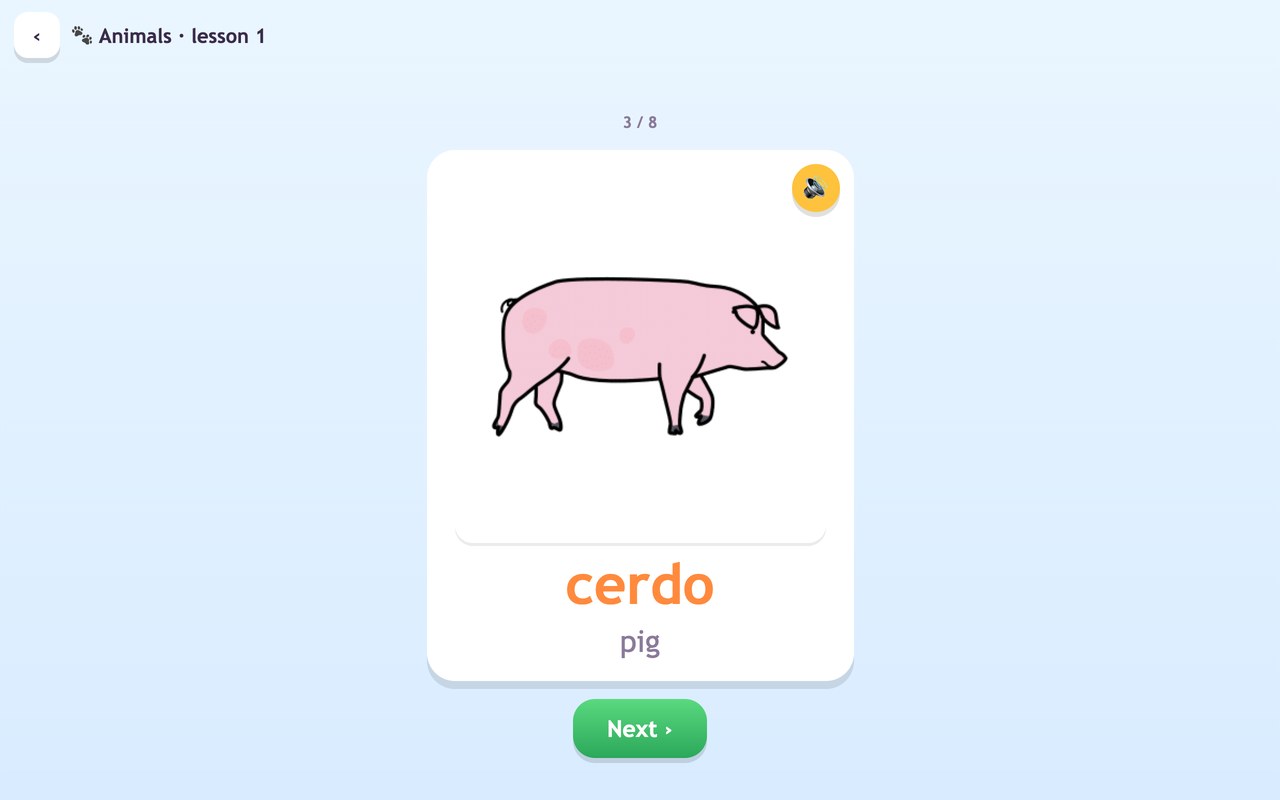 Learn Spanish for Kids — Free Spanish Academy 5+
Learn Spanish for kids on pictures: thousands of words across 26 topics and 109 …
-
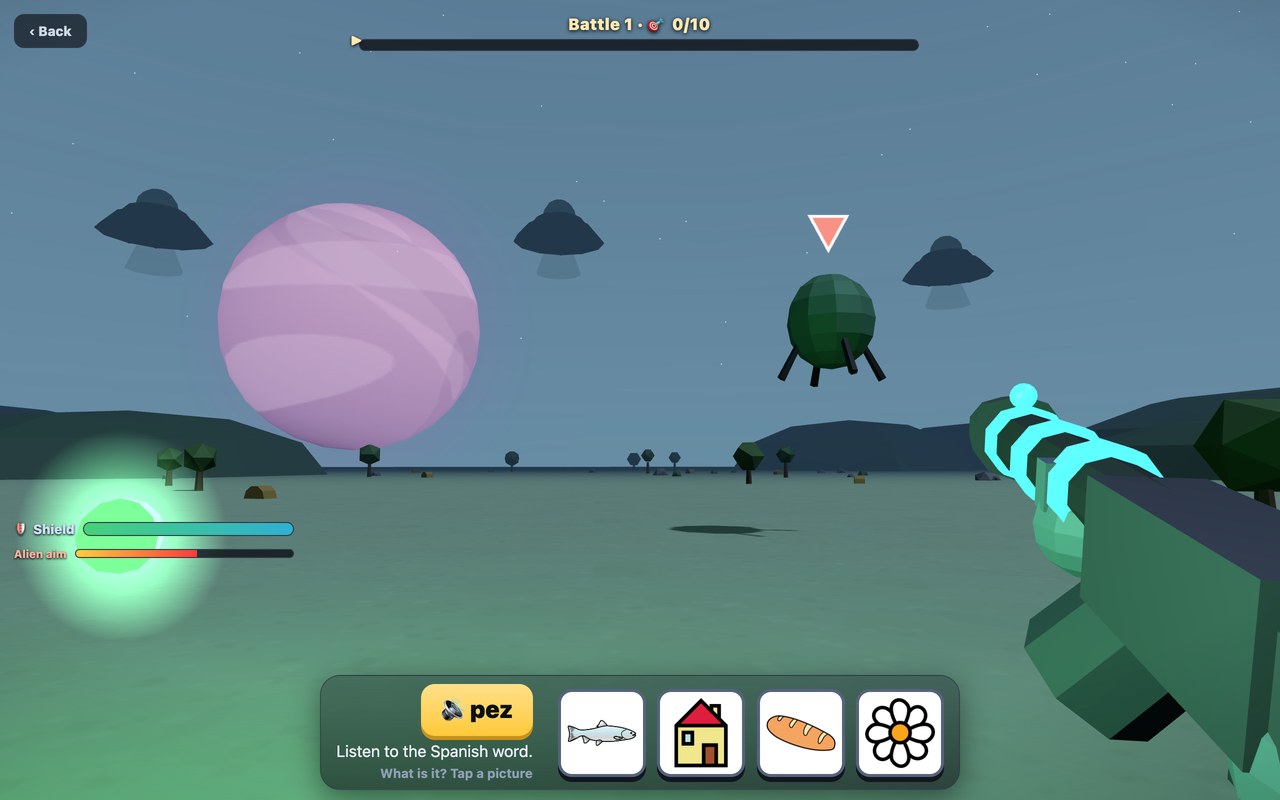 Learn Spanish for Kids — Free Planet Defense 6+
Spanish games for beginners: hear the word, tap the right picture card and your …
-
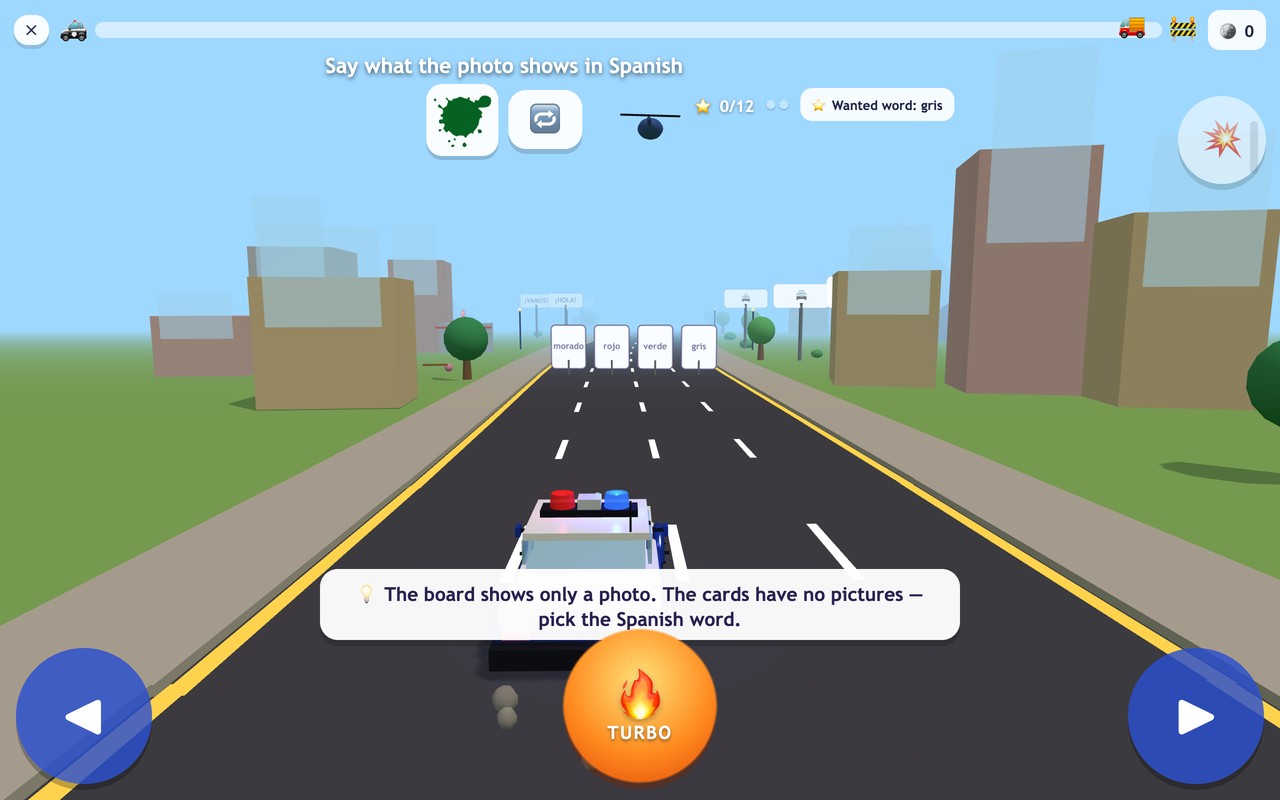 Spanish Games for Kids — Free Sticker Patrol 5+
Spanish learning games with a chase: learn 12 words a level, then hear the …
-
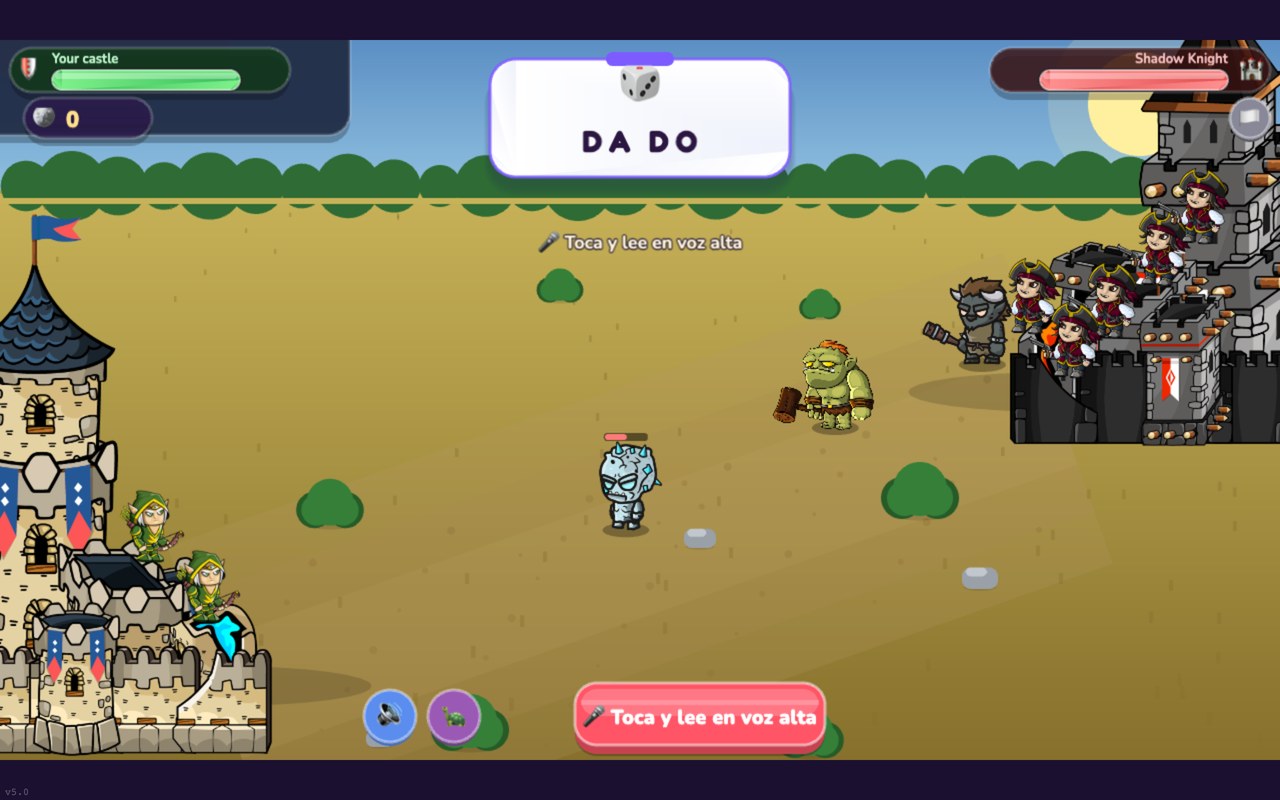 Learn to Read Spanish — Free Syllable Castle 5+
Learn to read Spanish through play: Spanish is highly phonetic (ma-me-mi-mo-mu), so decoding clicks …
-
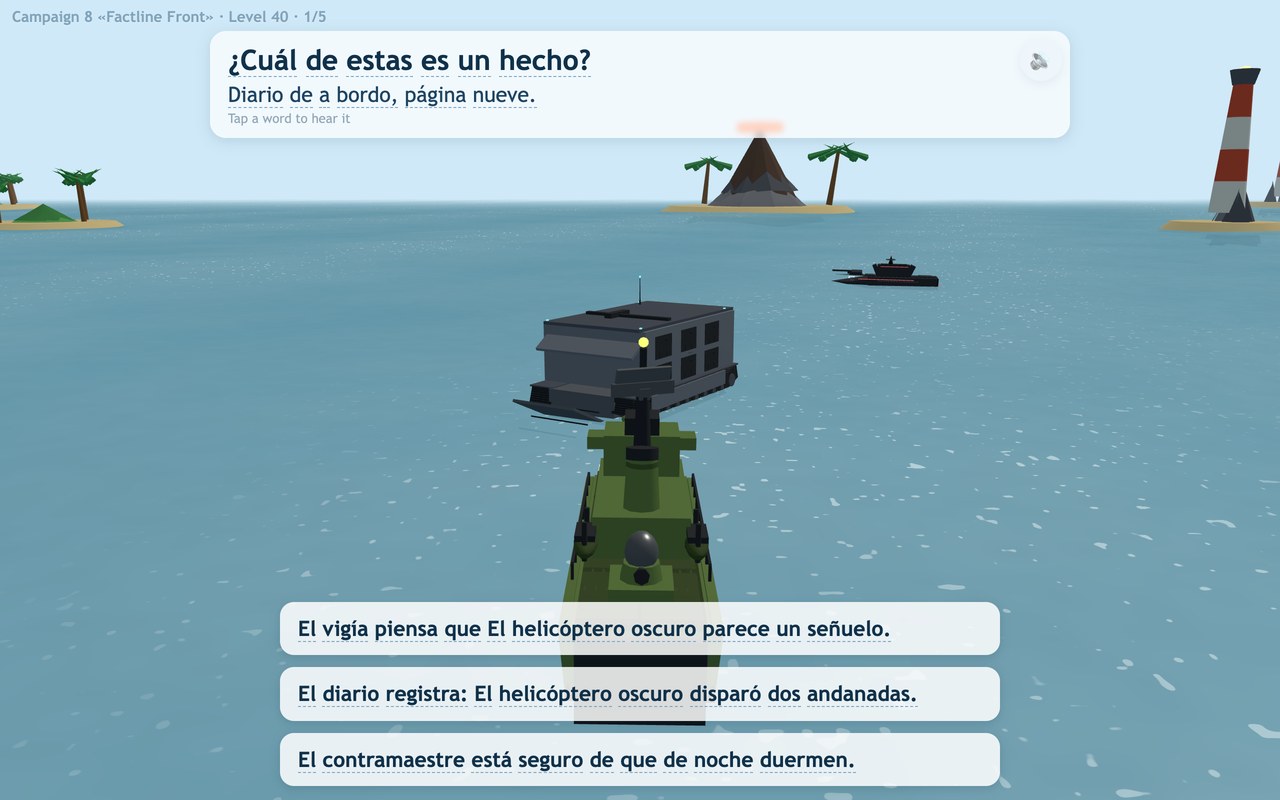 Learn to Read Spanish — Free Fleet Captain 7+
Spanish reading comprehension in a naval battle: read and understand a written Spanish order, …
Explore
Spanish for kids works best when it feels like play rather than homework. Children are natural language learners: they pick up sounds, words, and patterns by hearing them often and using them in low-pressure, repeatable ways. You don't need to speak Spanish yourself, and you don't need an expensive program. With short, regular sessions and the right mix of listening, speaking, and games, your child can build a real foundation of Spanish vocabulary and confidence right from home.
How children actually learn a second language
Young kids learn languages differently from adults. Instead of memorizing grammar rules, they absorb meaning from context, repetition, and emotion. That's why songs, stories, picture games, and friendly characters work so well. The goal at this stage isn't perfect grammar; it's building a warm, positive relationship with the language and a growing bank of words your child recognizes and can say out loud.
The three building blocks
- Listening: hearing native pronunciation often, so the sounds of Spanish feel familiar.
- Vocabulary: learning everyday words first (colors, numbers, animals, food, family) before longer phrases.
- Speaking: repeating words and simple sentences with zero fear of mistakes.
A good early Spanish routine touches all three a little bit, often. Ten focused minutes a day beats one long, tiring session once a week.
Building Spanish vocabulary through play
Vocabulary is the part of language learning where games shine. When a child matches a word to a picture, hears it spoken, and taps the right answer, three senses reinforce the memory at once. That's the idea behind our Spanish Word Tower vocabulary game for kids, where children stack words into a growing tower as they learn them, getting instant feedback and a satisfying sense of progress.
A natural order for beginners looks like this:
- Start small: colors, numbers 1-10, and a handful of animals.
- Add the everyday: food, family members, and common objects around the house.
- Grow into phrases: greetings, "I like," "I want," and simple questions.
Each new layer reuses words your child already knows, so confidence builds instead of overwhelm. Celebrating small wins keeps motivation high and makes the next session something they look forward to.
What you can do at home (even without speaking Spanish)
You are still your child's most powerful learning partner, no fluency required. A few simple habits make a big difference:
- Label the day: name a few objects in Spanish at breakfast or on a walk.
- Press play together: short Spanish songs and videos train the ear effortlessly.
- Ask, don't quiz: "How do we say dog in Spanish?" keeps it playful, not stressful.
- Be a learner too: when you try and make mistakes, your child learns that mistakes are part of the fun.
Pair these everyday moments with a vocabulary game and you've created a balanced, sustainable routine that blends listening, speaking, and recognition.
Keeping it fun and pressure-free
The fastest way to slow a child down is to make language learning feel like a test. Keep sessions short, praise effort over accuracy, and let your child set the pace. Some days they'll want to play for twenty minutes; other days two minutes is plenty. Consistency matters far more than intensity. When learning Spanish feels like a game your child chooses to play, the words stick, the confidence grows, and the habit lasts. Ready to begin? Hop into the Spanish Word Tower game and watch your child's first words start to stack up.
Understanding comes before speaking
Children learn a second language in the order they learned their first: they understand far more than they can say, for a long time, and then speech arrives in a rush. A child who is silently pointing at the right picture is not failing to participate — they are in the stage that makes speaking possible. Every game here is built to be understandable without translation, because a word attached to a picture sticks and a word attached to an English word does not.
English speakers get a head start
Hundreds of Spanish words are close enough to English to be guessed on sight — familia, animal, hospital, chocolate. Starting there gives a child a hundred words of apparent fluency in a fortnight, which does more for their willingness to continue than any amount of grammar.
How far a small vocabulary goes
The most common few hundred words cover a startling share of ordinary conversation. Getting there is realistic for a child playing a few times a week, and it is enough to follow a simple cartoon or order food on holiday — a concrete result that keeps the thing alive.
Sounds are easiest now
Spanish is unusually kind here: five clean vowels that do not shift, and spelling that matches speech almost perfectly. Under about ten, children copy an accent without effort. Play with the sound on, let them repeat, and do not correct the r — it arrives when it arrives.
Reading Spanish is easier than reading English
Because the letters behave, a child who can already decode English can be reading Spanish aloud within weeks, often better than they read their own language. The reading-specific games live at learn to read Spanish; vocabulary work is at Spanish words for kids. Also see games for 6 year olds.
The science behind the games
Every Dad4Kids game is built on one simple truth: children want to play, not study — so we turn learning into a game worth replaying. The method draws on peer-reviewed research in game-based learning, motivation, and how memory works.
- Chen et al. (2016). The effectiveness of digital game-based vocabulary learning: a framework-based view. British Journal of Educational Technology.
- Sundqvist (2019). Commercial-off-the-shelf games in the digital wild and L2 learner vocabulary. Language Learning & Technology.
- Nakata (2015). Effects of expanding and equal spacing on second language vocabulary learning. Studies in Second Language Acquisition.
- Nakata & Webb (2016). Does studying vocabulary in smaller sets increase learning?. Studies in Second Language Acquisition.
- Tokac et al. (2019). Effects of game-based learning on students' mathematics achievement: A meta-analysis. Journal of Computer Assisted Learning.
- Alotaibi (2024). Game-based learning in early childhood education: a systematic review and meta-analysis. Frontiers in Psychology.
FAQ
What is the best way for kids to learn Spanish?
The best way is frequent, playful exposure that mixes listening, speaking, and vocabulary games rather than grammar drills. Short daily sessions with songs, picture-and-word games, and friendly repetition help kids absorb Spanish naturally and build confidence to speak.
What age should a child start learning Spanish?
There's no single right age, and earlier is genuinely easier because young children mimic new sounds effortlessly. Kids as young as 3 or 4 can start with simple vocabulary and songs, but any age from preschool through the early school years is an excellent time to begin.
Can kids learn Spanish on their own?
Kids can make real progress independently with well-designed games and videos that provide native pronunciation and instant feedback. They learn fastest, though, when a parent adds a little daily practice and encouragement, even without speaking Spanish themselves.
How much Spanish practice does my child need each day?
About 10 to 15 minutes a day is ideal for most young learners. Short, consistent sessions help words stick far better than one long weekly session, so aim for little and often rather than long and rare.
What Spanish words should kids learn first?
Start with high-frequency, concrete words children can see and use: colors, numbers 1-10, animals, food, family members, and simple greetings. Once those feel familiar, add short phrases like "I like" and "I want" to begin forming sentences.
By Evgeny Arsentiev, PhD · Last updated: September 2026