
Antichess — Play Free Online, Lose All Your Pieces to Win 6–12
 New from Dad4Kids
Clean YouTube for kids
For families with traditional values, hand-picked by parents.
Open →
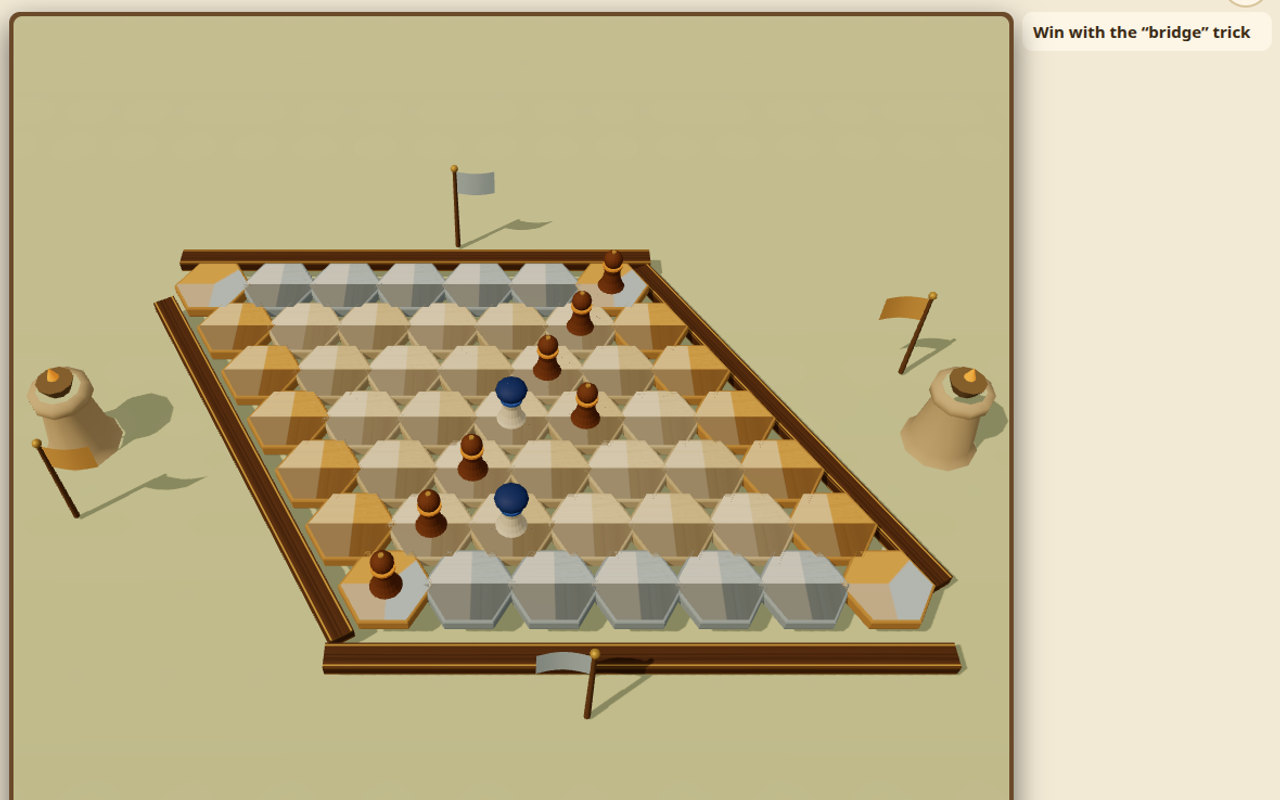
Antichess turns the goal upside down: you win by losing all your pieces, or by having no legal move left. And it gives you a tool to do it with — capturing is compulsory. If any of your pieces can take something, you must take, and if several can, you choose which.
The king is nobody special
There is no check, no checkmate and no castling. The king walks one square like always, it can be captured like any other piece, and a pawn reaching the last rank may even promote to a king if that suits you. The whole safety apparatus of chess is gone, which is exactly why the variant plays so fast.
Forced captures are the whole game
Since the opponent must take whatever is offered, you play by offering — dangling a piece so that the capture they are forced to make drags their bishop somewhere useless, or opens a line that forces the next capture, and the next. Long forced sequences are the point, and setting one up feels like knocking over dominoes.
Why beginners like it
Losing pieces is what a child is best at, and here it is the plan. There is no memorising, no rules about check to trip over, and games last a few minutes. It is also short enough to play three times while an adult is still deciding on an opening in ordinary chess.
More chess to try
Every one of these is the same board and the same pieces with one rule changed, and each has its own page: Chess960, Duck Chess, King of the Hill, Three-Check, Crazyhouse, Antichess, Atomic Chess and Fog of War. If you would rather start with the ordinary rules, our chess for kids teaches them from the first move.
How to play
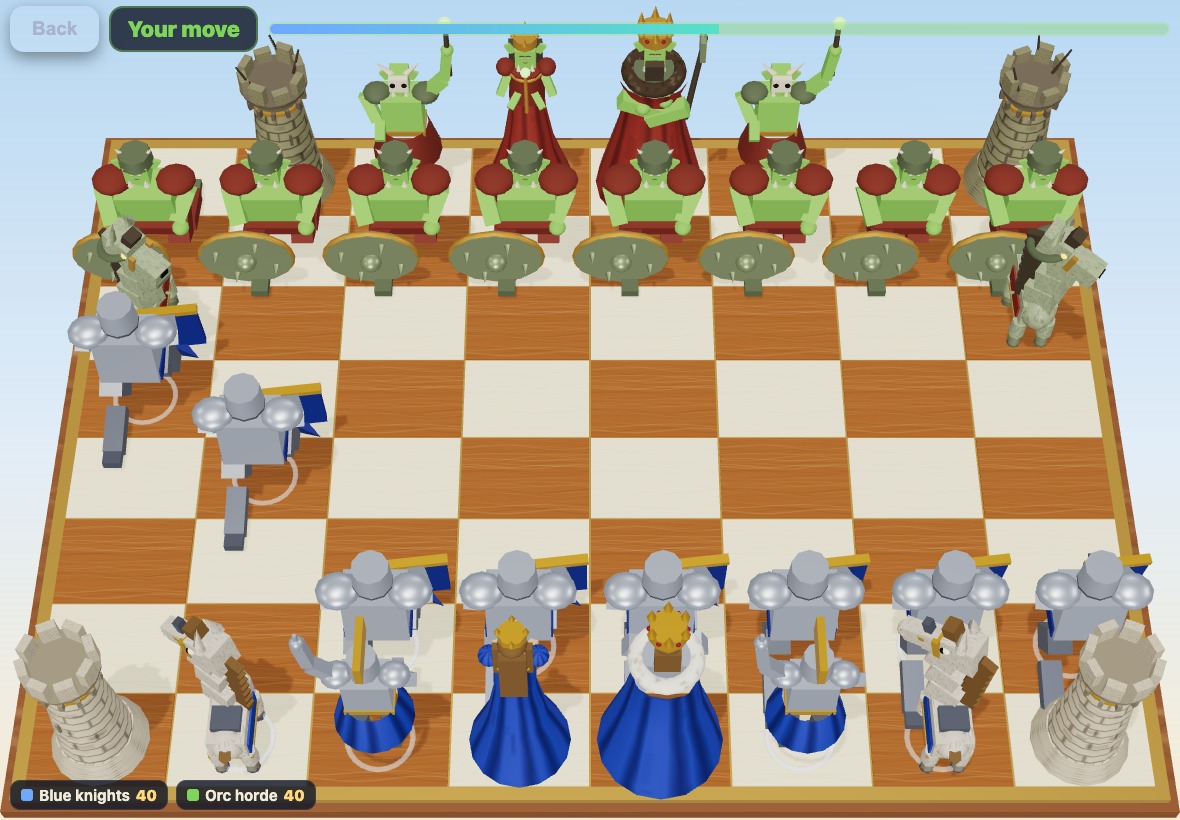
The pieces move as in ordinary chess, but the goal is reversed: you win by losing all your pieces, or by having no legal move left. Capturing is compulsory — if any of your pieces can take, you must take, and when several can, you choose which. There is no check, no checkmate and no castling: the king is an ordinary piece that can be captured, and a pawn may even promote to a king. The difference from ordinary chess is the upside-down goal — you play by offering pieces, not protecting them.
Drag a piece or tap it and tap where it should go — legal squares light up, and a move the rules forbid simply will not happen. The computer takes the other side, and it plays this variant rather than ordinary chess: its evaluation is rewritten for the rule that changed. You can also play a person instead: press the two-player button, share the room code, and the other browser joins the same game — this variant included.
What your child learns
Reading a chain of consequences. Because every capture is forced, a child can calculate quite deeply here without much chess knowledge — the opponent's replies are not guessed, they are known — and that is the friendliest introduction to real calculation there is. It also flips a strong intuition on its head, which is a useful exercise on its own: the piece you want to give away is now the valuable one, and a move that looks generous may be the sharpest on the board.
The science behind the games
Every Dad4Kids game is built on one simple truth: children want to play, not study — so we turn learning into a game worth replaying. The method draws on peer-reviewed research in game-based learning, motivation, and how memory works.
- Prins et al. (2013). “Braingame Brian”: toward an executive function training program with game elements. Games for Health Journal.
- Tokac et al. (2019). Effects of game-based learning on students' mathematics achievement: A meta-analysis. Journal of Computer Assisted Learning.
- Alotaibi (2024). Game-based learning in early childhood education: a systematic review and meta-analysis. Frontiers in Psychology.
- Lampropoulos & Sidiropoulos (2024). Impact of gamification on students' learning outcomes and academic performance: a meta-analysis. Education Sciences.
- Taylor & Boyer (2019). Play-based learning: evidence-based research to improve children's learning experiences. Early Childhood Education Journal.
- Gottfried (1990). Academic intrinsic motivation in young elementary school children. Journal of Educational Psychology.
FAQ
How do you play antichess?
You win by losing every piece you own, or by being left with no legal move. Capturing is compulsory: if you can take something, you must. There is no check, no checkmate and no castling, and the king is an ordinary piece.
What is antichess also called?
Losing chess, giveaway chess and suicide chess are the usual names, and they differ slightly at the edges — mostly over whether stalemate wins and whether a pawn may become a king. In this game a player with no legal moves wins, and pawns may promote to a king.
Has antichess been solved?
Yes — computer analysis published in 2016 showed the first move 1.e3 is a forced win for White with perfect play. That takes nothing away from the game between two humans, since nobody plays it perfectly.
Do I have to capture if it loses a piece?
Yes, always — and losing a piece is the goal, so it may not be bad news at all. The only choice you get is which capture to make when more than one is available, and that choice is usually the whole game.
Does it work on a tablet?
Yes. Tap a piece, then tap the square you want — the same as dragging with a mouse. The board turns to fit the screen in both orientations.
More free games for kids
By Evgeny Arsentiev, PhD · Last updated: September 2026