
Free Math Games for Kids — Play in Your Browser
Games
-
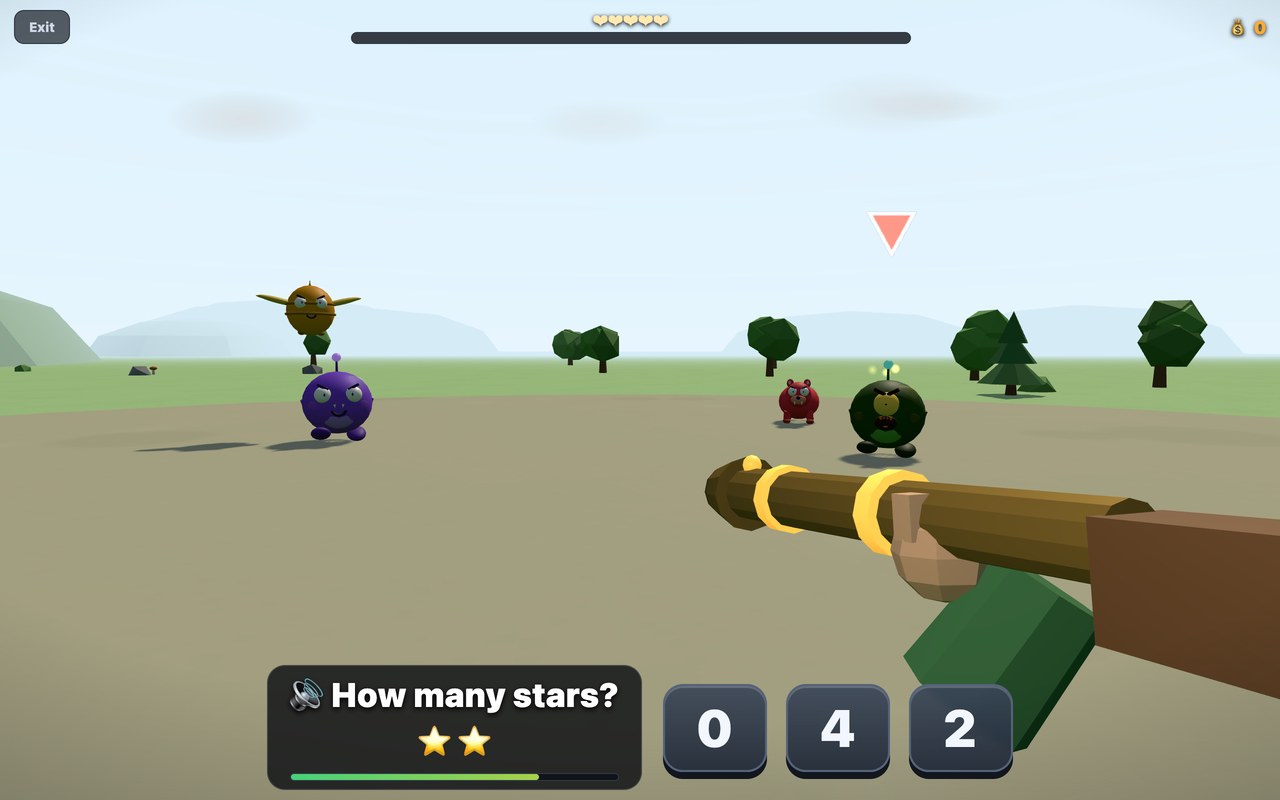 Math Games for Kindergarten — Free Math Archer 3D 4+
Math games for 5 year olds that start at counting to 5: an elf …
-
 Math Games for Kids — Free Online 6+
Math games for kids on a pirate wall: solve addition, subtraction and more to …
-
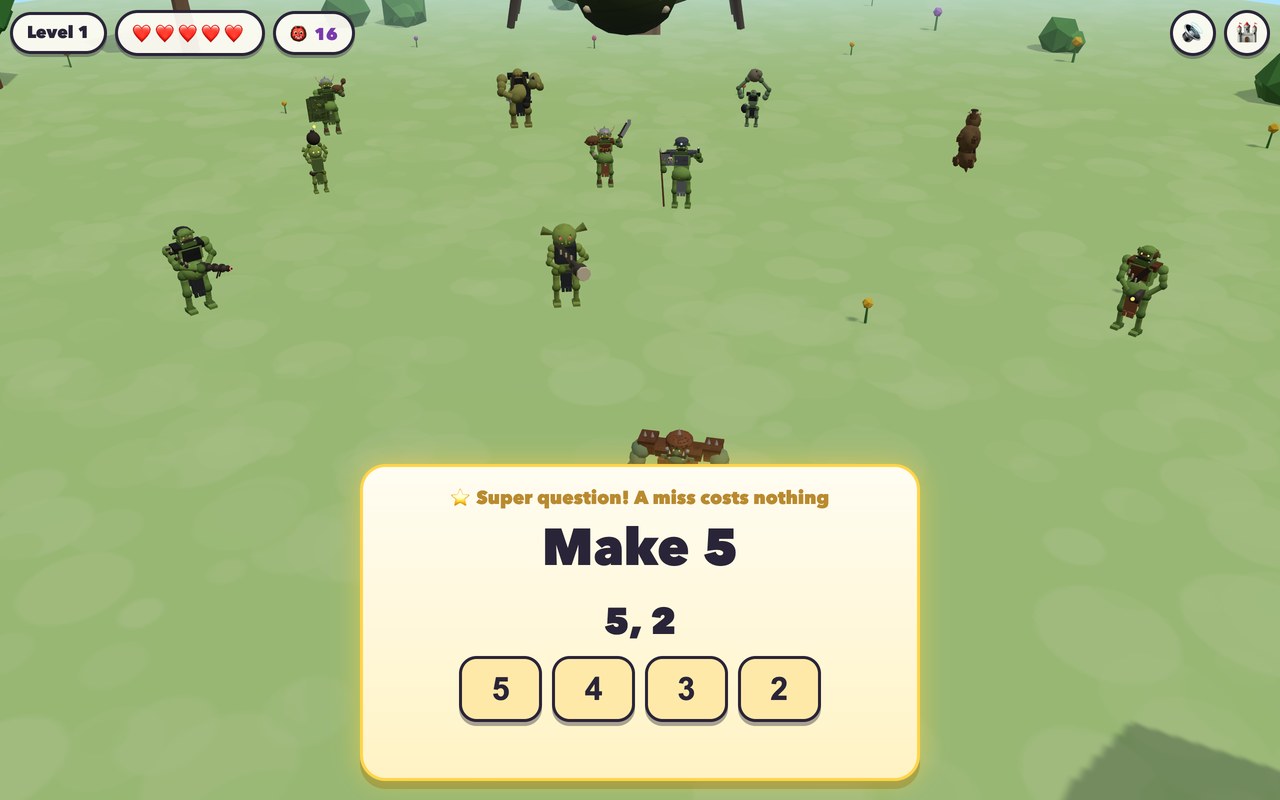 Math Games for 1st Graders — Free Sword of Sums 6+
Math games for 1st graders: a knight walks ten 3D worlds and every monster …
-
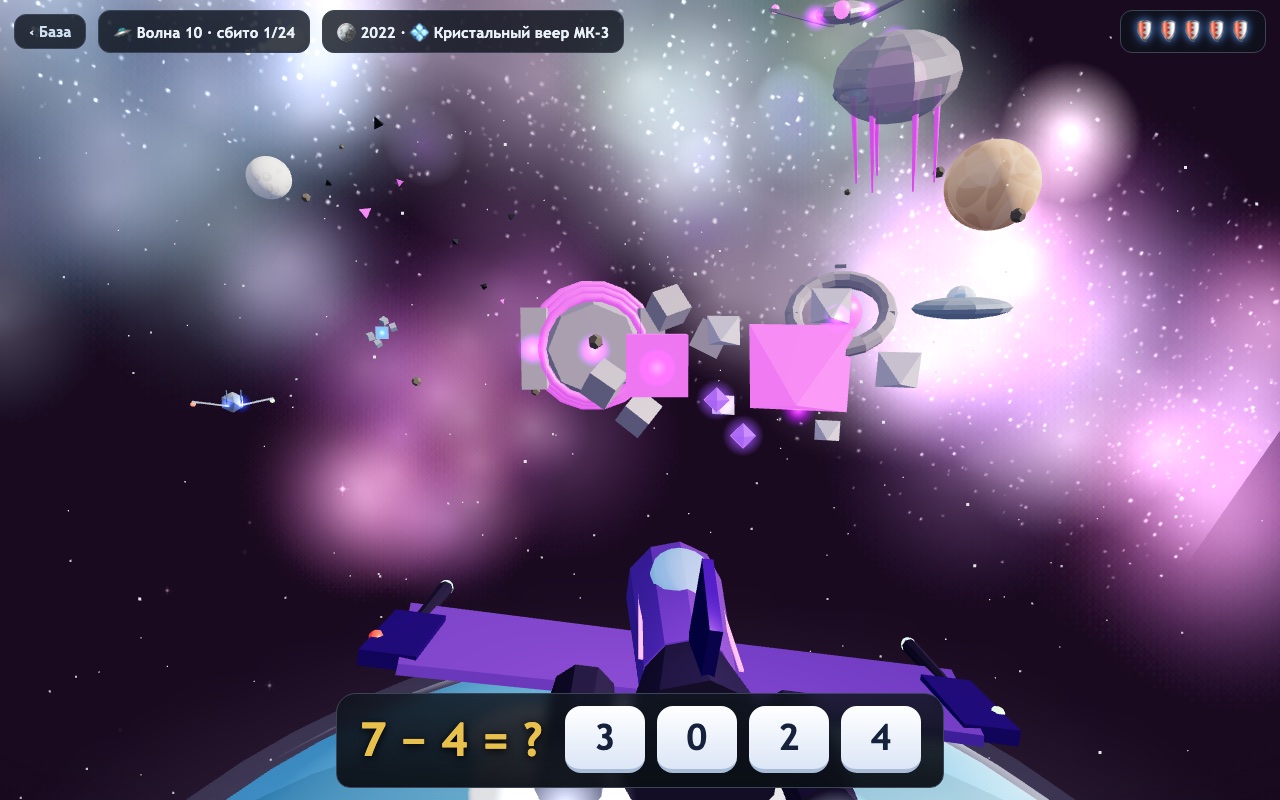 Math Facts Games for Kids — Free Online 6+
Math facts games for kids in Earth orbit: solve addition, subtraction and times tables …
-
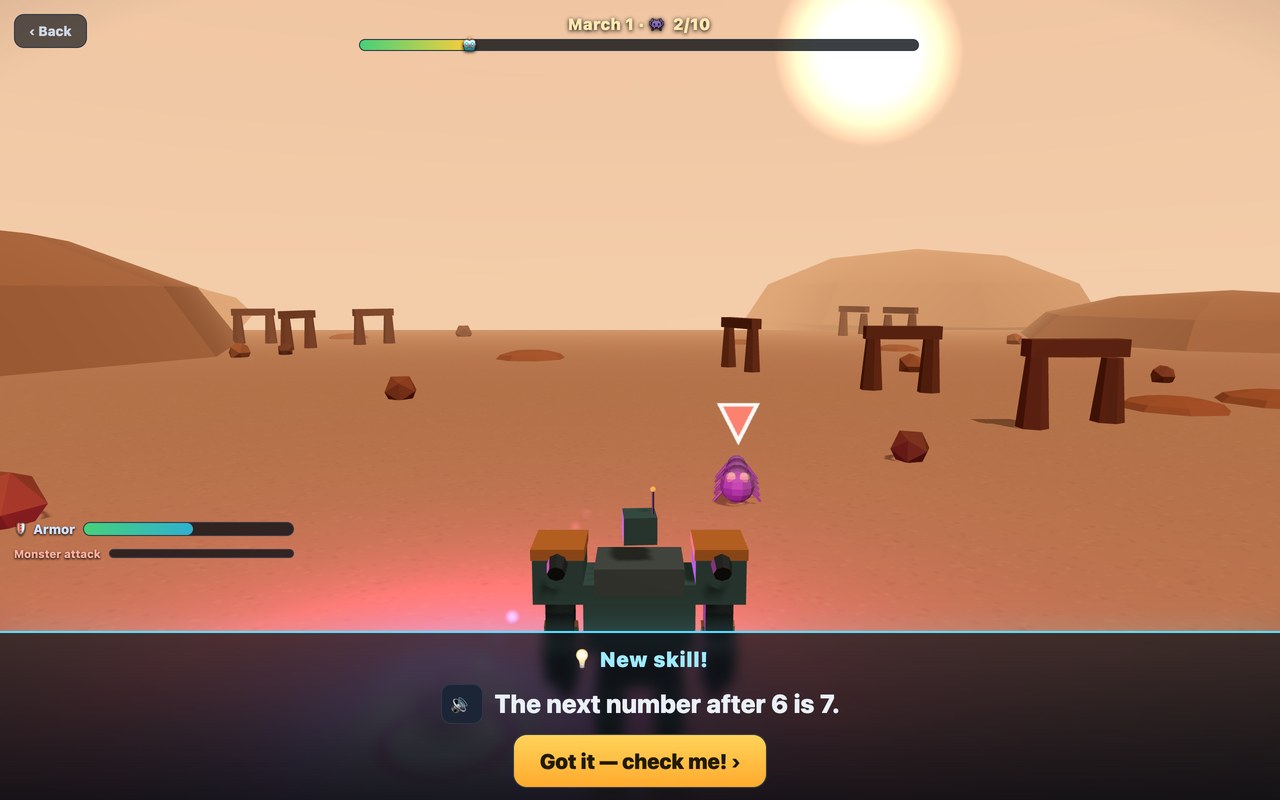 Math Facts Games — Free Star Mech Fluency Drill 7+
Math facts games with a real mastery rule: five right in a row retires …
-
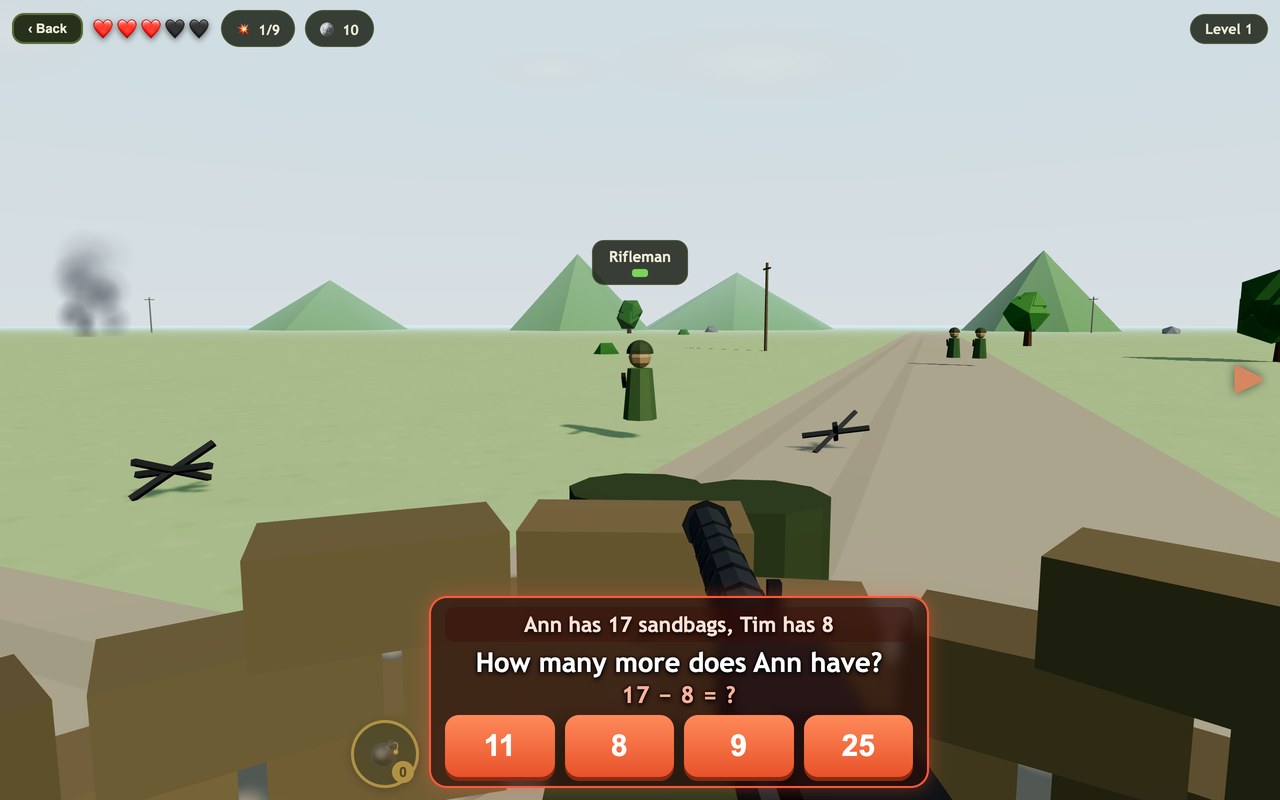 Math Games for 3rd Graders — Free Firing Line 6+
Math games for 3rd graders: short word problems, adding and subtracting past 100, times …
-
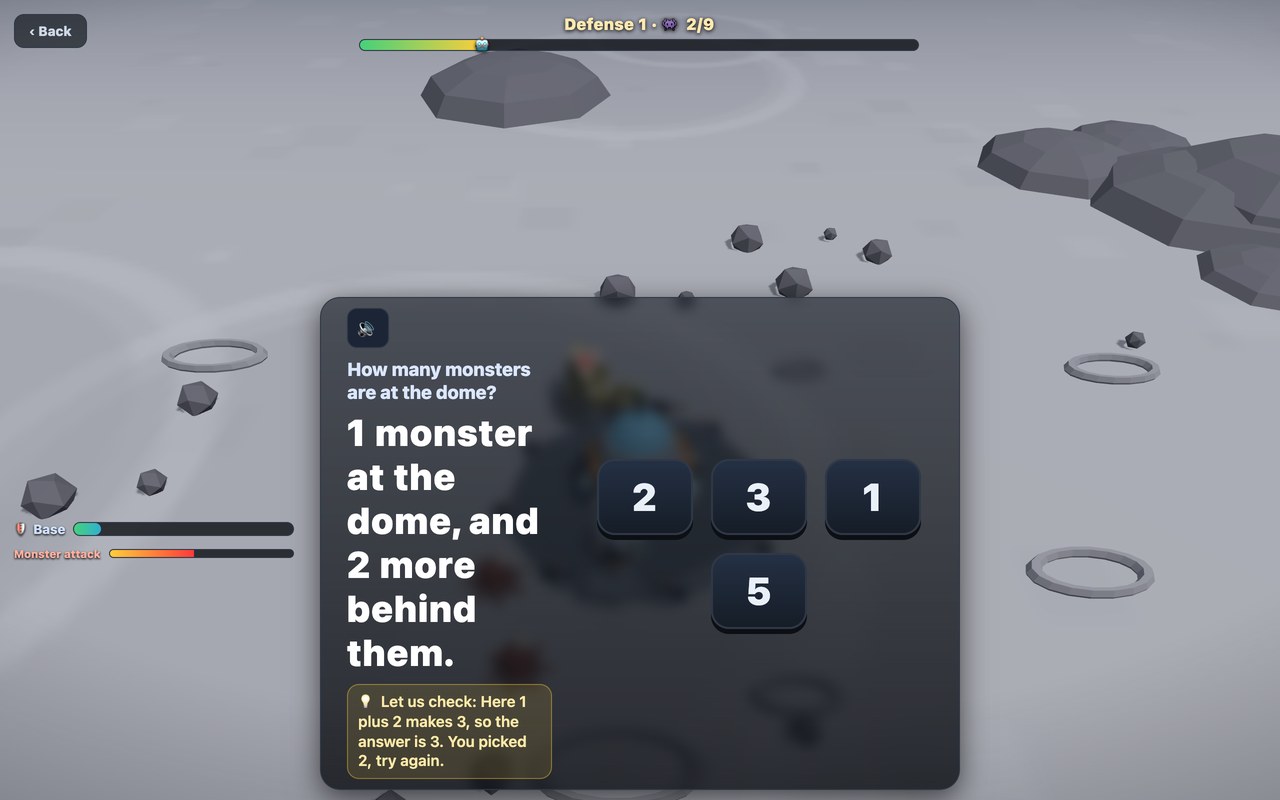 Math Games for 2nd Graders — Free Moon Base Defence 7+
Math games for 2nd graders: monsters rush the moon base and only a correct …
-
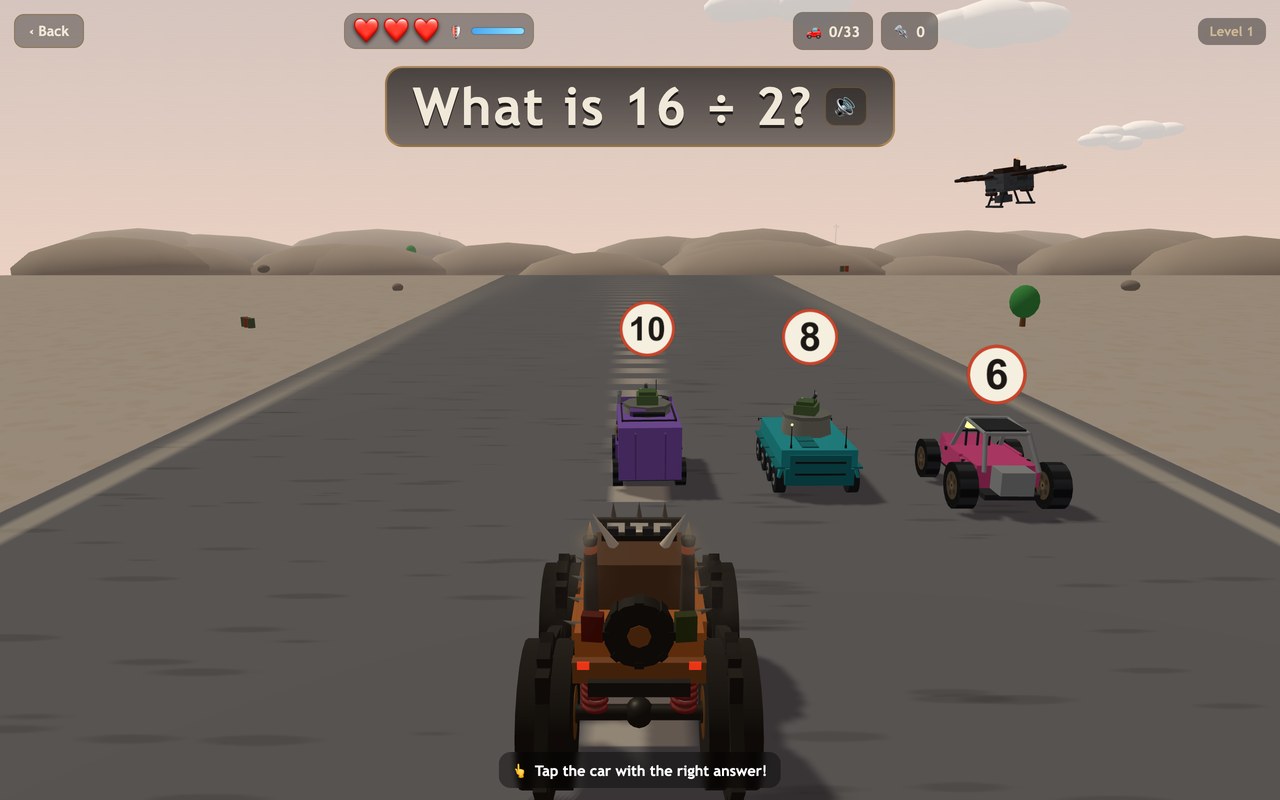 Times Tables Game for Kids — Free Bigfoot Arena 7+
Times tables practice in a demolition derby: crush the car carrying the right answer …
-
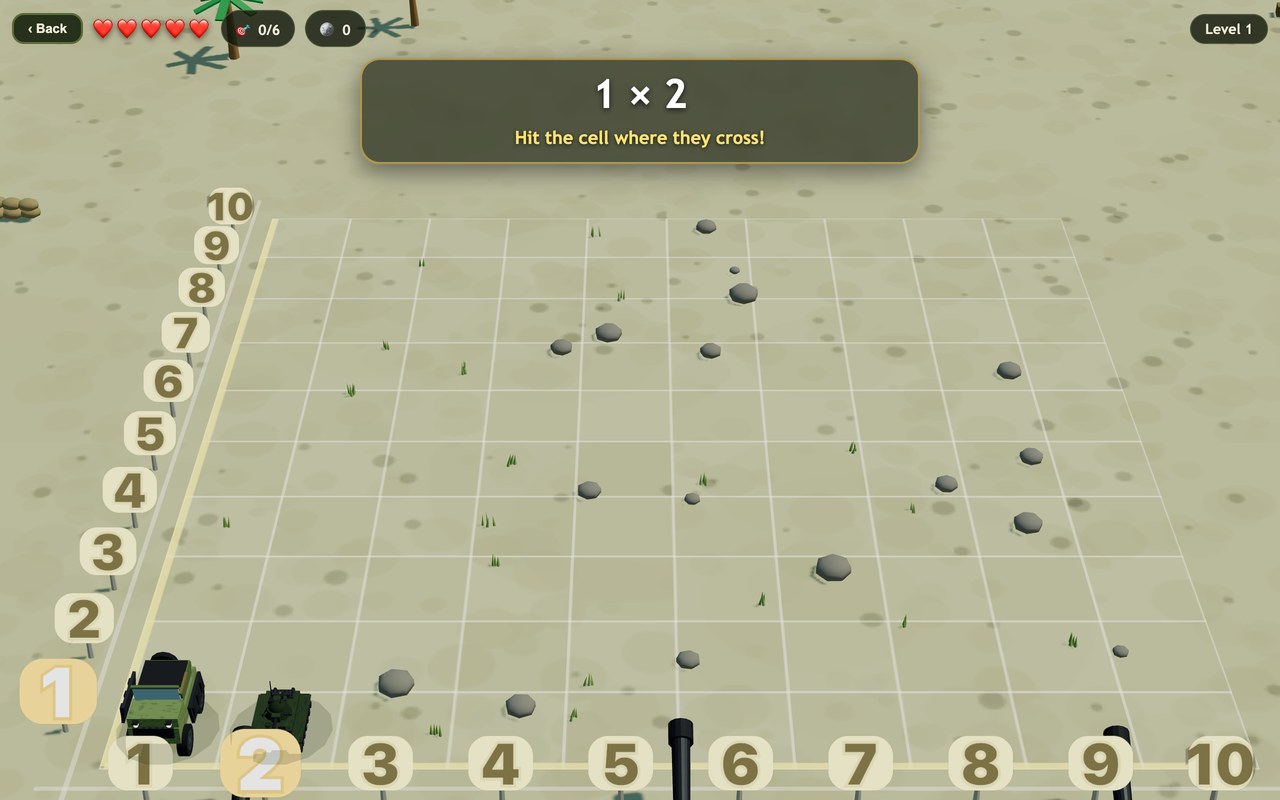 Multiplication Facts — Free True Aim Artillery Game 7+
Practise multiplication facts one row at a time: 2s, 5s and 10s first, then …
-
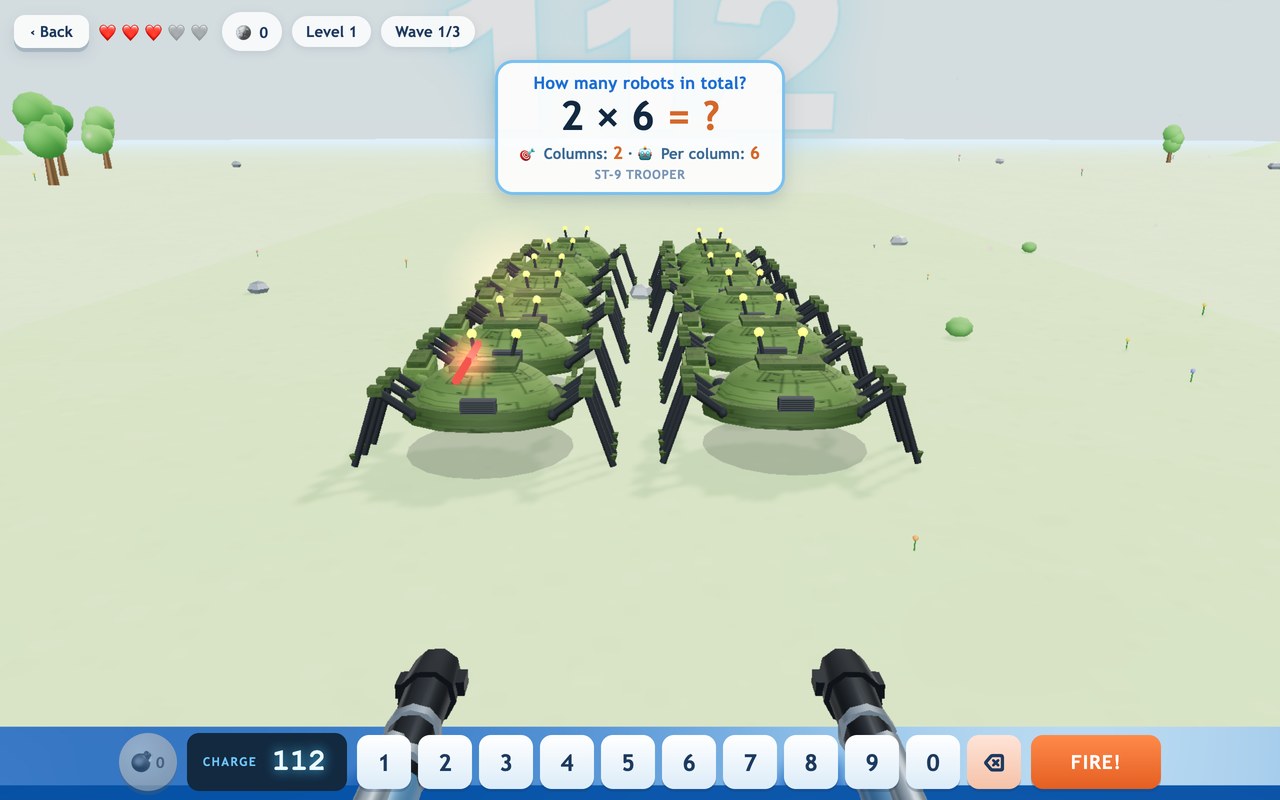 Multiplication Table Game — Free Divide & Conquer 7+
A multiplication table game where the answer is on screen: count the robot formation, …
-
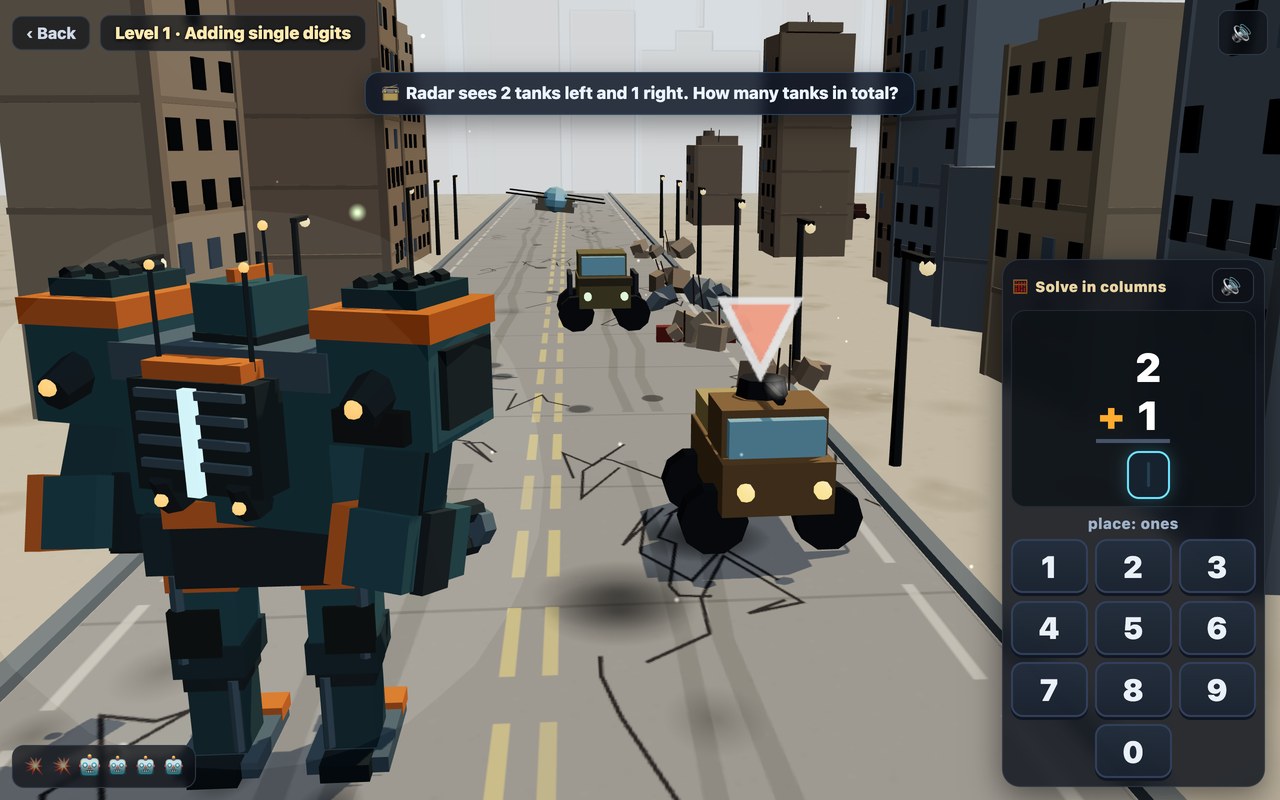 Long Division & Column Math Game for Kids — Free 7+
A long division game for kids that also drills column addition, borrowing and long …
-
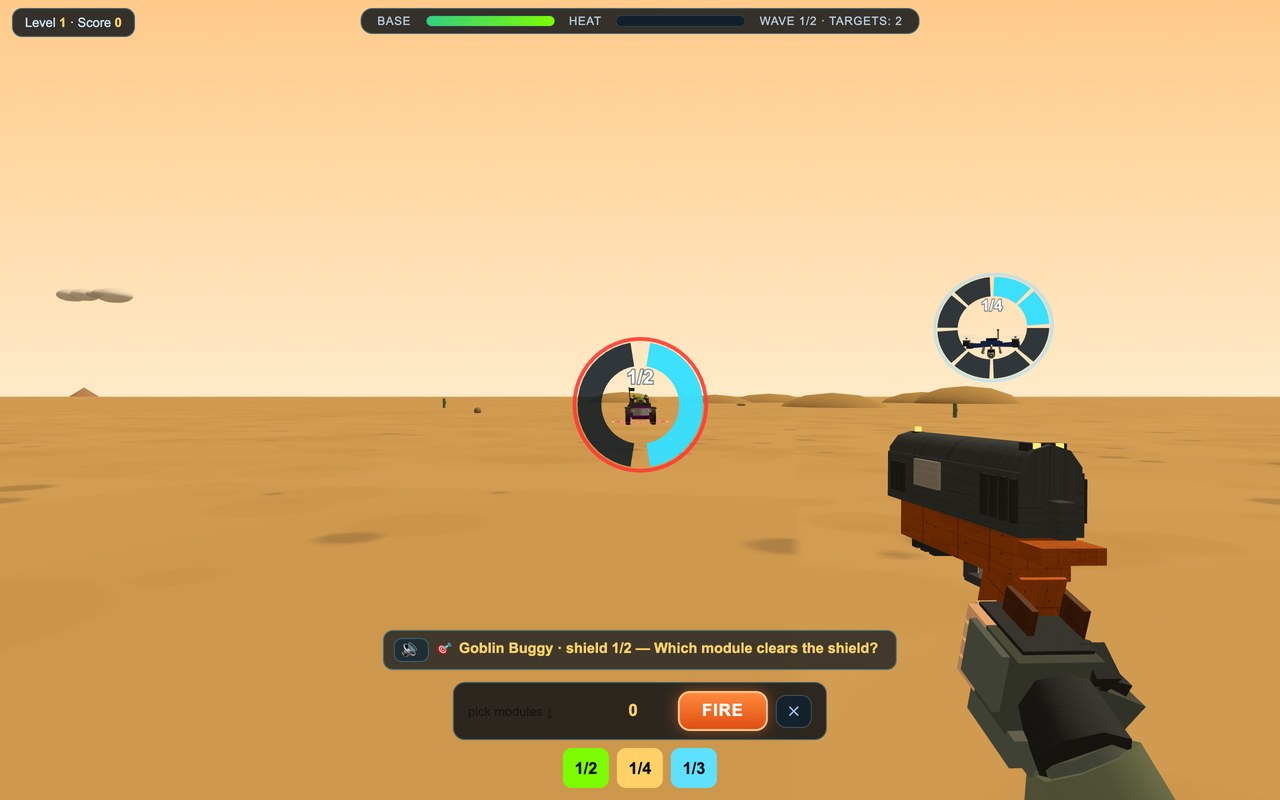 Equivalent Fractions — Free Game With 500 Levels 7+
Equivalent fractions practice: pick the round that matches the shield and fire. 1/2 = …
-
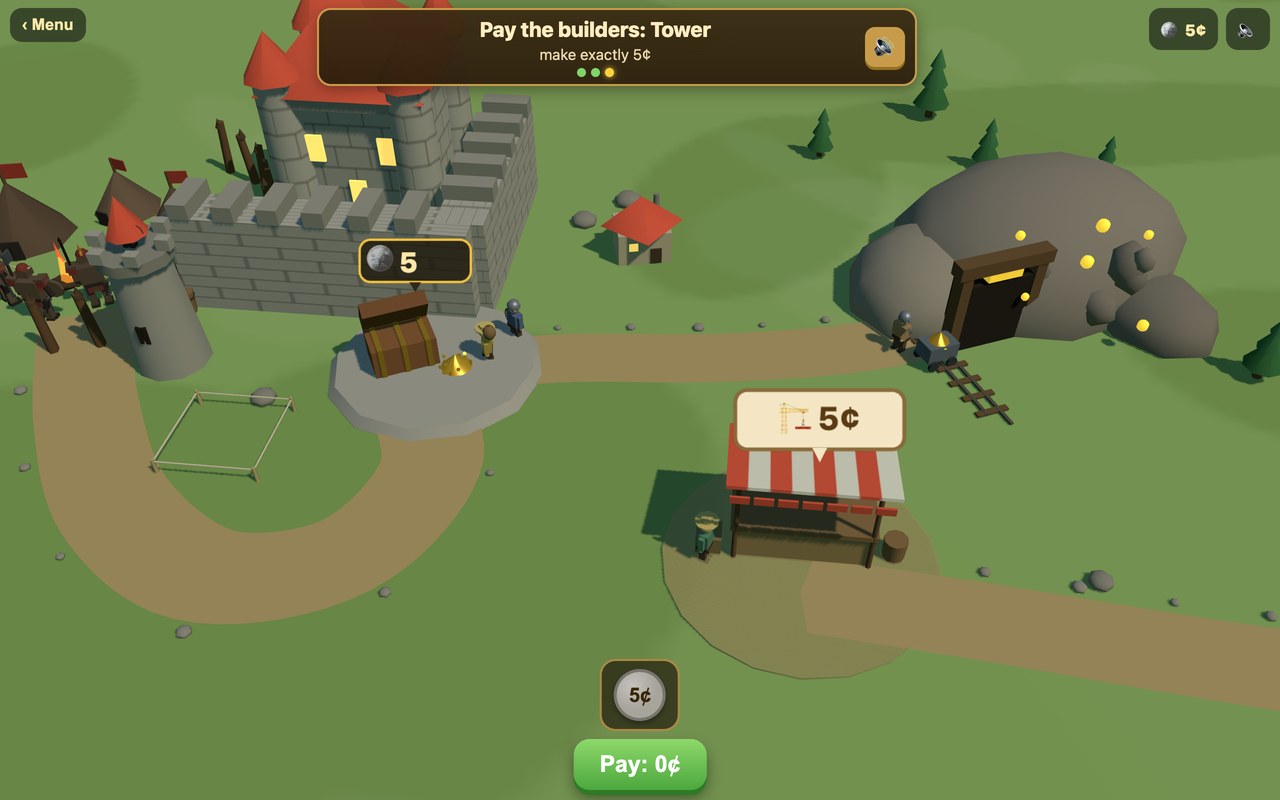 Counting Money — Free Treasury Keep Game for Kids 7+
Counting money in a treasury: add up the coins, compare two prices, make an …
-
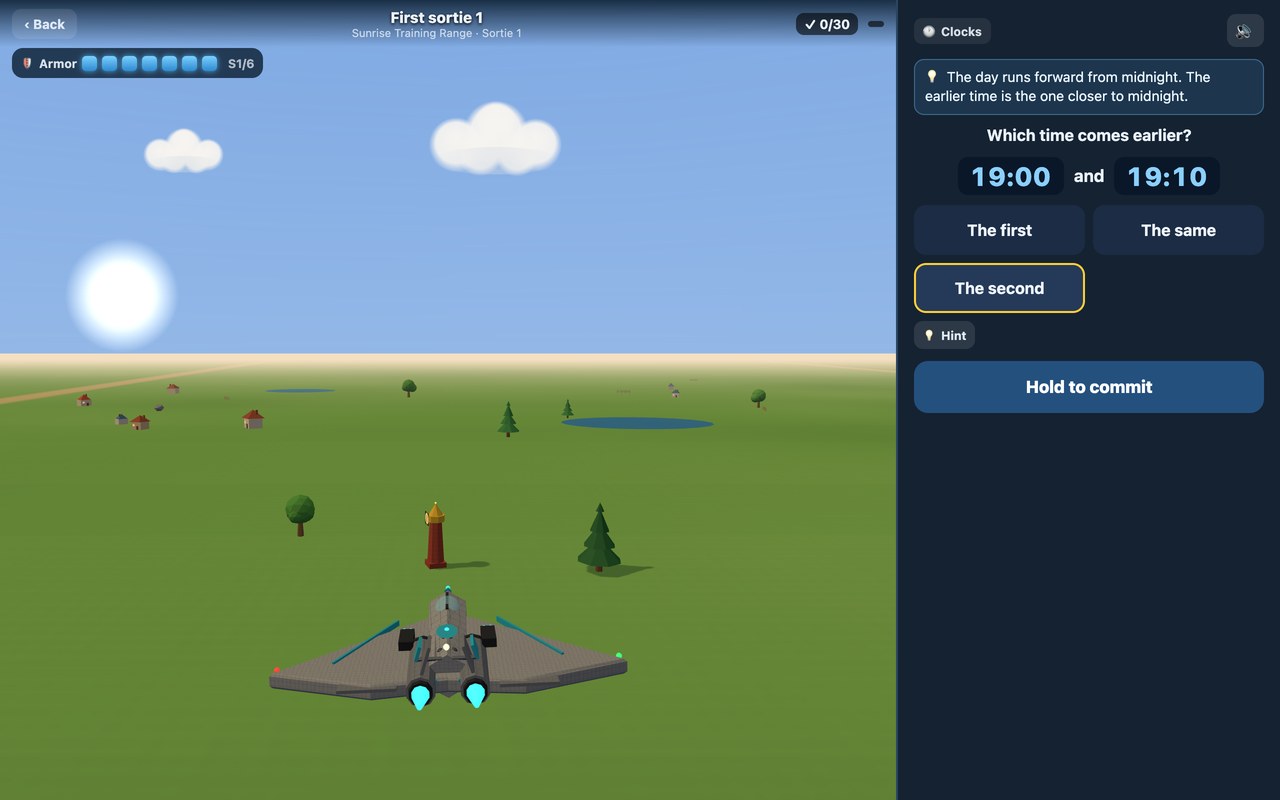 Telling Time — Free Chrono Wing Game for Kids 7+
Telling time from the clock face on: count the minutes, measure how long something …
-
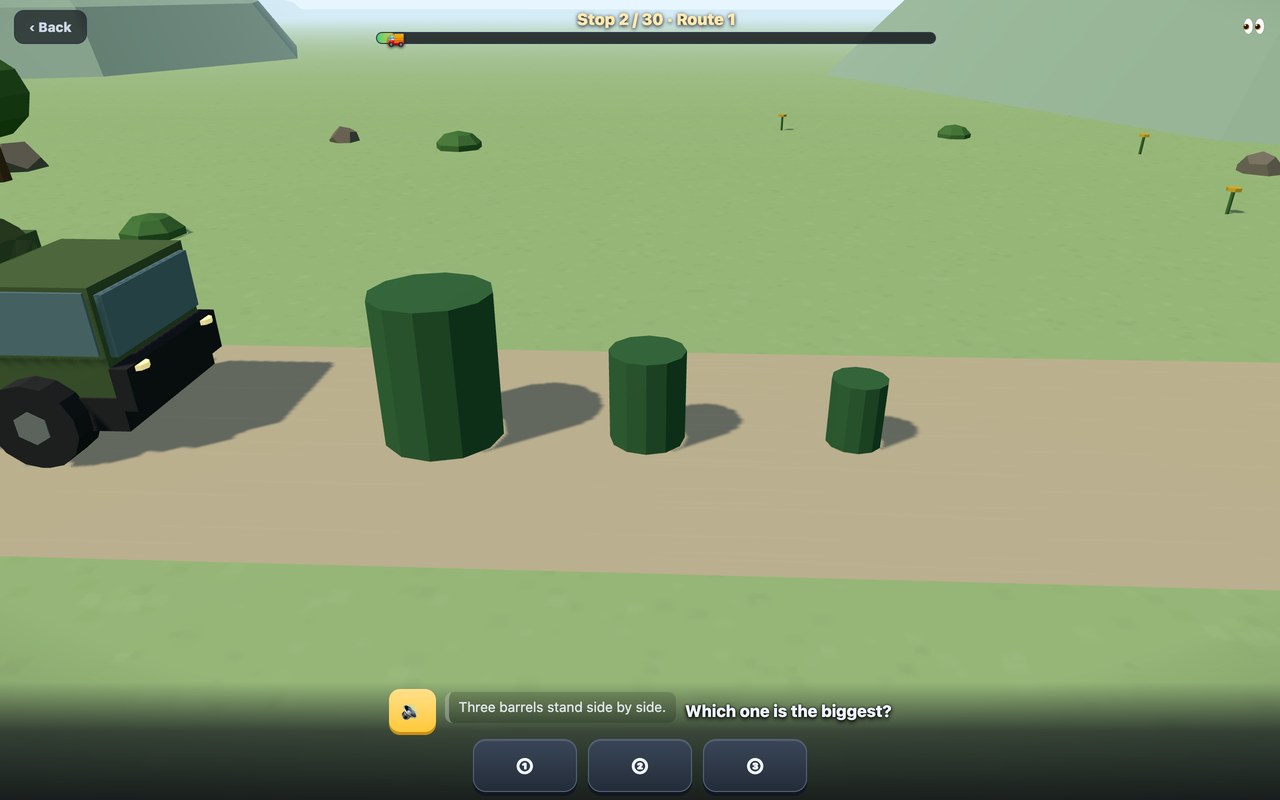 Measuring Length — Free Supply Command Game for Kids 6+
Measuring length on a ruler and a tape measure, then converting cm to m, …
-
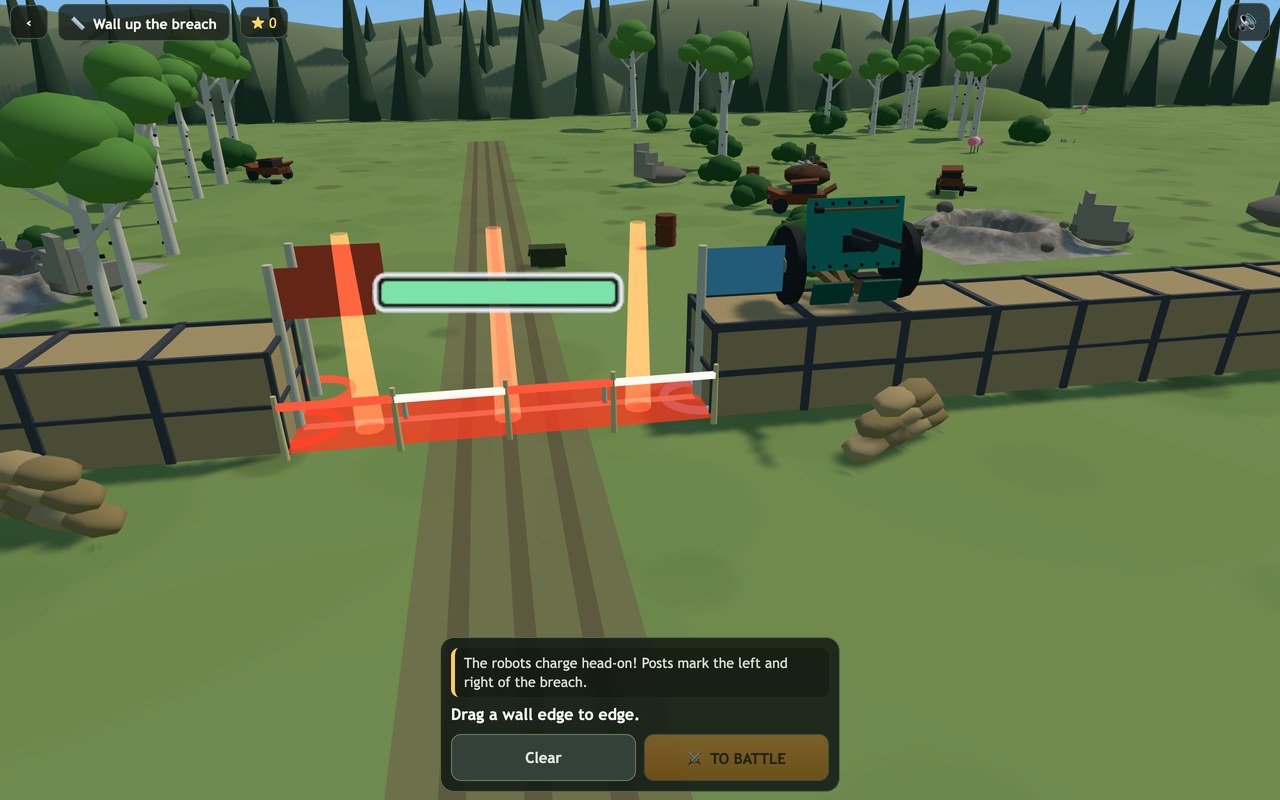 Area and Perimeter — Free Geometry Game for Kids 6+
Area and perimeter on a building grid: fence the yard, floor the warehouse, then …
-
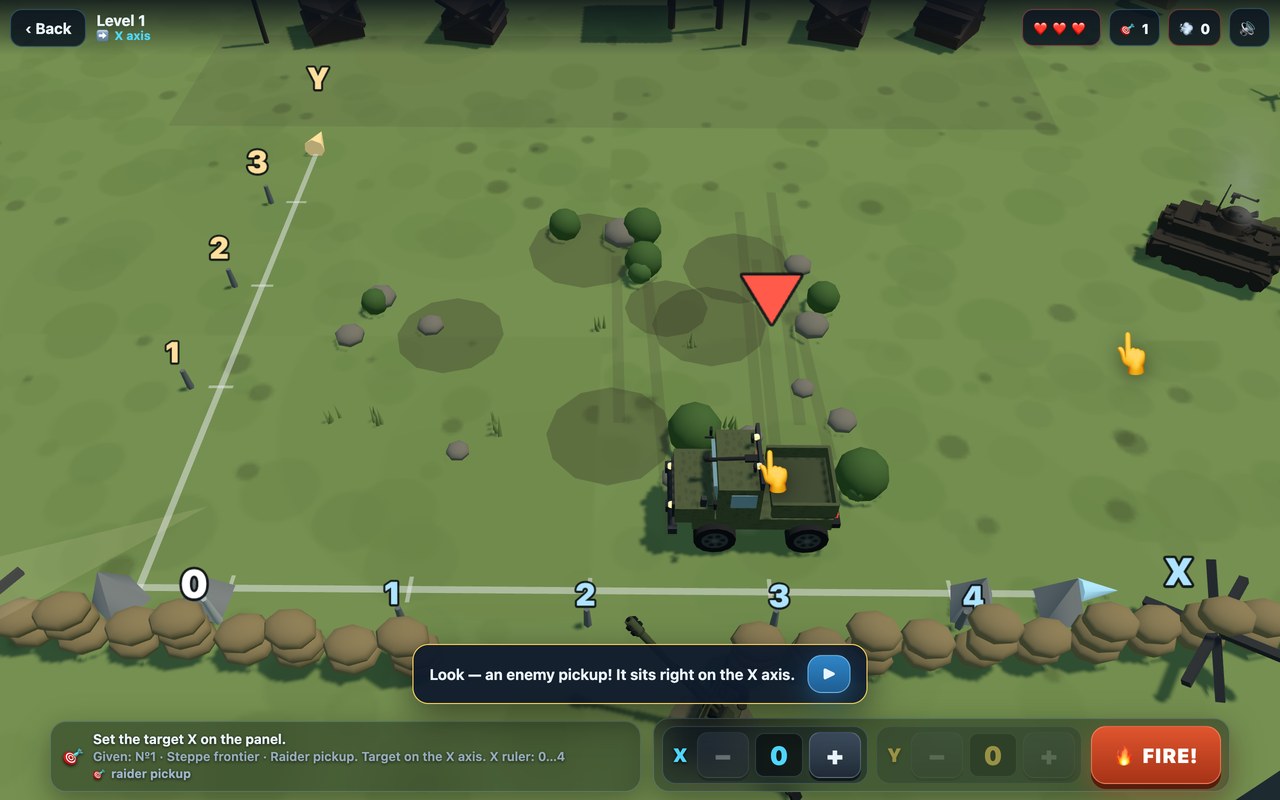 Coordinate Grid — Free Grid Artillery Game for Kids 7+
A coordinate grid game where the point is the target: read it, call it …
-
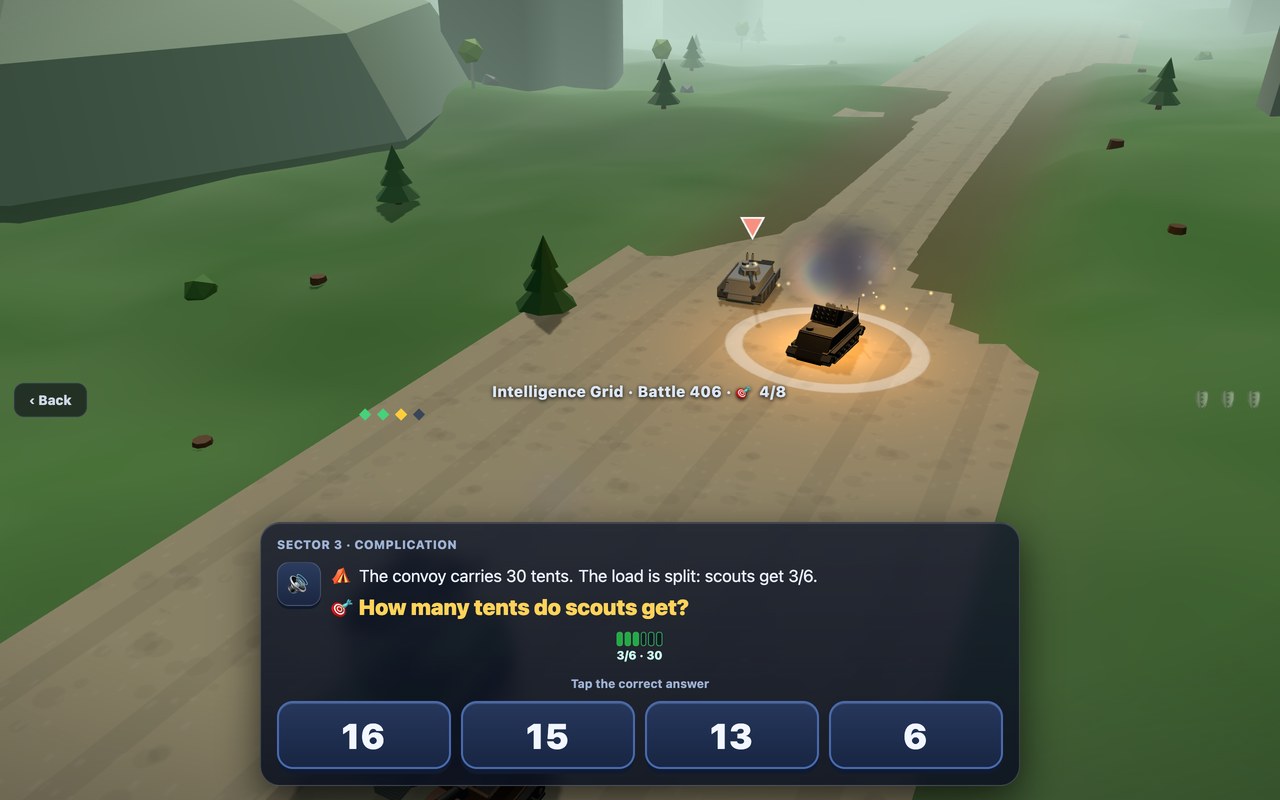 Math Word Problems for Kids — Convoy Frontline 7+
Math word problems for kids turned into a convoy fight: read the story, build …
-
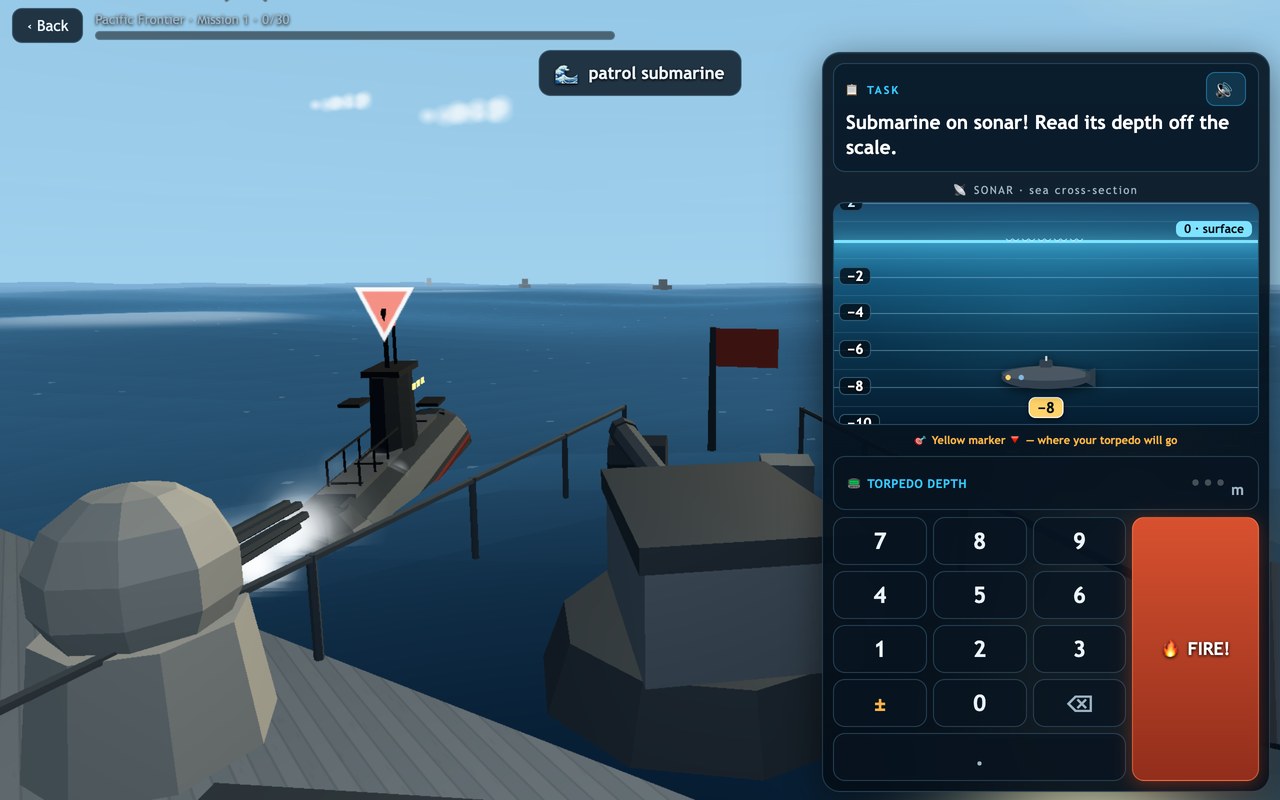 Math Games for 6th Graders — Free Deep Number 8+
Math games for 6th graders on a submarine depth scale: negative numbers, opposites, comparing …
-
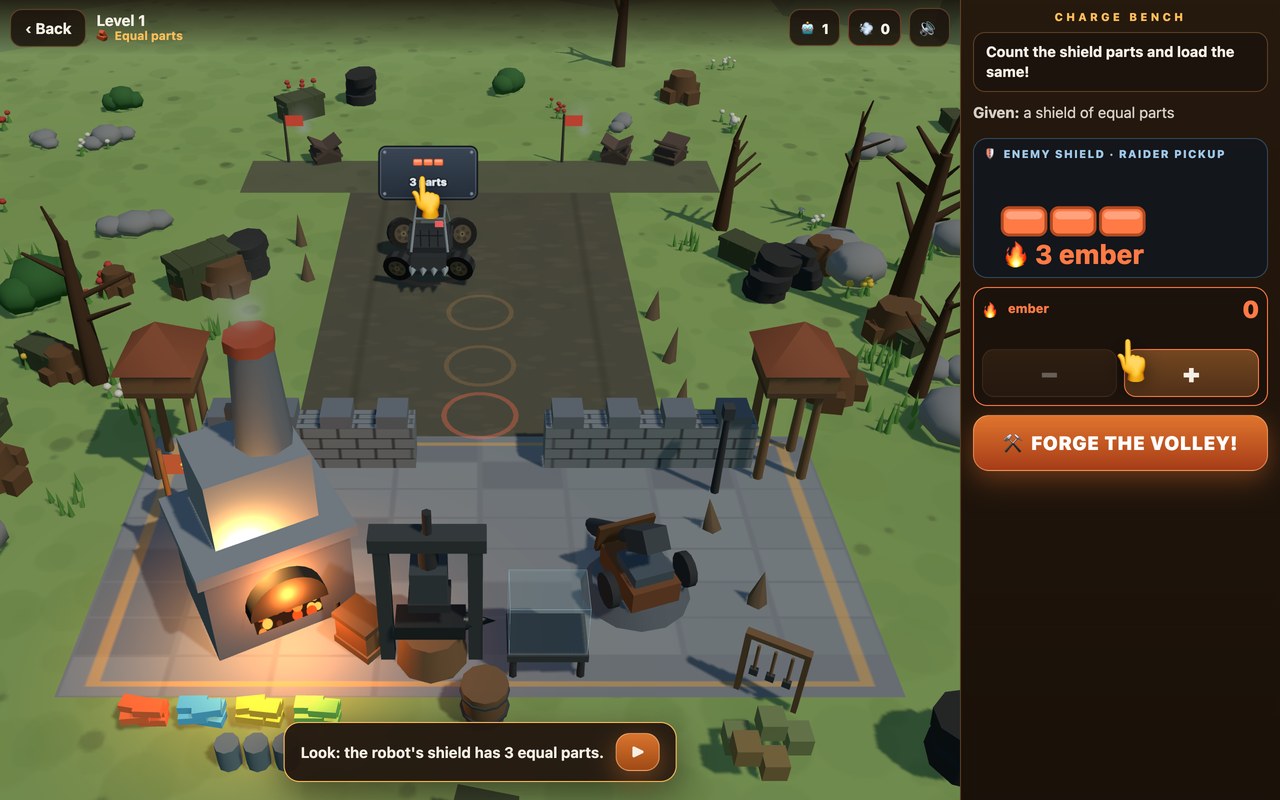 Ratio & Proportion Games for Kids — Free Ratio Forge 9+
Ratio games for kids where the math is the weapon: use ratios, unit rates …
-
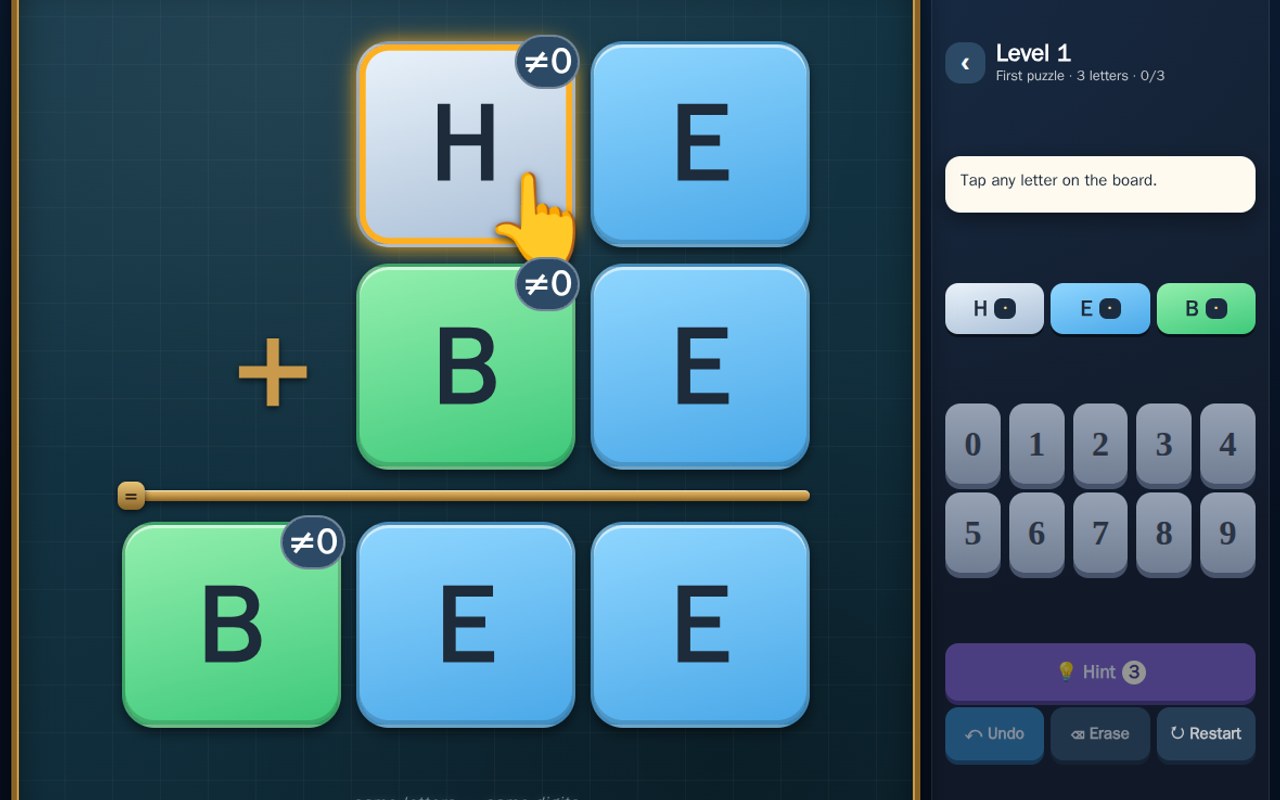 Cryptarithm Game for Kids — Letters Are Digits 6+
Play cryptarithm puzzles online free: HE+BE=BEE letter addition where each letter hides a digit …
-
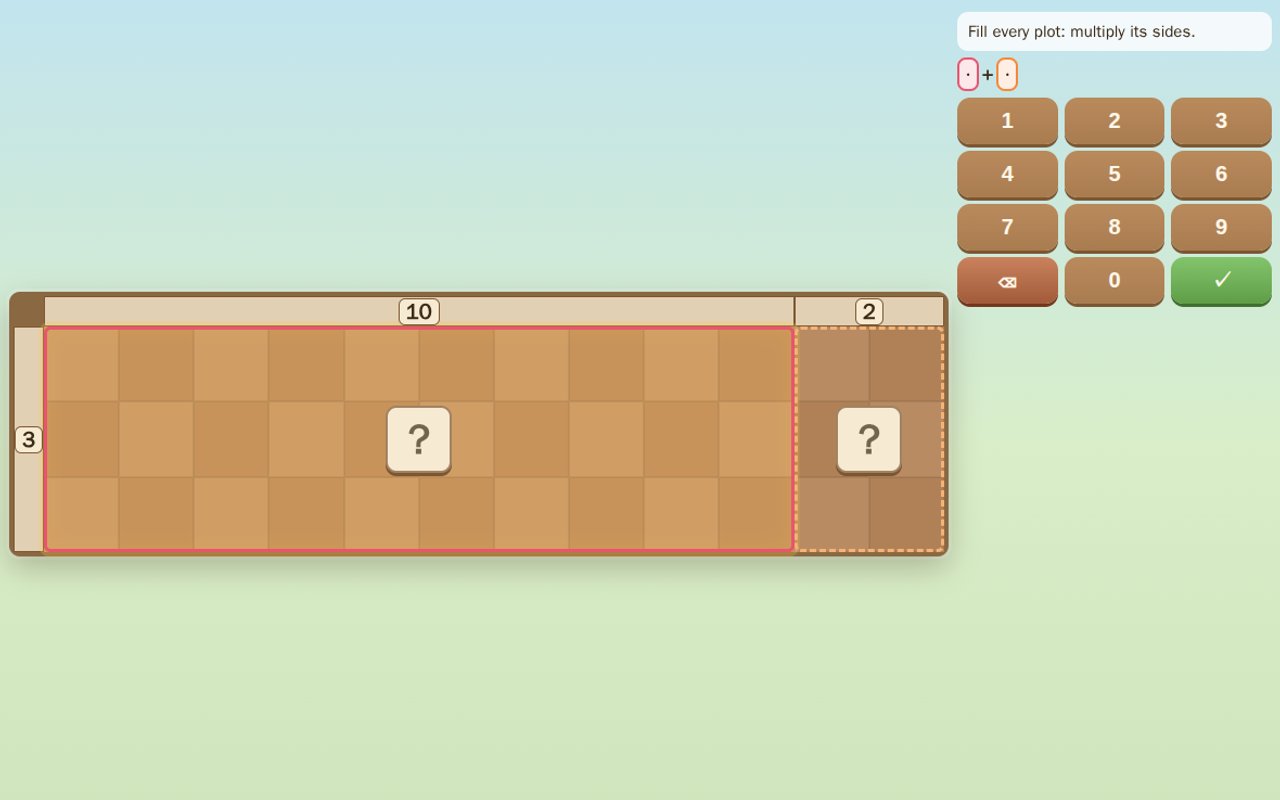 Area Model Multiplication Game — Grow the Garden 6+
Play the area model multiplication game free: split a garden plot into place-value strips, …
Adding Integers: Why Minus Plus Minus Is Not Plus
-
Math Games for 6th Graders — Free Deep Number 8+
Math games for 6th graders on a submarine depth scale: negative numbers, opposites, comparing …
-
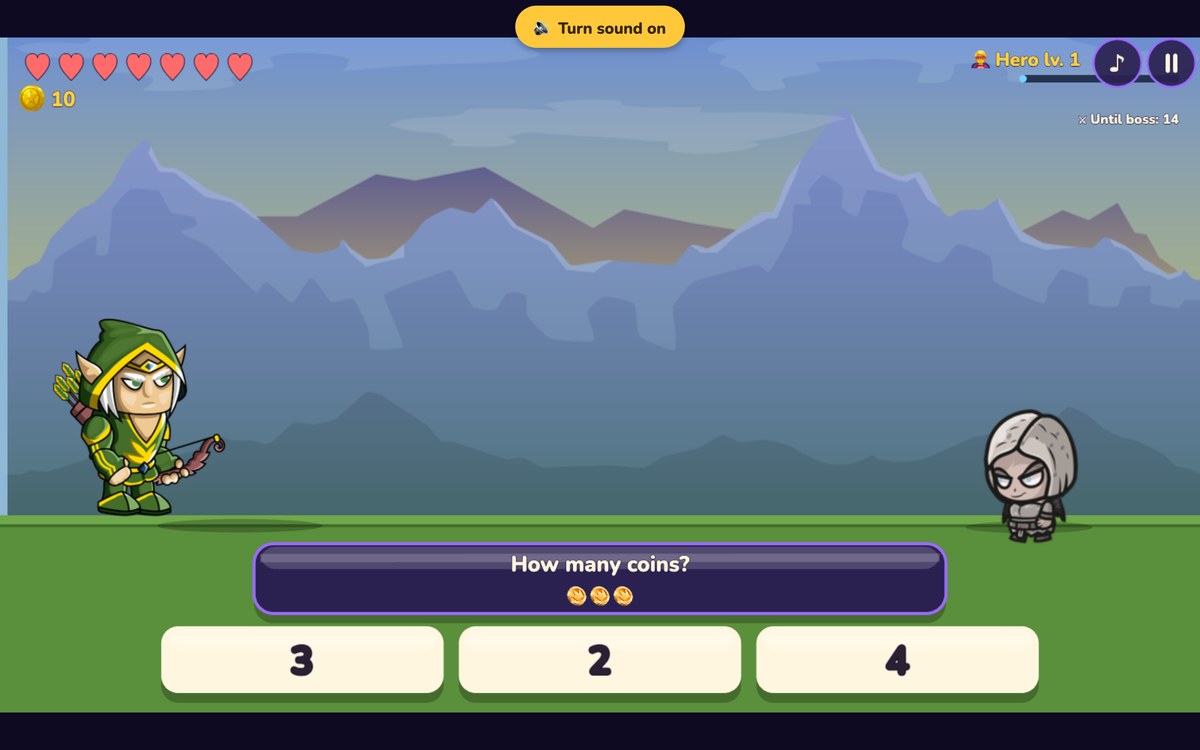 Math Games for 5th Graders — Free Math Blaster 4+
Math games for 5th graders: decimals, percent, fractions, area, perimeter, volume and solving for …
-
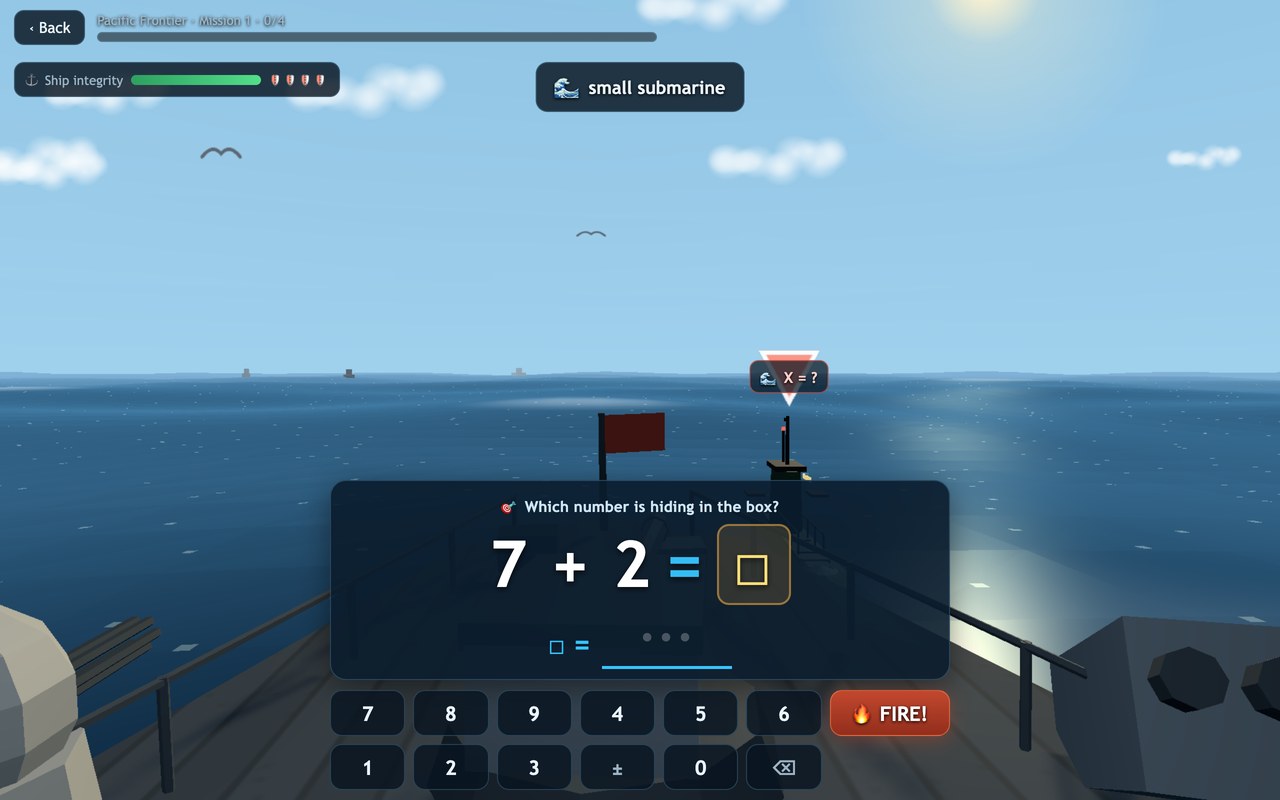 Algebra Games for Kids — Free Sea Battle: Find X 6+
Algebra games where solving is the trigger: work out the hidden enemy's position, type …
-
Coordinate Grid — Free Grid Artillery Game for Kids 7+
A coordinate grid game where the point is the target: read it, call it …
-
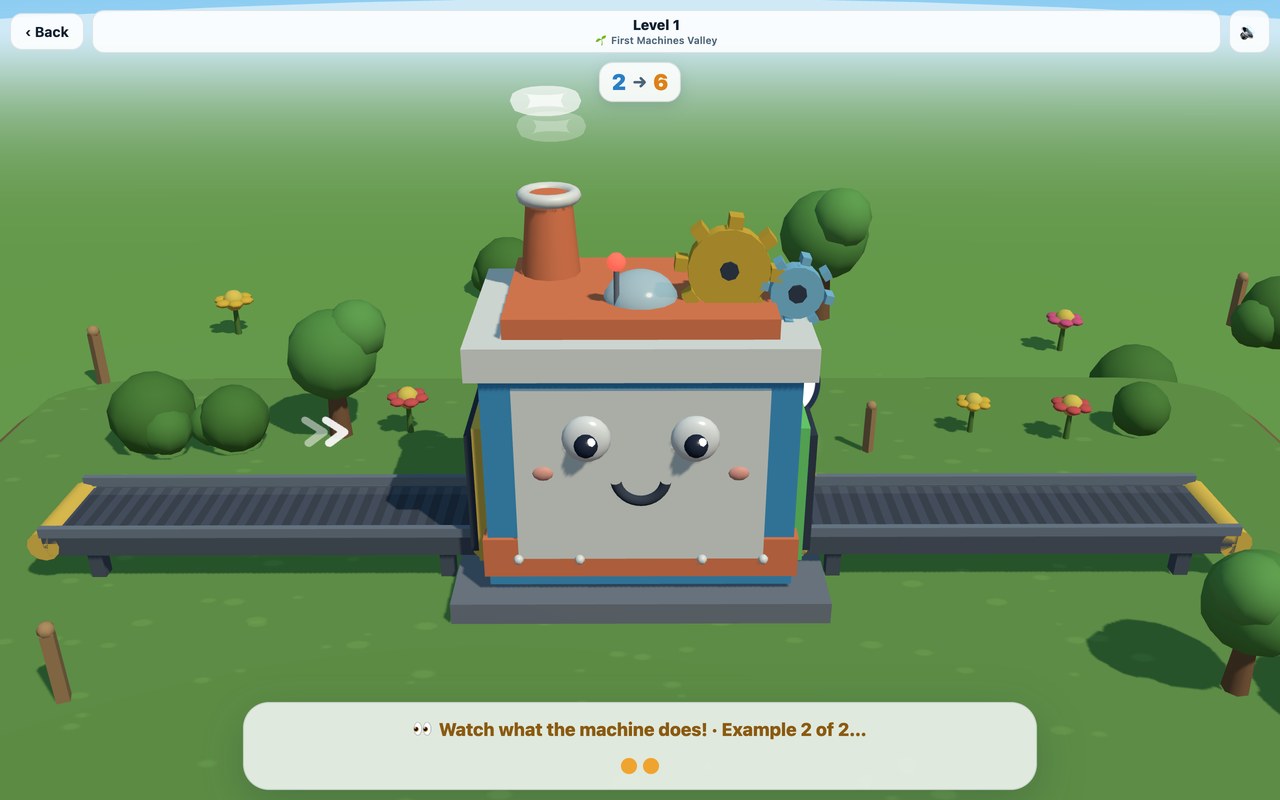 Function Machine Game — Free Function Forge Academy 7+
Function tables made visible: drop an input into the machine, watch the output, fill …
Counting Coins: Pennies, Nickels, Dimes and Quarters
-
Counting Money — Free Treasury Keep Game for Kids 7+
Counting money in a treasury: add up the coins, compare two prices, make an …
-
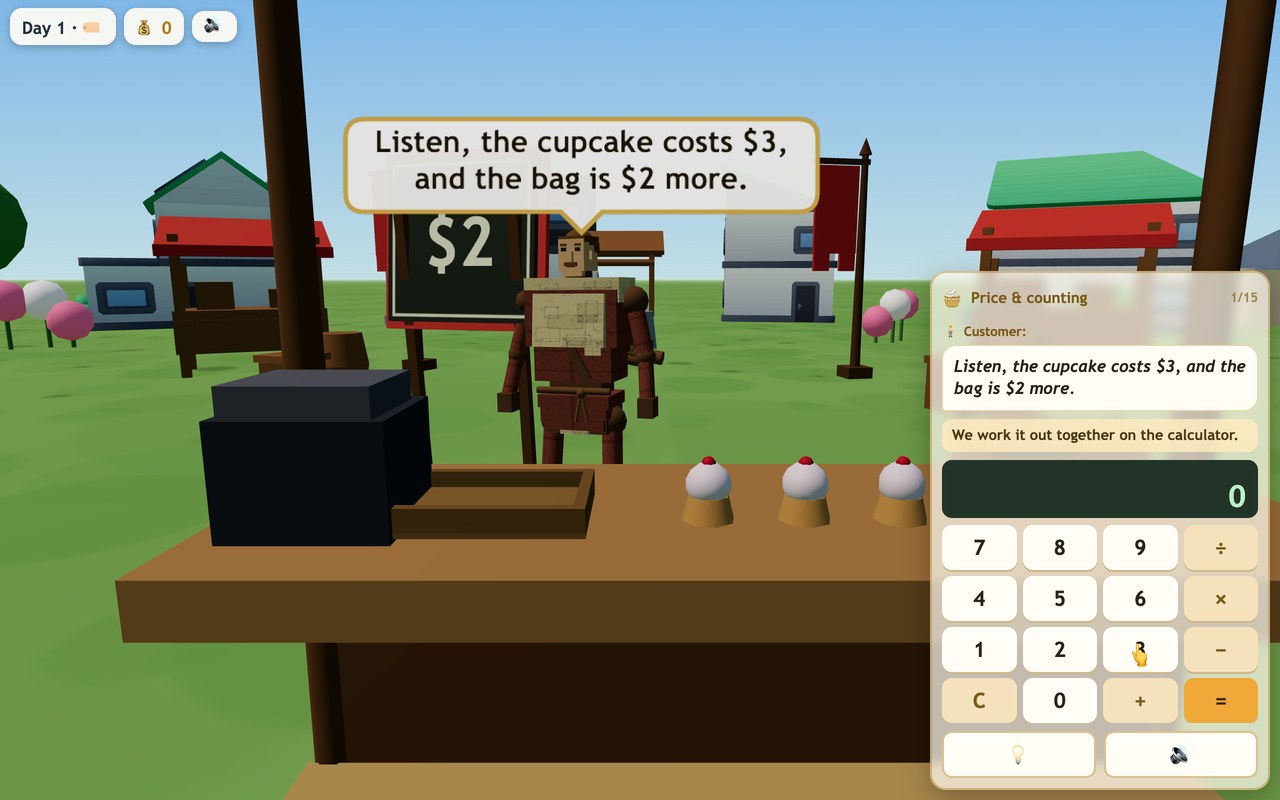 Business Game for Kids — Free Venture City 7+
Business games for kids built on real money math: use the built-in calculator to …
-
Math Games for 2nd Graders — Free Moon Base Defence 7+
Math games for 2nd graders: monsters rush the moon base and only a correct …
-
Ratio & Proportion Games for Kids — Free Ratio Forge 9+
Ratio games for kids where the math is the weapon: use ratios, unit rates …
Customary Units: Inches, Feet, Cups and Pounds That Finally Make Sense
-
Measuring Length — Free Supply Command Game for Kids 6+
Measuring length on a ruler and a tape measure, then converting cm to m, …
-
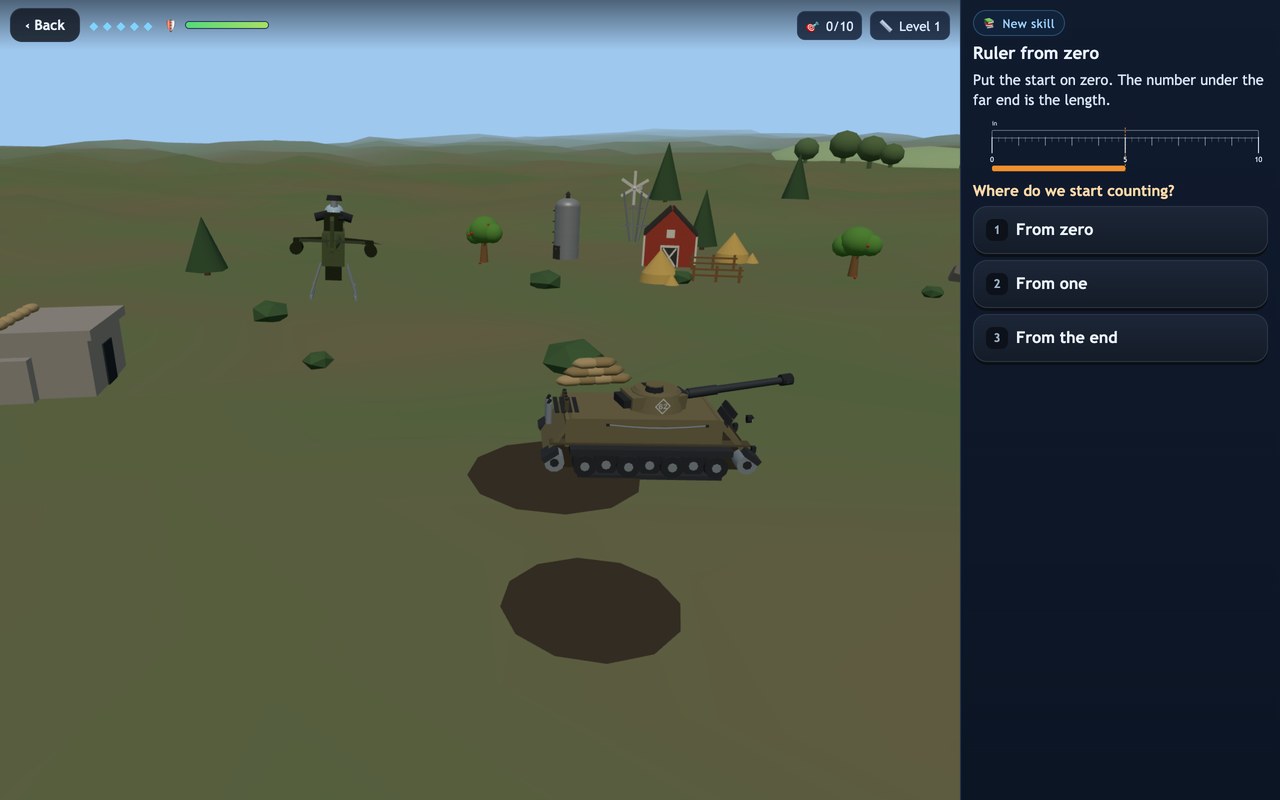 Measurement Games for Kids — Free Rescue Drone 7+
Measurement games for kids: read rulers, scales and thermometers and convert units to fly …
-
Area and Perimeter — Free Geometry Game for Kids 6+
Area and perimeter on a building grid: fence the yard, floor the warehouse, then …
-
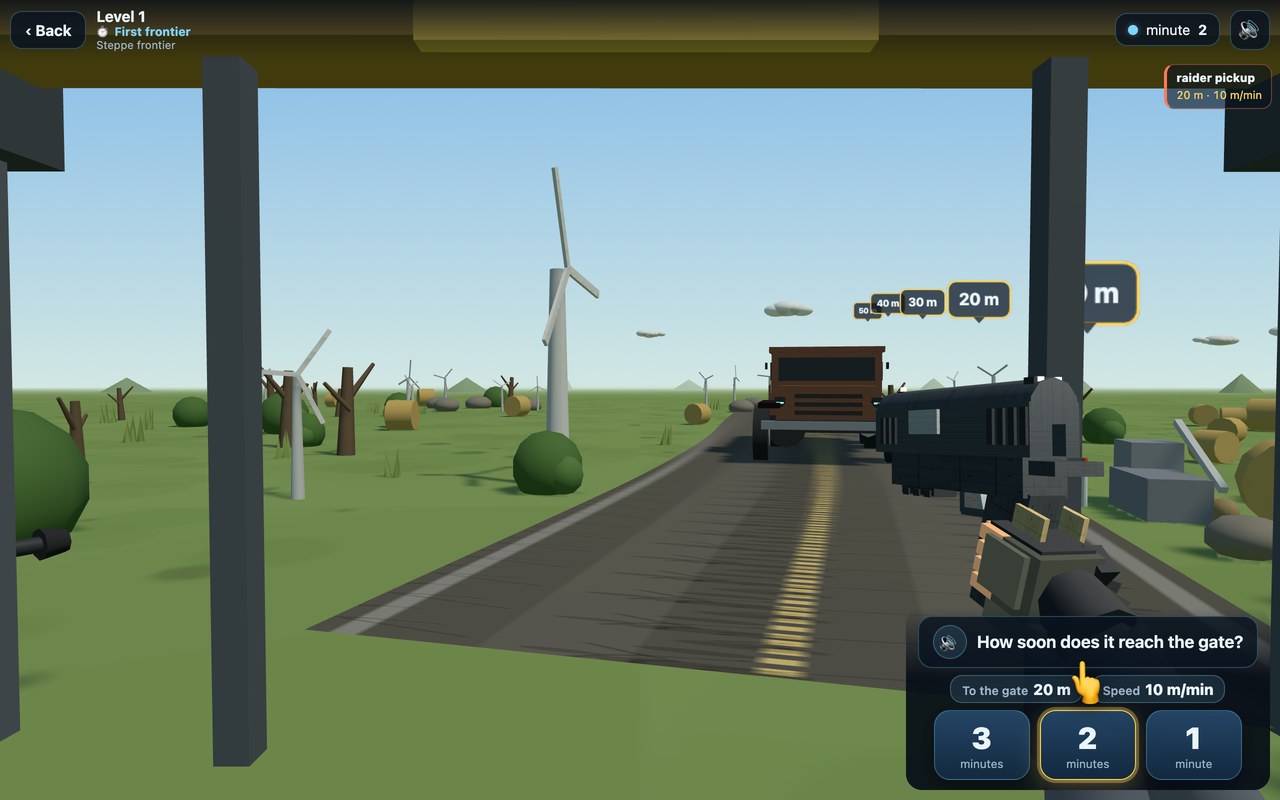 Speed, Time and Distance Game — Free Base Commander 7+
Speed distance time word problems as a defense mission: track a moving target, predict …
-
Counting Money — Free Treasury Keep Game for Kids 7+
Counting money in a treasury: add up the coins, compare two prices, make an …
-
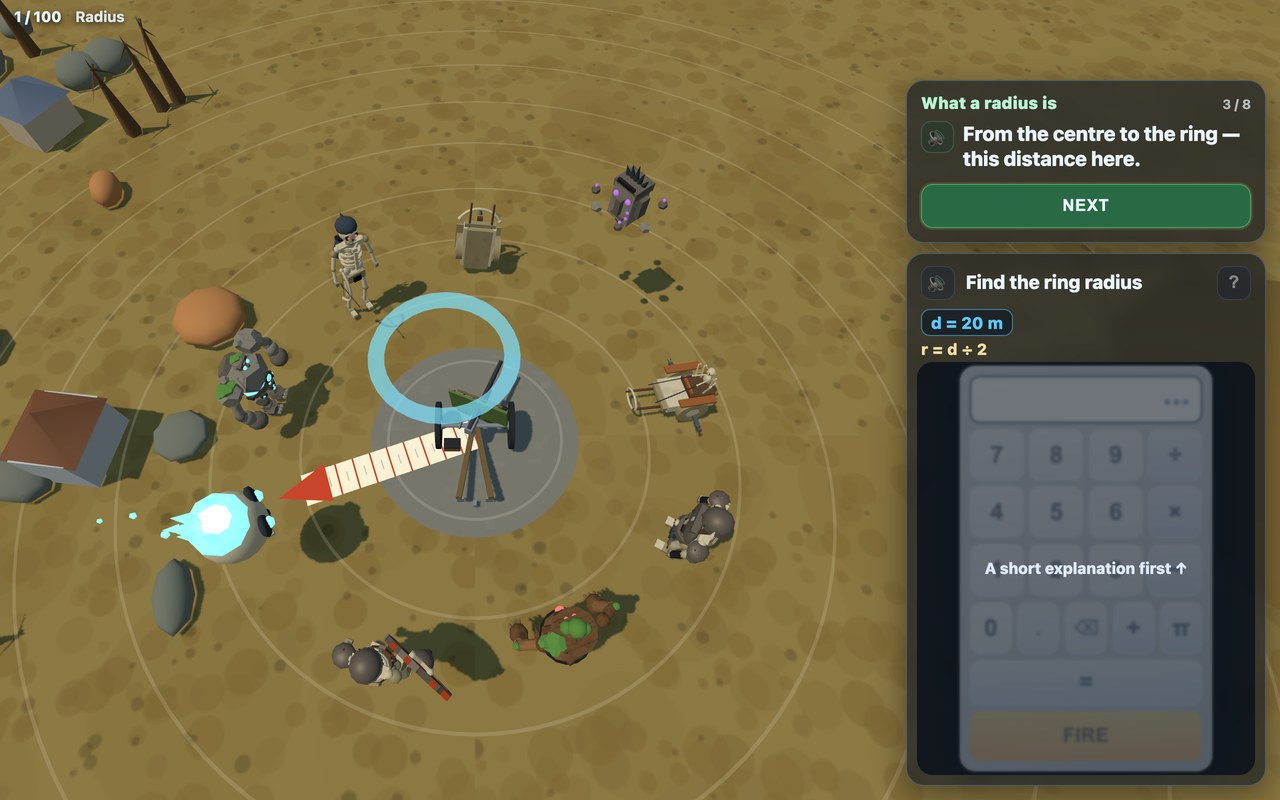 Circumference of a Circle: Formula, Pi and Worked Examples 8+
The circumference of a circle is C = 2πr (or πd). See where pi …
Division Facts: Every One Is a Times Table Read Backwards
-
Multiplication Table Game — Free Divide & Conquer 7+
A multiplication table game where the answer is on screen: count the robot formation, …
-
Long Division & Column Math Game for Kids — Free 7+
A long division game for kids that also drills column addition, borrowing and long …
-
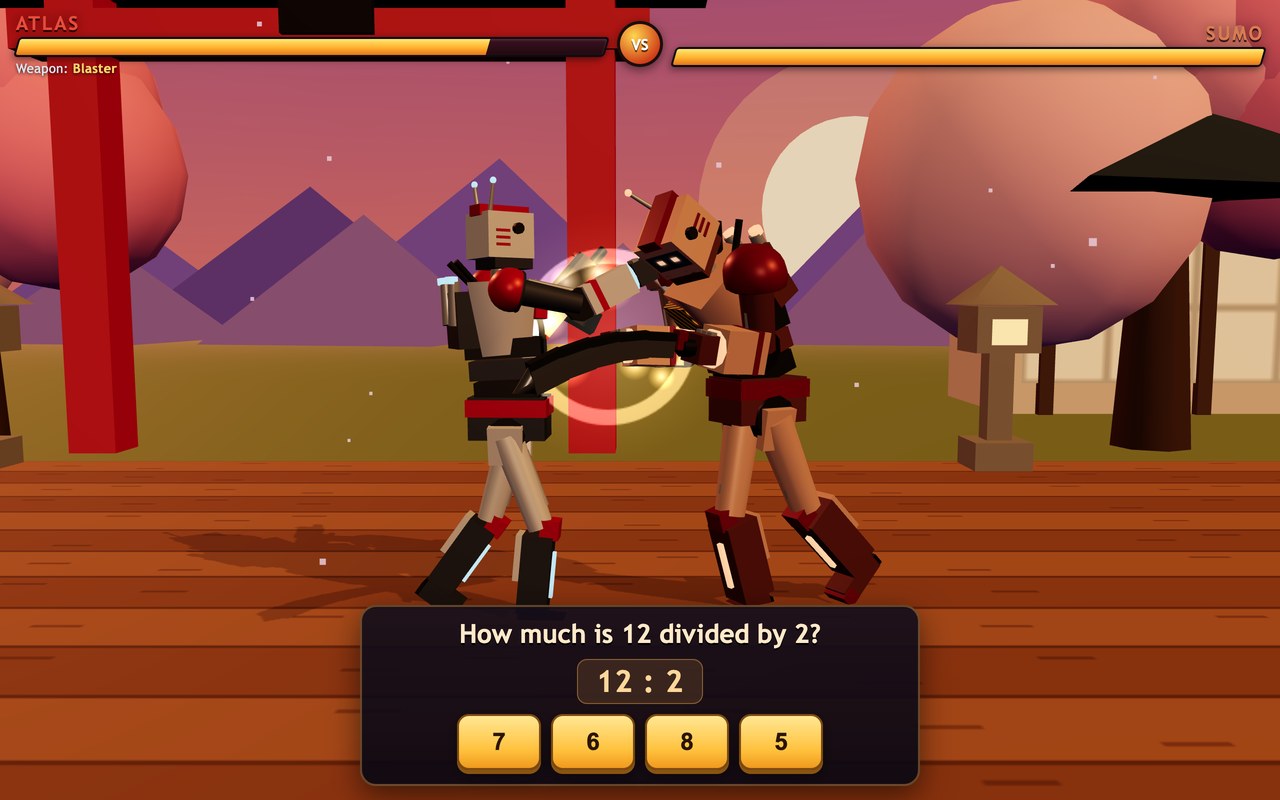 Multiplication and Division Games — Free Robot Brawl 6+
Multiplication and division games as a full-contact brawl: every correct answer lands your robot's …
-
Multiplication Facts — Free True Aim Artillery Game 7+
Practise multiplication facts one row at a time: 2s, 5s and 10s first, then …
-
Times Tables Game for Kids — Free Bigfoot Arena 7+
Times tables practice in a demolition derby: crush the car carrying the right answer …
-
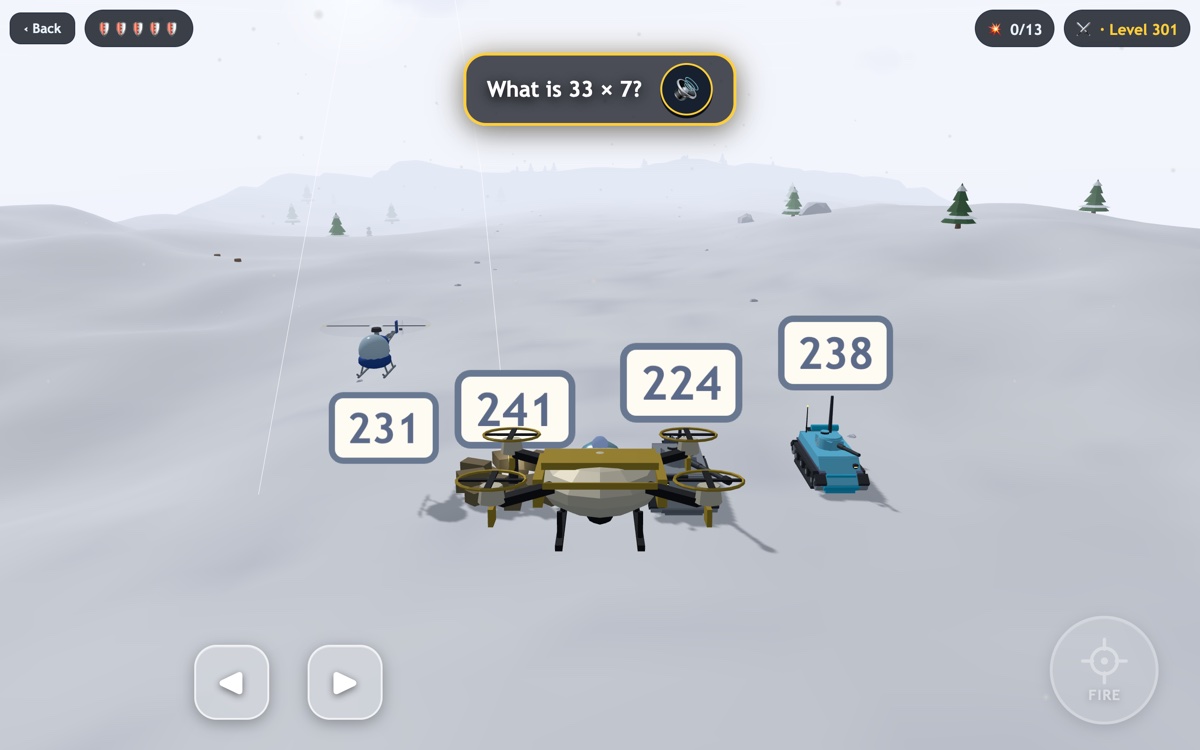 Math Games for 4th Graders — Free Drone Patrol 9+
Math games for 4th graders: multi-digit multiplication, division with remainder, factors, equivalent fractions and …
-
Equivalent Fractions — Free Game With 500 Levels 7+
Equivalent fractions practice: pick the round that matches the shield and fire. 1/2 = …
Evgenii Arsentev's Math — Arithmetic Games for Kids
-
Math Games for Kindergarten — Free Math Archer 3D 4+
Math games for 5 year olds that start at counting to 5: an elf …
-
Math Facts Games for Kids — Free Online 6+
Math facts games for kids in Earth orbit: solve addition, subtraction and times tables …
-
Math Facts Games — Free Star Mech Fluency Drill 7+
Math facts games with a real mastery rule: five right in a row retires …
-
Math Games for 2nd Graders — Free Moon Base Defence 7+
Math games for 2nd graders: monsters rush the moon base and only a correct …
-
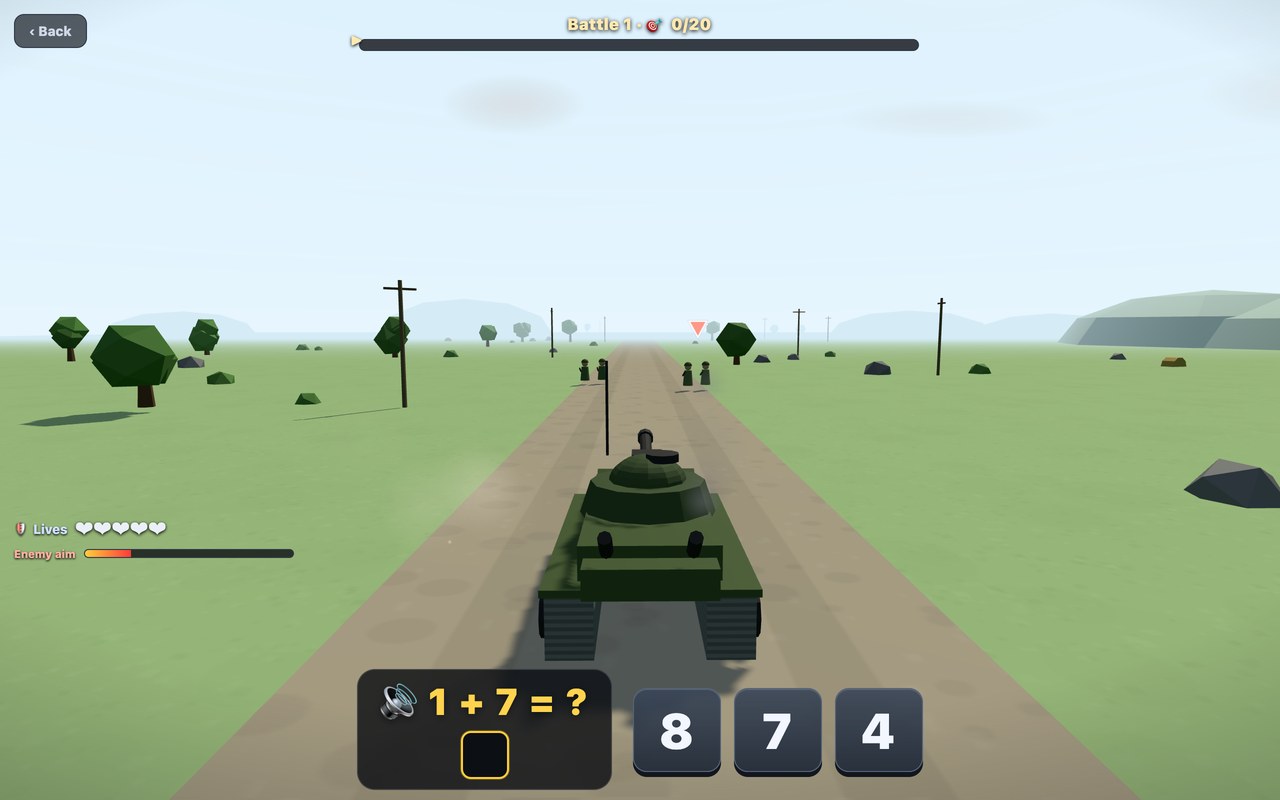 Mental Math Games for Kids — Free Math Tanks 7+
Mental math games in a 3D tank campaign: solve the problem, build the answer …
-
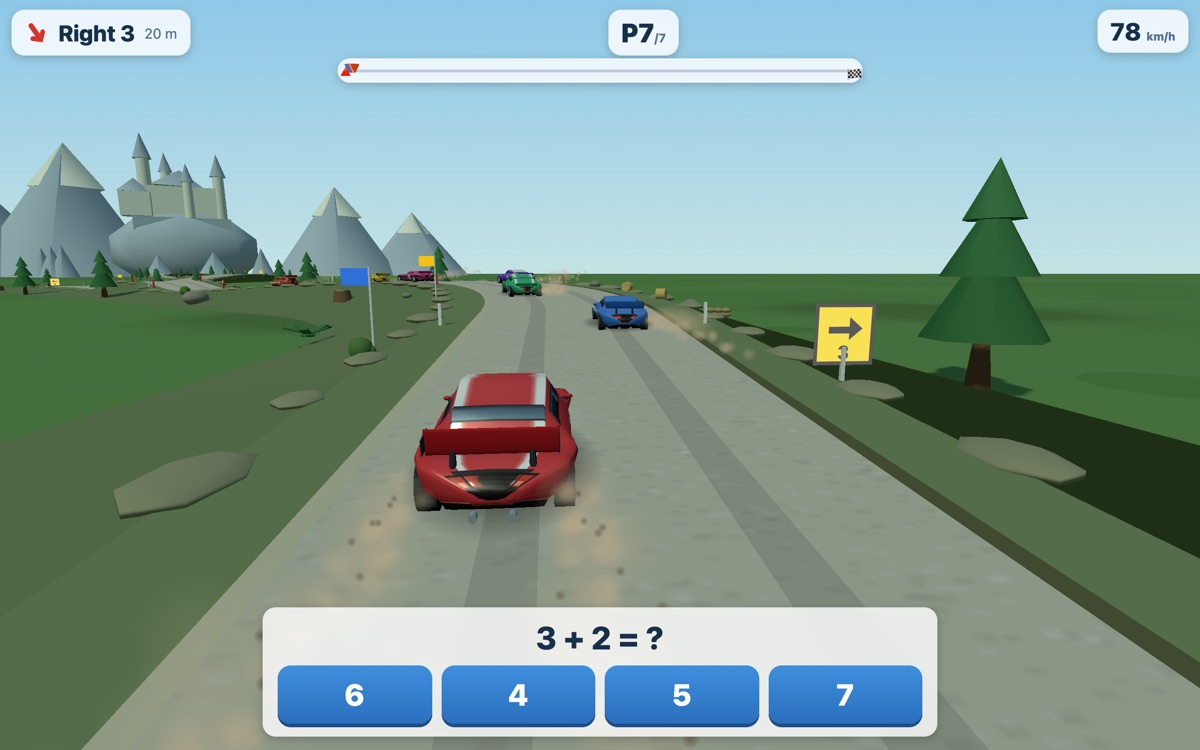 Number Games for Kids: Answer Right and the Car Pulls Away 7+
Number games for kids where solving is the accelerator: answer and your rally car …
-
Math Games for 4th Graders — Free Drone Patrol 9+
Math games for 4th graders: multi-digit multiplication, division with remainder, factors, equivalent fractions and …
-
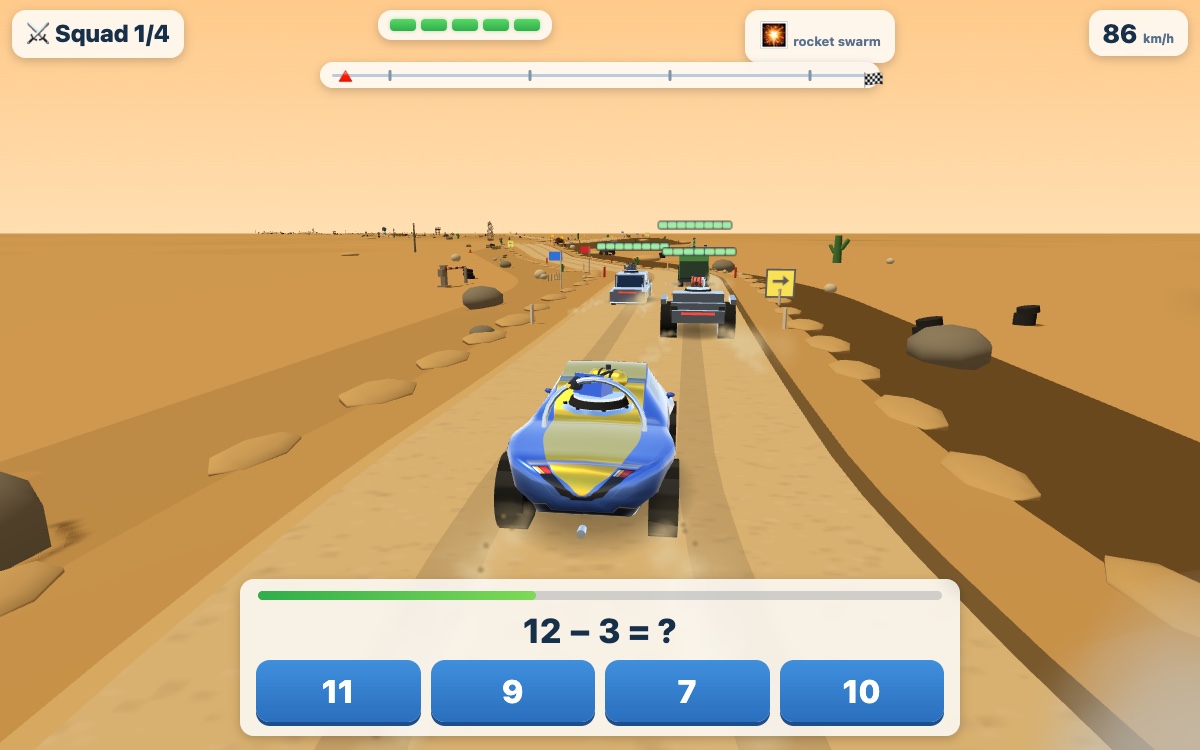 Car Math Games: Solve It and Your Car Fires 7+
Car math games where answering fires the gun: solve the problem and your battle …
-
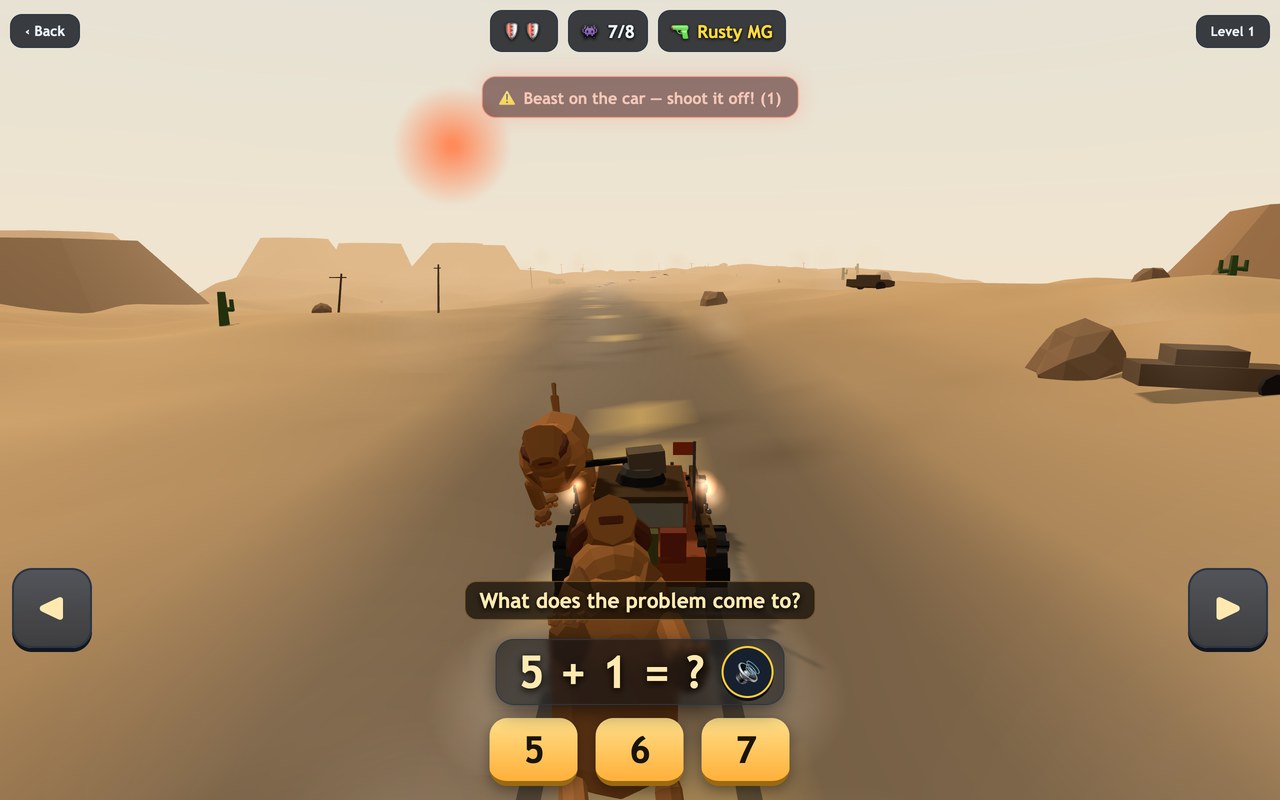 Math Shooting Games — Free Wasteland Chase 6+
Math racing game on a desert highway: compare numbers, spot patterns and solve to …
-
Math Games for 5th Graders — Free Math Blaster 4+
Math games for 5th graders: decimals, percent, fractions, area, perimeter, volume and solving for …
-
Math Games for 3rd Graders — Free Firing Line 6+
Math games for 3rd graders: short word problems, adding and subtracting past 100, times …
-
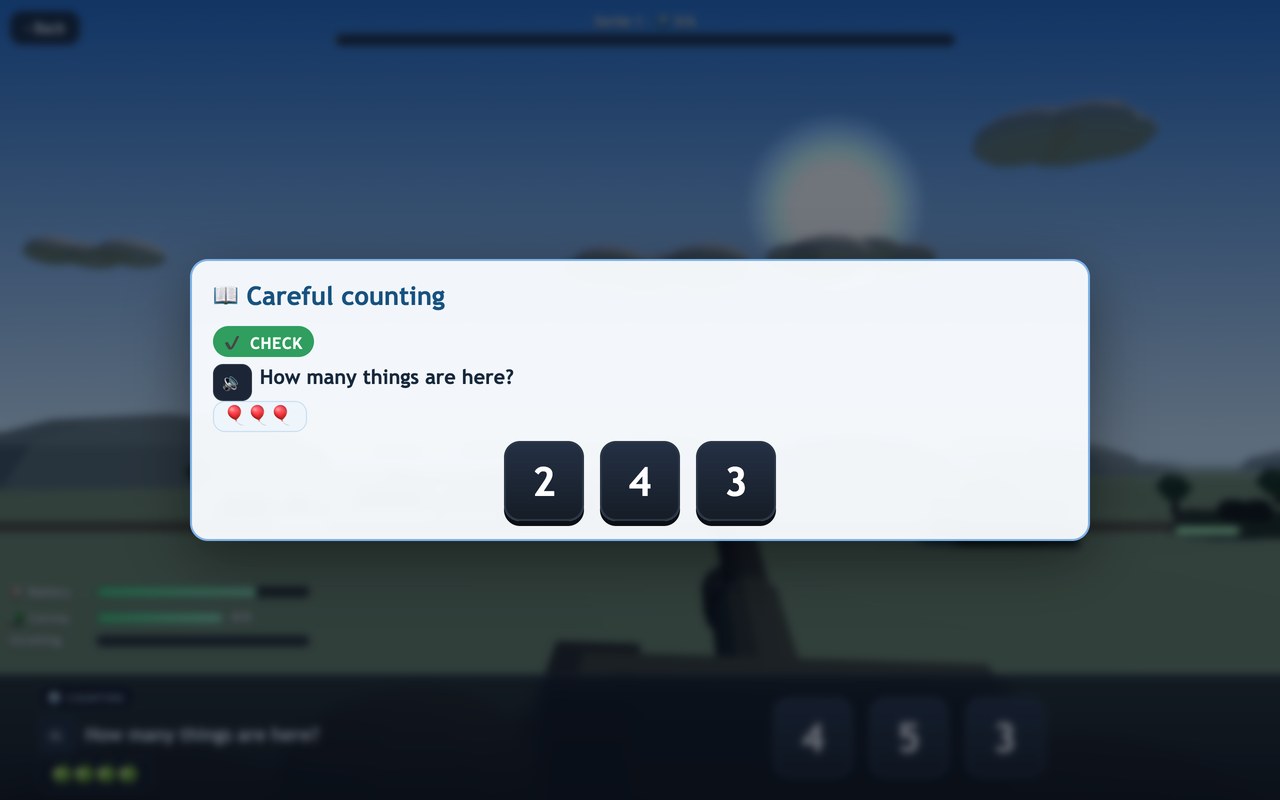 Logic Games for Kids — Free Sky Guard 5+
Logic games at a first-person flak gun: down the planes by solving 300 puzzles …
Free Multiplication Games for Kids: Master Times Tables
-
Times Tables Game for Kids — Free Bigfoot Arena 7+
Times tables practice in a demolition derby: crush the car carrying the right answer …
-
Multiplication Facts — Free True Aim Artillery Game 7+
Practise multiplication facts one row at a time: 2s, 5s and 10s first, then …
-
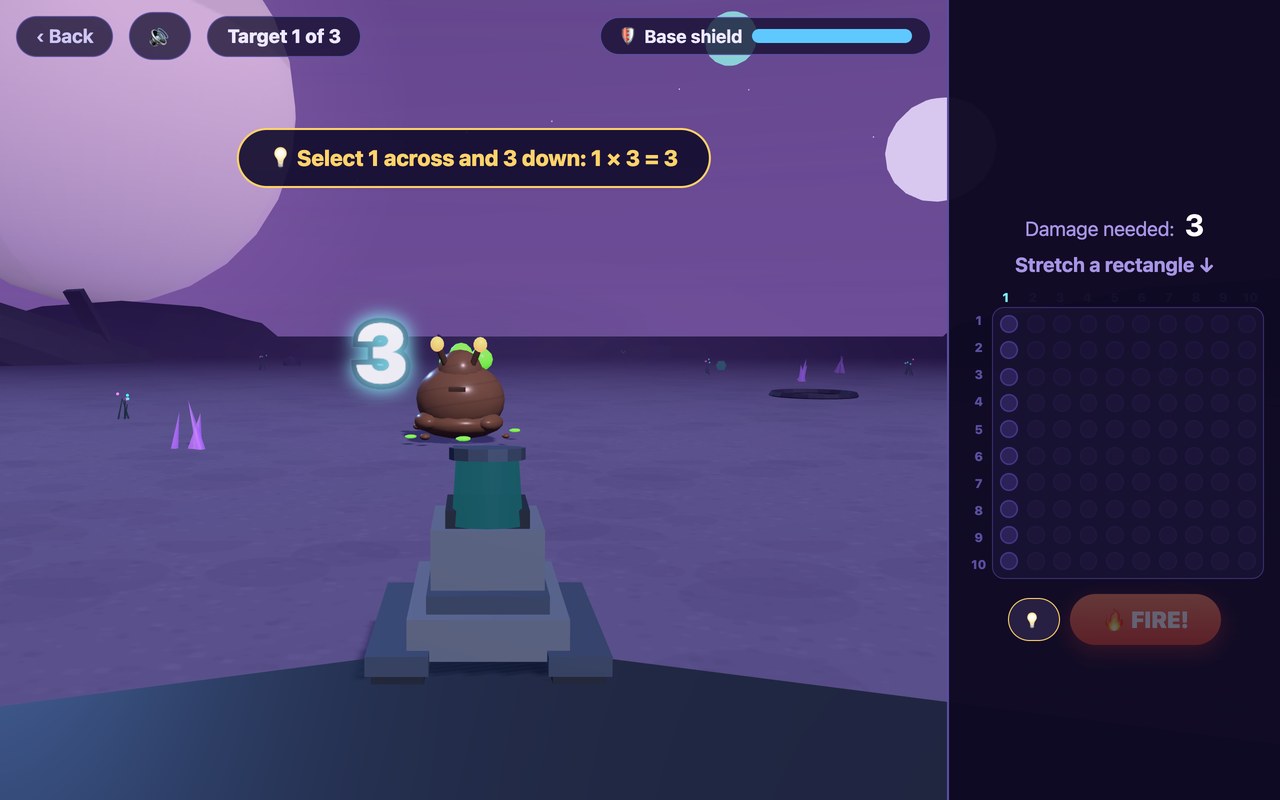 Multiplication Games for Kids — Free Math Artillery 7+
Multiplication games where the times tables are battle calculations: load the cannons with equal …
-
Area Model Multiplication Game — Grow the Garden 6+
Play the area model multiplication game free: split a garden plot into place-value strips, …
-
Multiplication and Division Games — Free Robot Brawl 6+
Multiplication and division games as a full-contact brawl: every correct answer lands your robot's …
-
Multiplication Table Game — Free Divide & Conquer 7+
A multiplication table game where the answer is on screen: count the robot formation, …
-
Long Division & Column Math Game for Kids — Free 7+
A long division game for kids that also drills column addition, borrowing and long …
-
Cryptarithm Game for Kids — Letters Are Digits 6+
Play cryptarithm puzzles online free: HE+BE=BEE letter addition where each letter hides a digit …
-
Ratio & Proportion Games for Kids — Free Ratio Forge 9+
Ratio games for kids where the math is the weapon: use ratios, unit rates …
-
Mental Math Games for Kids — Free Math Tanks 7+
Mental math games in a 3D tank campaign: solve the problem, build the answer …
Function Machine: The Easiest Way Into Algebra
-
Function Machine Game — Free Function Forge Academy 7+
Function tables made visible: drop an input into the machine, watch the output, fill …
-
Algebra Games for Kids — Free Sea Battle: Find X 6+
Algebra games where solving is the trigger: work out the hidden enemy's position, type …
-
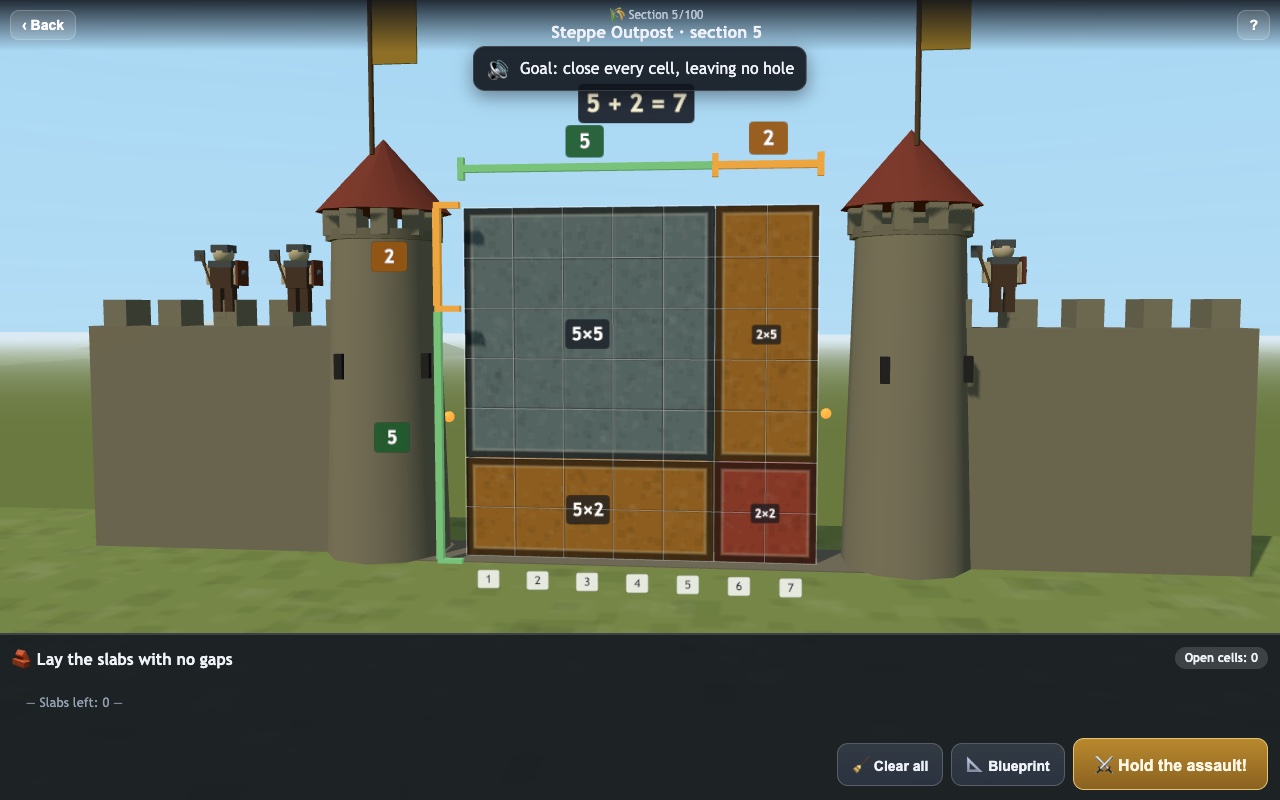 Difference of Squares and the Perfect Square Formula — Explained 7+
Difference of squares a² − b² = (a − b)(a + b) shown with …
-
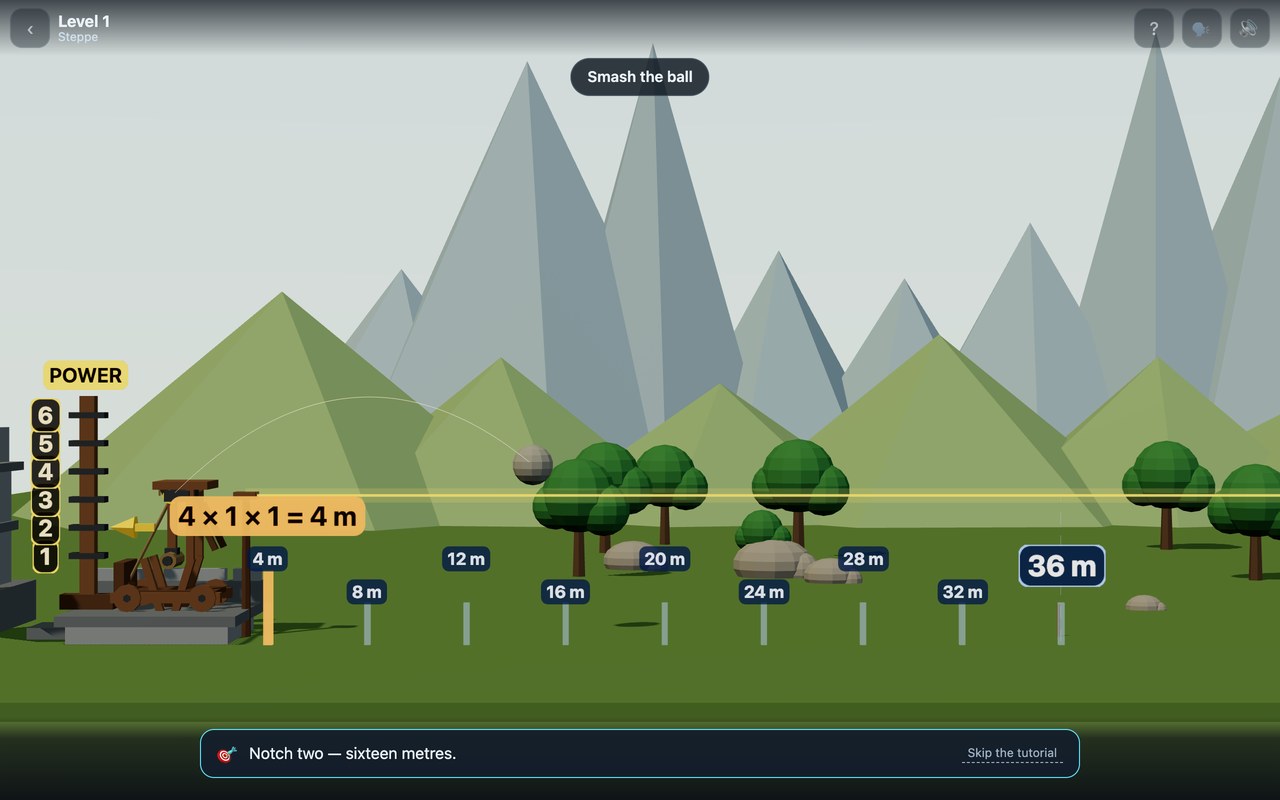 Parabola and Quadratic Equations — Explained, With a Free Game 7+
A parabola is the path of a thrown stone. Vertex, roots, the discriminant and …
-
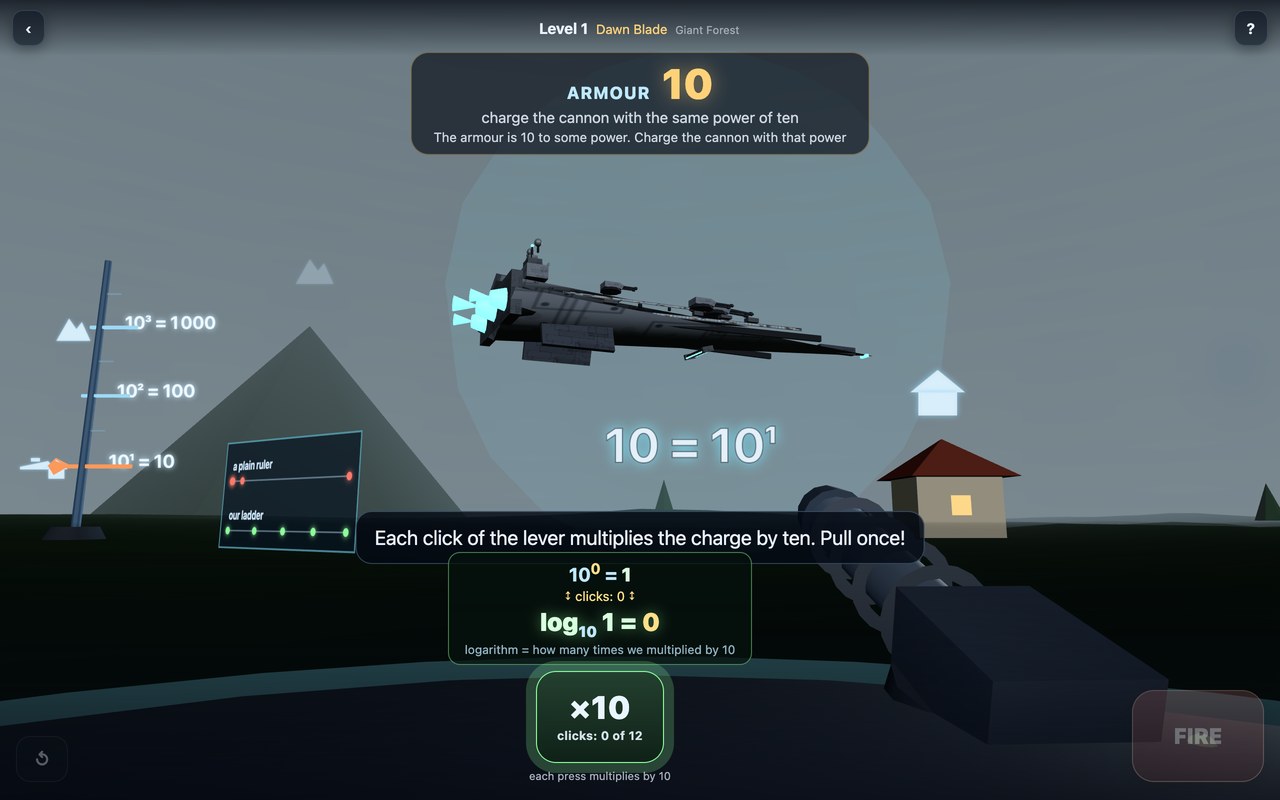 Properties of Logarithms — Explained, With a Free Practice Game 7+
Properties of logarithms in plain English: a logarithm counts how many times you multiplied. …
-
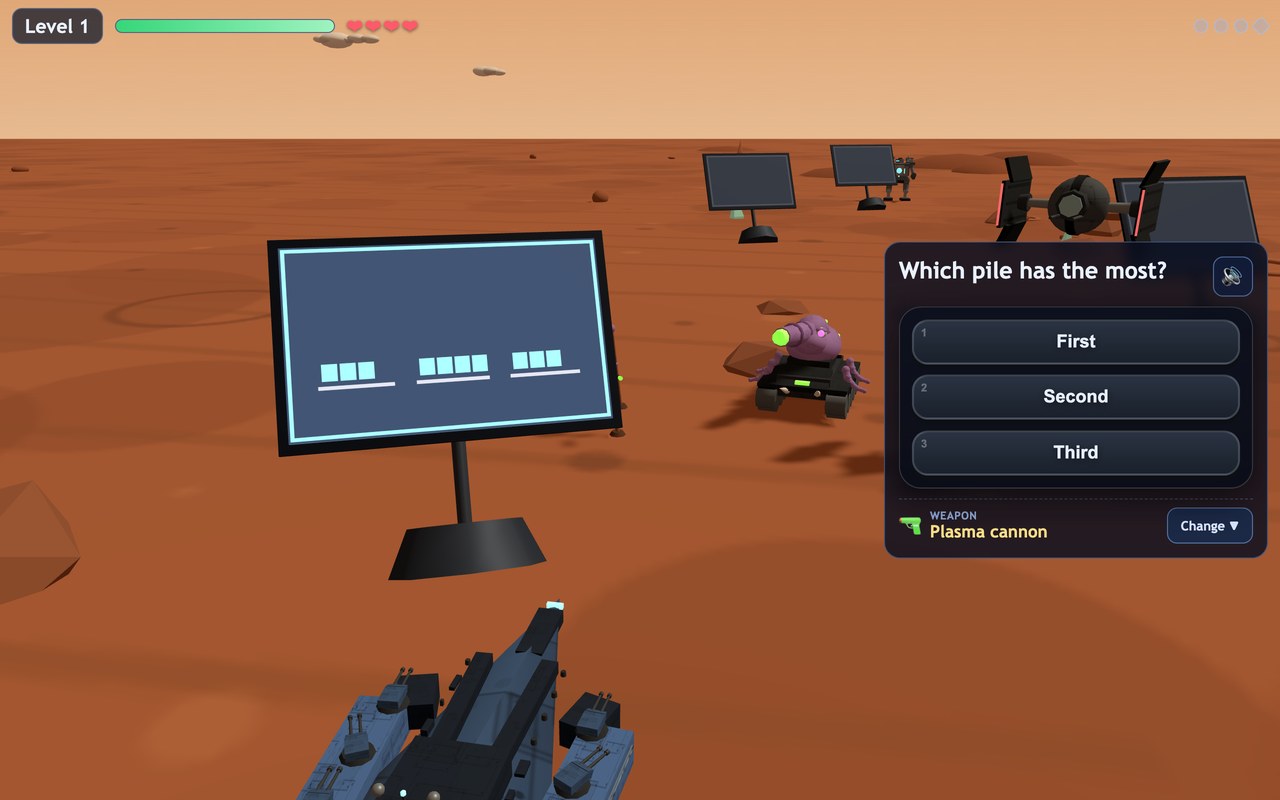 Proof Math Game for Kids — Free Proof Architects 7+
Proof Architects: a proof math game where kids prove answers, not guess them. 10 …
Math Word Problems: Turning a Sentence Into a Sum
-
Math Word Problems for Kids — Convoy Frontline 7+
Math word problems for kids turned into a convoy fight: read the story, build …
-
Speed, Time and Distance Game — Free Base Commander 7+
Speed distance time word problems as a defense mission: track a moving target, predict …
-
Math Games for 4th Graders — Free Drone Patrol 9+
Math games for 4th graders: multi-digit multiplication, division with remainder, factors, equivalent fractions and …
-
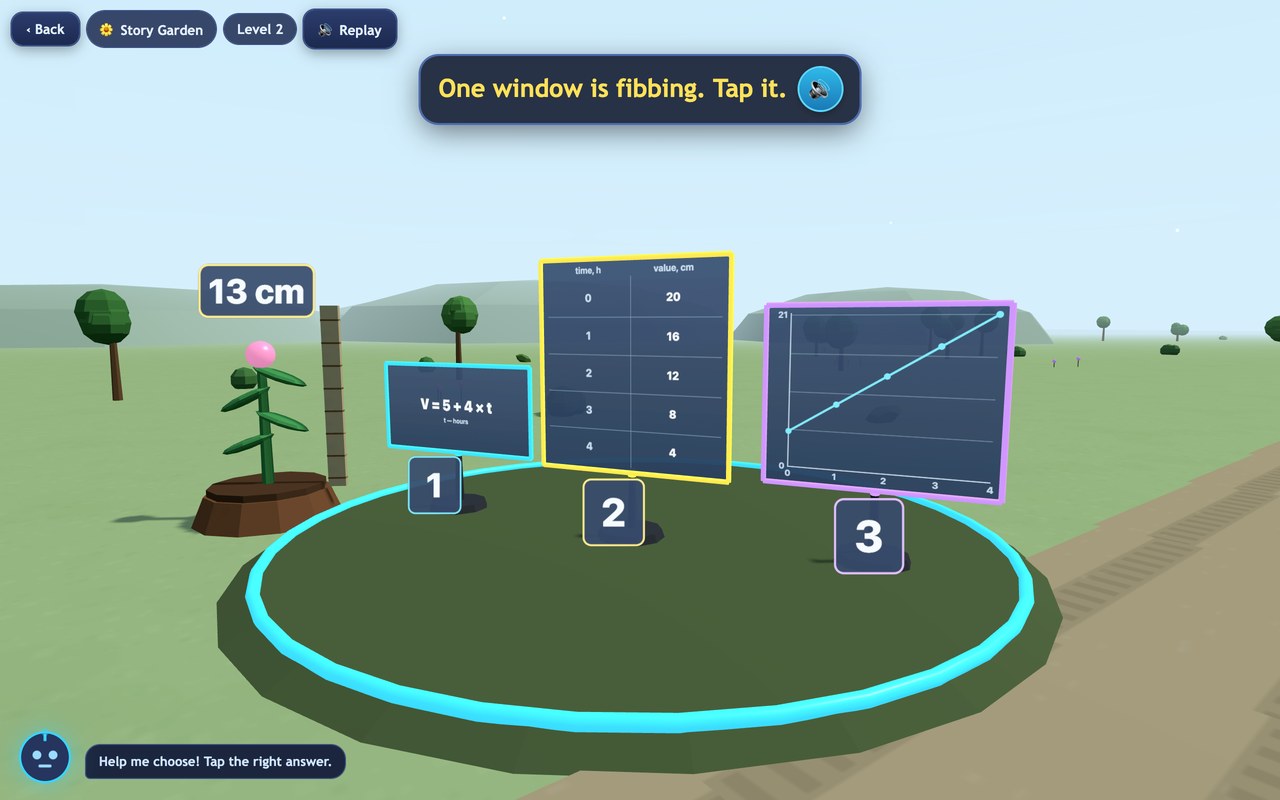 Story, Table & Graph Games — Free Modelverse Lab 8+
Math games for 7th graders that tie one story to a table, a graph …
-
Ratio & Proportion Games for Kids — Free Ratio Forge 9+
Ratio games for kids where the math is the weapon: use ratios, unit rates …
Ordered Pairs: Reading (x, y) Without Getting Them Backwards
-
Coordinate Grid — Free Grid Artillery Game for Kids 7+
A coordinate grid game where the point is the target: read it, call it …
-
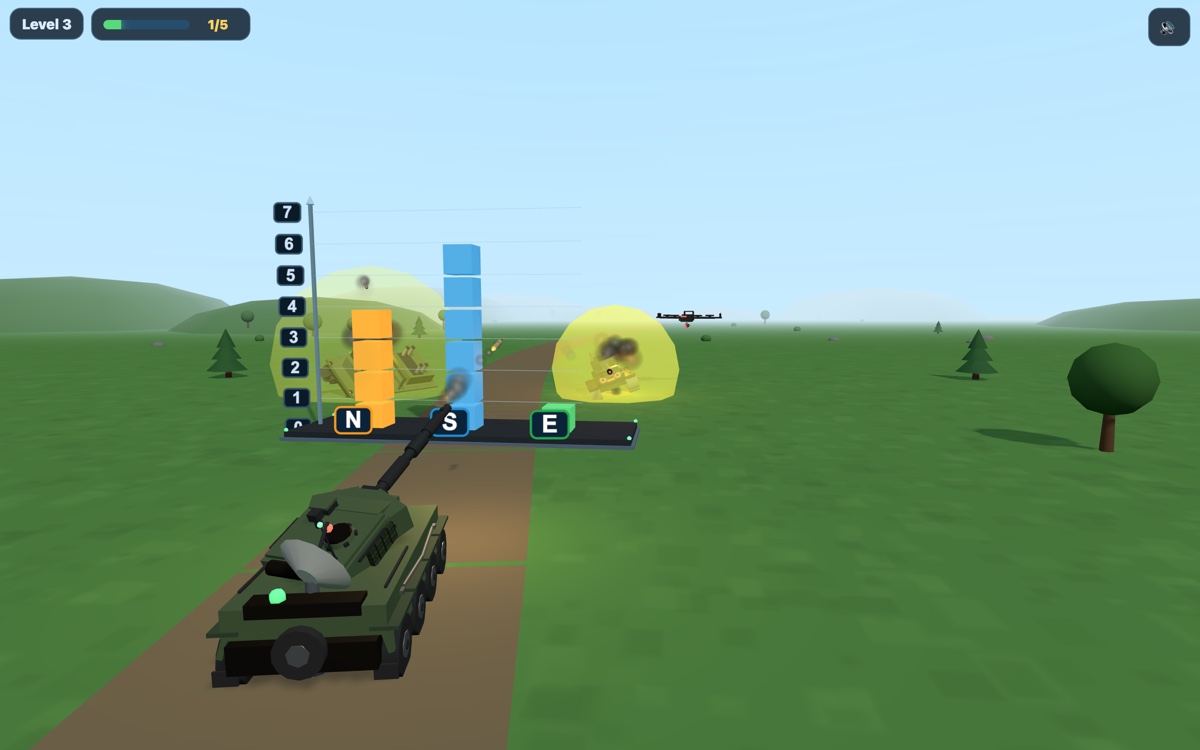 Graphing & Data Games for Kids — Free Last Radar 7+
Graphing games for kids on a radar screen: read charts, tables, bar graphs and …
-
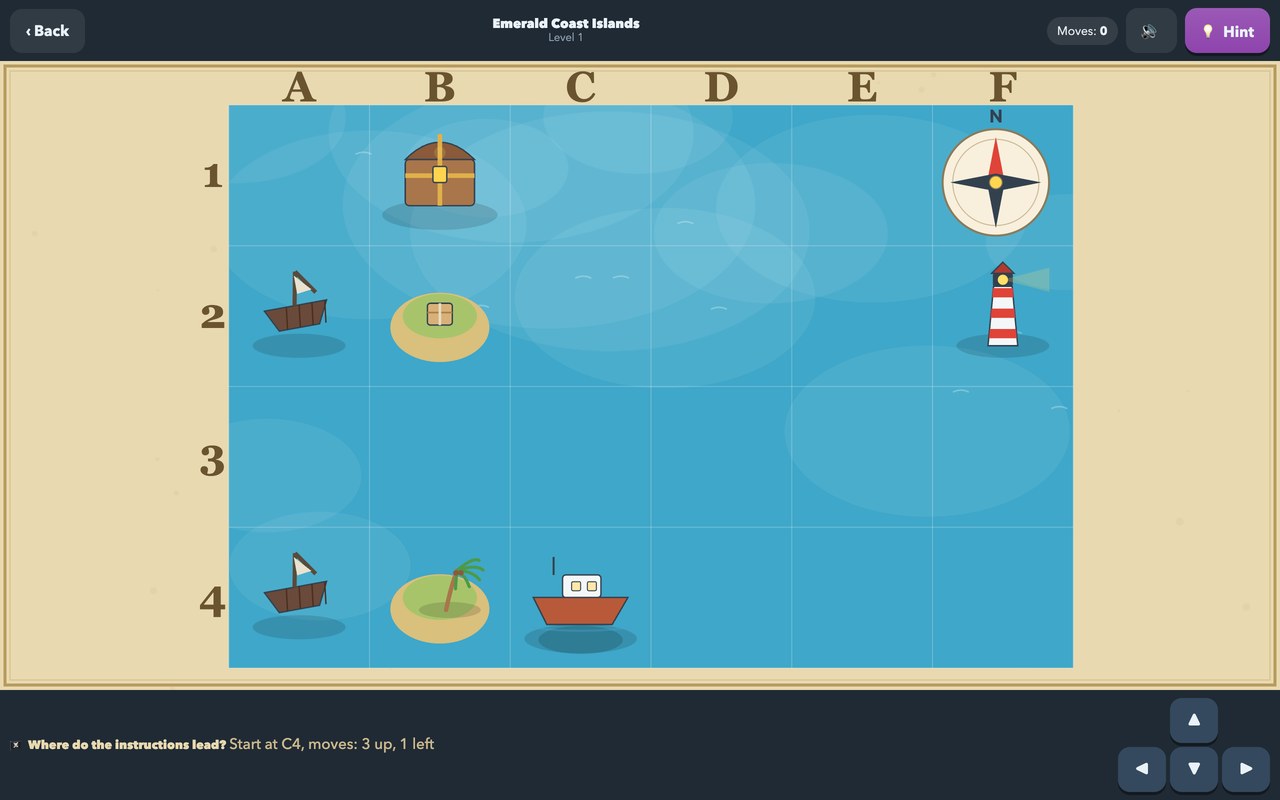 Cardinal Directions — Free Treasure Map Game for Kids 6+
Cardinal directions on a treasure map: north, south, east and west, then grid squares, …
-
Algebra Games for Kids — Free Sea Battle: Find X 6+
Algebra games where solving is the trigger: work out the hidden enemy's position, type …
-
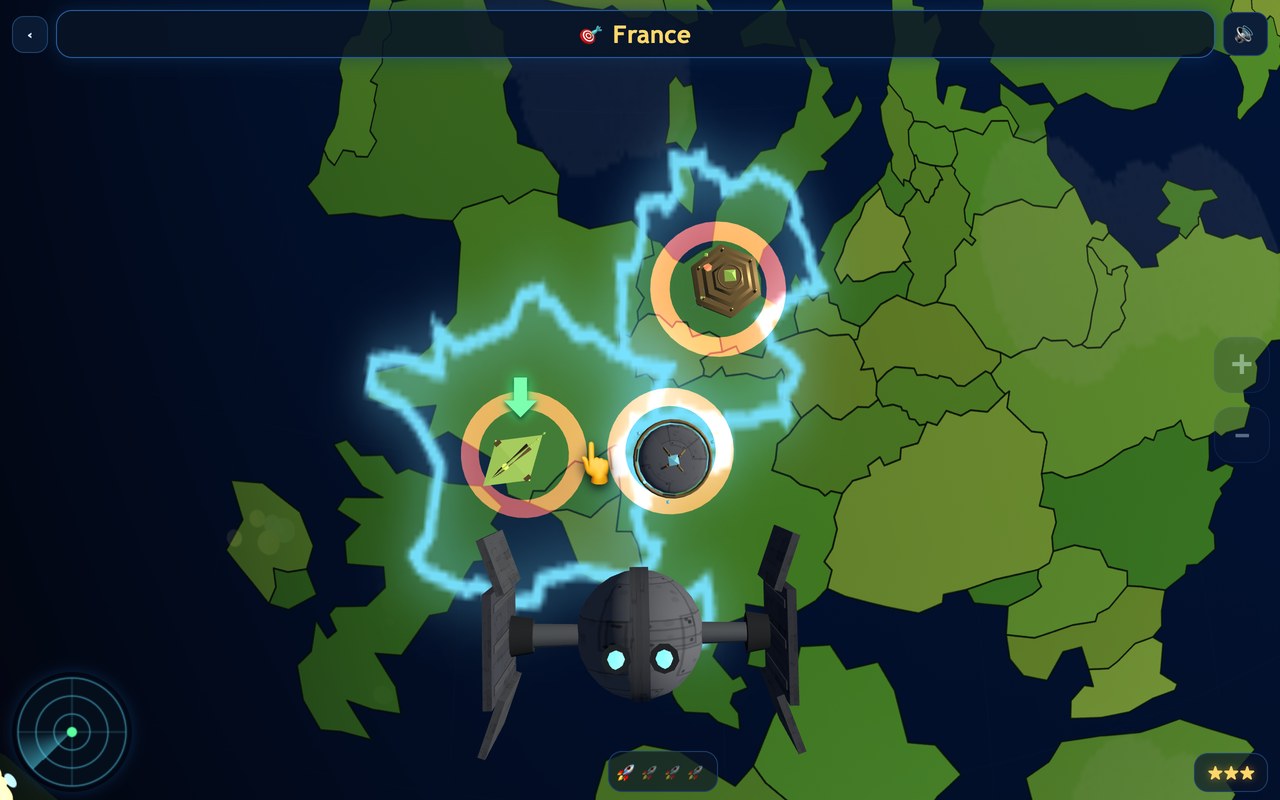 Capitals of the World — Free Globe Game for Kids 7+
Capitals of the world on a real 3D globe: it turns to the region, …
Ratios and Proportions: Comparing by Division, Not Difference
-
Ratio & Proportion Games for Kids — Free Ratio Forge 9+
Ratio games for kids where the math is the weapon: use ratios, unit rates …
-
Business Game for Kids — Free Venture City 7+
Business games for kids built on real money math: use the built-in calculator to …
-
Equivalent Fractions — Free Game With 500 Levels 7+
Equivalent fractions practice: pick the round that matches the shield and fire. 1/2 = …
-
Speed, Time and Distance Game — Free Base Commander 7+
Speed distance time word problems as a defense mission: track a moving target, predict …
-
Multiplication Table Game — Free Divide & Conquer 7+
A multiplication table game where the answer is on screen: count the robot formation, …
Reading a Clock: Hands, Fives and the Half Past Problem
-
Telling Time — Free Chrono Wing Game for Kids 7+
Telling time from the clock face on: count the minutes, measure how long something …
-
Speed, Time and Distance Game — Free Base Commander 7+
Speed distance time word problems as a defense mission: track a moving target, predict …
-
Math Facts Games — Free Star Mech Fluency Drill 7+
Math facts games with a real mastery rule: five right in a row retires …
-
Measuring Length — Free Supply Command Game for Kids 6+
Measuring length on a ruler and a tape measure, then converting cm to m, …
Types of Angles: Acute, Right, Obtuse — and How to Measure Them
-
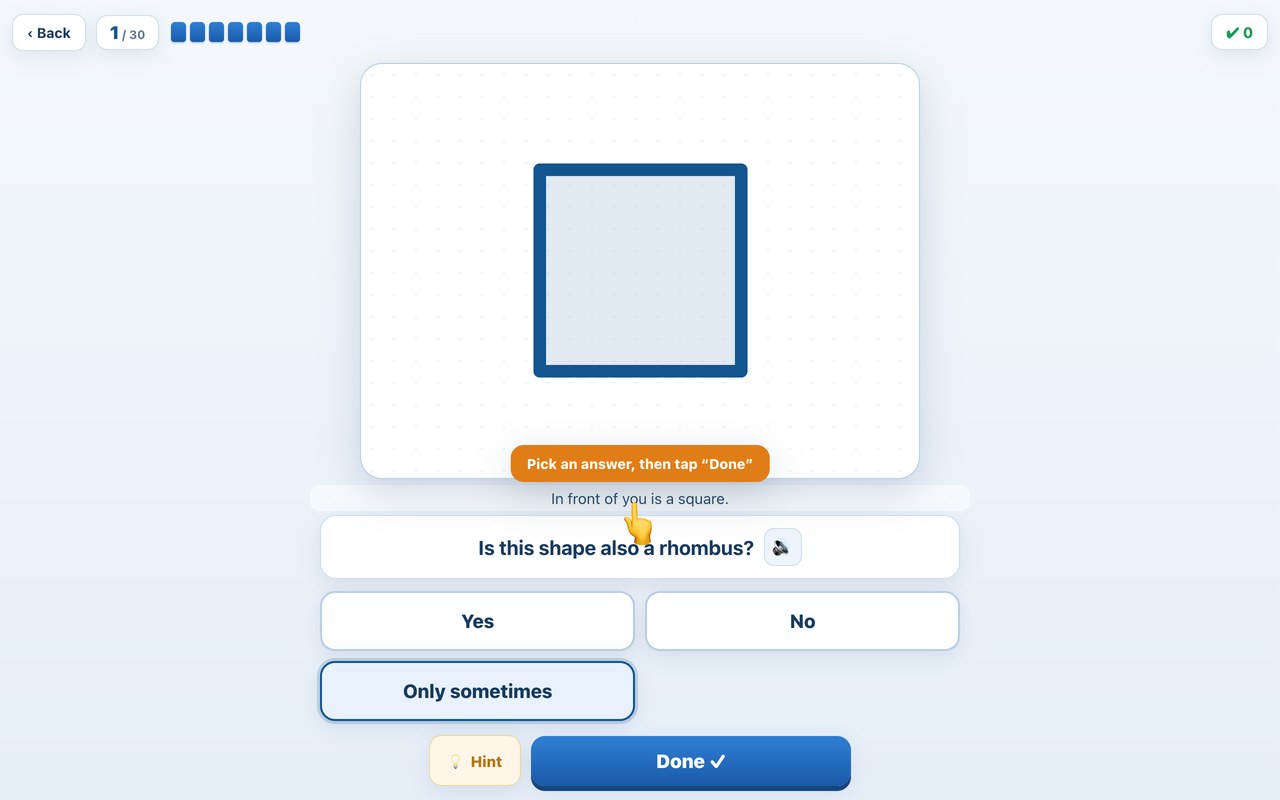 Geometry Games for Kids — Free Angle Assault 8+
Geometry games for kids where the answer is the attack: measure angles, name shapes, …
-
Area and Perimeter — Free Geometry Game for Kids 6+
Area and perimeter on a building grid: fence the yard, floor the warehouse, then …
-
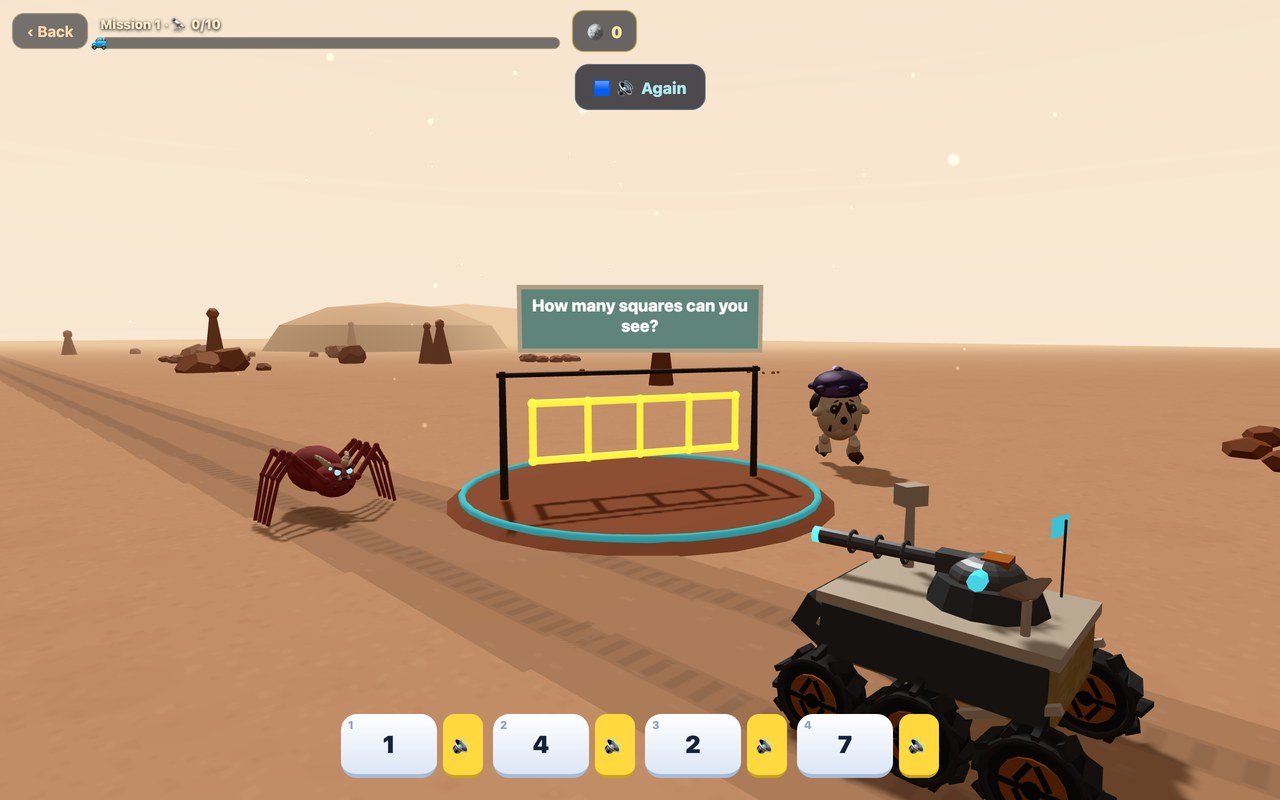 Geometry Games for Kids — Free Mars Rover 6+
Geometry for kids inside a Mars adventure: neon figures, cube builds and giant gears …
-
Circumference of a Circle: Formula, Pi and Worked Examples 8+
The circumference of a circle is C = 2πr (or πd). See where pi …
-
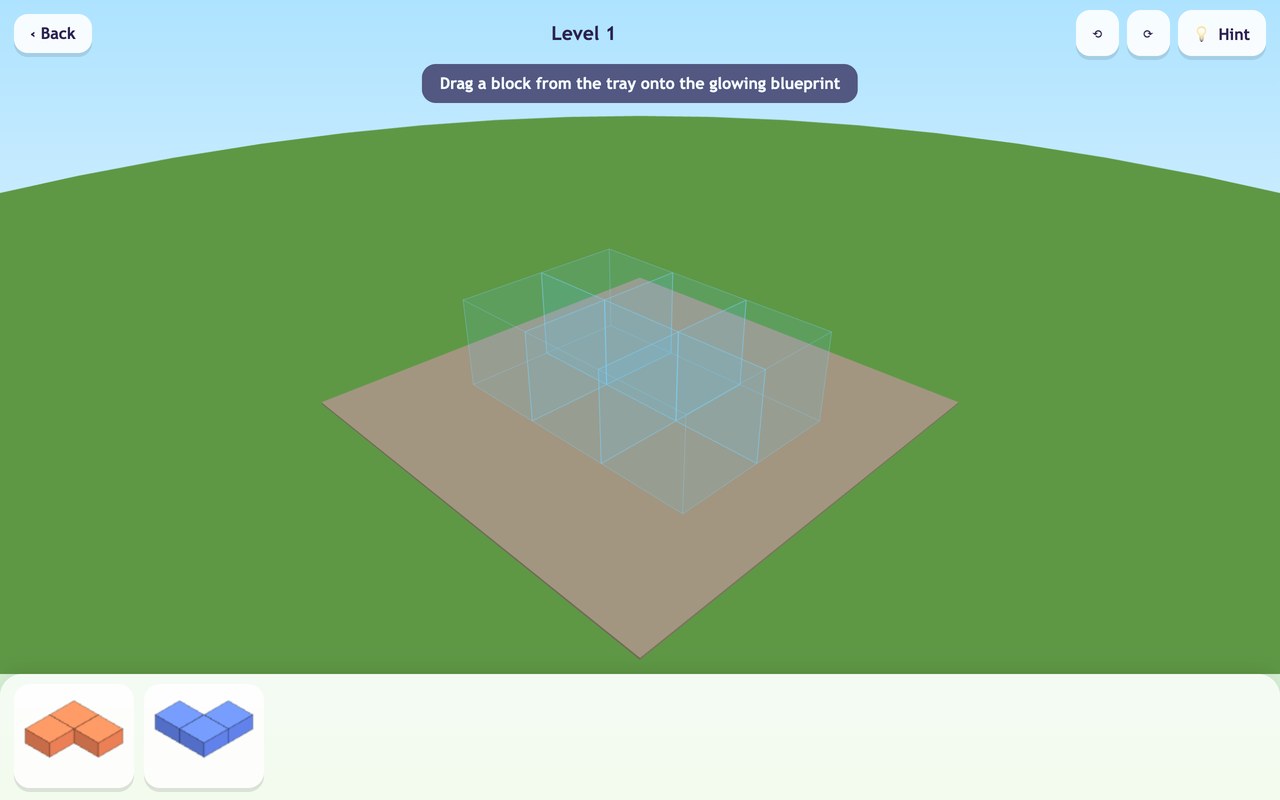 3D Block Puzzles for Kids — Free Castle Keep 3D 6+
3D block puzzles for kids aged 6+: rotate polycube blocks in your mind, fill …
-
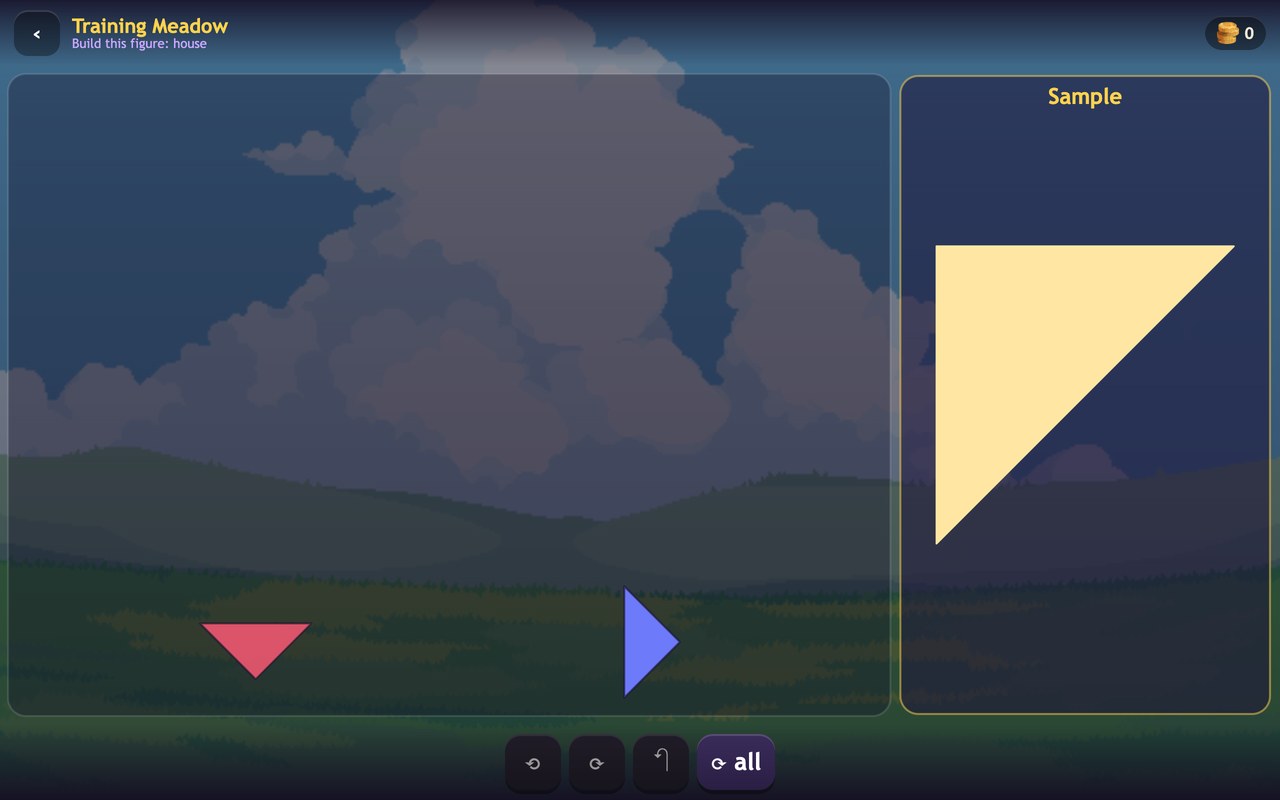 Tangram Puzzles for Kids — Free Castle Tangram 5+
Tangram puzzles for kids inside a castle-defense adventure: build the silhouette from the 7 …
-
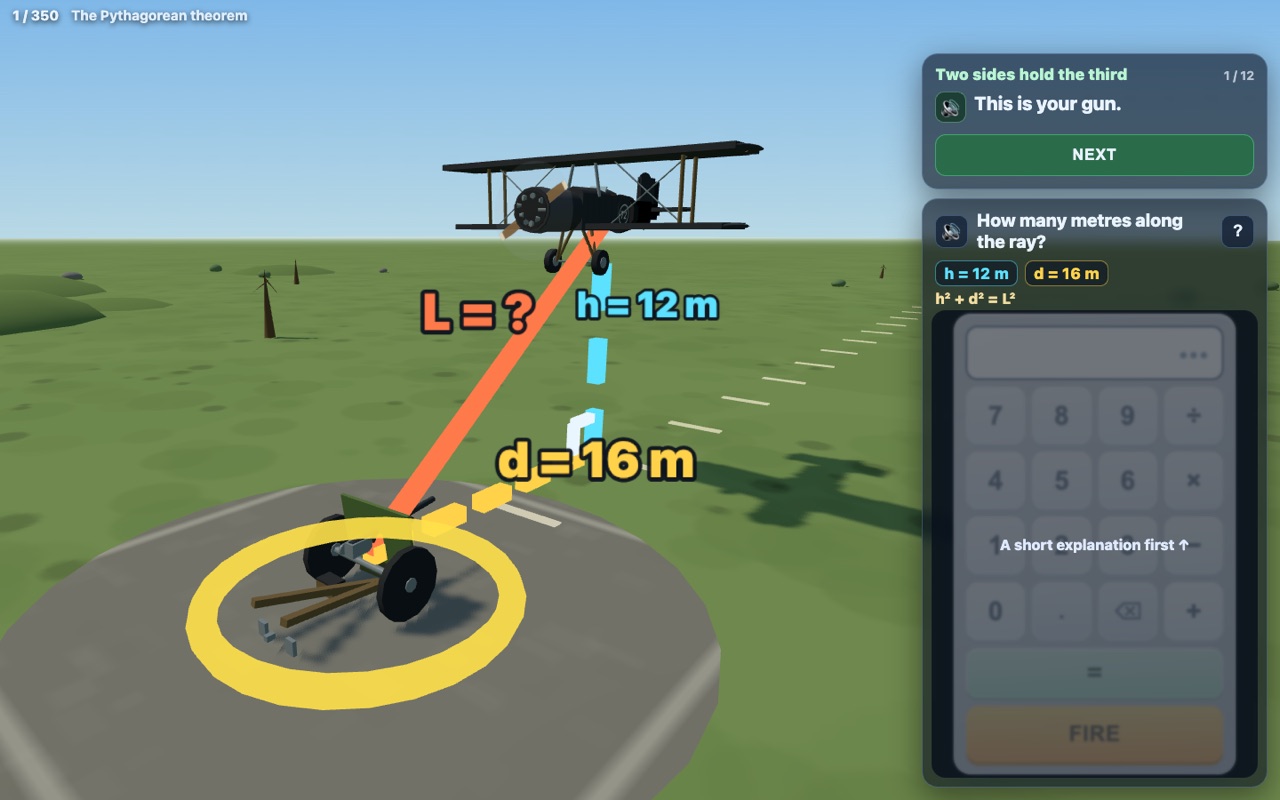 Pythagorean Theorem and Trigonometry — Explained, With a Free Game 10+
The Pythagorean theorem is a² + b² = c²: worked examples for the hypotenuse …
Explore
These are free math games in the plain sense of the word: nothing to install, no account to make, no ad break in the middle of a times table. Pick a game, and your child is answering questions inside ten seconds.
Math games for kids, arranged by what they actually practise
The one thing that decides whether math games for kids help or waste an afternoon is whether the material matches the child. Everything below is sorted by grade and by skill, and every game keeps a single rule: the shot, the throw, the launch is what a correct answer does. Nothing is destroyed by reflex.
- Counting and number sense (ages 4-6): recognising digits, counting objects, first sums to ten.
- Adding and subtracting (grades 1-2): within 20, then within 100, with and without regrouping.
- Times tables and division (grades 3-4): the whole table, then division as its reverse, then factors and multiples.
- Fractions, decimals and geometry (grades 4-5): equivalent fractions, percent, perimeter, area and coordinates.
Why free, and what the catch is
There is none. The games are written for one family's children and shared as they are — which is also why there is no advertising in them and no shop screen a seven-year-old can tap by accident.
How this section is put together
Everything here is arranged the way a child actually climbs through arithmetic, not the way a textbook table of contents is printed. The first games on the page ask for one small fact at a time and give it back instantly; the last ones ask a child to hold three ideas at once. If you scroll and think "that looks far too easy" — start there anyway. Fluency at the easy end is what pays for the hard end.
What breaks, and where
Almost every wall a child hits in elementary math has the same cause underneath: a fact that is still being counted instead of remembered. A ten-year-old who stalls on long division is usually not confused about division — they are re-deriving 7 × 8 in the middle of it and losing their place. That is why the arcade-speed games matter. They are not decoration on top of "real" math; they are the thing that makes real math affordable.
Choosing the first game
Pick by the skill your child is meeting this week at school, not by their age. If you are not sure, open one game about counting on and one about a topic you know is current. Watch for thirty seconds. If they are answering without visible counting, move up a level; if they go quiet, move down. Nothing here punishes a wrong answer — the game simply asks again with more support, which is how the difficulty finds them without you managing it.
A realistic dose
Five to ten minutes, most days, beats an hour on Sunday. Arithmetic fluency is built by spacing, not by volume, and the games are built to be finished in a sitting rather than farmed. Nothing saves progress behind a paywall and no game asks for money at any point.
From here you can go narrow: addition and subtraction, multiplication, geometry or word problems — or by school year, from kindergarten up to 5th grade.
The science behind the games
Every Dad4Kids game is built on one simple truth: children want to play, not study — so we turn learning into a game worth replaying. The method draws on peer-reviewed research in game-based learning, motivation, and how memory works.
- Tokac et al. (2019). Effects of game-based learning on students' mathematics achievement: A meta-analysis. Journal of Computer Assisted Learning.
- McLaren et al. (2017). A computer-based game that promotes mathematics learning more than a conventional approach. International Journal of Game-Based Learning.
- Deng et al. (2020). Digital game-based learning in a Shanghai primary-school mathematics class: a case study. Journal of Computer Assisted Learning.
- Alotaibi (2024). Game-based learning in early childhood education: a systematic review and meta-analysis. Frontiers in Psychology.
- Lampropoulos & Sidiropoulos (2024). Impact of gamification on students' learning outcomes and academic performance: a meta-analysis. Education Sciences.
- Taylor & Boyer (2019). Play-based learning: evidence-based research to improve children's learning experiences. Early Childhood Education Journal.
FAQ
Are math games good for kids?
Yes. Well-designed math games turn repetition into play, which is exactly what builds fast, accurate recall of number facts. The key is choosing games matched to your child's level so they feel challenged but not overwhelmed.
How do you make math fun for kids?
Keep sessions short (about ten minutes), tie practice to rewards like stars or streaks, and play alongside your child when you can. Letting them race a timer or 'beat' a previous score turns dry drills into a game they want to win.
What age should kids start math?
Informal math starts as early as ages 2-3 with counting, sorting, and comparing sizes. Structured number work like addition usually begins around ages 5-6, and times tables typically come into focus between ages 7 and 9.
What is the best order to learn times tables?
Start with the 2s, 5s, and 10s because their patterns are easy to see, then move to the 3s and 4s, then the harder 6s, 7s, and 8s, and finish with the 9s, 11s, and 12s. Mixing tables together once each is solid builds true recall.
How long should a child practice math each day?
About ten focused minutes a day, four or five days a week, works far better than one long weekly session. Short, frequent practice keeps number facts fresh and prevents burnout.
By Evgeny Arsentiev, PhD · Last updated: September 2026