
Division Facts: Every One Is a Times Table Read Backwards
Games
-
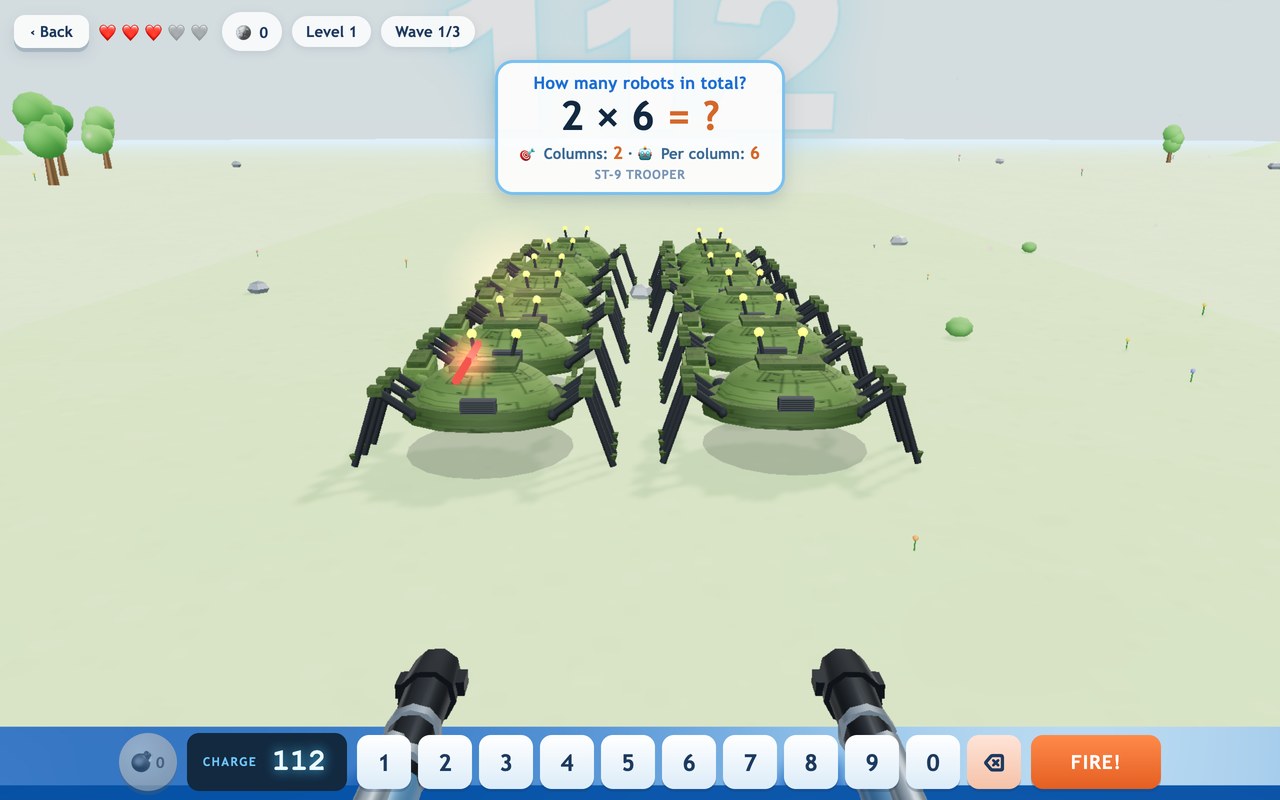 Multiplication Table Game — Free Divide & Conquer 7+
A multiplication table game where the answer is on screen: count the robot formation, …
-
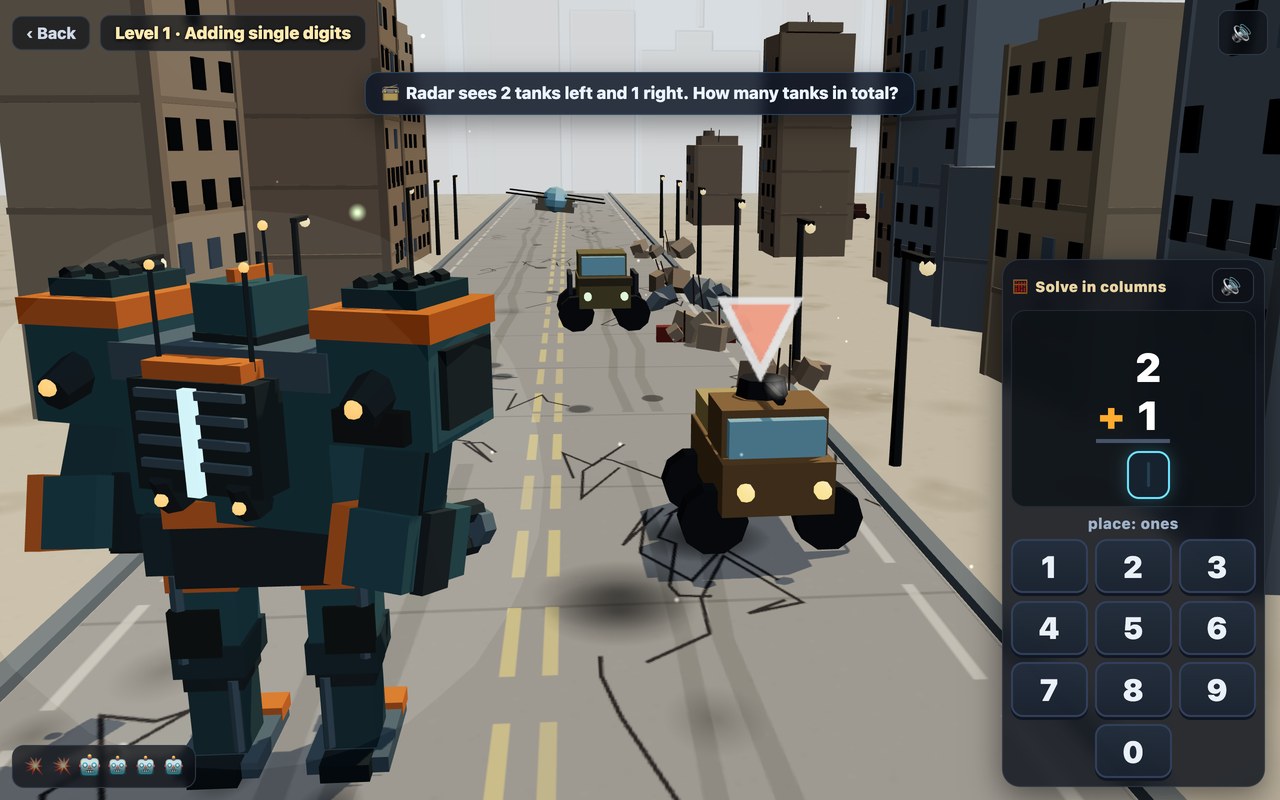 Long Division & Column Math Game for Kids — Free 7+
A long division game for kids that also drills column addition, borrowing and long …
-
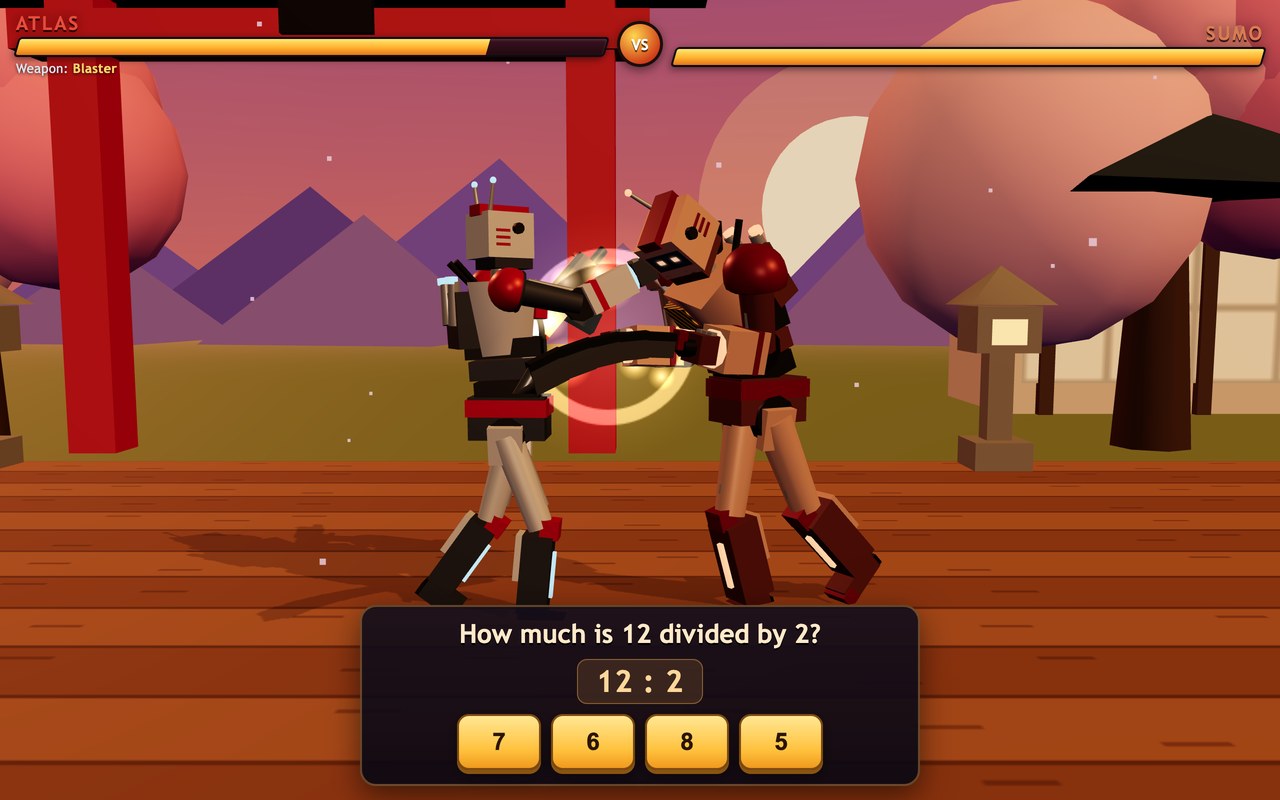 Multiplication and Division Games — Free Robot Brawl 6+
Multiplication and division games as a full-contact brawl: every correct answer lands your robot's …
-
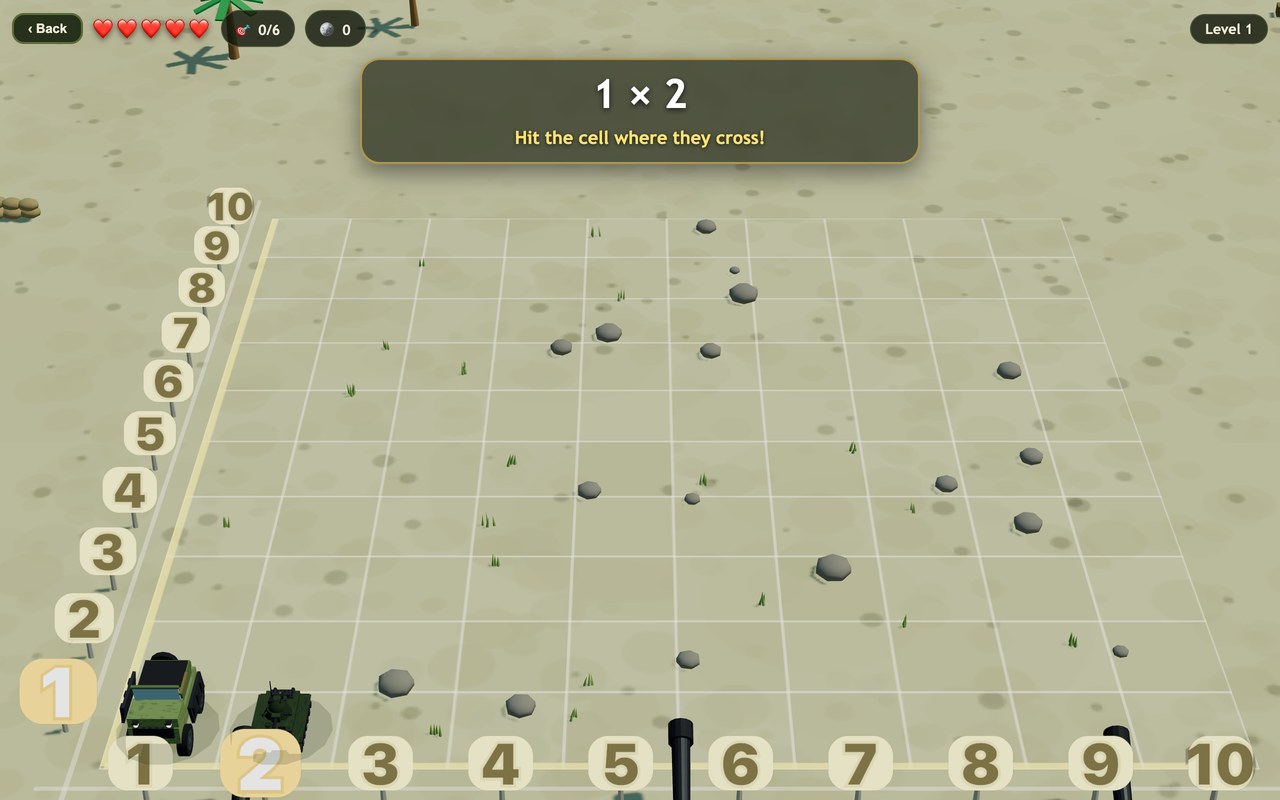 Multiplication Facts — Free True Aim Artillery Game 7+
Practise multiplication facts one row at a time: 2s, 5s and 10s first, then …
-
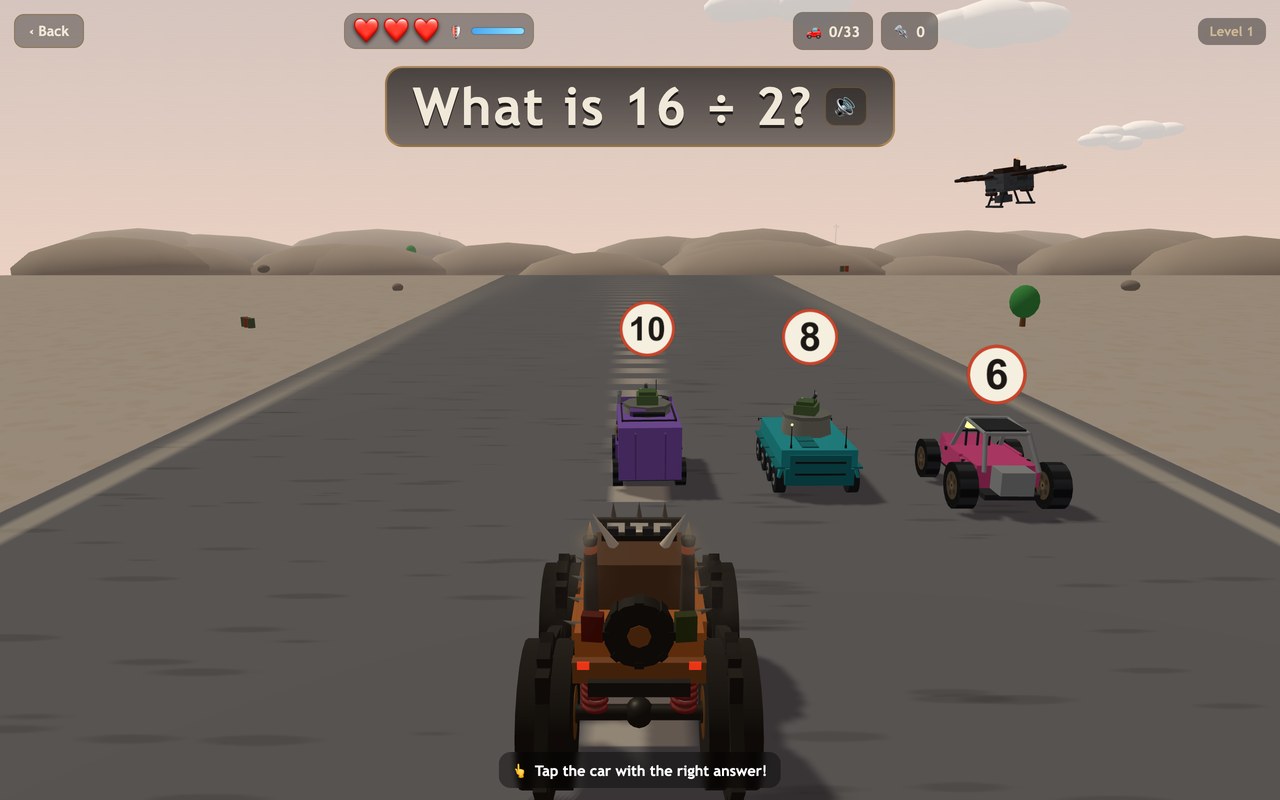 Times Tables Game for Kids — Free Bigfoot Arena 7+
Times tables practice in a demolition derby: crush the car carrying the right answer …
-
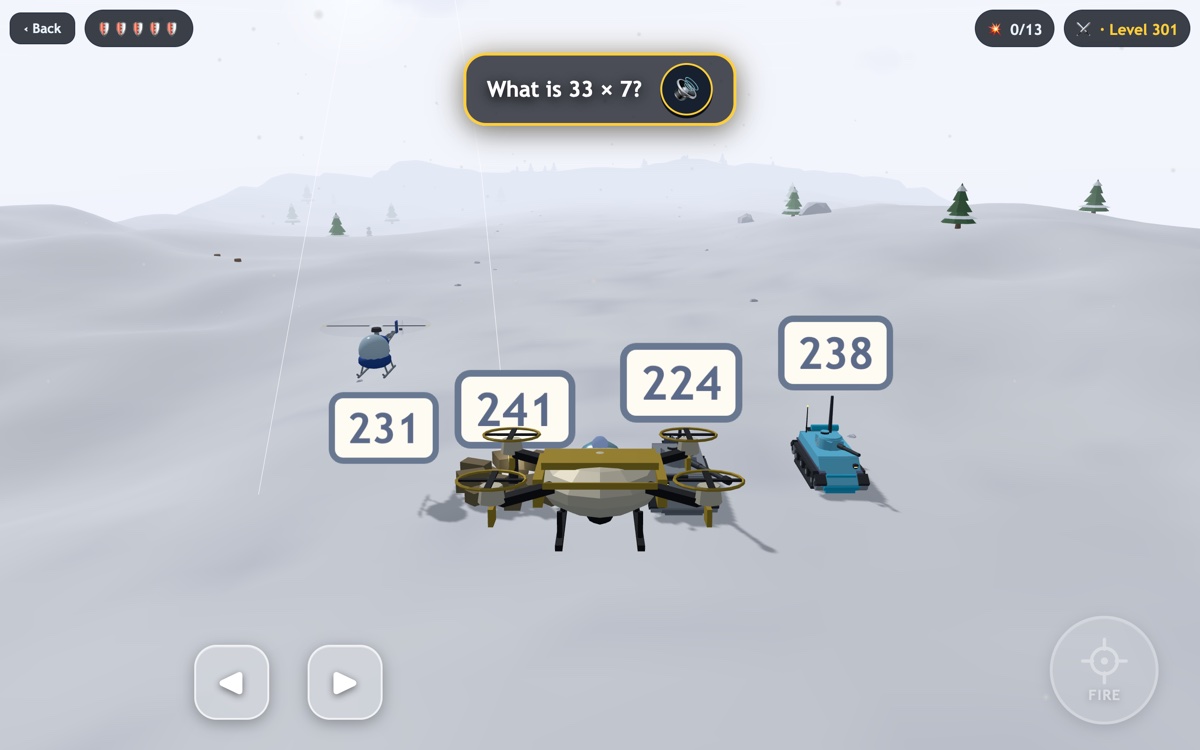 Math Games for 4th Graders — Free Drone Patrol 9+
Math games for 4th graders: multi-digit multiplication, division with remainder, factors, equivalent fractions and …
-
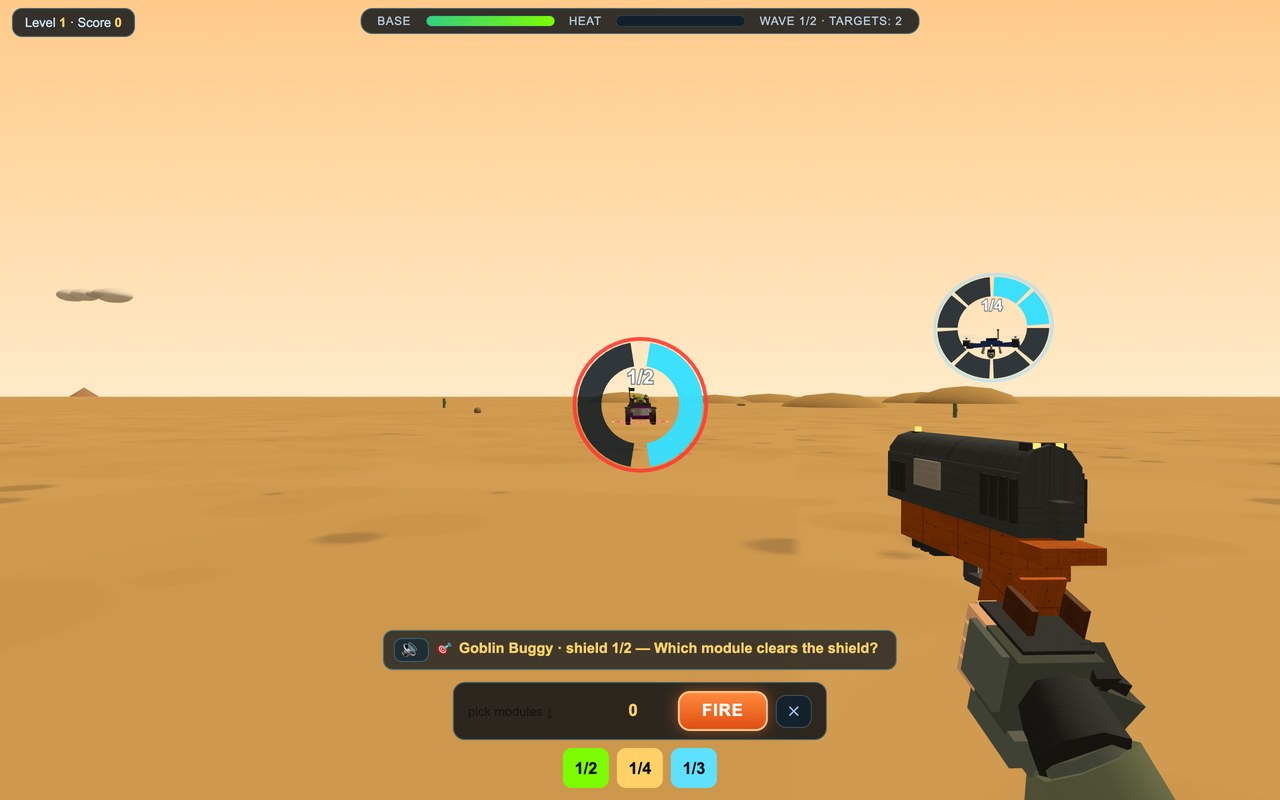 Equivalent Fractions — Free Game With 500 Levels 7+
Equivalent fractions practice: pick the round that matches the shield and fire. 1/2 = …
There is no division table. There never was. Every division fact is a multiplication fact asked in reverse: 42 ÷ 6 is nothing more than "six times what makes 42?" Children who are taught this spend a fortnight on division; children taught division as a separate set of facts spend two years and forget it anyway.
Fact families. Three numbers, four sentences: 6 × 7 = 42, 7 × 6 = 42, 42 ÷ 6 = 7, 42 ÷ 7 = 6. Practise the whole family together. The child stops asking "is this a times or a divide" because it is the same fact wearing a different hat.
Two meanings of division, both needed. Sharing: 12 sweets between 3 children — how many each? Grouping: 12 sweets in bags of 3 — how many bags? Same calculation, different picture. Word problems switch between them constantly, and children who have only seen sharing get stuck on grouping.
Remainders. 13 ÷ 4 = 3 remainder 1. The question that must follow is "so what do we do with the 1?" — because in real problems you sometimes round up (buses for a school trip), sometimes ignore it (full boxes only), sometimes keep it as a fraction. A remainder is a decision, not a leftover.
Long division is a loop of four steps: divide, multiply, subtract, bring down. It fails when the multiplication facts are slow, when subtraction with regrouping is shaky, or when the columns drift. Diagnose which one before drilling the whole procedure again.
Related: times tables games, multiplication games for kids, 4th grade math games and games for 8 year olds.
The science behind the games
Every Dad4Kids game is built on one simple truth: children want to play, not study — so we turn learning into a game worth replaying. The method draws on peer-reviewed research in game-based learning, motivation, and how memory works.
- Tokac et al. (2019). Effects of game-based learning on students' mathematics achievement: A meta-analysis. Journal of Computer Assisted Learning.
- Alotaibi (2024). Game-based learning in early childhood education: a systematic review and meta-analysis. Frontiers in Psychology.
- Lampropoulos & Sidiropoulos (2024). Impact of gamification on students' learning outcomes and academic performance: a meta-analysis. Education Sciences.
- Taylor & Boyer (2019). Play-based learning: evidence-based research to improve children's learning experiences. Early Childhood Education Journal.
- Gottfried (1990). Academic intrinsic motivation in young elementary school children. Journal of Educational Psychology.
- Yang et al. (2018). Enhancing learning and retrieval of new information: a review of the forward testing effect. npj Science of Learning.
By Evgeny Arsentiev, PhD · Last updated: August 2026