
Games for 5th Graders: Decimals, Order of Operations, First Algebra
Games
-
 Math Games for 5th Graders — Free Math Blaster 4+
Math games for 5th graders: decimals, percent, fractions, area, perimeter, volume and solving for …
-
 Math Games for 6th Graders — Free Deep Number 8+
Math games for 6th graders on a submarine depth scale: negative numbers, opposites, comparing …
-
 Coordinate Grid — Free Grid Artillery Game for Kids 7+
A coordinate grid game where the point is the target: read it, call it …
-
 Algebra Games for Kids — Free Sea Battle: Find X 6+
Algebra games where solving is the trigger: work out the hidden enemy's position, type …
-
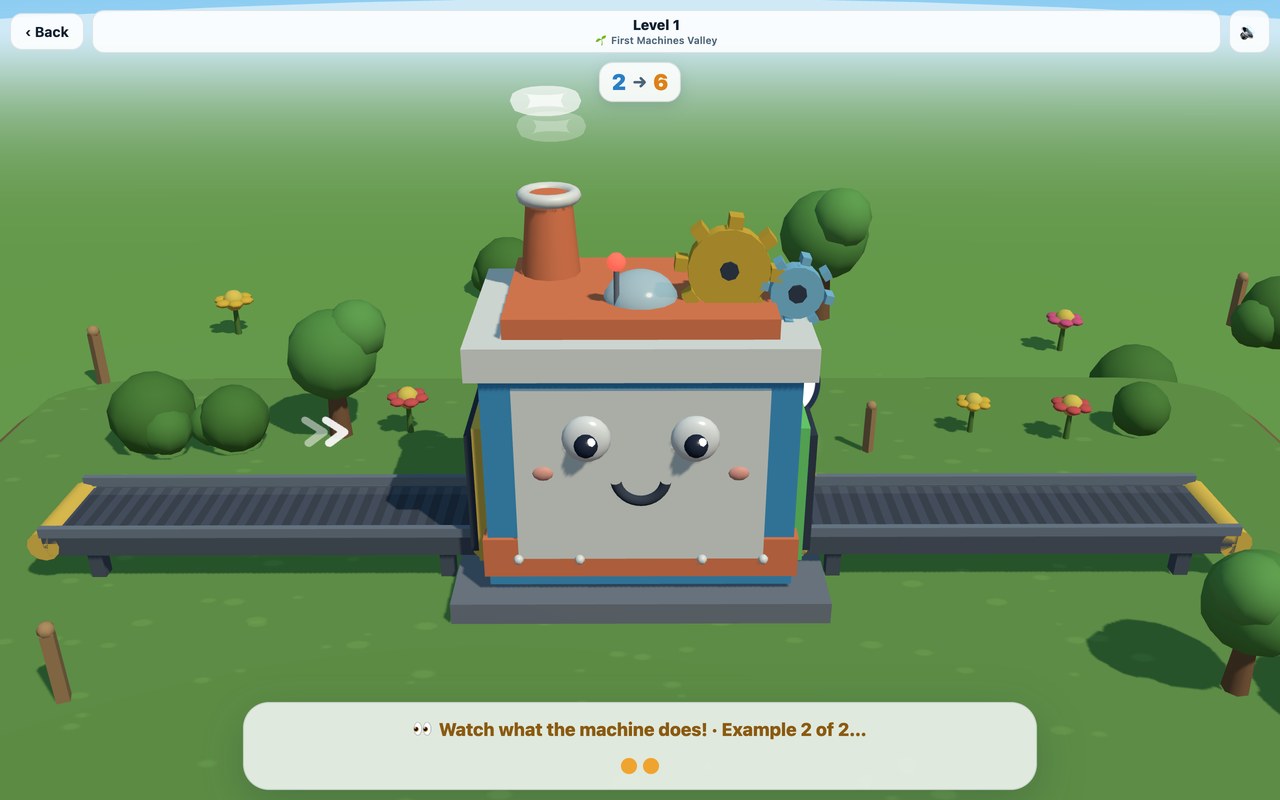 Function Machine Game — Free Function Forge Academy 7+
Function tables made visible: drop an input into the machine, watch the output, fill …
-
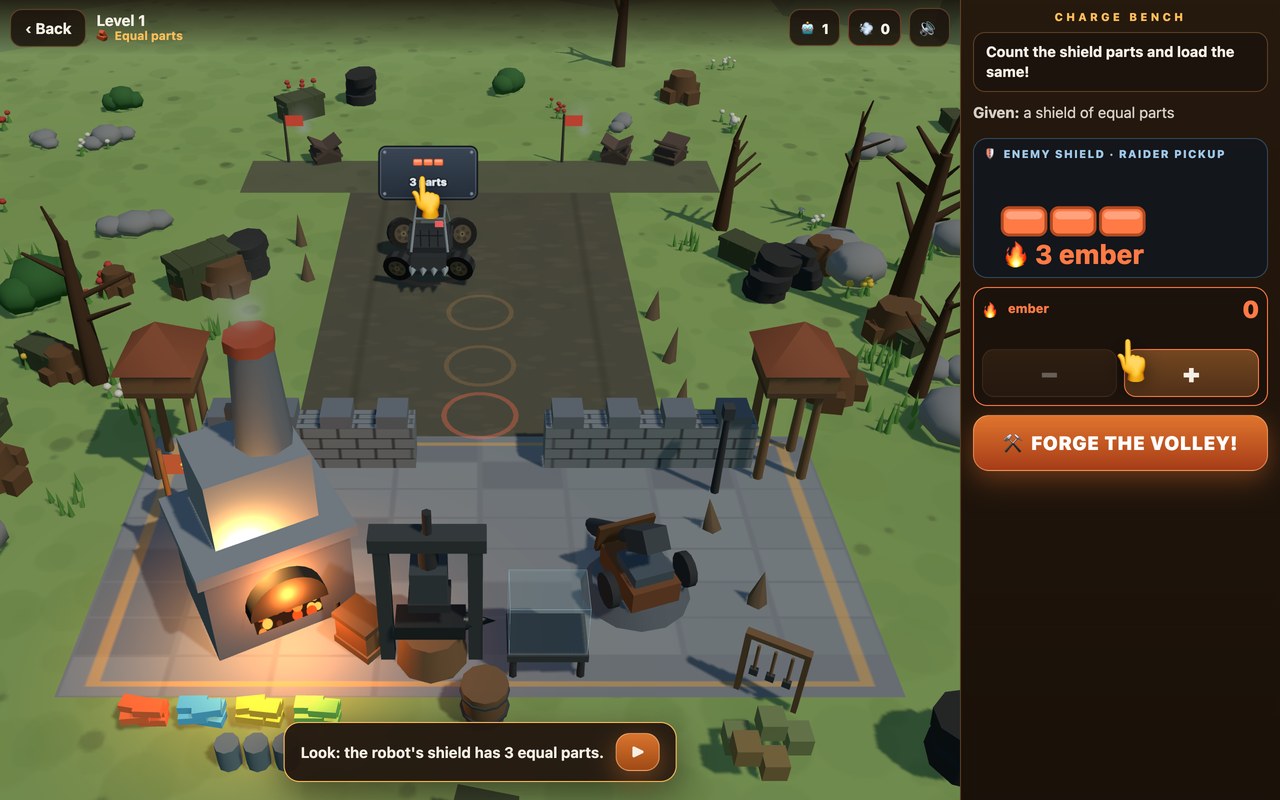 Ratio & Proportion Games for Kids — Free Ratio Forge 9+
Ratio games for kids where the math is the weapon: use ratios, unit rates …
-
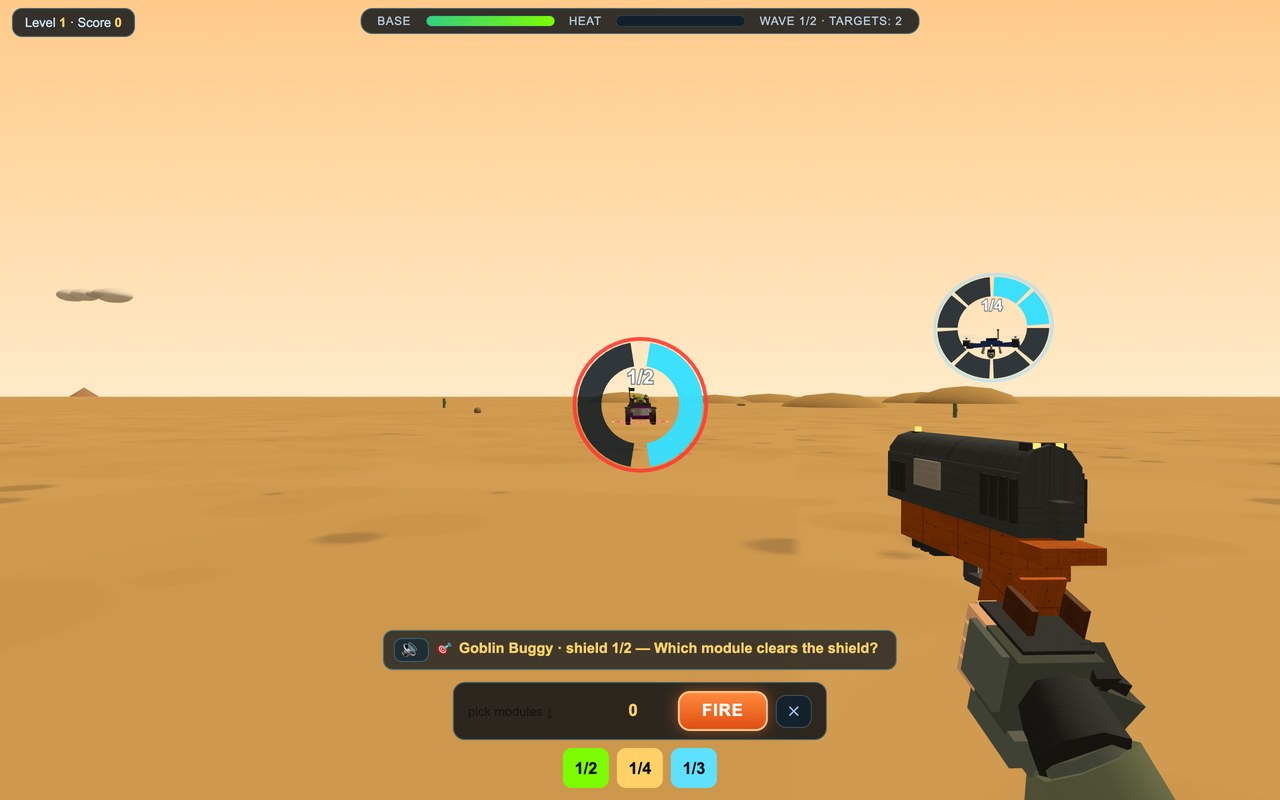 Equivalent Fractions — Free Game With 500 Levels 7+
Equivalent fractions practice: pick the round that matches the shield and fire. 1/2 = …
-
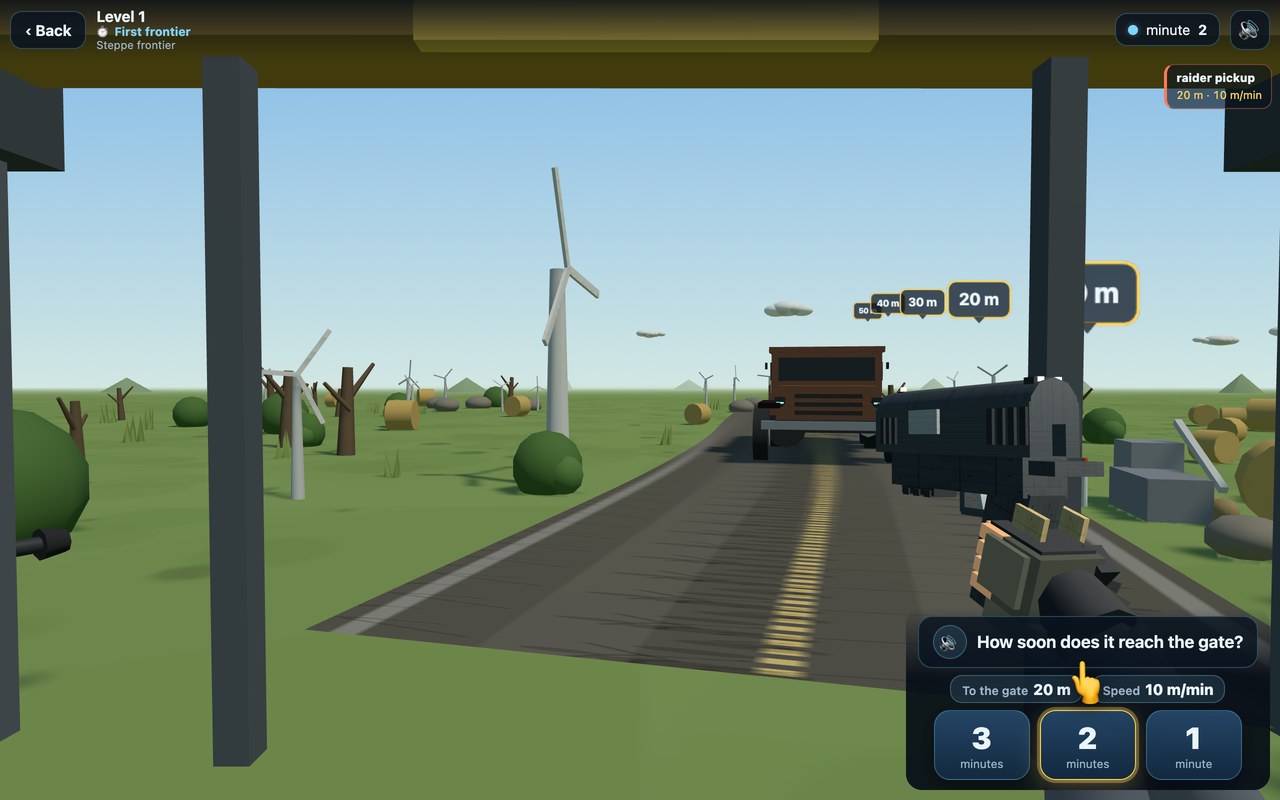 Speed, Time and Distance Game — Free Base Commander 7+
Speed distance time word problems as a defense mission: track a moving target, predict …
-
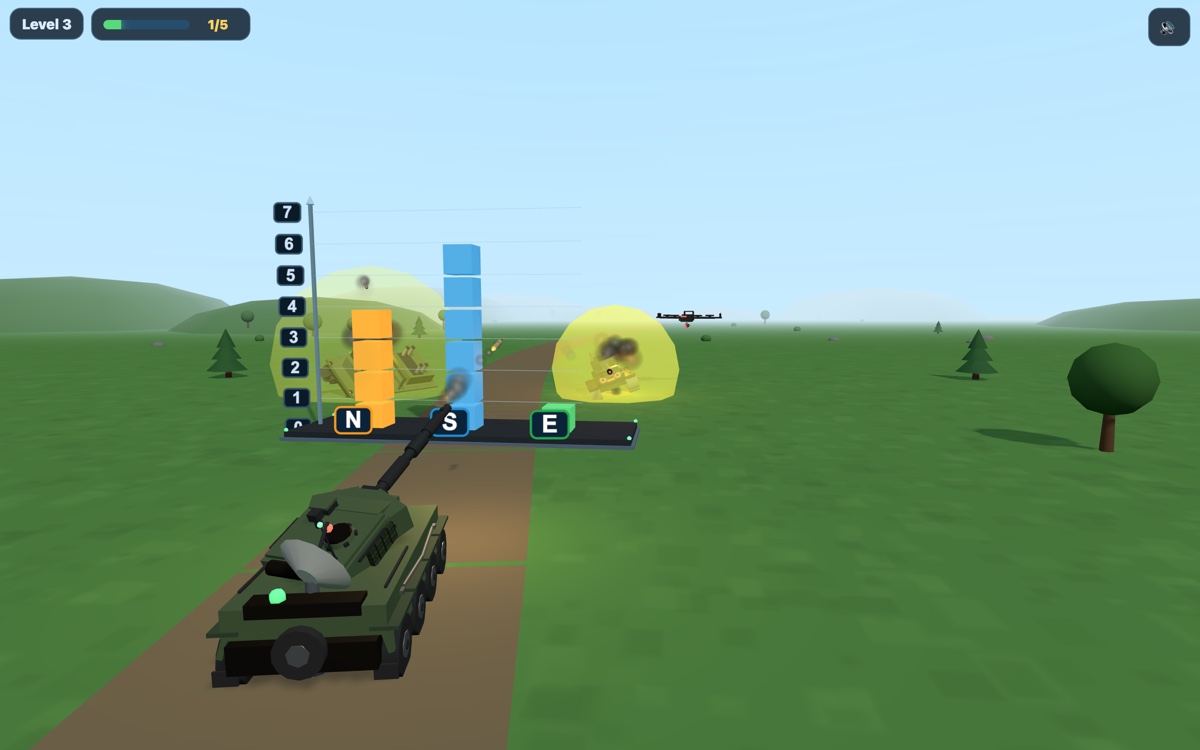 Graphing & Data Games for Kids — Free Last Radar 7+
Graphing games for kids on a radar screen: read charts, tables, bar graphs and …
-
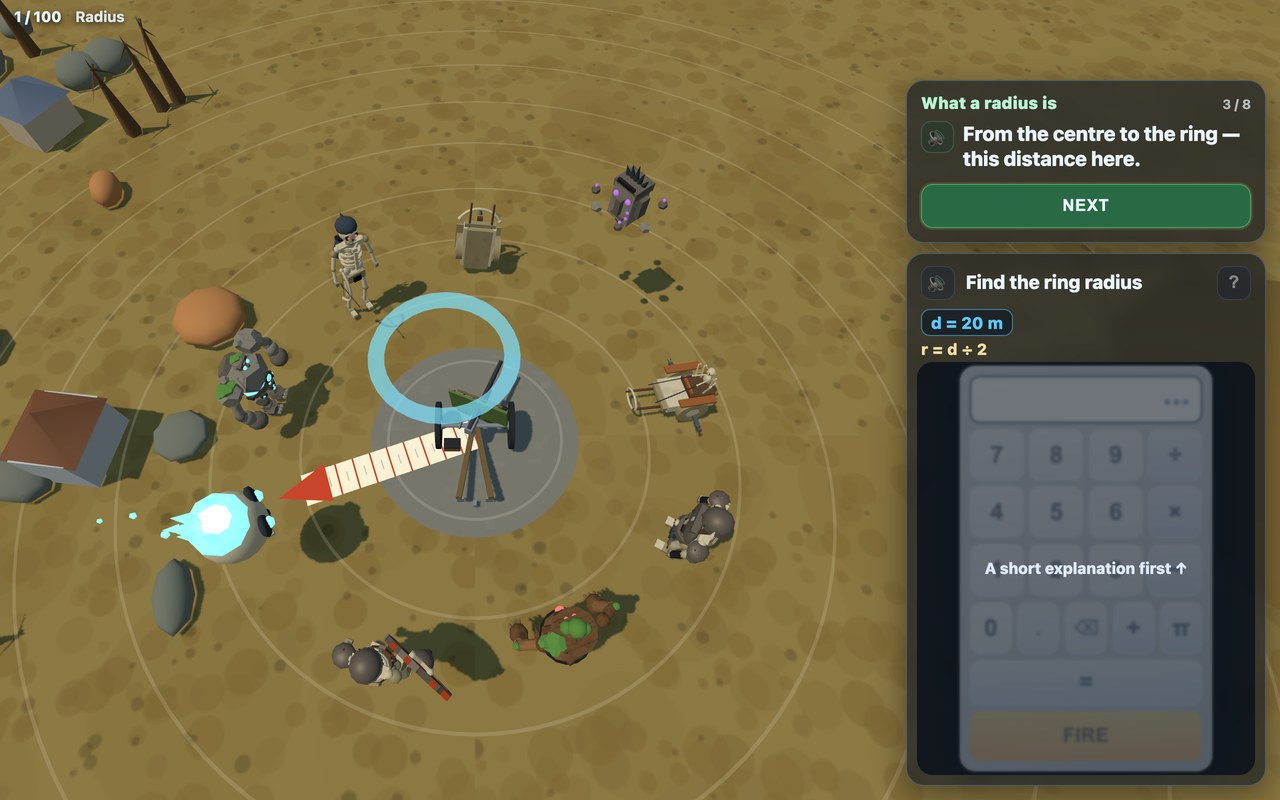 Circumference of a Circle: Formula, Pi and Worked Examples 8+
The circumference of a circle is C = 2πr (or πd). See where pi …
-
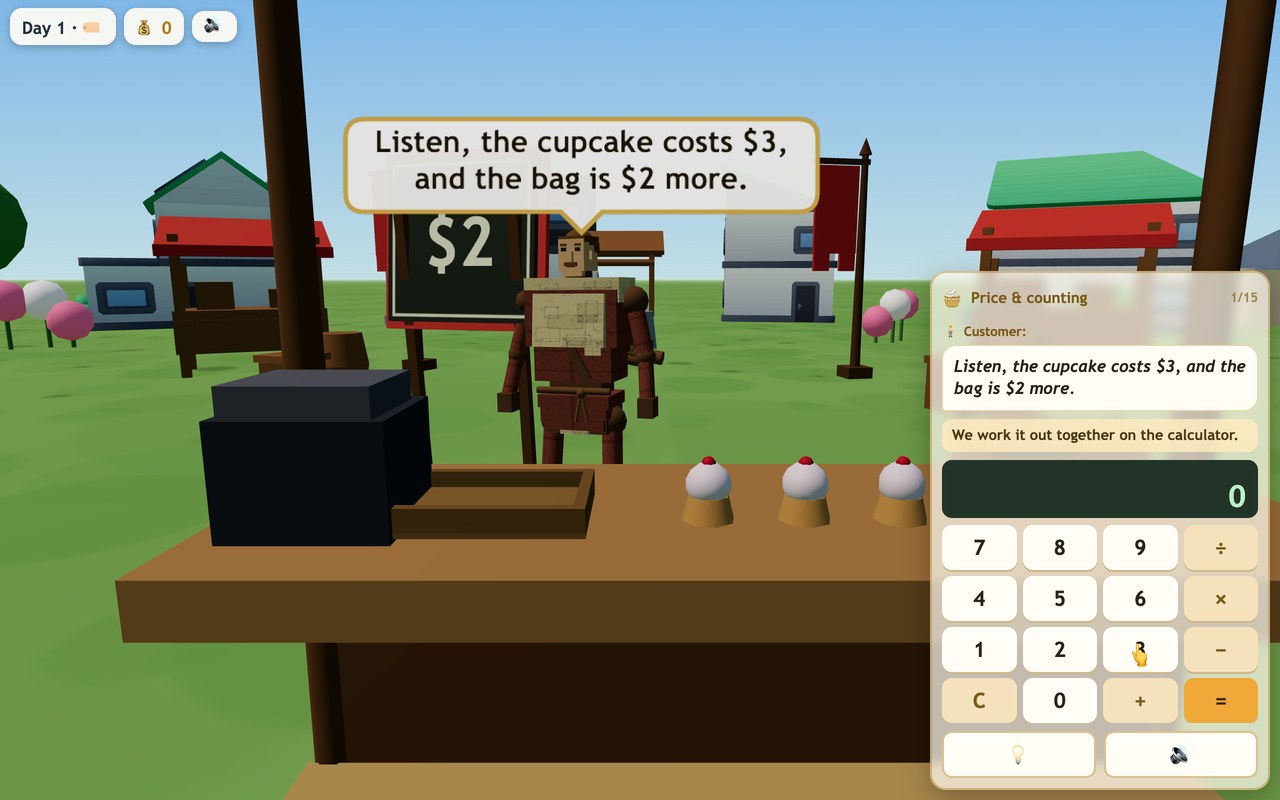 Business Game for Kids — Free Venture City 7+
Business games for kids built on real money math: use the built-in calculator to …
-
 Chemistry for Kids: Atom Lab — Free Online 8+
Chemistry for kids aged 6-10: baking soda and vinegar foam, dissolving salt, rust, melting …
-
 Proof Math Game for Kids — Free Proof Architects 7+
Proof Architects: a proof math game where kids prove answers, not guess them. 10 …
Fifth grade is the bridge year. Everything before it was arithmetic on whole numbers; everything after it is algebra, and the crossing has three specific planks.
Plank one: decimals as place value, not as a new species. 0.7 is seven tenths — the same column logic as tens and hundreds, continued to the right. Children who learn decimal rules as separate tricks ("line up the dots") get 0.9 > 0.85 wrong, because they compare them as if they were 9 and 85.
Plank two: order of operations. 3 + 4 × 5 is 23, not 35, and this is not arbitrary — multiplication is repeated addition, so it is already grouped. A fifth grader who accepts the rule without that reason will misapply it the first time brackets and exponents appear together.
Plank three: the letter. In x + 7 = 12, x is not a mystery and not a code — it is a number we have not written down yet, and the equation is a balance. Both sides stay equal as long as you do the same thing to each. That single idea carries a student through the next four years.
Also this year: volume of a rectangular prism (which is area with a third dimension), plotting points in all four quadrants, ratio as a comparison rather than a difference, and negative numbers as positions on a line rather than "numbers that are missing".
Tip for the grown-up. Fifth graders will argue about maths if you let them. "Convince me that 0.9 is bigger than 0.85" produces more learning than ten correct exercises.
Continue with ordered pairs, function machine games, adding integers, ratios and proportions and learning games for 4th graders.