
Learn Spanish for Kids — Free Castle Siege 4–10
 New from Dad4Kids
Clean YouTube for kids
For families with traditional values, hand-picked by parents.
Open →
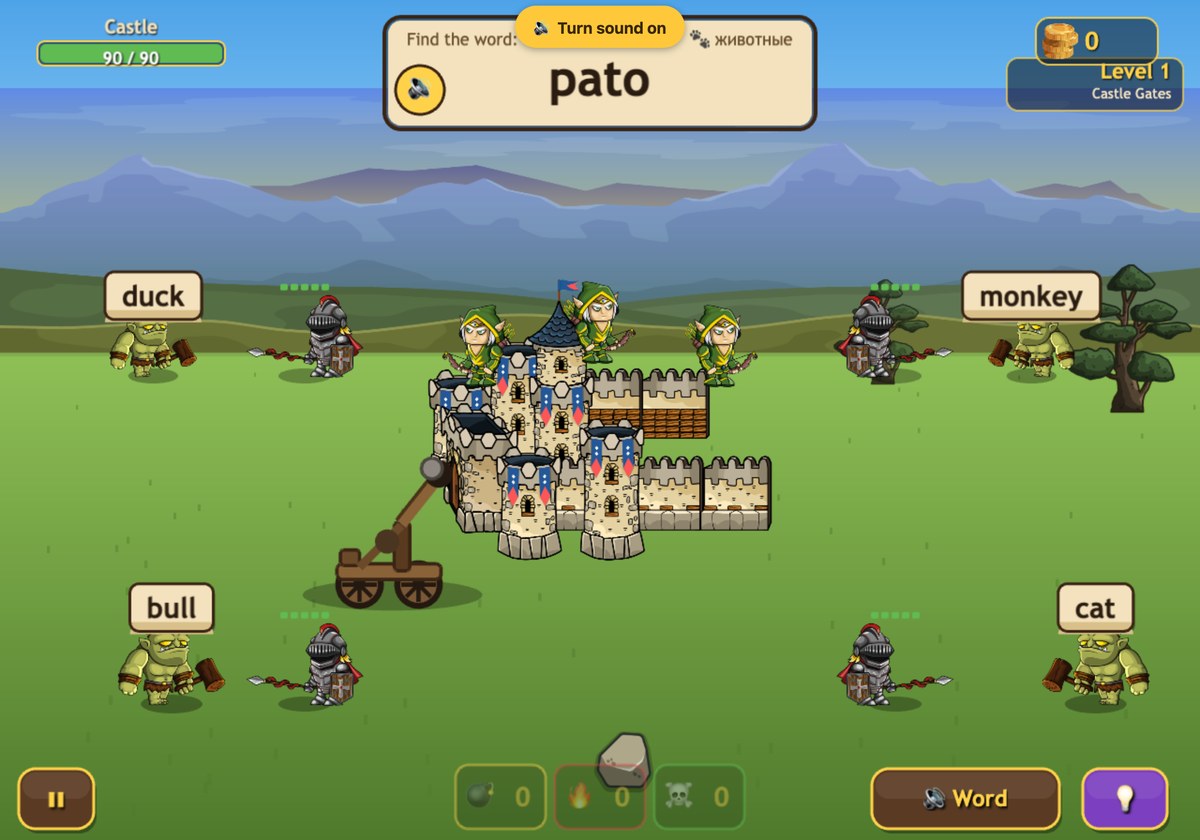
Castle Siege is Spanish pronunciation practice where the words are meant to be spoken aloud. Ahead looms the orcs' dark castle, its wall guarded by monsters. The game shows a picture and says a word once in Spanish; the child repeats it out loud. If the word is recognized, your knights charge the wall and smash it. The more words you say, the more knights you send and the faster the castle falls.
Picture + voice = memory
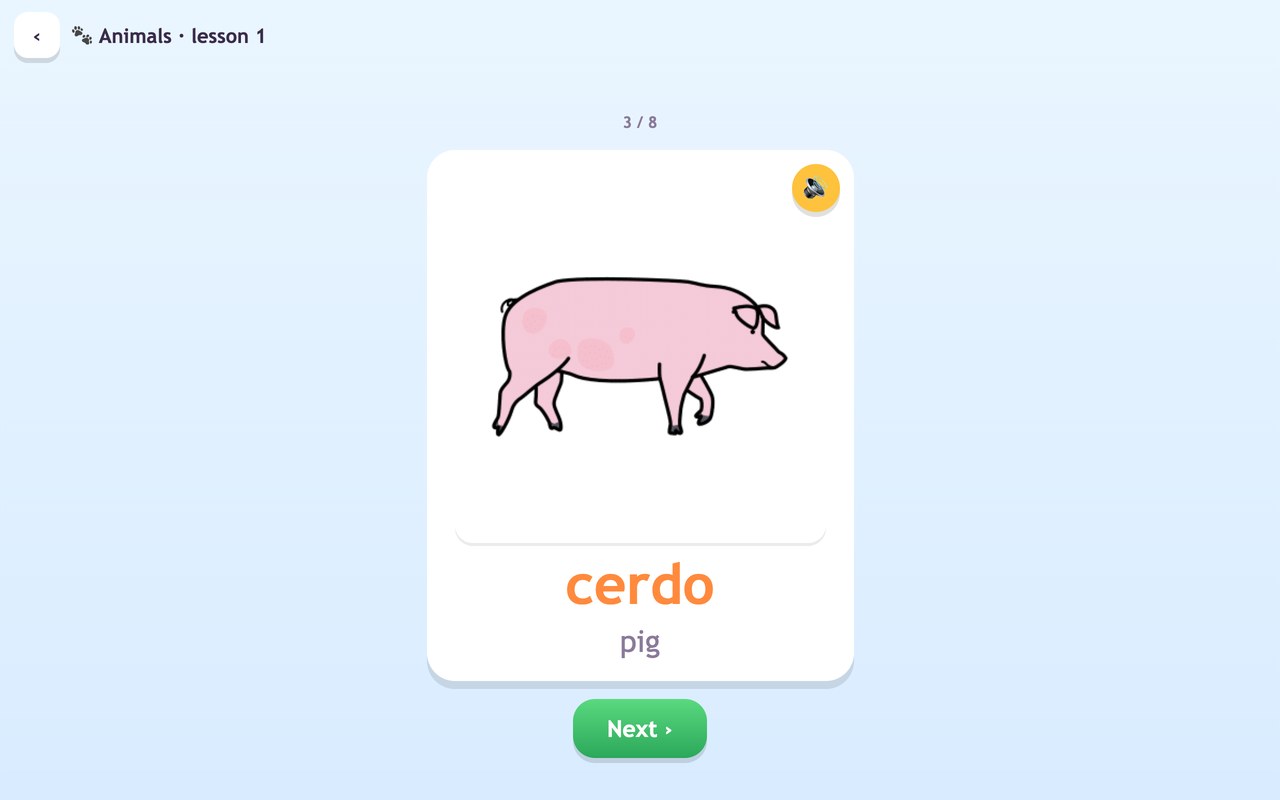
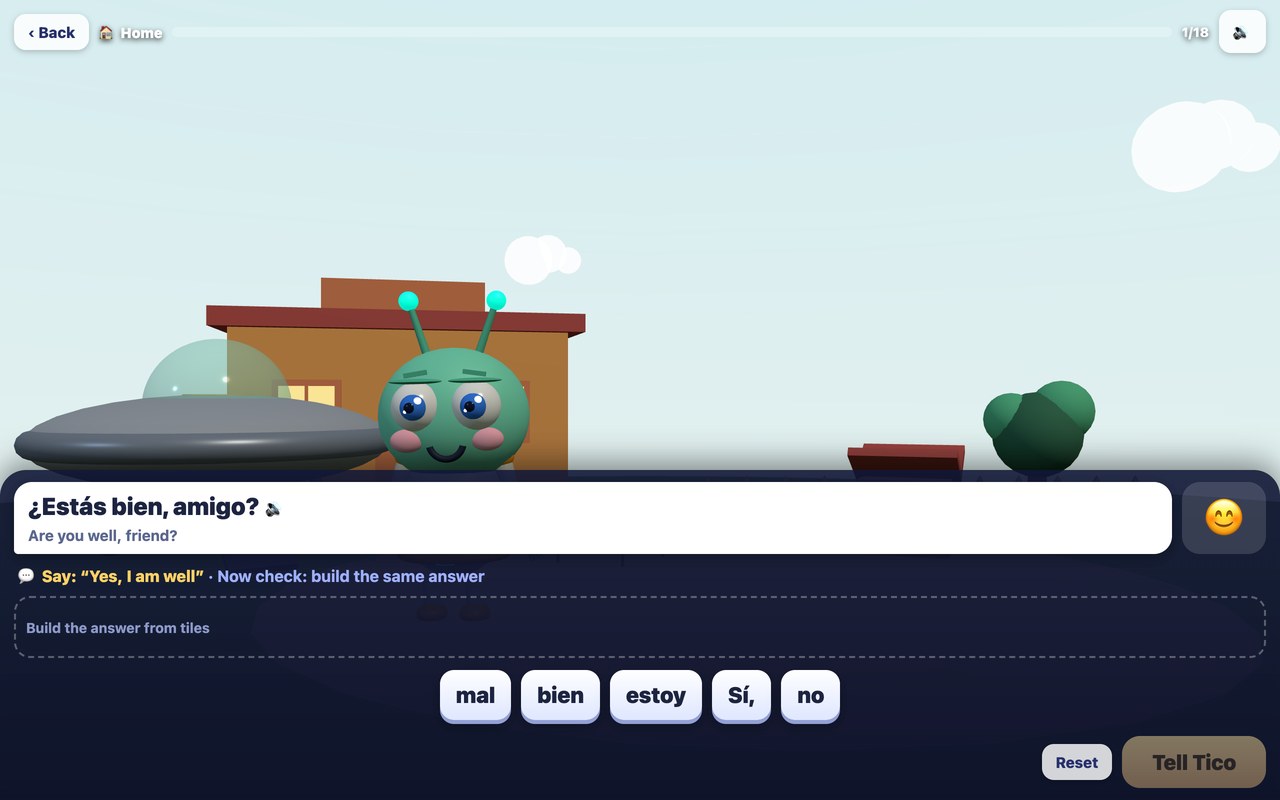
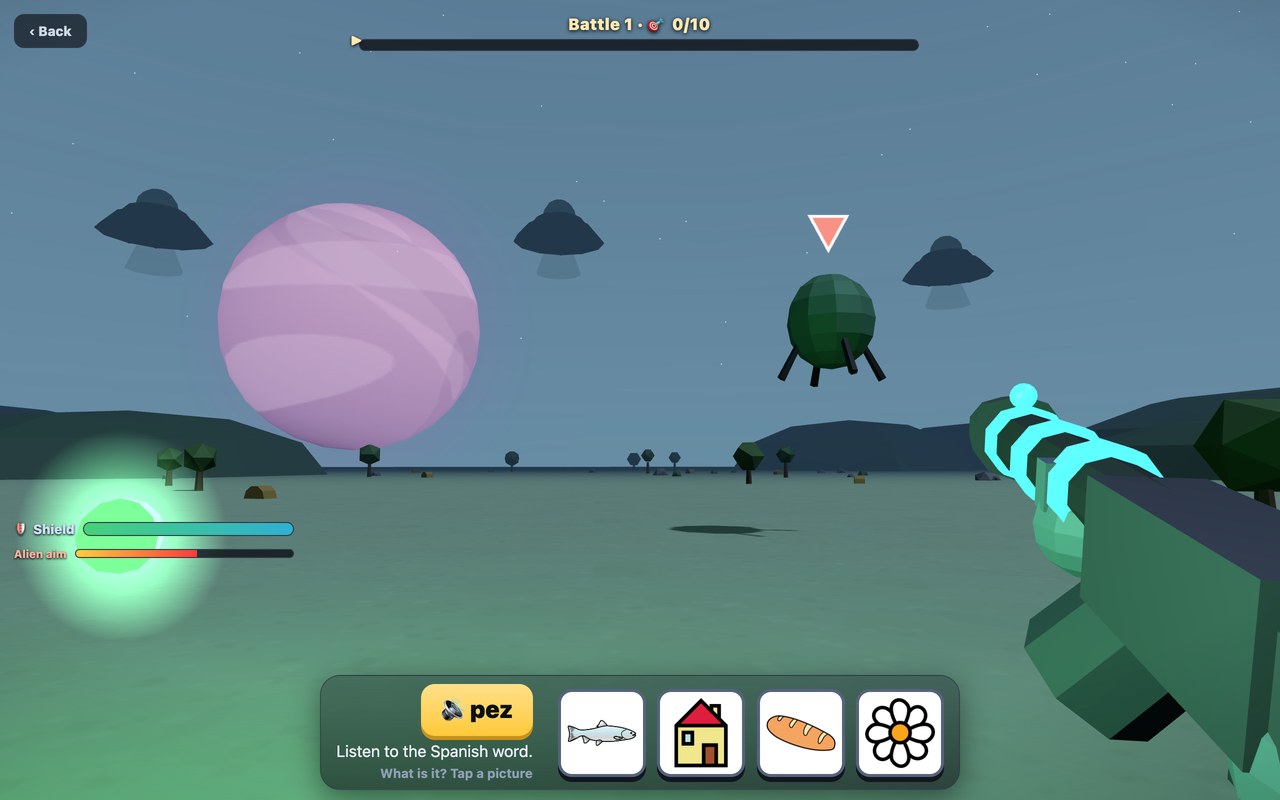
Every word comes with a clear picture and audio (tap 🔊 to hear it again). The child sees the image, hears the Spanish word and says it back — so words stick naturally, by ear and in speech.
Speech recognition — private by default
By default, speech is recognized right in the browser and never leaves the device. In settings a parent may optionally connect more accurate recognition (their own key) — with a clear explanation of what is sent where. The parent decides.
2829 words, easy to hard
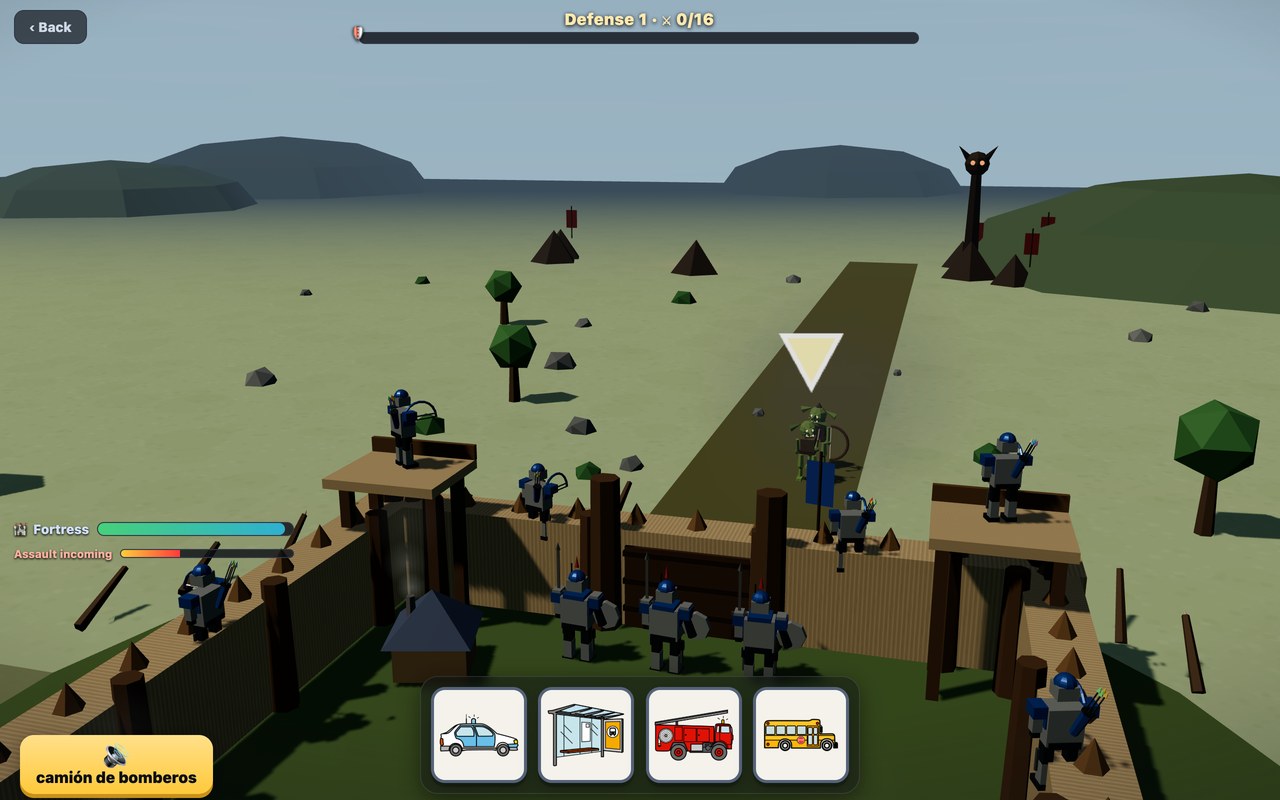
Start with the most common everyday words, then move to harder ones by topic. The castle grows tougher and the walls fill with more monsters — but you gain more knights with every correct word.
How to play
Look at the picture and listen to the word 🔊. Tap the microphone and say the word in Spanish. If the game understands you, your knights run in and break the orc castle's wall. Say as many words as you can to bring the whole castle down!
What your child learns
Builds active Spanish pronunciation (not just recognition but real speech), plus vocabulary by ear and by sight through pictures. A speaking-first way to learn Spanish for kids.
The science behind the games
Every Dad4Kids game is built on one simple truth: children want to play, not study — so we turn learning into a game worth replaying. The method draws on peer-reviewed research in game-based learning, motivation, and how memory works.
- Chen et al. (2016). The effectiveness of digital game-based vocabulary learning: a framework-based view. British Journal of Educational Technology.
- Sundqvist (2019). Commercial-off-the-shelf games in the digital wild and L2 learner vocabulary. Language Learning & Technology.
- Nakata (2015). Effects of expanding and equal spacing on second language vocabulary learning. Studies in Second Language Acquisition.
- Nakata & Webb (2016). Does studying vocabulary in smaller sets increase learning?. Studies in Second Language Acquisition.
- Tokac et al. (2019). Effects of game-based learning on students' mathematics achievement: A meta-analysis. Journal of Computer Assisted Learning.
- Alotaibi (2024). Game-based learning in early childhood education: a systematic review and meta-analysis. Frontiers in Psychology.
FAQ
Does it need a microphone?
Yes — the game teaches saying words aloud, so it needs a microphone and permission for it. By default recognition runs in the browser and is not sent to our server.
Is it safe for my child?
By default the voice is processed on the device. More accurate online recognition is connected only manually by a parent in settings, with the trade-offs explained.
What age is it for?
About 4 and up. Each word is first shown as a picture and spoken aloud — the child only needs to repeat it.
Is it free?
Yes — free, no ads, right in the browser on a tablet, phone or computer.
More free games for kids
By Evgeny Arsentiev, PhD · Last updated: September 2026
Pictograms: author Sergio Palao for ARASAAC (© Government of Aragón, Spain), licensed CC BY-NC-SA.