
Geometry Games for Kids — Free Mars Rover 6+
 New from Dad4Kids
Clean YouTube for kids
For families with traditional values, hand-picked by parents.
Open →
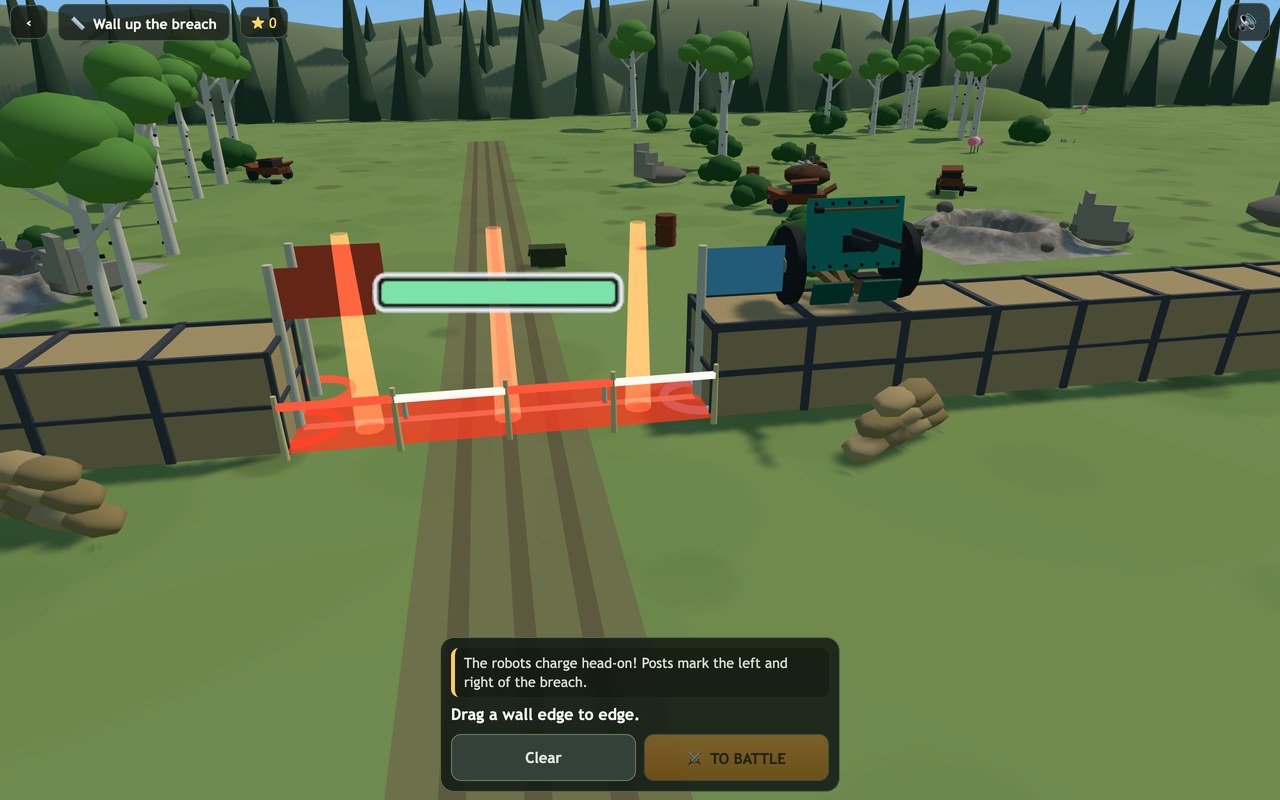
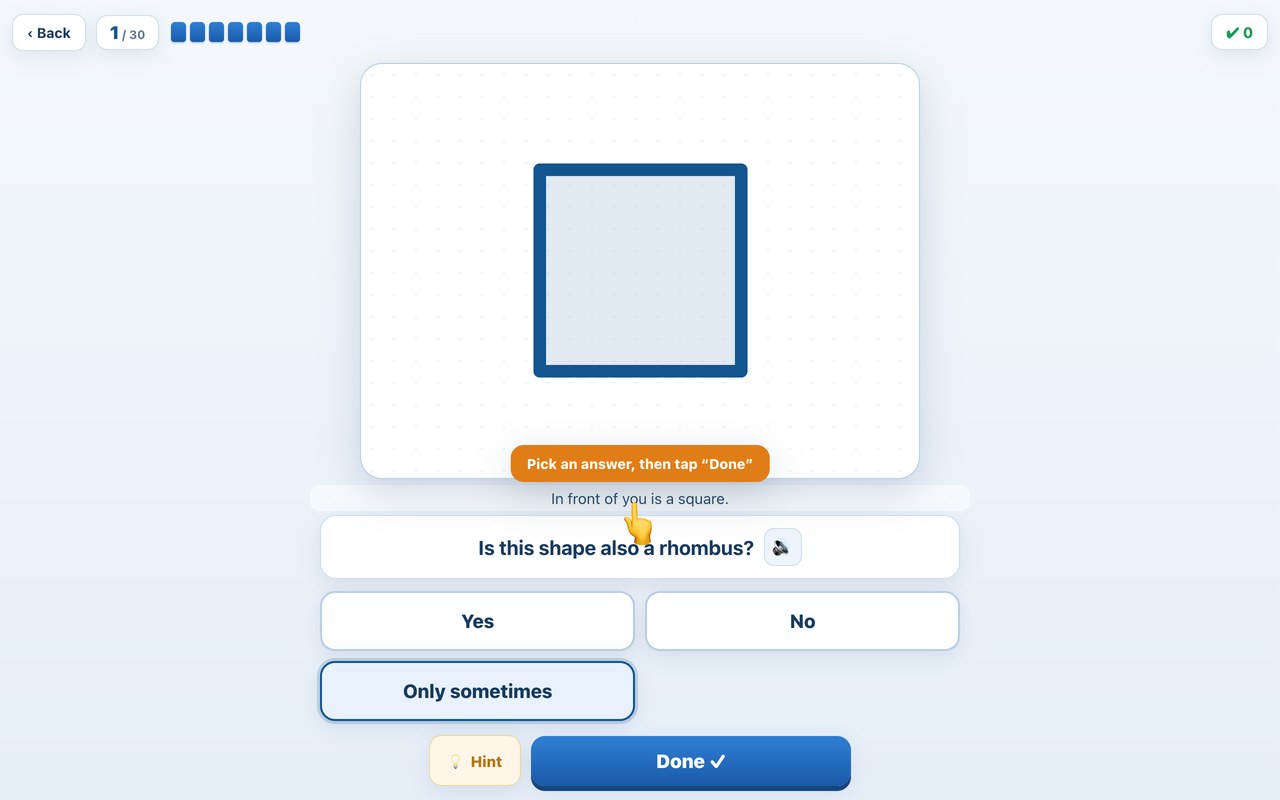
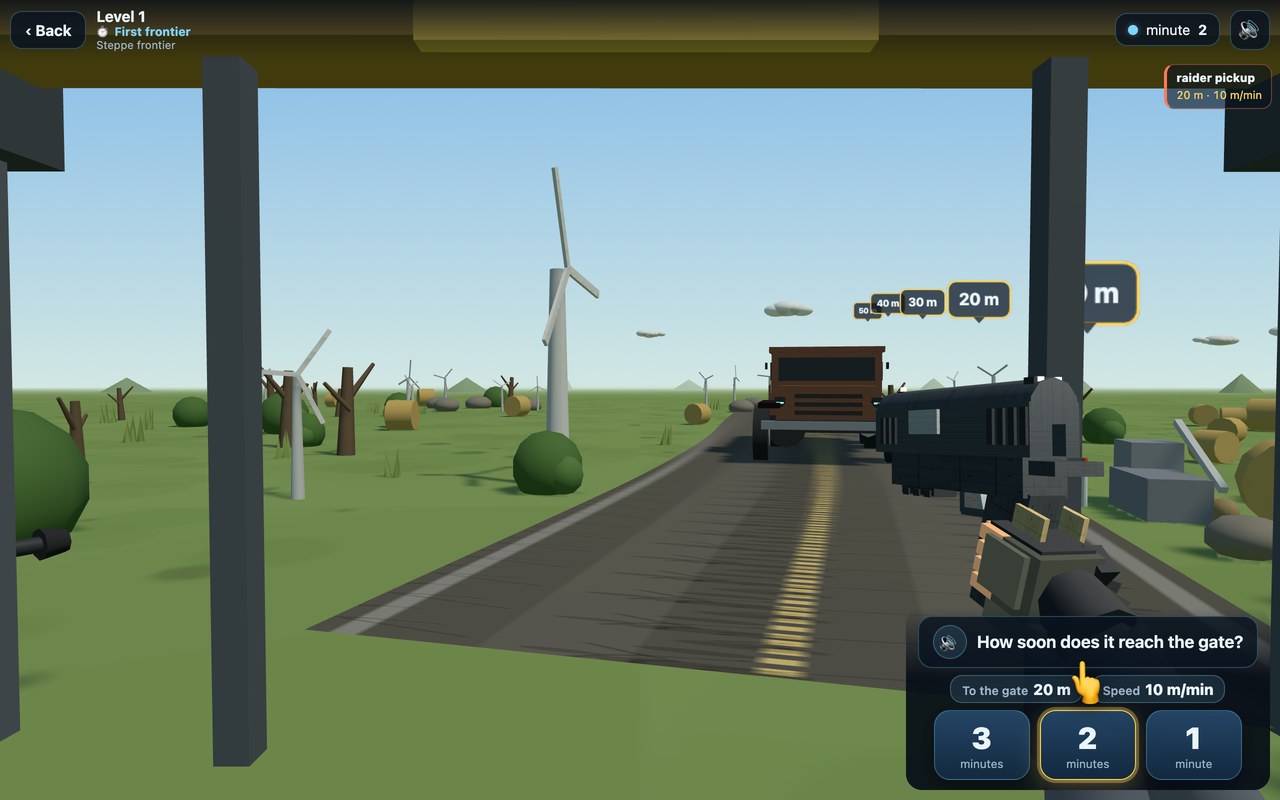
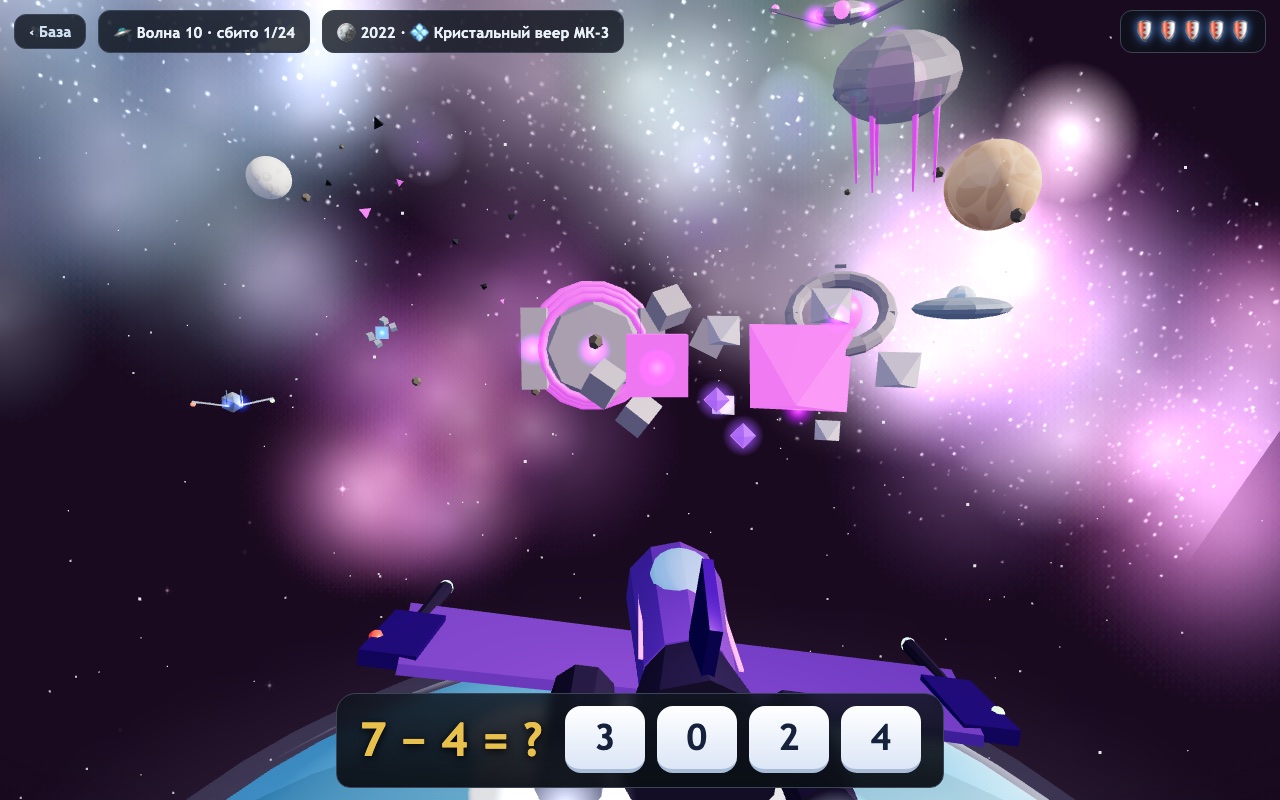
Mars Rover: Fun Geometry is a course of geometry for kids hidden inside a Mars action adventure. An armed six-wheeled battle rover rolls across the red planet, and at every glowing anomaly the geometry is standing RIGHT THERE IN THE WORLD: neon figures built of glowing tubes, real stacks of cubes with hidden ones to count, walls of voxel shapes, giant spinning gears, two glowing roads to compare. An alien guard — a flying saucer, a tripod turret or a crystal-thief bug — protects each puzzle.
Solve it and the plasma cannon fires: the alien is blasted sky-high, coins burst out and fly into your counter, and the freed crystal soars away. A mistake is safe — the alien fires a scary but harmless warning shot, and a friendly card explains the idea. There is no timer: the rover parks and waits while the child thinks.
The course is 1000 generated tasks across 100 missions — never copied, always fresh: fifteen puzzle families with exactly computed answers ramp smoothly from shape counting and odd-one-out to hidden cubes, top views, symmetry, rotations, right angles, area and perimeter, cutting logic and gear chains.
How to play
Watch the rover drive to the anomaly. The puzzle stands right on Mars — study it, listen to the question, think as long as you like and tap the answer. Right answer — the cannon fires, the alien tumbles, coins fly to your counter. Wrong — read the little explanation card and try again. Ten anomalies per mission.
What your child learns
The core of visual geometry for ages 6-10: shape recognition, counting composite figures, 3D spatial reasoning (hidden cubes, top views), symmetry and rotations, area and perimeter, right angles, cutting and folding logic, gear chains — 1000 tasks with smoothly growing difficulty.
The science behind the games
Every Dad4Kids game is built on one simple truth: children want to play, not study — so we turn learning into a game worth replaying. The method draws on peer-reviewed research in game-based learning, motivation, and how memory works.
- Tokac et al. (2019). Effects of game-based learning on students' mathematics achievement: A meta-analysis. Journal of Computer Assisted Learning.
- Alotaibi (2024). Game-based learning in early childhood education: a systematic review and meta-analysis. Frontiers in Psychology.
- Lampropoulos & Sidiropoulos (2024). Impact of gamification on students' learning outcomes and academic performance: a meta-analysis. Education Sciences.
- Taylor & Boyer (2019). Play-based learning: evidence-based research to improve children's learning experiences. Early Childhood Education Journal.
- Gottfried (1990). Academic intrinsic motivation in young elementary school children. Journal of Educational Psychology.
- Yang et al. (2018). Enhancing learning and retrieval of new information: a review of the forward testing effect. npj Science of Learning.
FAQ
Is it violent?
It's kid-friendly action: the rover zaps cartoon alien guards with a glowing plasma bolt, they tumble and vanish in sparkles — no blood, no people. Mistakes never hurt the child: the alien only fires a harmless warning shot.
Are the 1000 puzzles really different?
Yes — every task is generated by fifteen exact-math puzzle families (triangle counting via real geometry, cube builds, gear chains…), so nothing is hand-copied and the course stays fresh across all 100 missions.
Is the child rushed?
Never. The rover parks at the puzzle and waits. There is no timer; explanation cards close with a button.
Is it free?
Yes — free, no ads, right in the browser. Best on a tablet held sideways.
More free games for kids
By Evgeny Arsentiev, PhD · Last updated: September 2026