
Math Games for 1st Graders — Free Sword of Sums 6+
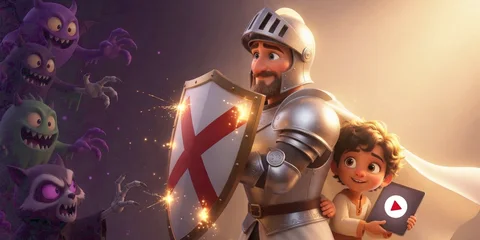 New from Dad4Kids
Clean YouTube for kids
For families with traditional values, hand-picked by parents.
Open →
Math games for 1st graders have to sit in a narrow window — past counting, not yet times tables. Sword of Sums aims straight at it: pick age 6 or 7 on the first screen and the game opens on adding and subtracting within 5 and within 10, number bonds, the number before and after, missing numbers and simple sequences, then walks up to work within 20.
Walk the world, meet a monster, solve a problem
Your child steers a small knight with the arrow keys (or two big arrow pads on a tablet) across ten bright 3D worlds — meadow, forest, autumn grove, ancient ruins, swamp, caves, crystal grotto, snowfields, volcano and the final castle. Walk up to a cartoon orc or goblin and it challenges you with a question. Right answer: the knight strikes and the monster bursts into blocks and stars. Wrong answer: it just shoves the knight back, costs one of five hearts, and the game shows and reads out the correct answer so the next try lands.
It measures, then chooses
The game keeps a running picture of which skills your child has really mastered and which are shaky, and picks the next question from that — so a strong first grader moves on quickly and a struggling one gets the same idea again in a new shape instead of a wall of red.
Free, no signup
Every question is spoken aloud. No ads, no download; it runs in the browser on a tablet, phone or computer.
More free math games for kids
- math games for kindergarten — counting to 5 and up, an elf archer that adapts to your child
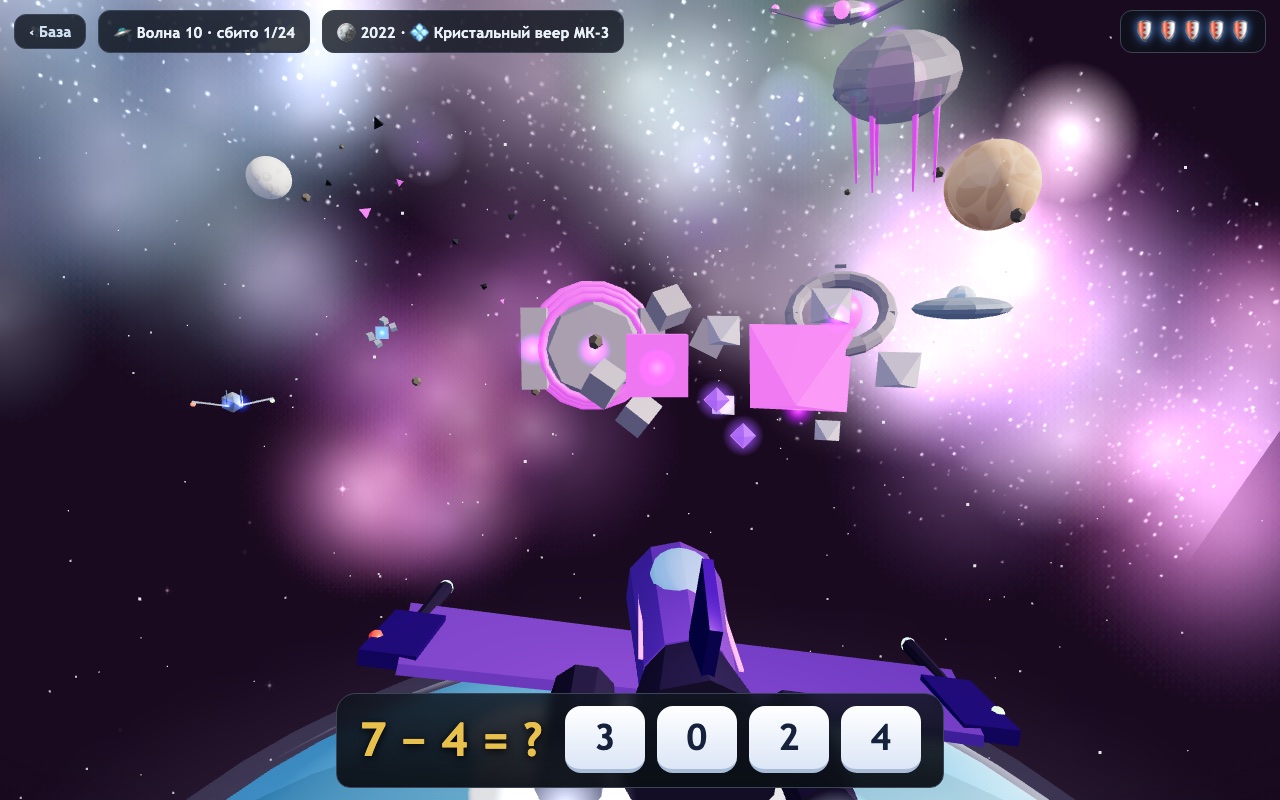
- math games for 2nd graders — adding, subtracting and first times tables in a moon-base defence
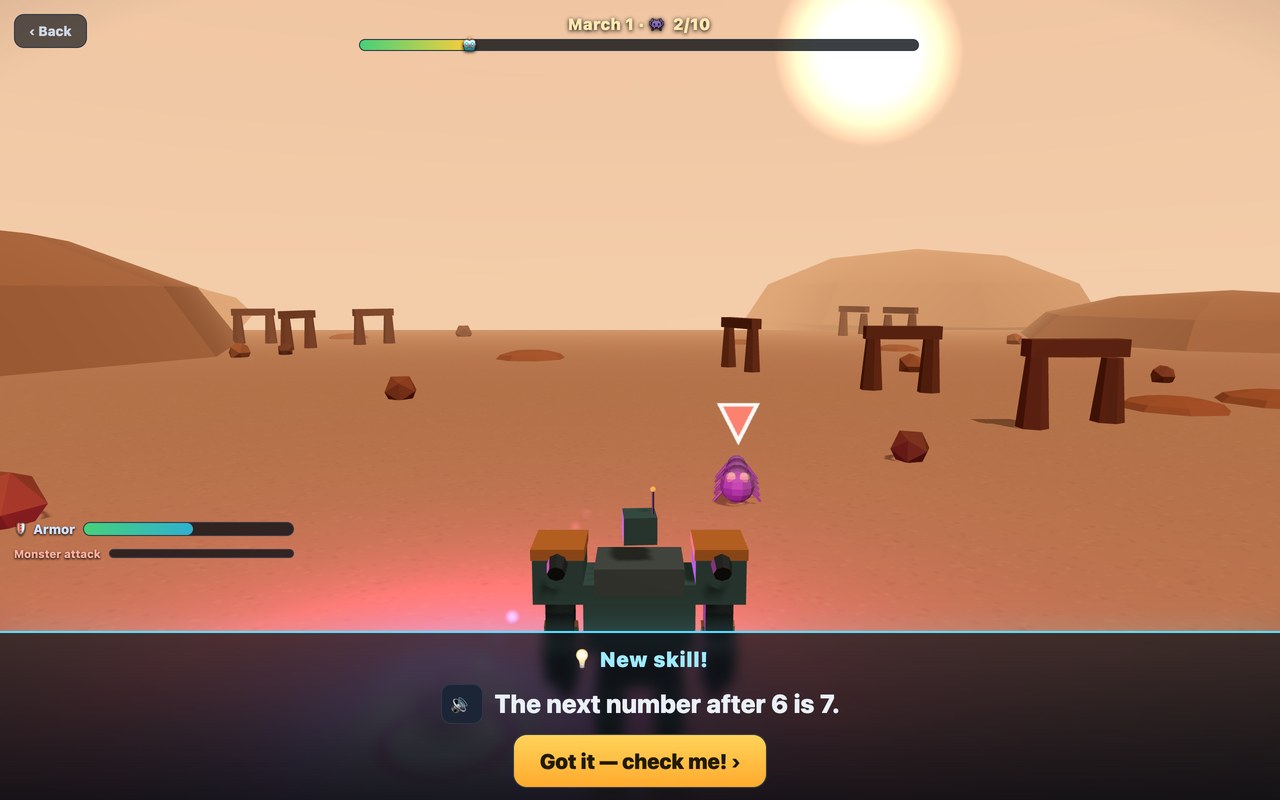
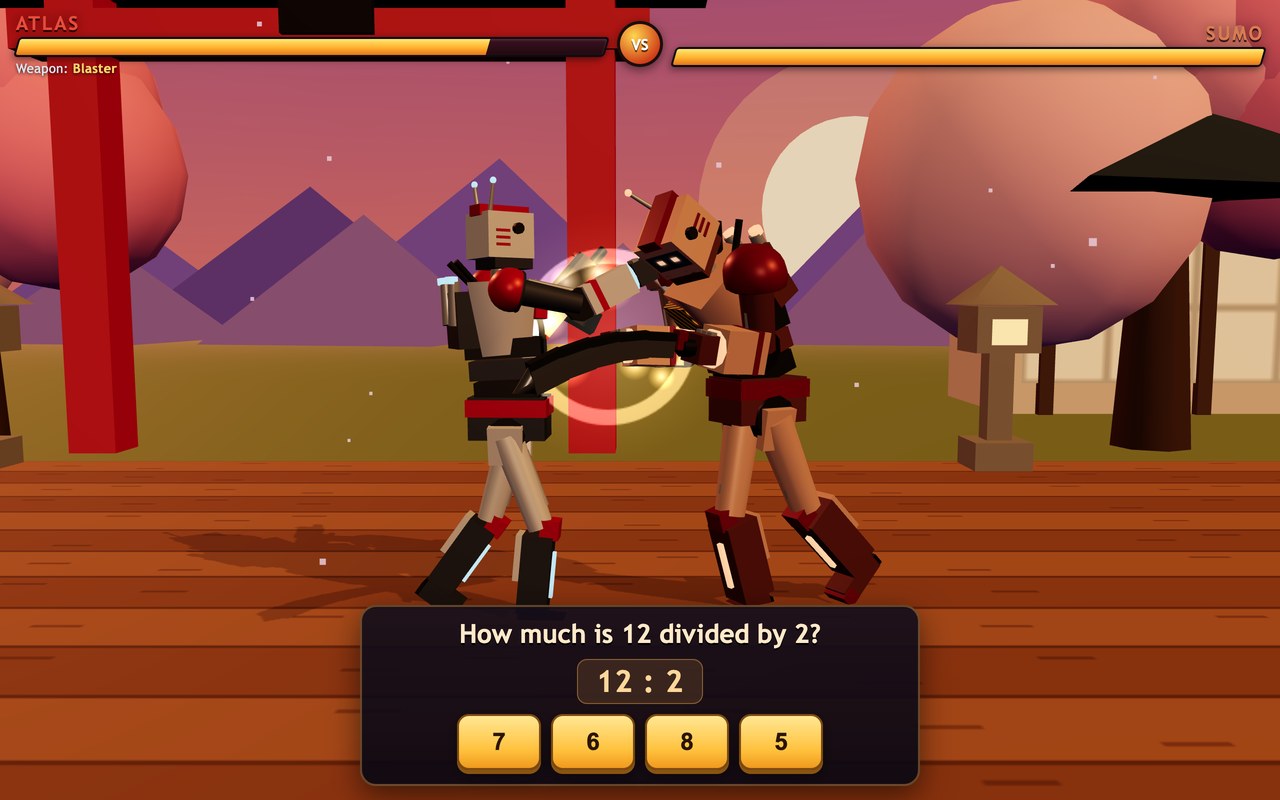
- math facts games — fact fluency with a mastery ladder in a walking mech
- multiplication table game — the whole times table, then division as its reverse
- multiplication practice games — aim the artillery by picking the right product
How to play
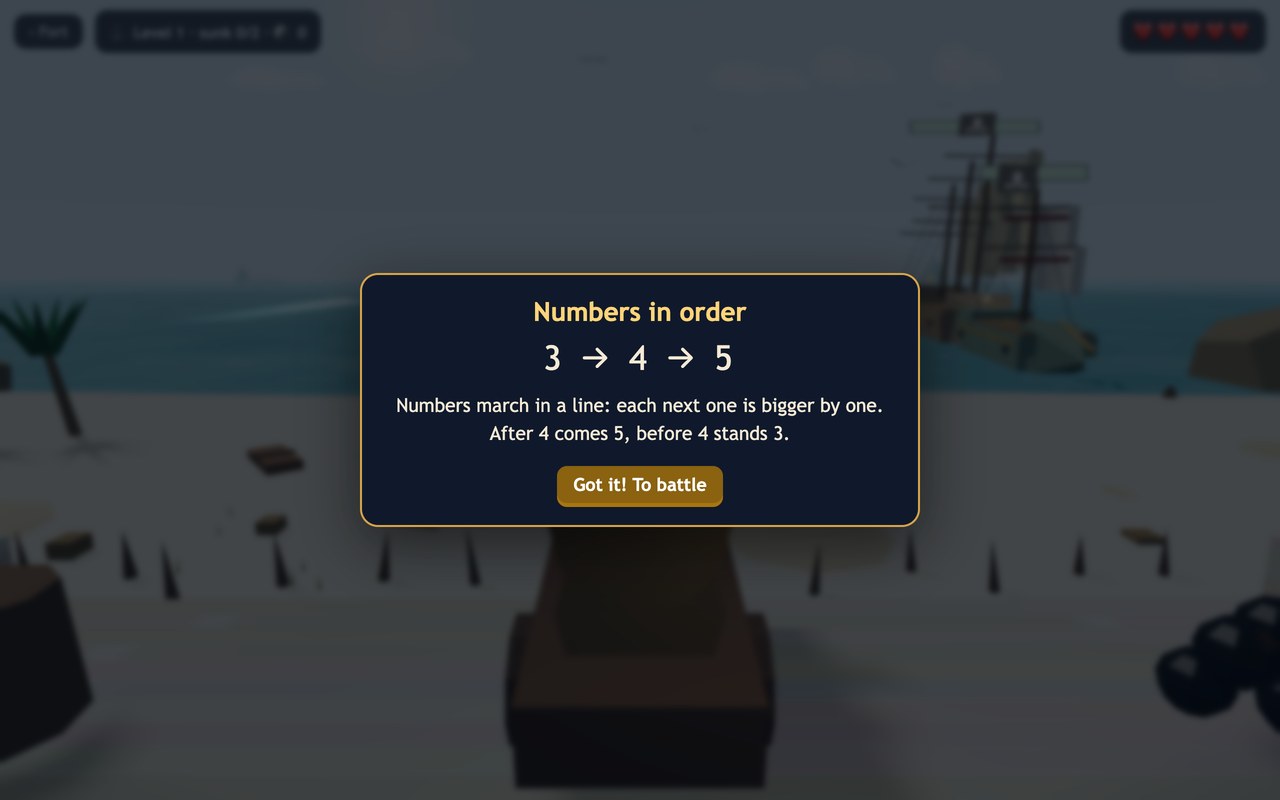
Move with the arrow keys or WASD; on tablets two big arrow pads sit at the bottom corners. Near a monster a problem card pops up — tap the right answer out of the choices. Defeat every monster on the level and the treasure chest at the end unlocks. A voice reads each problem and answer aloud.
What your child learns
All four operations in one game, on a 500-level staircase that never jumps: addition to 5, then to 10, subtraction, adding and subtracting to 20, times tables (×2–3, ×4–6, ×7–9), division, and finally all four operations mixed. Numbers grow gradually inside every chapter, mistakes are explained and retried, and a flawless level earns three stars.
The science behind the games
Every Dad4Kids game is built on one simple truth: children want to play, not study — so we turn learning into a game worth replaying. The method draws on peer-reviewed research in game-based learning, motivation, and how memory works.
- Tokac et al. (2019). Effects of game-based learning on students' mathematics achievement: A meta-analysis. Journal of Computer Assisted Learning.
- Alotaibi (2024). Game-based learning in early childhood education: a systematic review and meta-analysis. Frontiers in Psychology.
- Lampropoulos & Sidiropoulos (2024). Impact of gamification on students' learning outcomes and academic performance: a meta-analysis. Education Sciences.
- Taylor & Boyer (2019). Play-based learning: evidence-based research to improve children's learning experiences. Early Childhood Education Journal.
- Gottfried (1990). Academic intrinsic motivation in young elementary school children. Journal of Educational Psychology.
- Yang et al. (2018). Enhancing learning and retrieval of new information: a review of the forward testing effect. npj Science of Learning.
FAQ
What ages is it for?
From about 6: the first chapters are addition within 5 with three big answer buttons. Older kids jump straight to the times-table and division chapters — each of the ten chapters can be replayed on its own.
Is it scary?
No. The monsters are silly cartoon creatures; a defeated one bursts into toy blocks and golden stars — no blood, nothing dark. Even the caves and the volcano are bright and friendly.
What happens on a wrong answer?
The monster nudges the knight back one step, one of five hearts goes dark, and the game shows and voices the correct answer. Then comes a fresh problem of the same difficulty — progress only ever comes from thinking, not guessing.
More free games for kids
By Evgeny Arsentiev, PhD · Last updated: September 2026