
Rebus Puzzles for Kids — Play Online 6+
 New from Dad4Kids
Clean YouTube for kids
For families with traditional values, hand-picked by parents.
Open →
Rebus puzzles are word riddles drawn instead of written: a picture stands for its name, a comma cuts a letter off, 'A=O' swaps one letter for another, a letter or a number adds a sound — and the pieces spell a new word. CAT with the C cut off and an R in front is RAT.
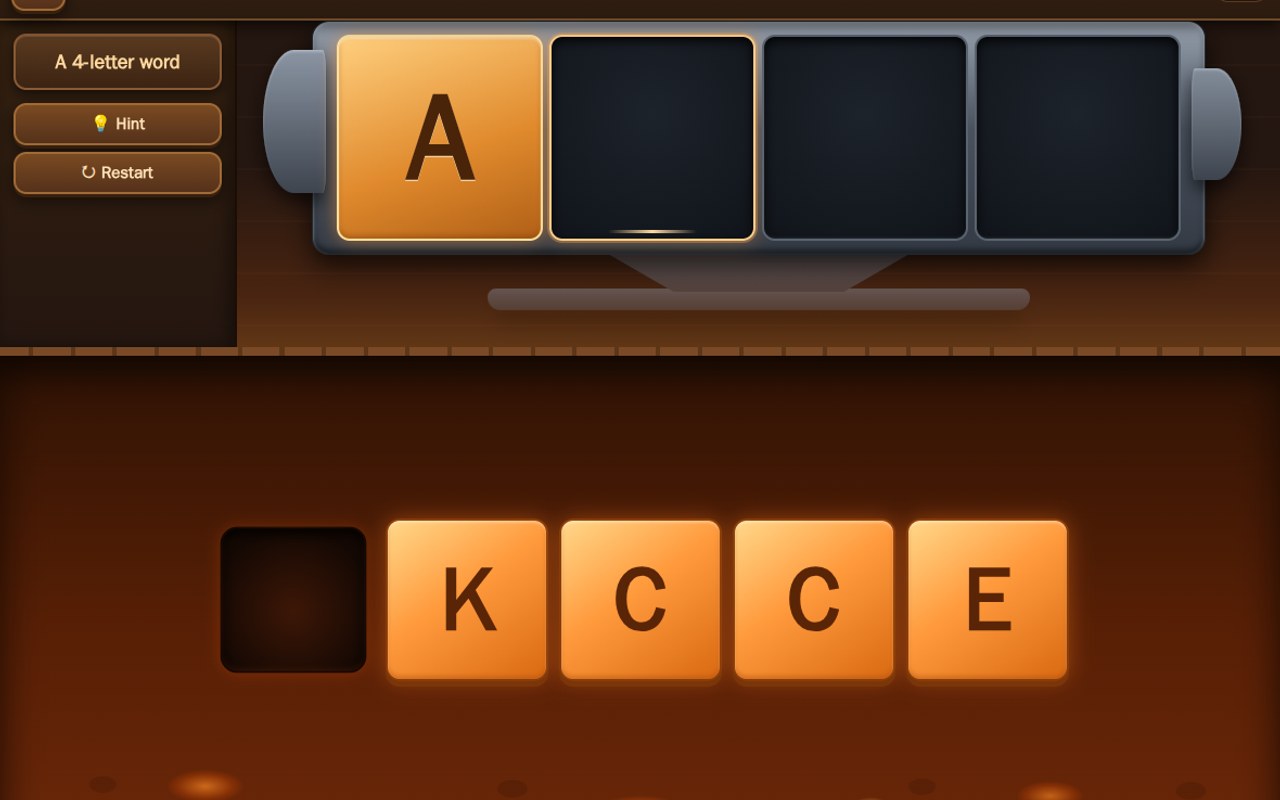
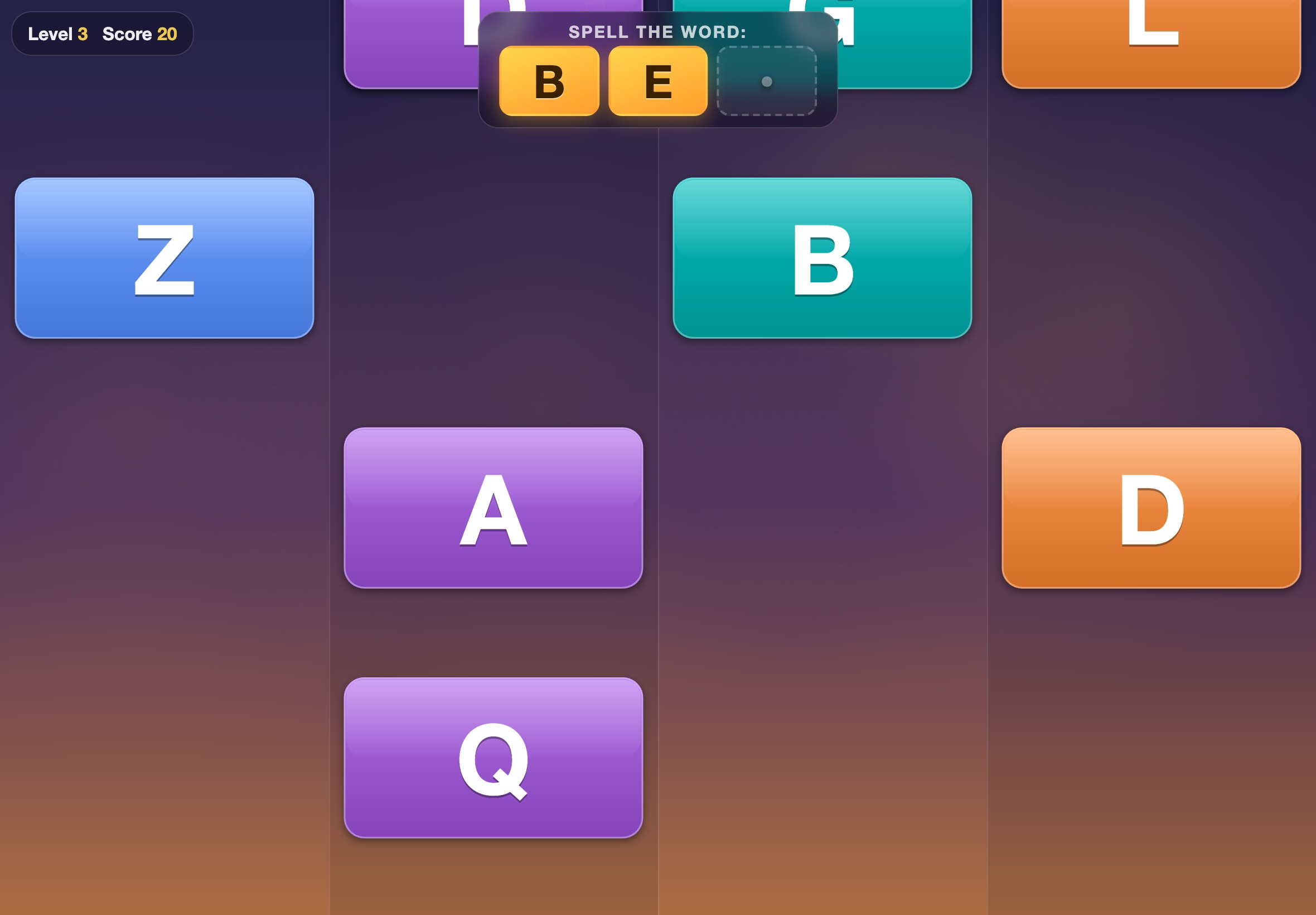
Here the rebus is on the board and the answer is spelled from letter tiles — no pen, no answer key. 500 riddles in six chapters: one picture, then two pictures added together, then commas, then letter swaps, then sound tricks like 4 for 'for' and B for 'bee', and finally everything mixed. Every riddle was decoded by the game itself before it reached the child, so exactly one dictionary word fits.
A wrong word is diagnosed by parts — the game shows which piece of the rebus went wrong, not the answer — and the tiles stay on the board.
How to play
Look at the rebus, then tap the letter tiles into the boxes; the word is checked the moment the last box is filled. There is always at least one extra tile. Tap a tile in a box to send it back. The first riddle of each chapter is a voiced lesson on the live board, and every new trick is explained once before it is used.
Big Undo is always at hand; Restart asks first.
What your child learns
Every rebus is a spelling problem in disguise: to cut the first letter off CAT the child has to hear that CAT starts with C. Commas train sounding out and letter counting, swaps train phonics, the '4 = for' chapter trains homophones, and every answer is a real word the child has to recognise. Reading practice that feels like a riddle, not a worksheet.
The science behind the games
Every Dad4Kids game is built on one simple truth: children want to play, not study — so we turn learning into a game worth replaying. The method draws on peer-reviewed research in game-based learning, motivation, and how memory works.
- Ehri et al. (2001). Systematic phonics instruction helps students learn to read: evidence from the National Reading Panel's meta-analysis. Review of Educational Research.
- Ehri (2020). The science of learning to read words: a case for systematic phonics instruction. Reading Research Quarterly.
- Tokac et al. (2019). Effects of game-based learning on students' mathematics achievement: A meta-analysis. Journal of Computer Assisted Learning.
- Alotaibi (2024). Game-based learning in early childhood education: a systematic review and meta-analysis. Frontiers in Psychology.
- Lampropoulos & Sidiropoulos (2024). Impact of gamification on students' learning outcomes and academic performance: a meta-analysis. Education Sciences.
- Taylor & Boyer (2019). Play-based learning: evidence-based research to improve children's learning experiences. Early Childhood Education Journal.
FAQ
What do the commas mean?
A comma before the picture removes the first letter of its name; a comma after removes the last. Two commas remove two letters.
Are the answers shown?
No. The puzzle never shows the word, the picture has no caption, and a wrong answer only points to the part of the rebus that did not fit.
What age is it for?
One-picture riddles suit a six-year-old who is starting to spell; commas and letter swaps are for 7–9; the sound tricks are best from 8.
Is every riddle solvable?
Yes: the game reads each rebus back by its own rules and keeps only riddles with exactly one dictionary answer.
More free games for kids
By Evgeny Arsentiev, PhD · Last updated: September 2026