
Learn Russian for Kids — Free Word Hunters Reading Adventure 7+
 New from Dad4Kids
Clean YouTube for kids
For families with traditional values, hand-picked by parents.
Open →
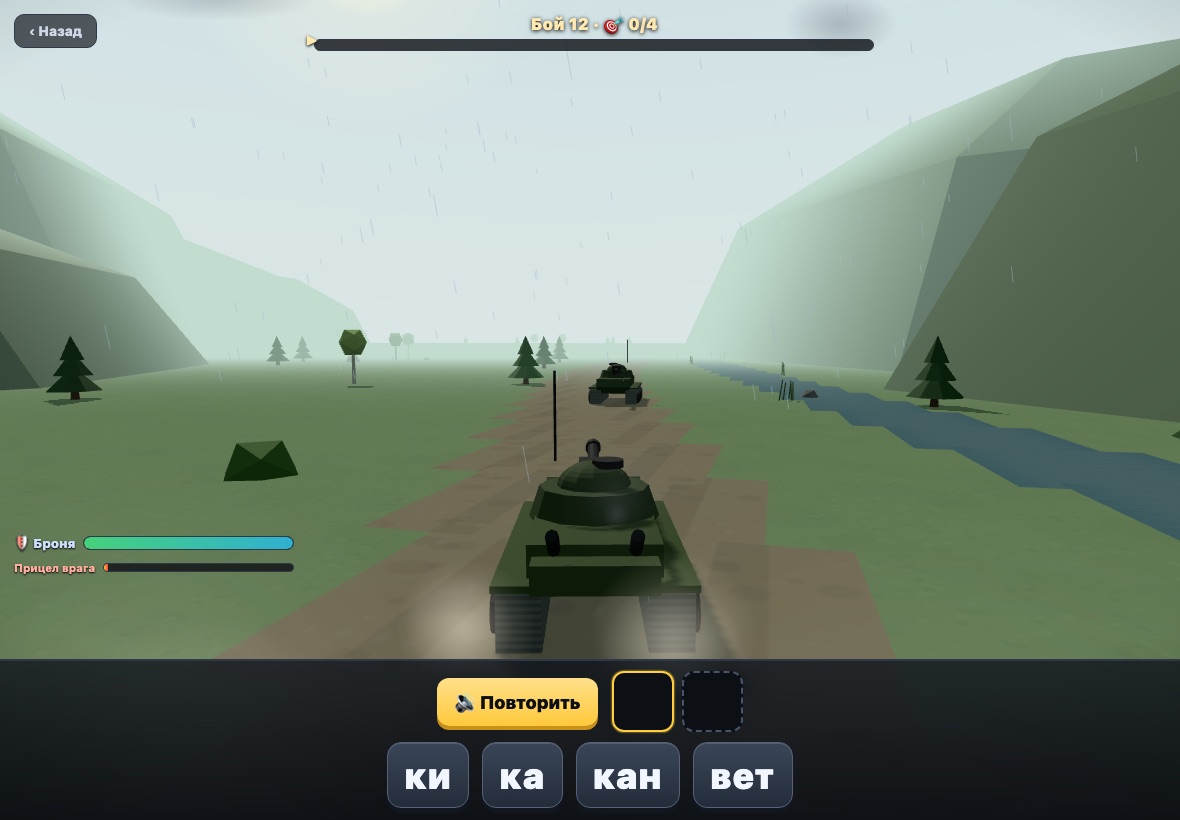
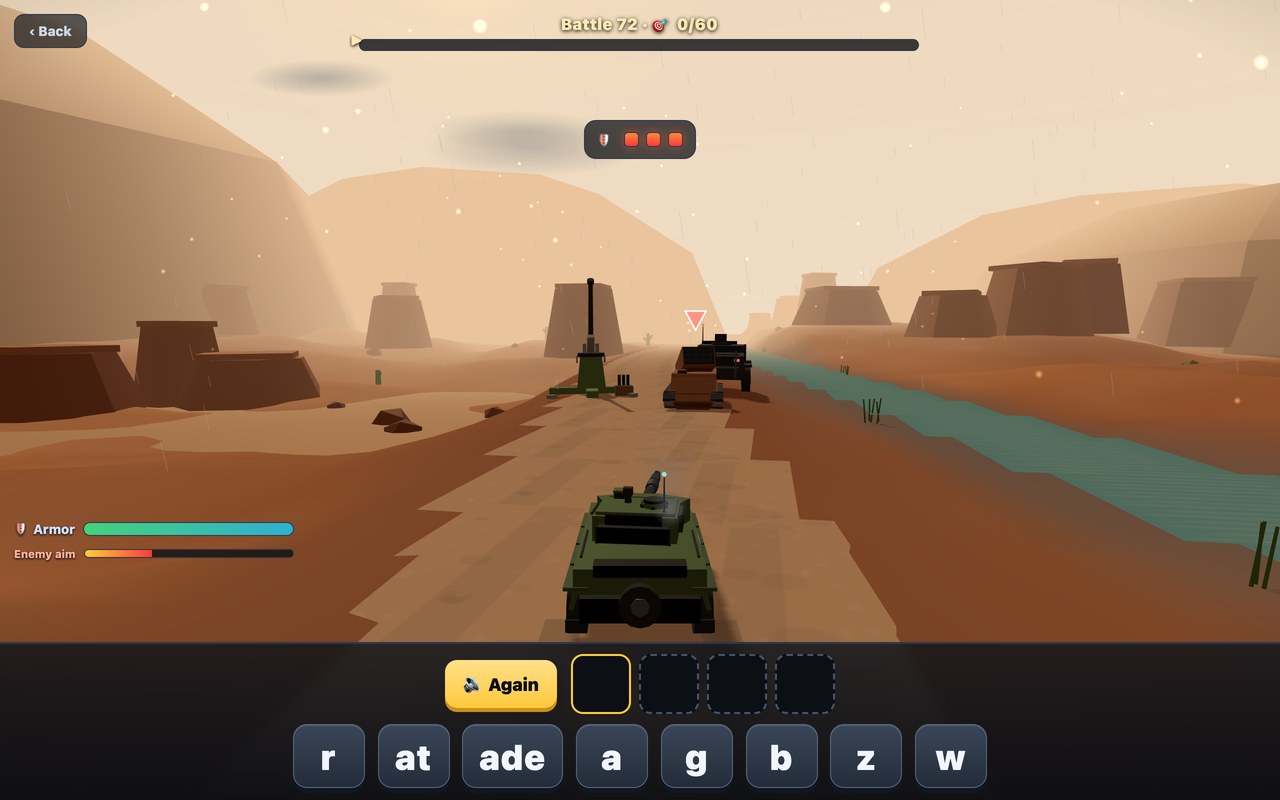
Word Hunters is a cinematic first-person adventure to learn Russian for kids, where literacy is a superpower. In every mission a mischievous monster attacks a word on a banner, stone tablet or spaceship panel: letters vanish, endings get swapped, commas are stolen. The player reads carefully, repairs the damage with large touch tiles — and every correct repair charges the magical blaster for a safe, spectacular beam of letter energy.
The blaster never harms people or animals: enemies are funny creatures of ink, paper, clockwork, clouds and crystals, and defeat means bursting into confetti letters. Bosses appear every tenth mission, and each of the fifteen regions — Alphabet Forest, Ink Swamp, Clockwork Library, Crystal Castle, Pirate Word Harbor, the final Chaos Citadel — has its own narrator character, monsters and language theme.
How to play
Choose an age squad (7–8, 9–10 or 11–12) — each is a separate 500-mission campaign. Listen to the narrator, watch the monster damage the word, then repair it: tap the missing letter, assemble syllables, arrange word cards into a sentence, return stolen commas or pick the form that fits the meaning. Then aim by dragging and press FIRE. Mistakes cost nothing — the monster just giggles, and a three-step hint ladder guides without giving the answer away.
What your child learns
A complete Russian literacy path: letters, syllables and first words; the zhi-shi/cha-scha rules; look-alike letters; adjective-noun agreement; word order; unstressed vowels checked by stress; paired consonants; prefixes; commas in lists; verb tense; and for older hunters — З/С prefixes, hard/soft signs, -тся/-ться, complex-sentence commas, paronyms, direct speech and inference from context. Progress is tracked invisibly per skill and difficulty adapts; a parent dashboard shows strengths without negative labels.
The science behind the games
Every Dad4Kids game is built on one simple truth: children want to play, not study — so we turn learning into a game worth replaying. The method draws on peer-reviewed research in game-based learning, motivation, and how memory works.
- Tokac et al. (2019). Effects of game-based learning on students' mathematics achievement: A meta-analysis. Journal of Computer Assisted Learning.
- Alotaibi (2024). Game-based learning in early childhood education: a systematic review and meta-analysis. Frontiers in Psychology.
- Lampropoulos & Sidiropoulos (2024). Impact of gamification on students' learning outcomes and academic performance: a meta-analysis. Education Sciences.
- Taylor & Boyer (2019). Play-based learning: evidence-based research to improve children's learning experiences. Early Childhood Education Journal.
- Gottfried (1990). Academic intrinsic motivation in young elementary school children. Journal of Educational Psychology.
- Yang et al. (2018). Enhancing learning and retrieval of new information: a review of the forward testing effect. npj Science of Learning.
FAQ
Is the shooting scary or violent?
No. The blaster fires bright magic beams at cartoon creatures made of ink, paper and clouds; defeated monsters pop into letter confetti and fly away laughing. No blood, no fear — mistakes are answered with playful giggles, never punishment.
My child can't read yet — is 7–8 too hard?
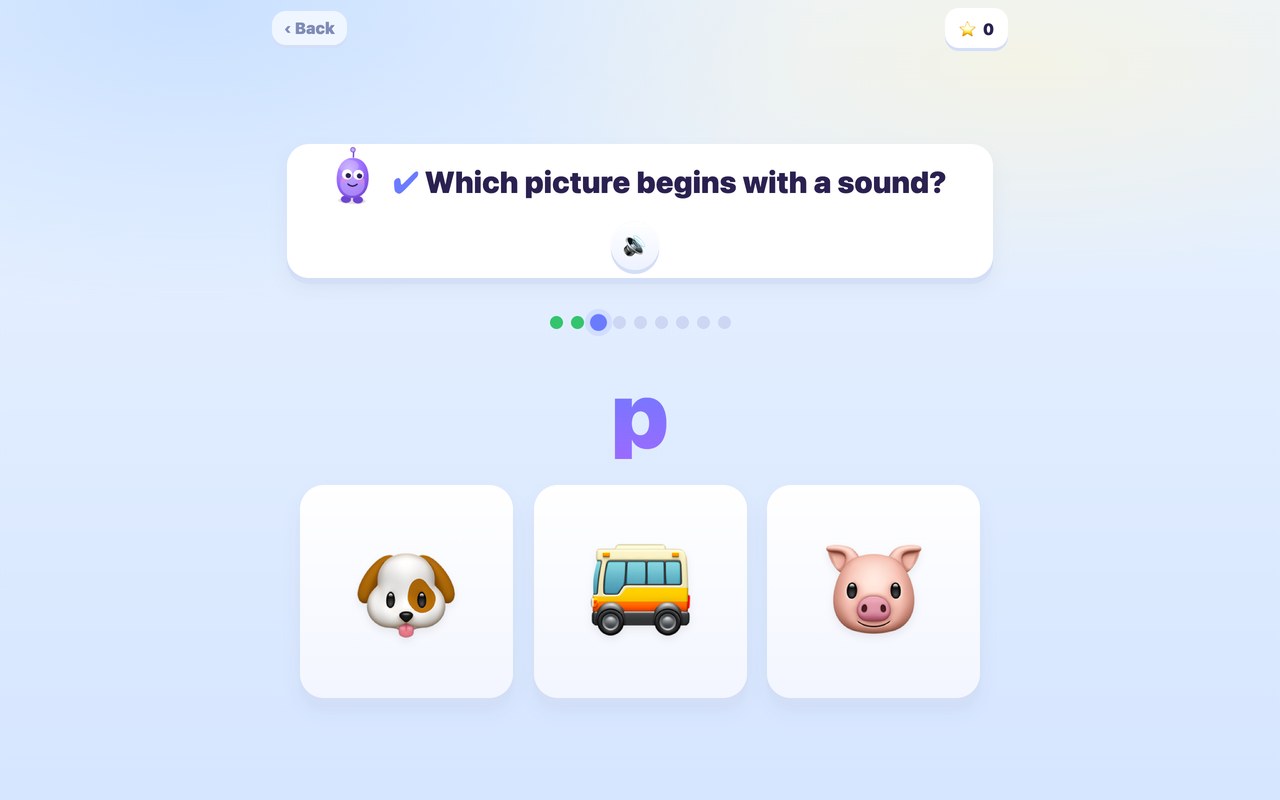
The 7–8 path starts with single letters and short words with picture and voice support: the correct word is shown before the monster breaks it, every word can be replayed aloud, and the first ten missions quietly tune the difficulty to the child.
More free games for kids
By Evgeny Arsentiev, PhD · Last updated: September 2026