
Proof Math Game for Kids — Free Proof Architects 7+
 New from Dad4Kids
Clean YouTube for kids
For families with traditional values, hand-picked by parents.
Open →
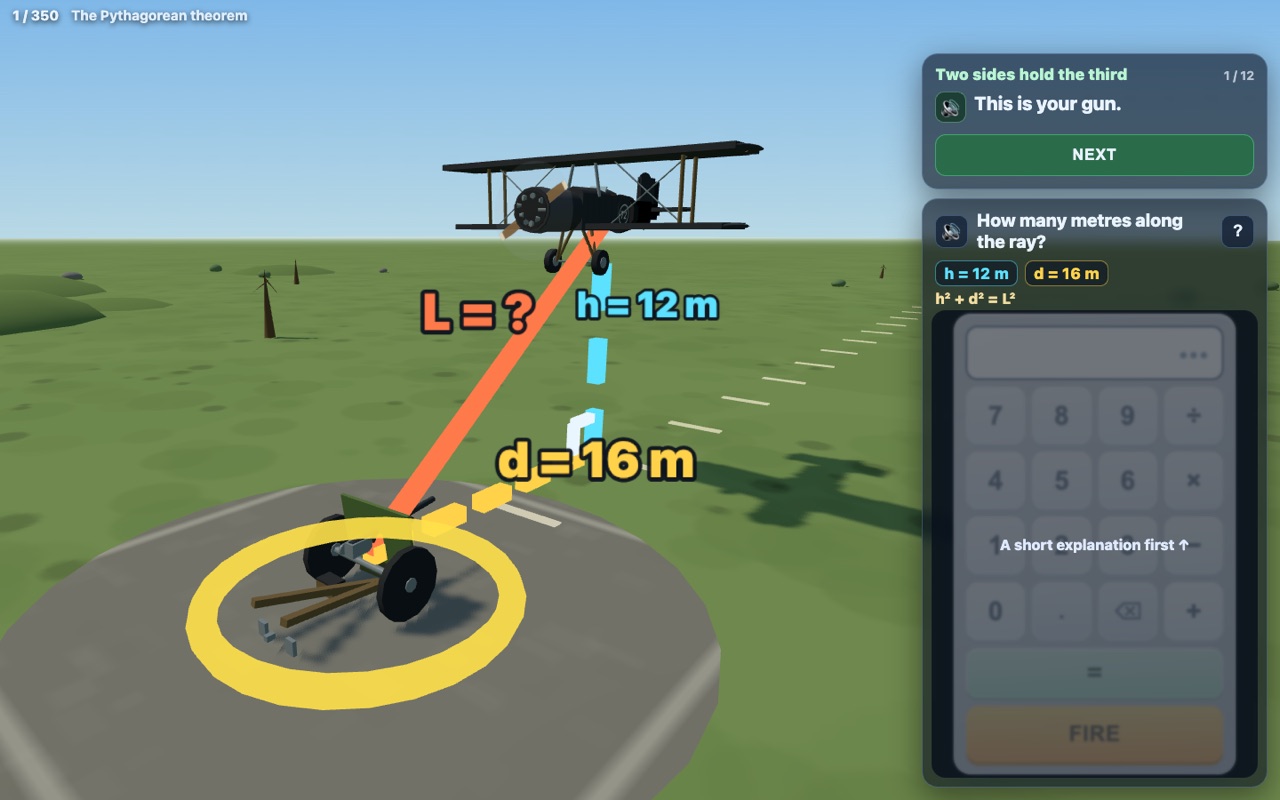
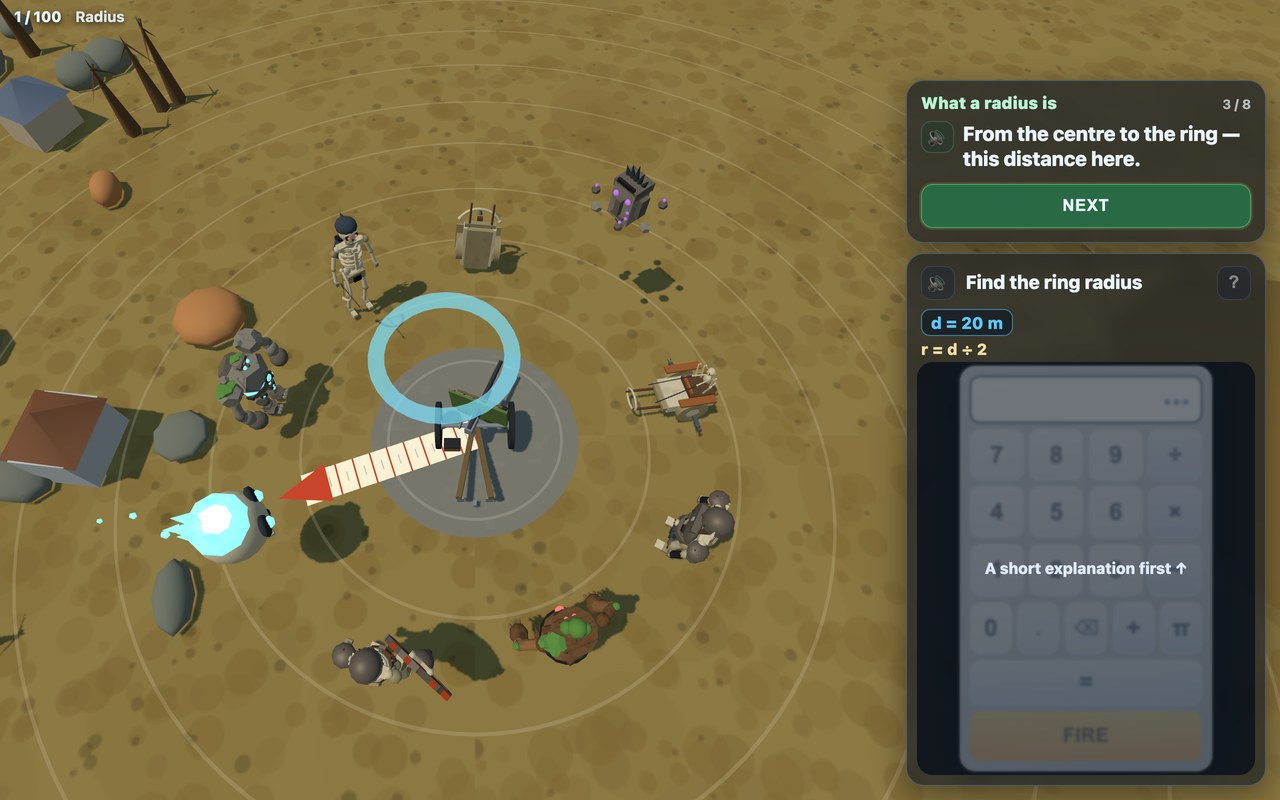
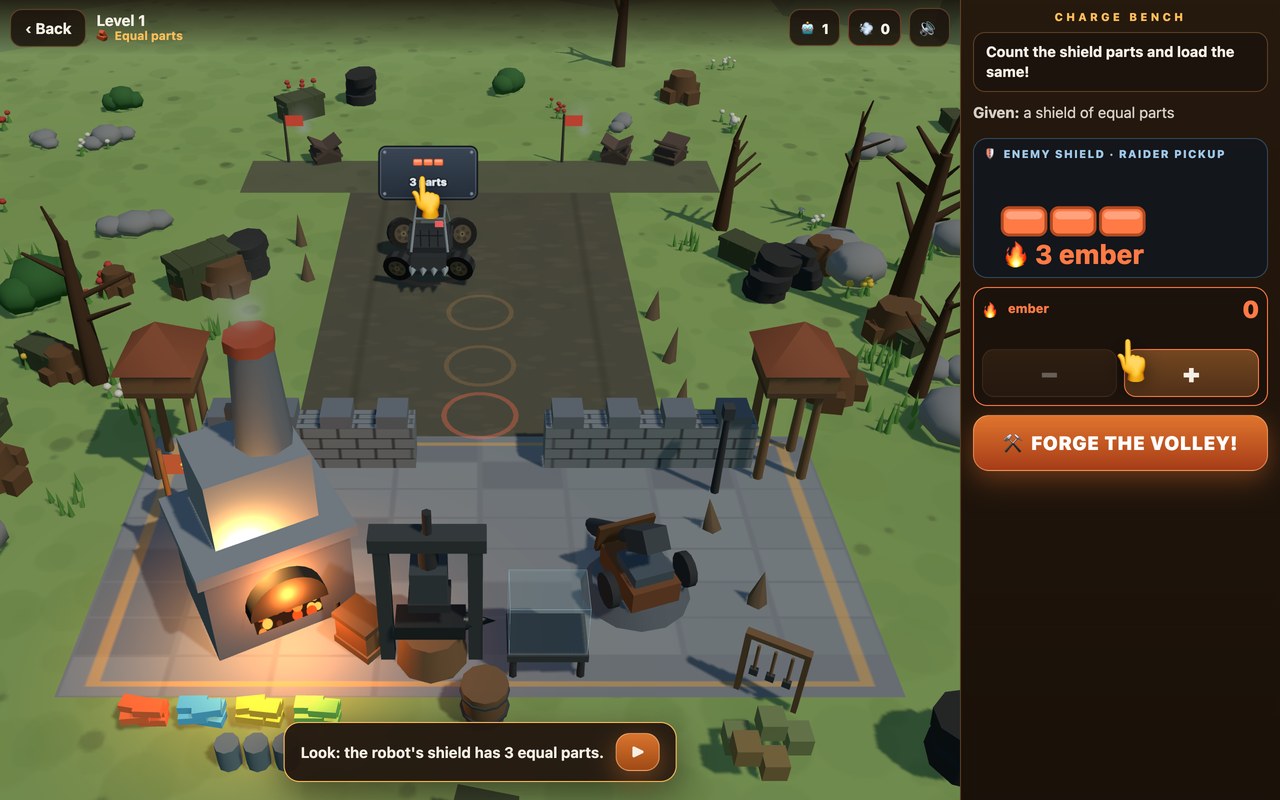
Proof Architects is a proof math game: the child is a young master builder who never wins by guessing. A bridge won't hold, a robot factory has miscounted its parts, an ancient gate won't open — because somewhere a piece of mathematical reasoning is broken. The player studies the scene, listens to friendly robots defend different solutions, spots the hidden mistake, restores the missing step and builds a visual proof — and only then the crane moves, the machine wakes and the city lights up.
The campaign crosses ten hand-themed regions — Number Village, Bridge Builder Canyon, Array Factory, the Desert Solar Colony, Fraction Harbor, an Underwater Research Dome, Geometry Gardens, a Frozen Measurement Station, the Ancient Proof Temple and the Grand Architect Citadel. Every region has its own robots, narrator, machines and mathematical theme, and every fifty-mission arc ends in a cinematic engineering challenge.
How to play
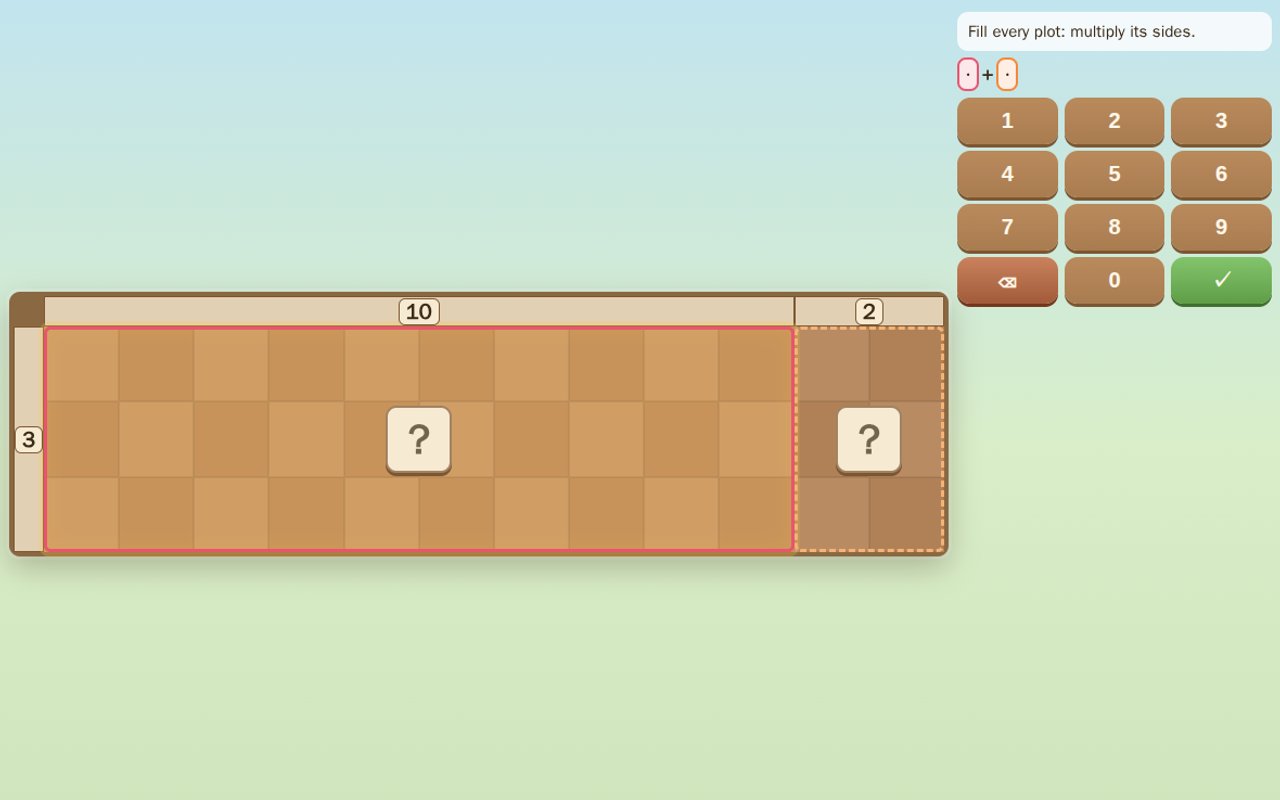
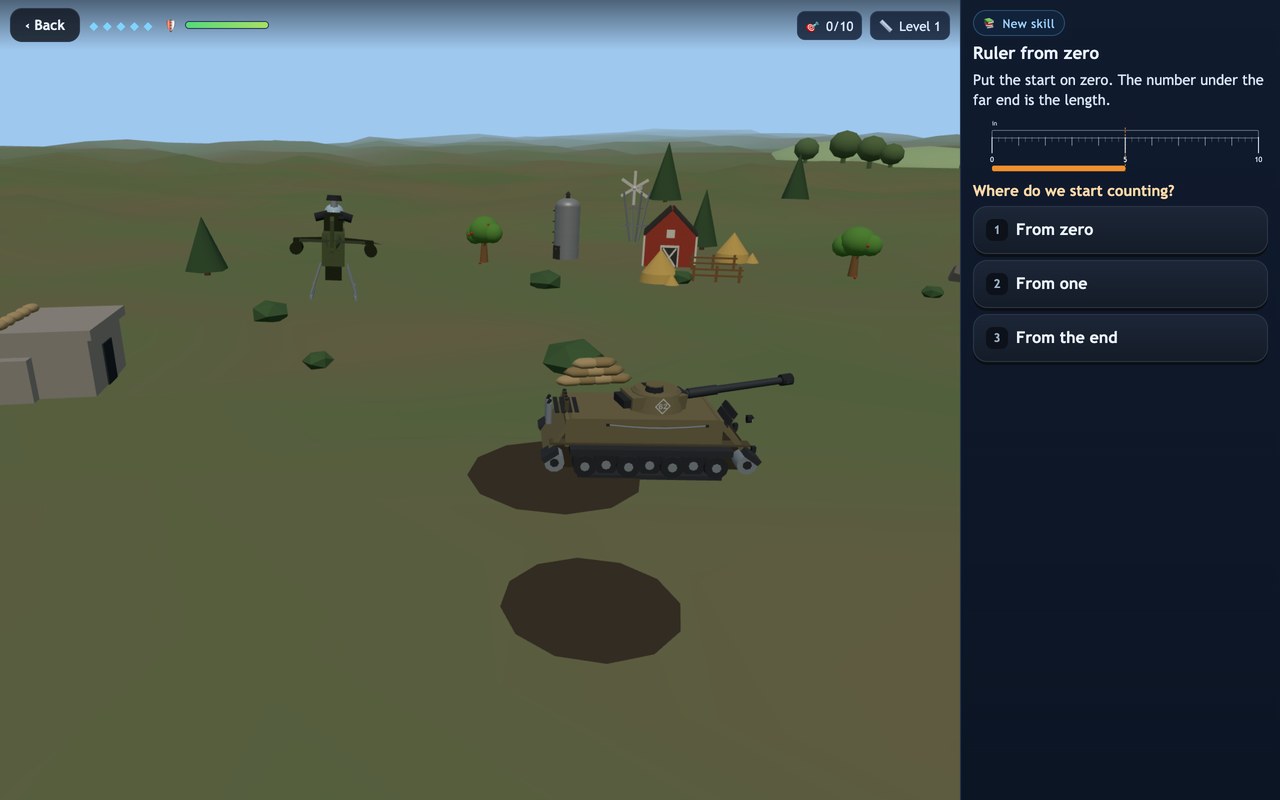
Each mission is a story with a real problem in the scene: counted towers, a bridge with missing supports, tanks of oxygen marked in fractions. Read the brief (or listen — every mission is voiced), inspect the robots' proposals step by step, then prove your answer one of three ways: pick the reasoning that actually holds, assemble the proof chain in the right order on the proof board, or build the model itself — arrays, equal groups, fraction bars, number lines and tile patterns. Wrong turns cost nothing: a gentle hint ladder (three steps) and a respectful explanation of each mistake keep the child inspecting, not guessing. Finish a mission and watch the world respond — the bridge locks in, the rocket launches, the great machine spins.
What your child learns
Mathematical reasoning as a skill: comparing quantities and proving equality; multiplication and division through arrays and equal groups; fair sharing; fractions, part–whole thinking and equivalence (why 3/6 equals 1/2); measurement, area and perimeter and why they differ; repeating patterns and their rules; spotting errors in plausible arguments; ordering proof steps and explaining «I know this because…». An invisible support system adapts hints and decoys to the child, and the parent dashboard shows growing skills positively — no grades, no labels.
The science behind the games
Every Dad4Kids game is built on one simple truth: children want to play, not study — so we turn learning into a game worth replaying. The method draws on peer-reviewed research in game-based learning, motivation, and how memory works.
- Tokac et al. (2019). Effects of game-based learning on students' mathematics achievement: A meta-analysis. Journal of Computer Assisted Learning.
- McLaren et al. (2017). A computer-based game that promotes mathematics learning more than a conventional approach. International Journal of Game-Based Learning.
- Deng et al. (2020). Digital game-based learning in a Shanghai primary-school mathematics class: a case study. Journal of Computer Assisted Learning.
- Alotaibi (2024). Game-based learning in early childhood education: a systematic review and meta-analysis. Frontiers in Psychology.
- Lampropoulos & Sidiropoulos (2024). Impact of gamification on students' learning outcomes and academic performance: a meta-analysis. Education Sciences.
- Taylor & Boyer (2019). Play-based learning: evidence-based research to improve children's learning experiences. Early Childhood Education Journal.
FAQ
Is this a math drill with a story on top?
No. The questions are rarely «how much» — they are «which reasoning is correct», «what step is missing», «prove these are equal». The child can answer only by reading the visual model: counting the actual blocks, checking the actual parts, walking the actual chain of steps. Guessing simply doesn't open the gate.
What if my child picks wrong answers?
Nothing is lost. A wrong choice gets a respectful explanation of why that reasoning breaks, the scene wobbles gently instead of punishing, and a three-step hint ladder guides from a nudge to an almost-solution. The game quietly adapts its support level from the first ten missions.
More free games for kids
By Evgeny Arsentiev, PhD · Last updated: September 2026