Catapult Game for Kids — Free Physics Play
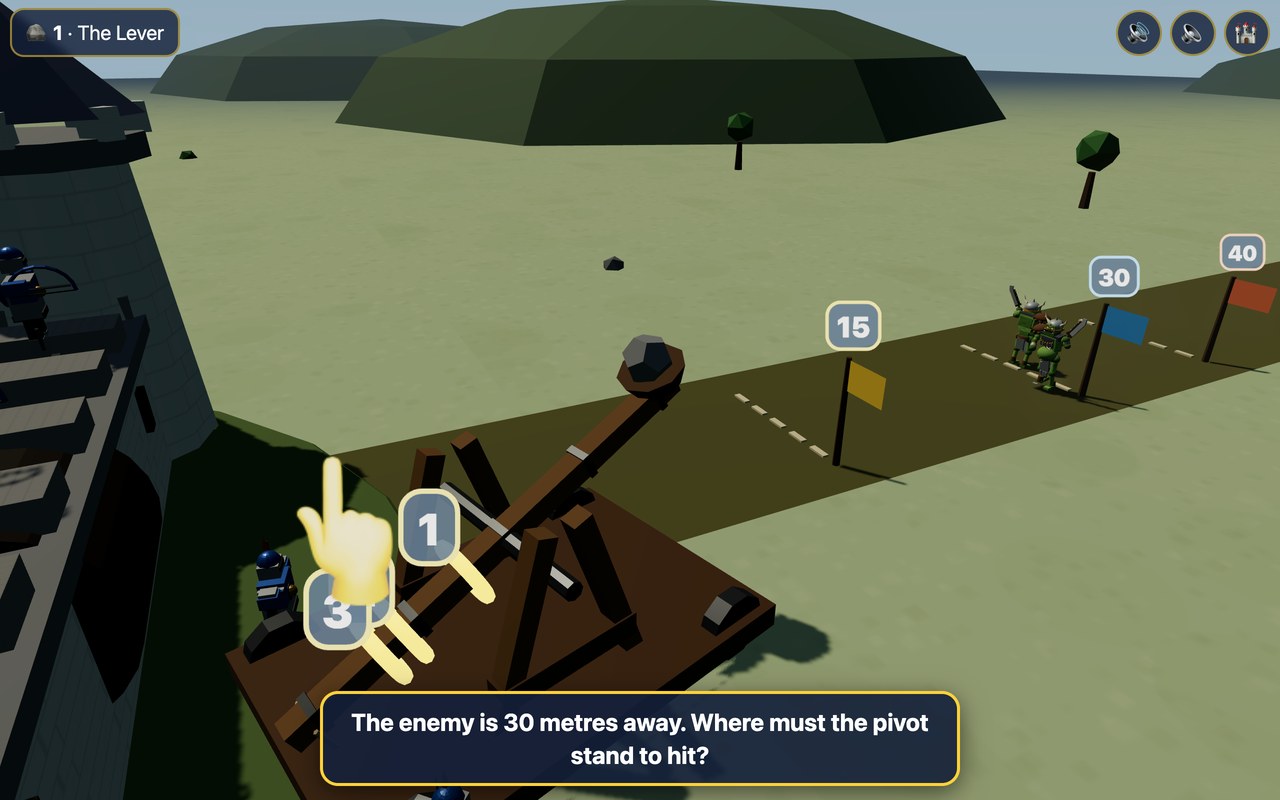
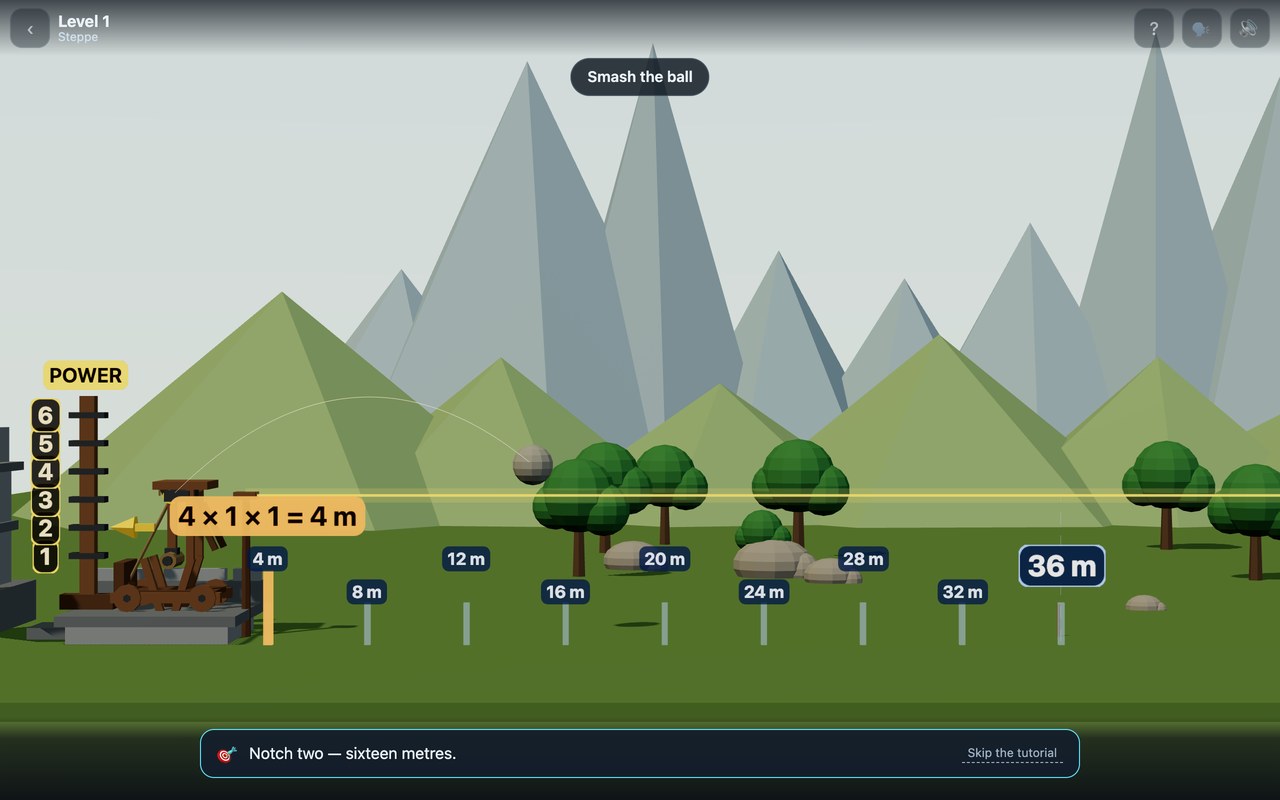
A catapult game is the oldest physics lesson in the world: pick an angle, load the arm, let it fly. Our Siege Line turns that into a full battle — and every shot quietly teaches projectile motion.
How the catapult teaches physics
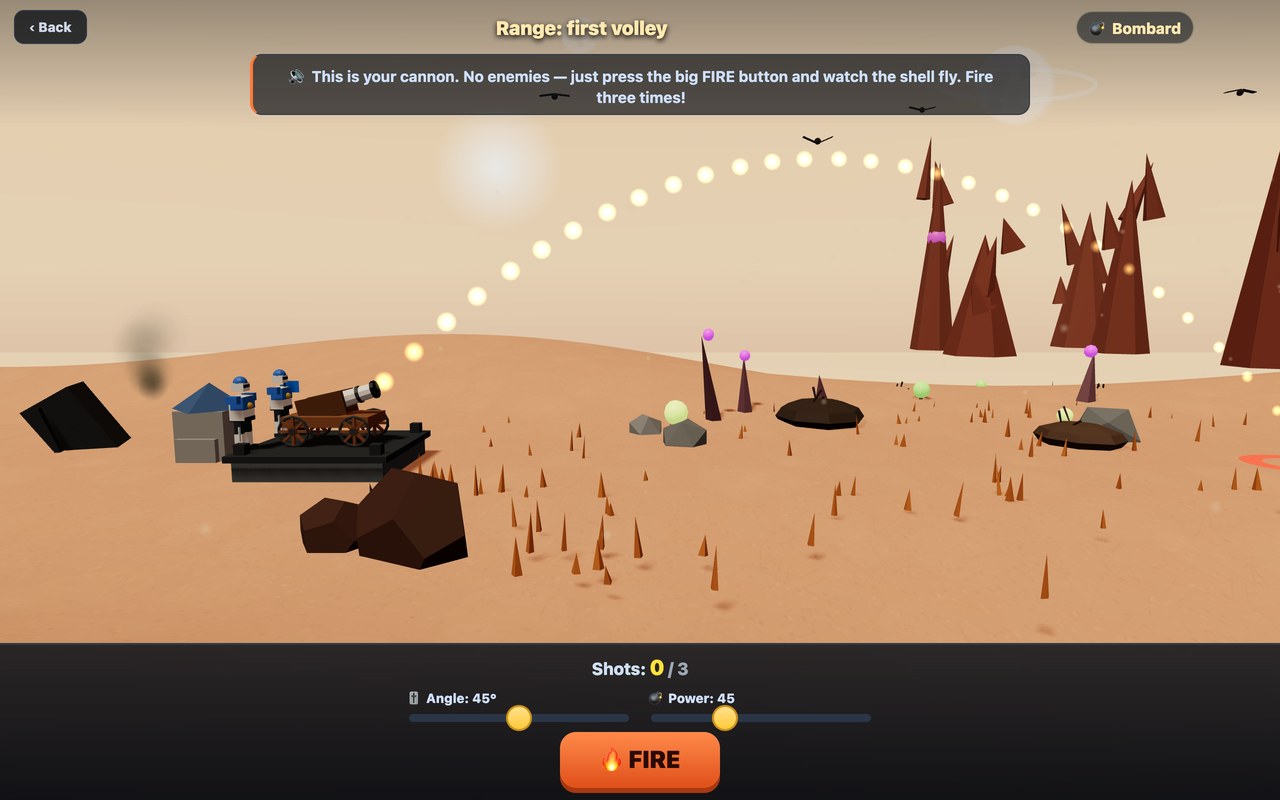
Angle too flat — the stone slams the wall. Too steep — it drops short. The child adjusts, predicts, and fires again: that predict-test-correct loop is exactly how engineers think.
Tips for parents
Ask “what do you think will happen?” before a shot — turning play into prediction doubles the learning without spoiling the fun.
Why a catapult teaches physics so well
A projectile is the cleanest possible demonstration of a hard idea: two things happening at once, at right angles, without interfering. The shot moves forward at a steady rate and falls at an accelerating one, and the curve you see is the two added together. A child who has aimed a few dozen shots has an intuition for that before anyone says the word parabola.
Angle and power are not the same knob
This is the discovery most children make within a few minutes, and it is worth letting them make it rather than explaining it. Two very different angles reach the same distance; forty-five degrees carries furthest on flat ground; a high arc clears a wall but takes longer and is easier to dodge. All of that is real projectile physics, arrived at by fiddling.
From aiming to predicting
The step that matters is when the child stops adjusting after each miss and starts calculating before the shot. Games that show the trajectory only after release push toward that, because guess-and-adjust becomes slower than thinking. It is also the exact moment arithmetic starts feeling useful rather than imposed.
Where it goes next
The same curve reappears in algebra a few years later as a quadratic, and the child who has thrown things at castles has somewhere to put it. Older siblings can jump straight to the parabola and trajectory games at the bottom of this page, where the maths is explicit.
Ages
Aiming works from about six; the games that ask for an angle in degrees or a numeric answer suit eight and up. Related: STEM games, geometry games and games for 8 year olds.