
Mental Math Games for Kids — Free Math Tanks 7+
 New from Dad4Kids
Clean YouTube for kids
For families with traditional values, hand-picked by parents.
Open →
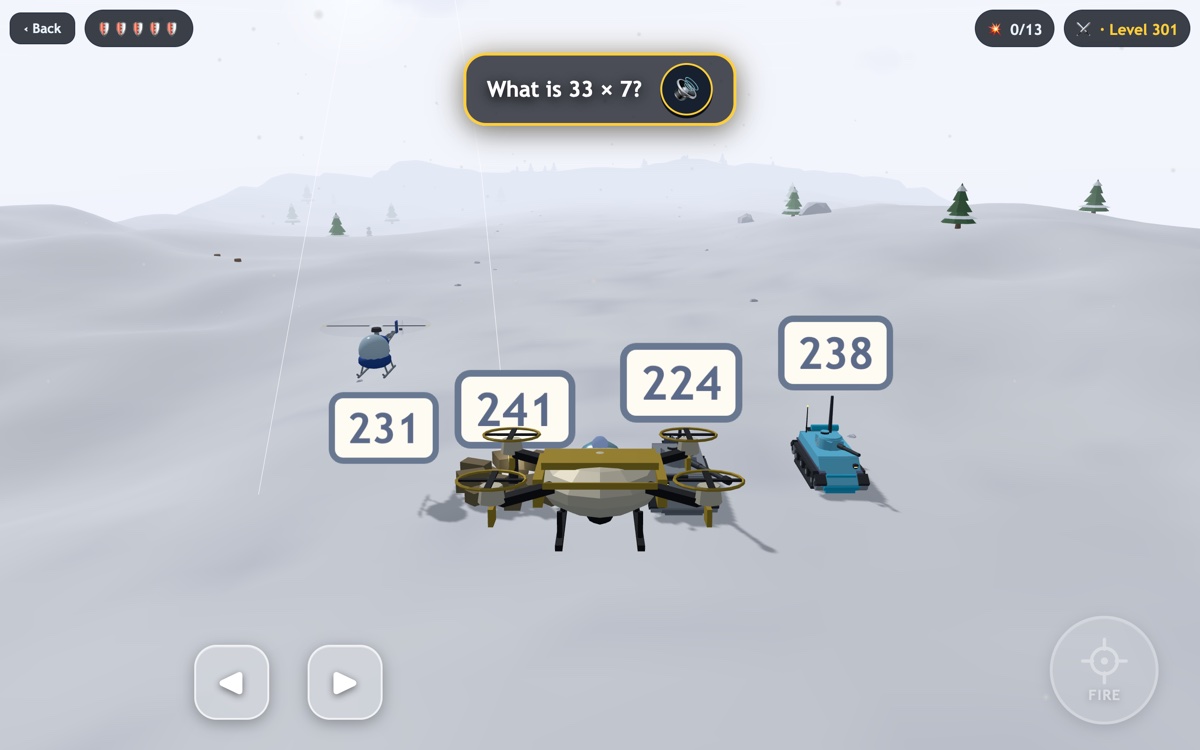
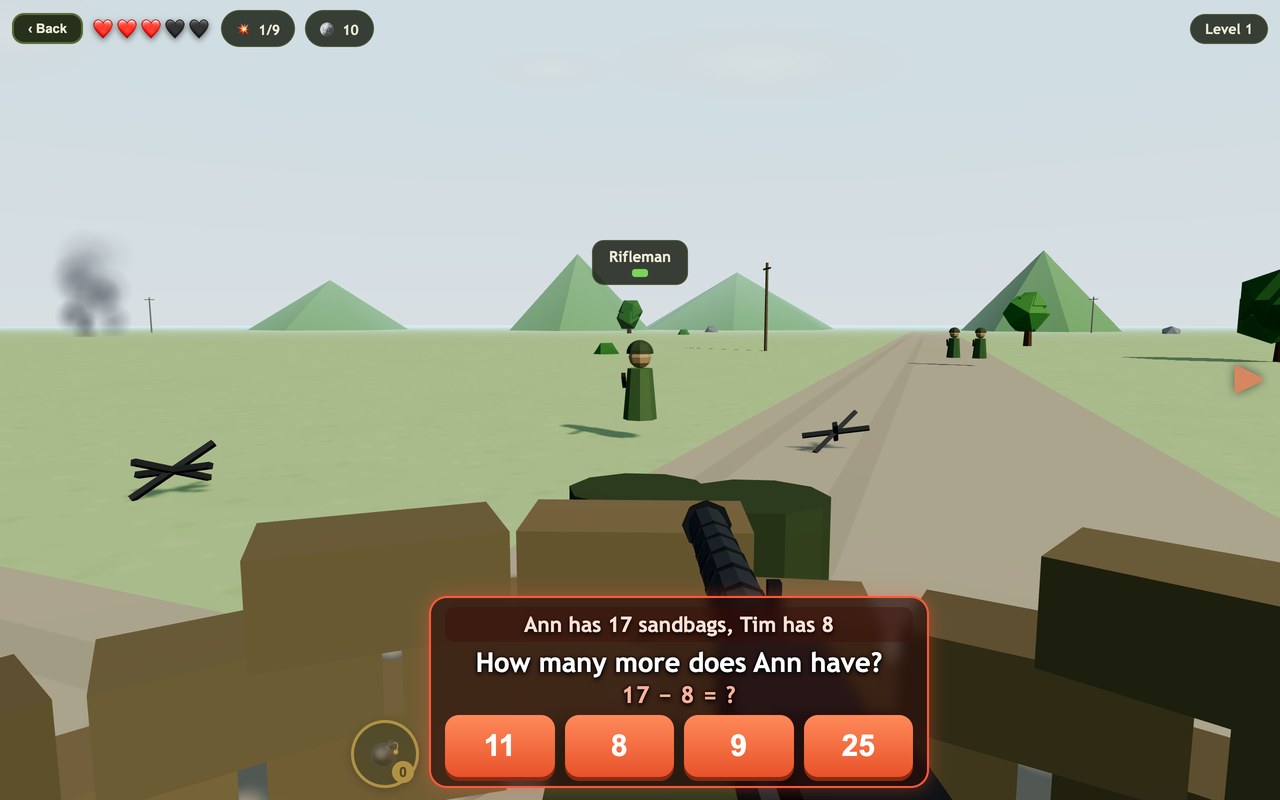
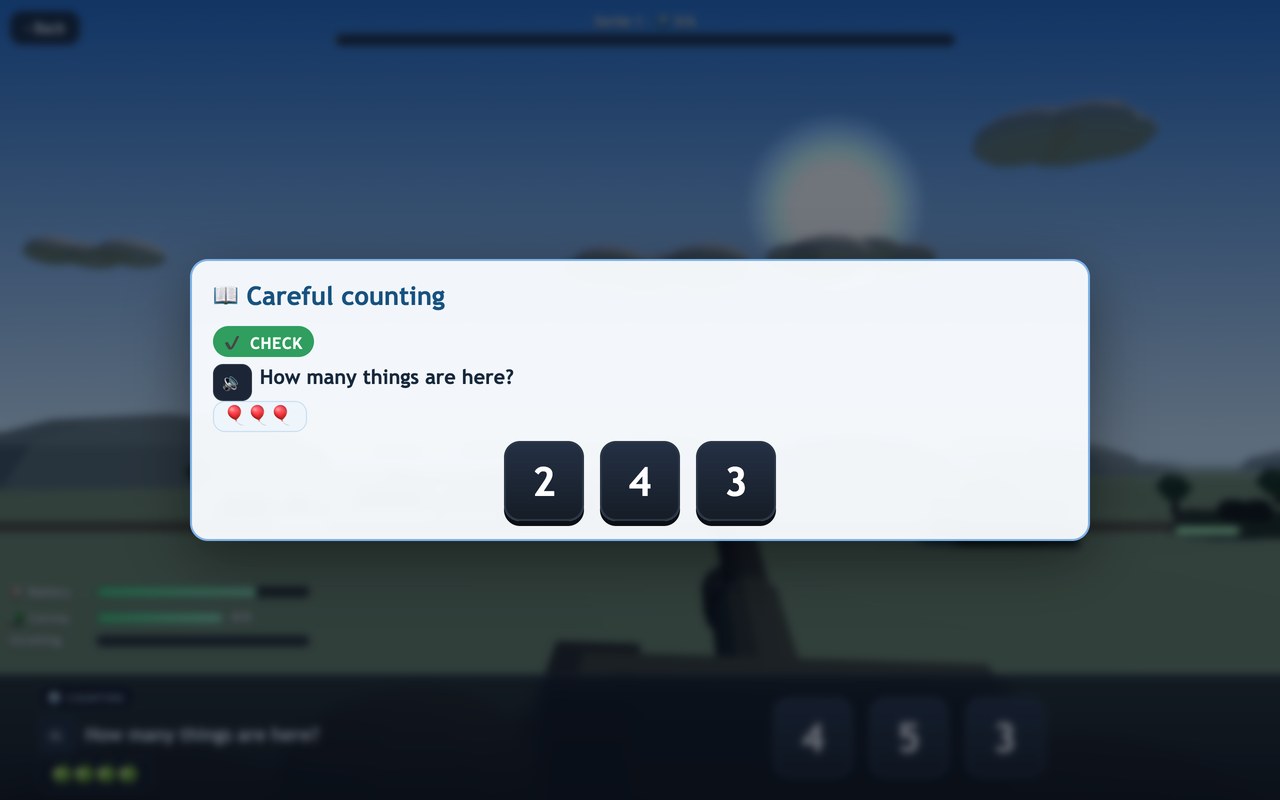
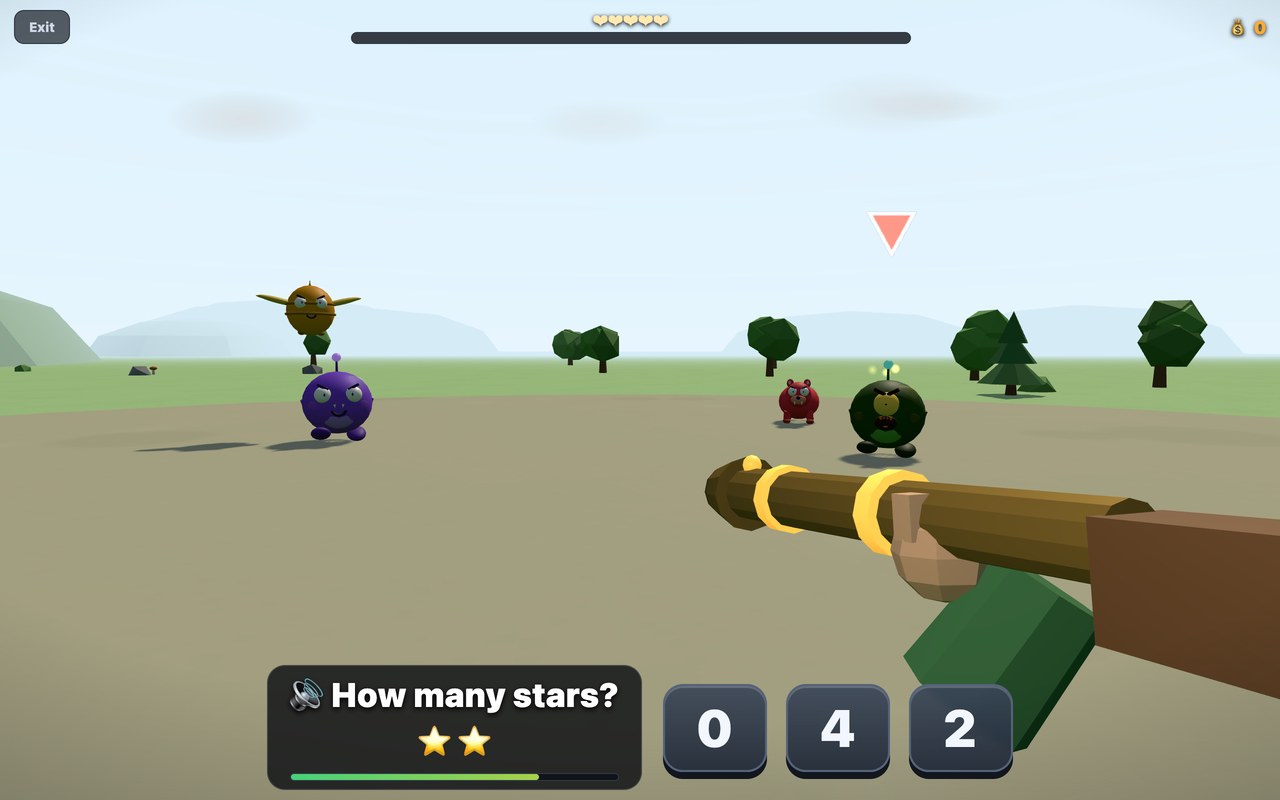
Math Tanks puts mental math games inside a real 3D tank campaign: a problem appears in gold — 7 + 5 = ? — and the child assembles the answer from digit tiles. A correct answer fires the cannon; a wrong tile lets the enemy strike back. Damage comes only from mistakes, so careful thinking is always safe.
The 1000-battle campaign climbs the whole primary-school ladder: adding and subtracting within 10, then within 20 crossing ten, two-digit sums, missing-number equations, times tables 2–9, division and mixed chains like 4 × 6 − 3. All the beloved battle content is here: 72 enemy vehicles and forts, bosses, weather, super-weapons and the tank garage.
How to play
Read (or replay by voice) the problem, tap the digits of the answer in order — the tank fires by itself. Earn stars, unlock new tanks in the garage and beat all 100 operations.
What your child learns
Mental arithmetic fluency from grade 1 upward: fact families within 10/20, two-digit strategies, missing addends, multiplication tables, division and order of operations — drilled through play, not worksheets.
The science behind the games
Every Dad4Kids game is built on one simple truth: children want to play, not study — so we turn learning into a game worth replaying. The method draws on peer-reviewed research in game-based learning, motivation, and how memory works.
- Tokac et al. (2019). Effects of game-based learning on students' mathematics achievement: A meta-analysis. Journal of Computer Assisted Learning.
- Alotaibi (2024). Game-based learning in early childhood education: a systematic review and meta-analysis. Frontiers in Psychology.
- Lampropoulos & Sidiropoulos (2024). Impact of gamification on students' learning outcomes and academic performance: a meta-analysis. Education Sciences.
- Taylor & Boyer (2019). Play-based learning: evidence-based research to improve children's learning experiences. Early Childhood Education Journal.
- Gottfried (1990). Academic intrinsic motivation in young elementary school children. Journal of Educational Psychology.
- Yang et al. (2018). Enhancing learning and retrieval of new information: a review of the forward testing effect. npj Science of Learning.
FAQ
What ages is it for?
7+ (grade 1). The campaign starts with adding within 10 and grows very gradually across 1000 battles.
Does the child get punished for thinking slowly?
No. Enemies only land a hit when a WRONG digit is tapped — taking time to think is always safe.
Is it free?
Yes — free, no ads, in the browser.
More free games for kids
By Evgeny Arsentiev, PhD · Last updated: September 2026