
Math Games for 5th Graders — Free Math Blaster 4+
 New from Dad4Kids
Clean YouTube for kids
For families with traditional values, hand-picked by parents.
Open →
Math games for 5th graders usually stop at the times tables. Math Blaster does not: its skill map carries on into decimals, percent, fractions, area, perimeter and volume, and simple equations where you solve for x — the work fifth grade is really made of.
A map, not a level list
Instead of a fixed queue the game keeps a live picture of which skills are solid and which are shaky, and takes the next question from that. A strong fifth grader moves on in minutes; a struggling one gets the same idea again in a different shape instead of a wall of red.
Explanation first, question second
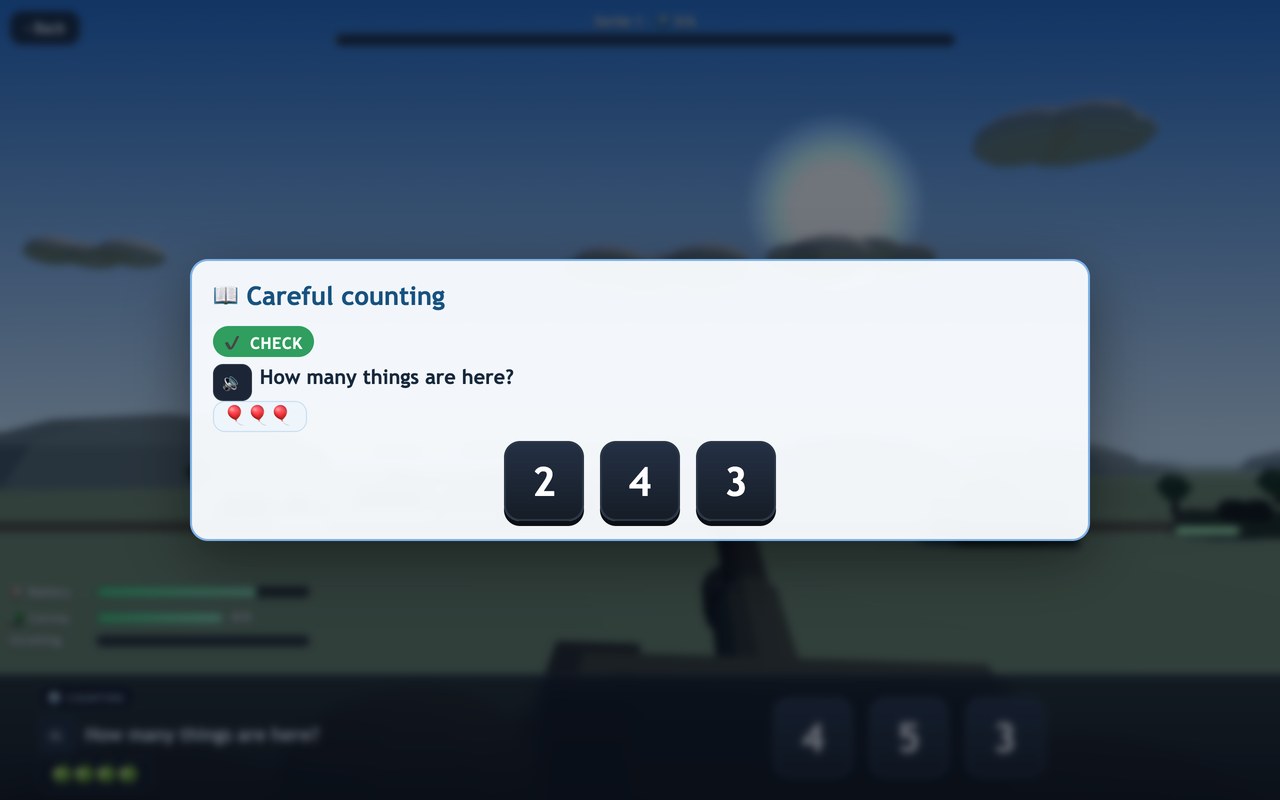
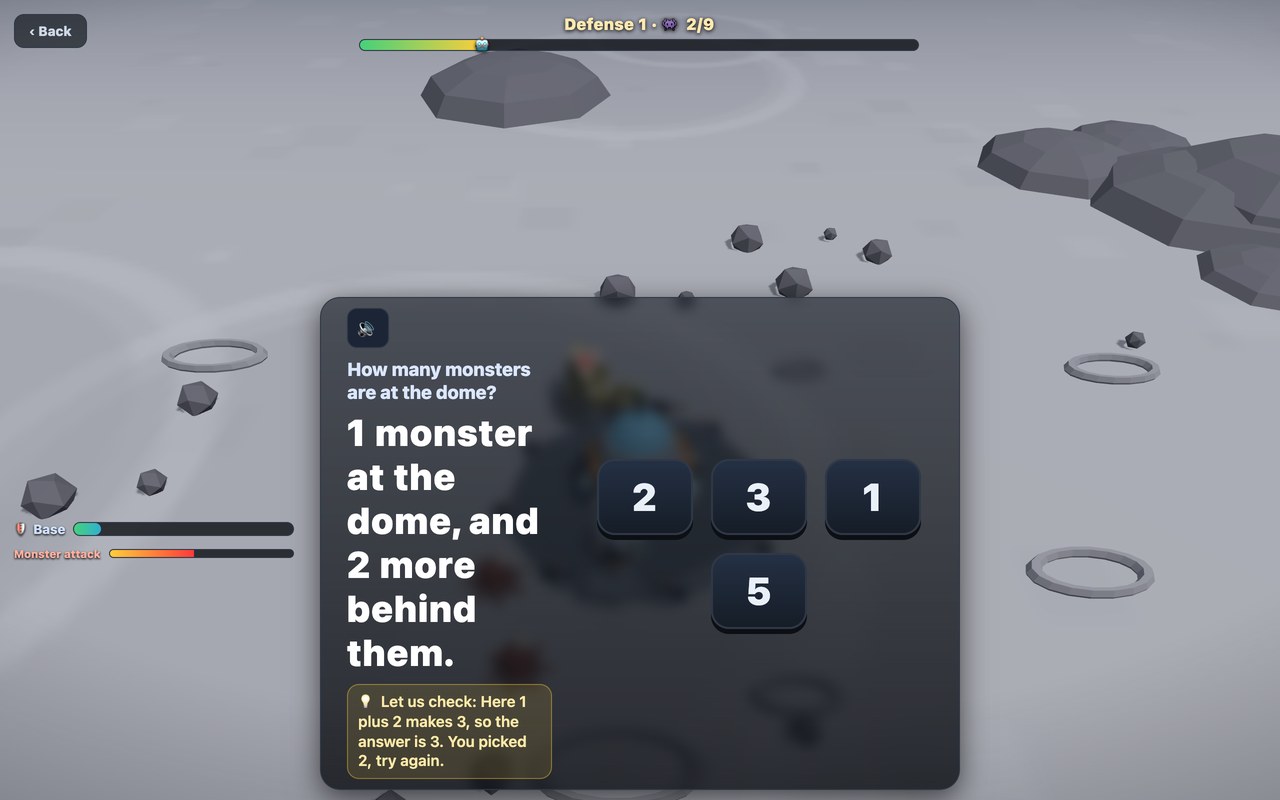
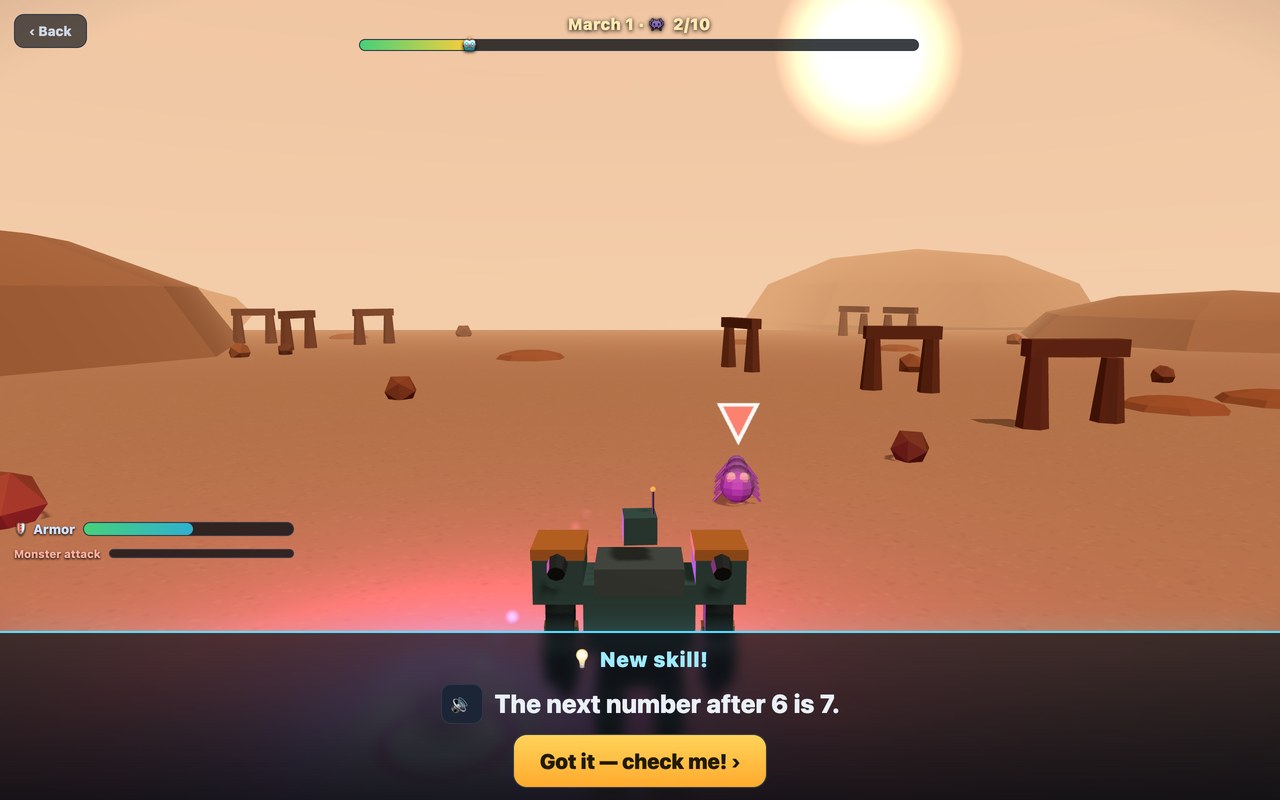
Every new skill opens with a plain-words explanation and a check before it counts for anything, and a wrong answer is walked back through the step that went missing.
Free, in the browser
No download, no account, no ads. Every question is read aloud, and progress is saved on the device.
Free math games by grade
- math games for kindergarten — counting to 5 and up, an elf archer that adapts to your child
- math games for 1st graders — adding and subtracting to 20 in a 3D knight adventure
- math games for 2nd graders — adding, subtracting and first times tables in a moon-base defence
- math games for 3rd graders — short word problems, add and subtract past 100, first division
- math games for 4th graders — multi-digit multiplication, factors, multiples and equivalent fractions
- math games for 6th graders — negative numbers on a depth scale, tenths and rounding
Free math games by skill
- multiplication table game — the whole times table, then division as its reverse
- multiplication facts — one row of the table per chapter until every fact is automatic
- math facts games — fact fluency with a mastery ladder in a walking mech
- counting money — count coins, compare prices, give change, keep the treasury
- telling time — read the clock, measure durations, plan a railway timetable
- measuring length — ruler, scales, measuring jug and unit conversion
- coordinate grid — read a grid point, then fire at (x, y) — all four quadrants
How to play
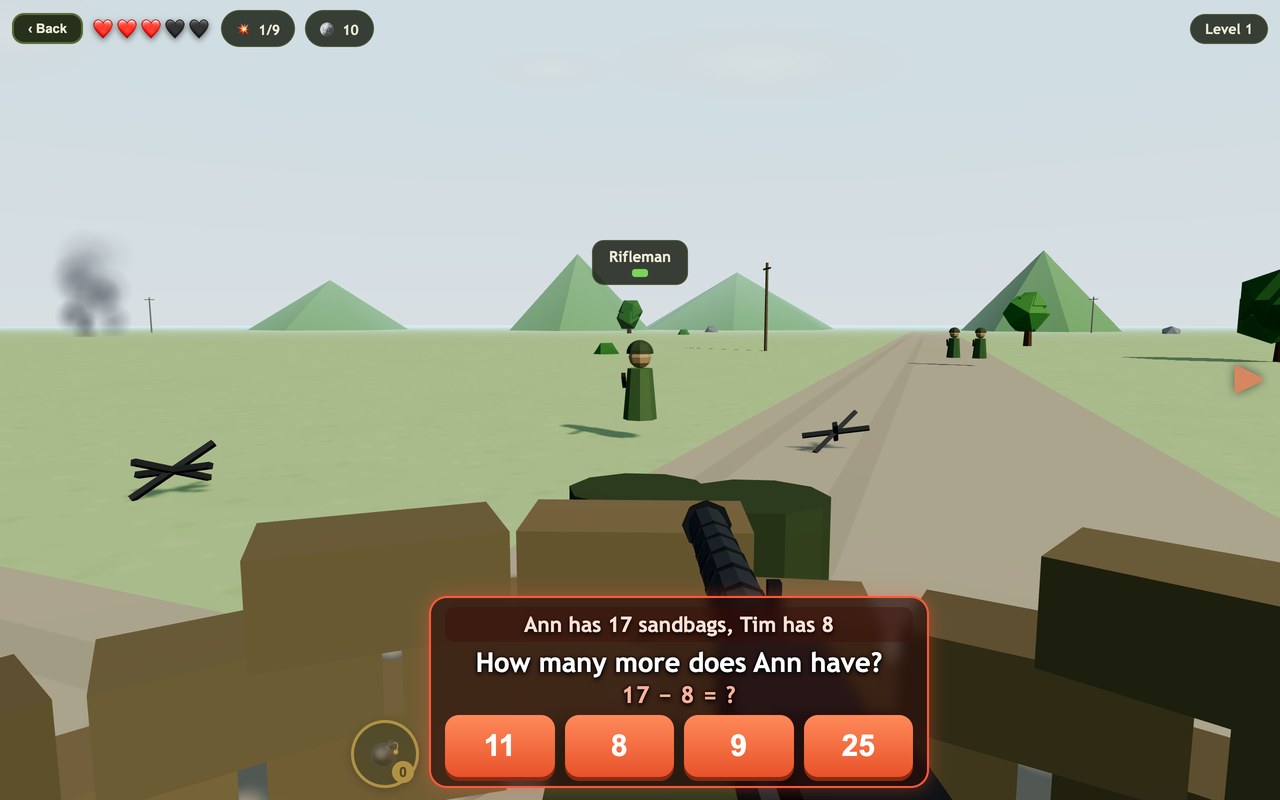
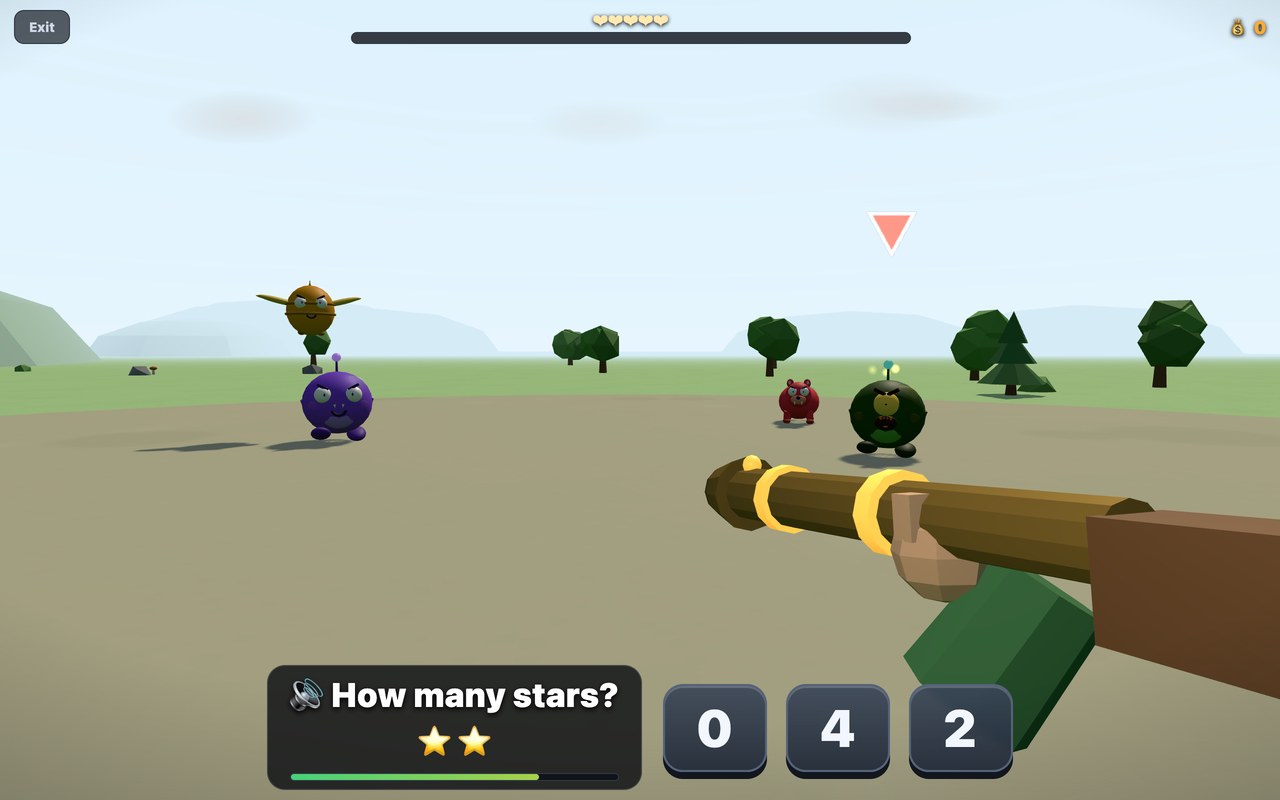
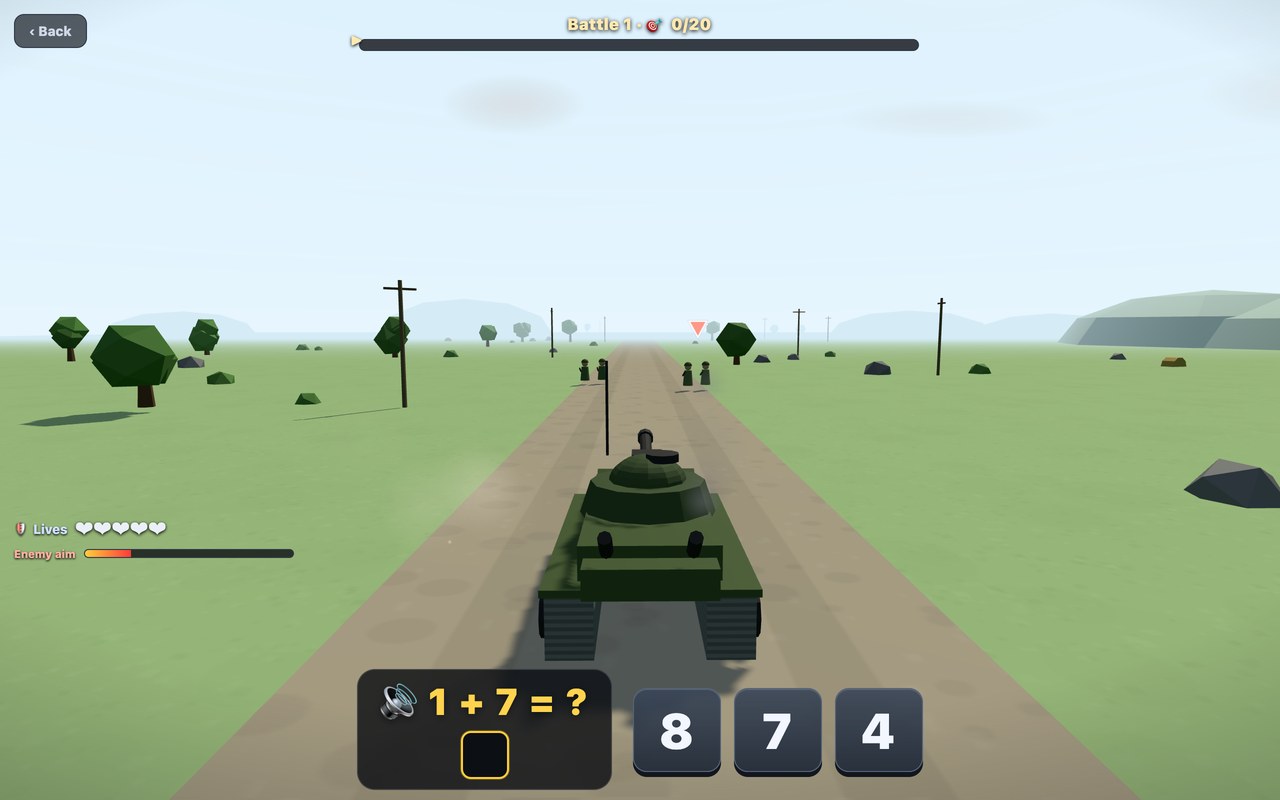
An enemy appears with a math problem. Tap the correct answer to fire an arrow and defeat it; a wrong answer lets the monster strike your hero. Clear the wave to earn coins and level up. The game gets a little harder as your child gets better, keeping every round just right.
What your child learns
Builds counting, addition, subtraction and multiplication fluency, plus the quick mental-math recall that makes harder problems easier later.
The science behind the games
Every Dad4Kids game is built on one simple truth: children want to play, not study — so we turn learning into a game worth replaying. The method draws on peer-reviewed research in game-based learning, motivation, and how memory works.
- Tokac et al. (2019). Effects of game-based learning on students' mathematics achievement: A meta-analysis. Journal of Computer Assisted Learning.
- Alotaibi (2024). Game-based learning in early childhood education: a systematic review and meta-analysis. Frontiers in Psychology.
- Lampropoulos & Sidiropoulos (2024). Impact of gamification on students' learning outcomes and academic performance: a meta-analysis. Education Sciences.
- Taylor & Boyer (2019). Play-based learning: evidence-based research to improve children's learning experiences. Early Childhood Education Journal.
- Gottfried (1990). Academic intrinsic motivation in young elementary school children. Journal of Educational Psychology.
- Yang et al. (2018). Enhancing learning and retrieval of new information: a review of the forward testing effect. npj Science of Learning.
FAQ
Are math games good for kids?
Yes — playful, low-pressure practice builds number confidence and quick recall, and a game keeps kids motivated far longer than a worksheet. This one rewards every correct answer, so progress feels like winning.
How do you make math fun for a 6-year-old?
Turn practice into a goal they care about. Here, solving a problem fires an arrow and defeats a monster — so addition and times tables become the way to win, and short, frequent rounds keep it light.
What math topics does the game cover?
Counting and number recognition, addition, subtraction and the multiplication tables — introduced in that order as your child is ready.
What age is this math game for?
Roughly ages 4–11. Difficulty adapts automatically, so the youngest count their first numbers while older kids drill times tables.
Is it free and ad-free?
Yes — completely free, with no ads and nothing to install. It plays right in the browser on tablet, phone or computer.
More free games for kids
By Evgeny Arsentiev, PhD · Last updated: September 2026