
Math Games for 3rd Graders — Free Firing Line 6+
 New from Dad4Kids
Clean YouTube for kids
For families with traditional values, hand-picked by parents.
Open →
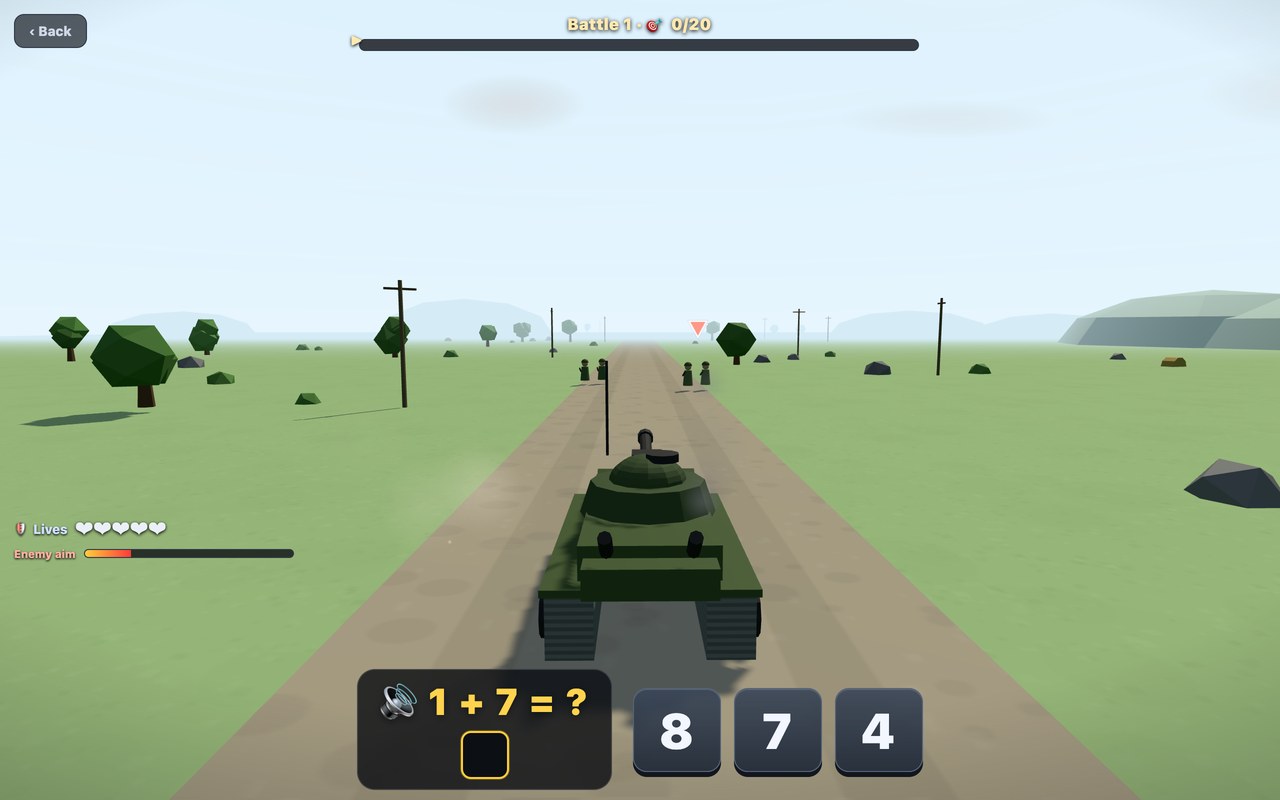
Math games for 3rd graders should be mostly word problems, because third grade is where numbers stop being bare sums. Firing Line is built that way: almost every question is a two-line story — «there were 4 shells, 3 more arrived» — and the answer is what fires the line.
Six bands, one continuous campaign
The bands run from adding and subtracting inside 10 up to two-digit by one-digit multiplication and division, which is exactly the third-grade core. 500 levels, and each new band opens with a short explanation and a check before it starts counting.
Thinking time is free
The enemy line only advances when your child answers, so there is no reflex pressure and no timer panic. A wrong answer costs a heart and gets the explanation again in a new shape.
Free, in the browser
No download, no account, no ads. Every question is read aloud, and progress is saved on the device.
Free math games by grade
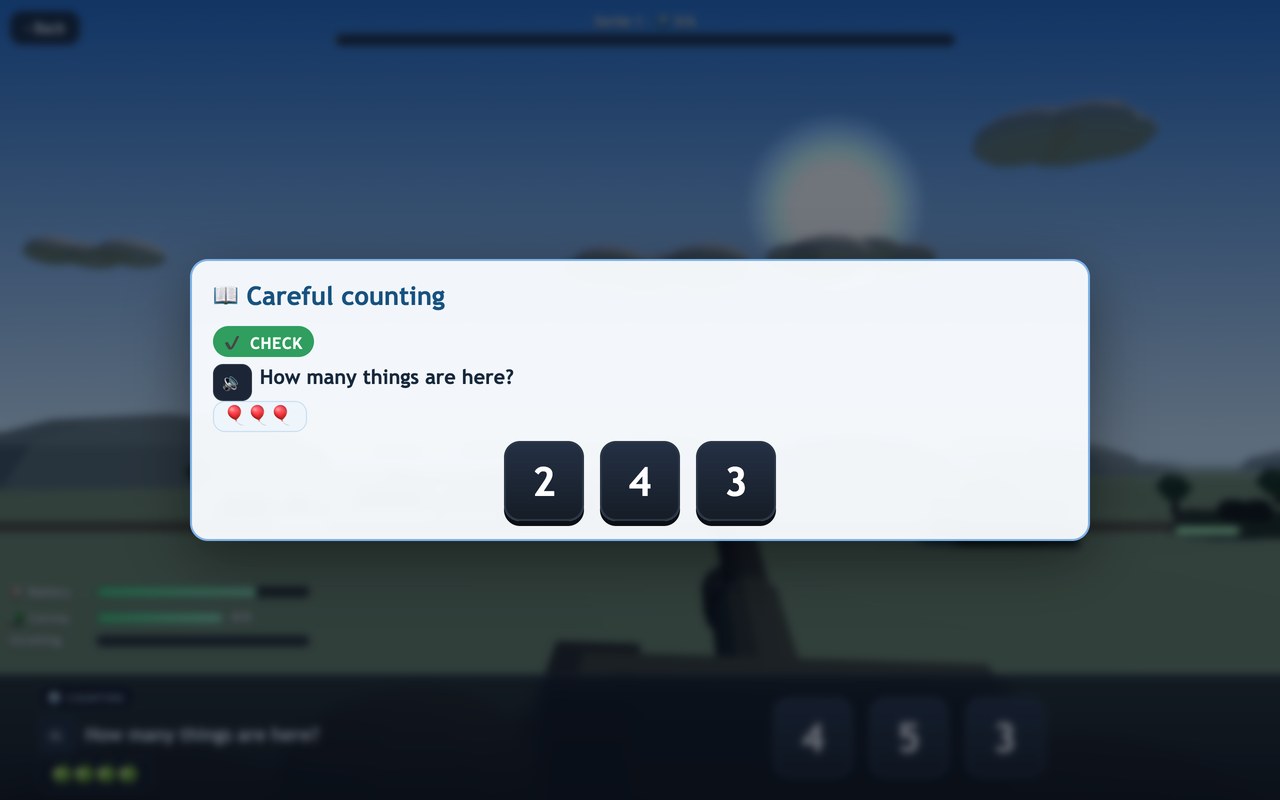
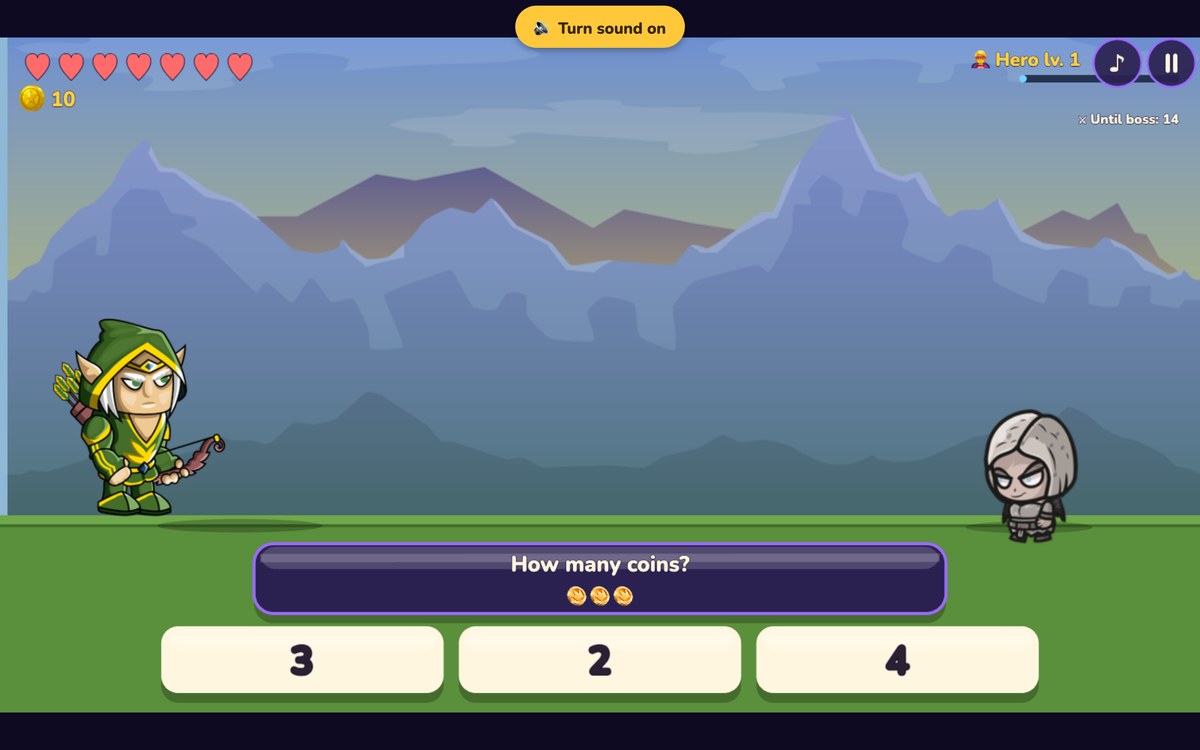
- math games for kindergarten — counting to 5 and up, an elf archer that adapts to your child
- math games for 1st graders — adding and subtracting to 20 in a 3D knight adventure
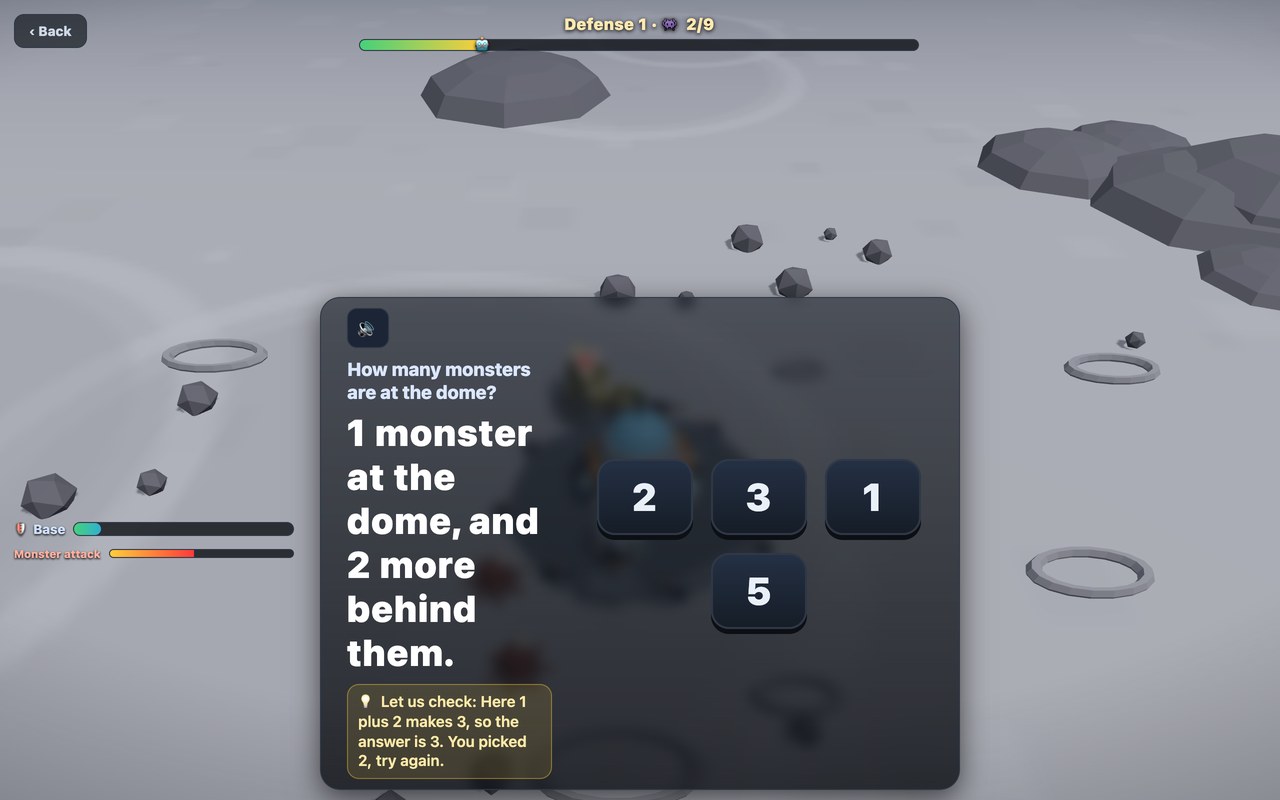
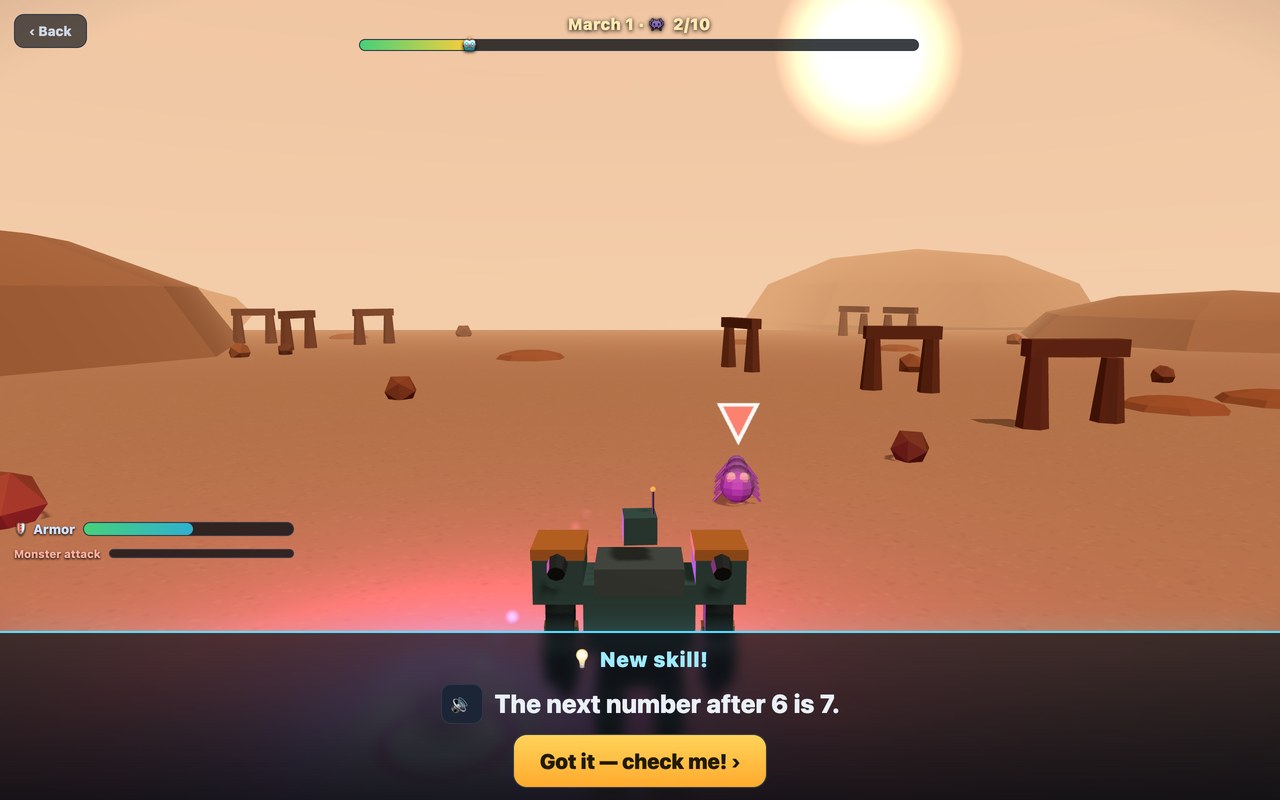
- math games for 2nd graders — adding, subtracting and first times tables in a moon-base defence
- math games for 4th graders — multi-digit multiplication, factors, multiples and equivalent fractions
- math games for 5th graders — decimals, percent, area and perimeter, solving for x — it picks by skill
- math games for 6th graders — negative numbers on a depth scale, tenths and rounding
Free math games by skill
- multiplication table game — the whole times table, then division as its reverse
- multiplication facts — one row of the table per chapter until every fact is automatic
- math facts games — fact fluency with a mastery ladder in a walking mech
- counting money — count coins, compare prices, give change, keep the treasury
- telling time — read the clock, measure durations, plan a railway timetable
- measuring length — ruler, scales, measuring jug and unit conversion
- coordinate grid — read a grid point, then fire at (x, y) — all four quadrants
How to play
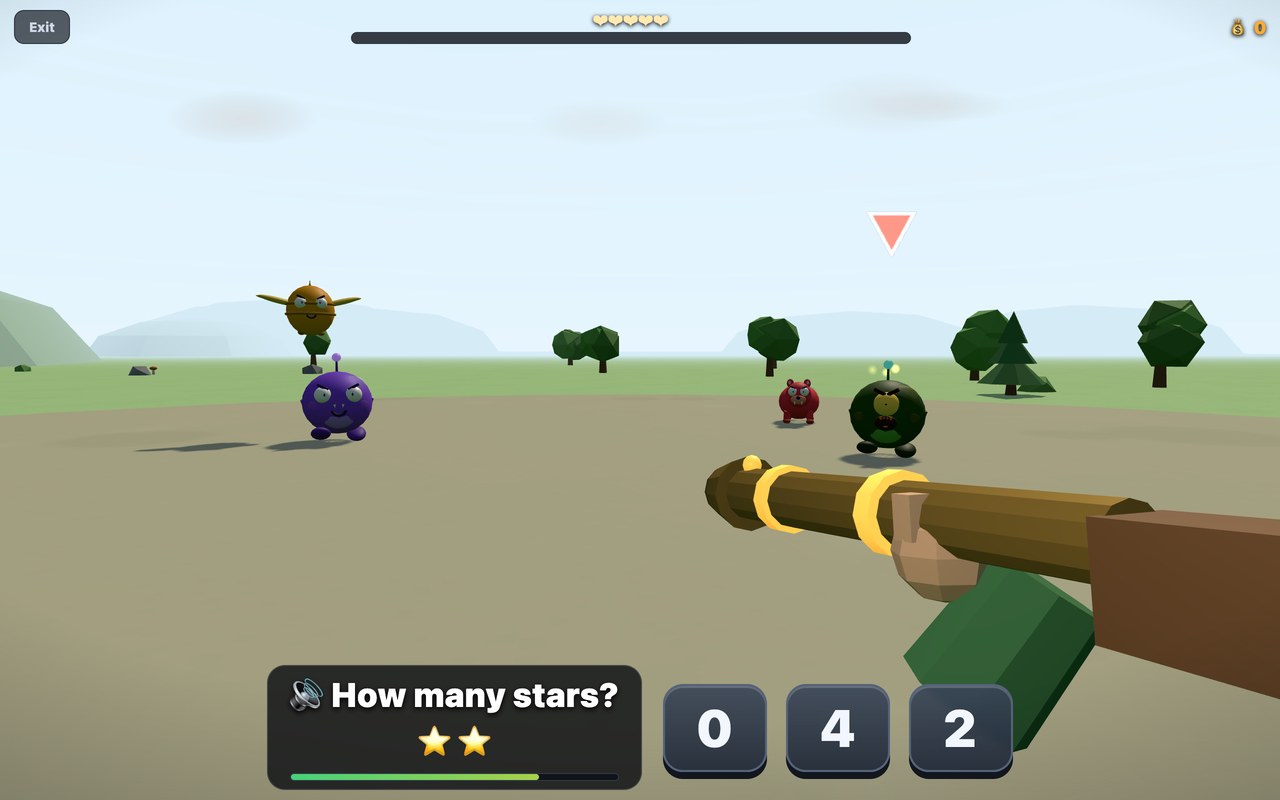
Read the problem at the bottom and tap the right answer out of four. The machine gun turns to the nearest target by itself; red arrows warn about threats from the flanks, and you can drag the view around. Collect grenades from red questions and tap the 💣 button to blast the toughest vehicle. Destroy every enemy to hold the line — a boss arrives at the end of each of the three chapters.
What your child learns
Addition and subtraction within 10, 20 and 100, then multiplication tables and division — the difficulty grows across 500 levels and three chapters (amber fields, crimson sunset, frozen line). Red bonus questions are one band harder and reward stretch thinking. A wrong answer costs a heart, which teaches checking over guessing.
The science behind the games
Every Dad4Kids game is built on one simple truth: children want to play, not study — so we turn learning into a game worth replaying. The method draws on peer-reviewed research in game-based learning, motivation, and how memory works.
- Tokac et al. (2019). Effects of game-based learning on students' mathematics achievement: A meta-analysis. Journal of Computer Assisted Learning.
- Alotaibi (2024). Game-based learning in early childhood education: a systematic review and meta-analysis. Frontiers in Psychology.
- Lampropoulos & Sidiropoulos (2024). Impact of gamification on students' learning outcomes and academic performance: a meta-analysis. Education Sciences.
- Taylor & Boyer (2019). Play-based learning: evidence-based research to improve children's learning experiences. Early Childhood Education Journal.
- Gottfried (1990). Academic intrinsic motivation in young elementary school children. Journal of Educational Psychology.
- Yang et al. (2018). Enhancing learning and retrieval of new information: a review of the forward testing effect. npj Science of Learning.
FAQ
Is the game violent?
It is a cartoon low-poly defense: vehicles pop apart into parts, soldiers tumble over and vanish — no blood. The child never loses for shooting slowly; only wrong math answers cost hearts.
How long is a level?
About 2–4 minutes: 7–14 enemies arrive in a steady trickle, and every tenth level ends with a chapter boss.
More free games for kids
By Evgeny Arsentiev, PhD · Last updated: September 2026