
Long Division & Column Math Game for Kids — Free 7+
 New from Dad4Kids
Clean YouTube for kids
For families with traditional values, hand-picked by parents.
Open →
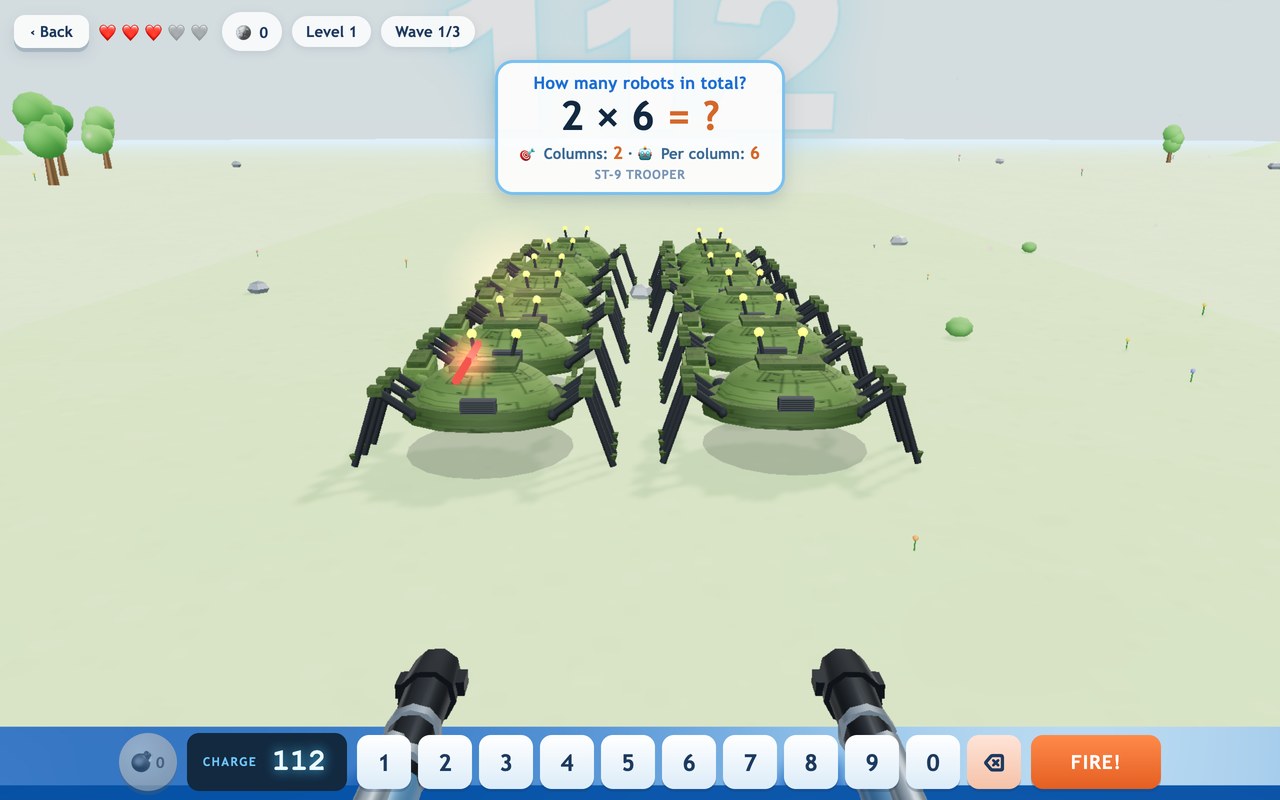
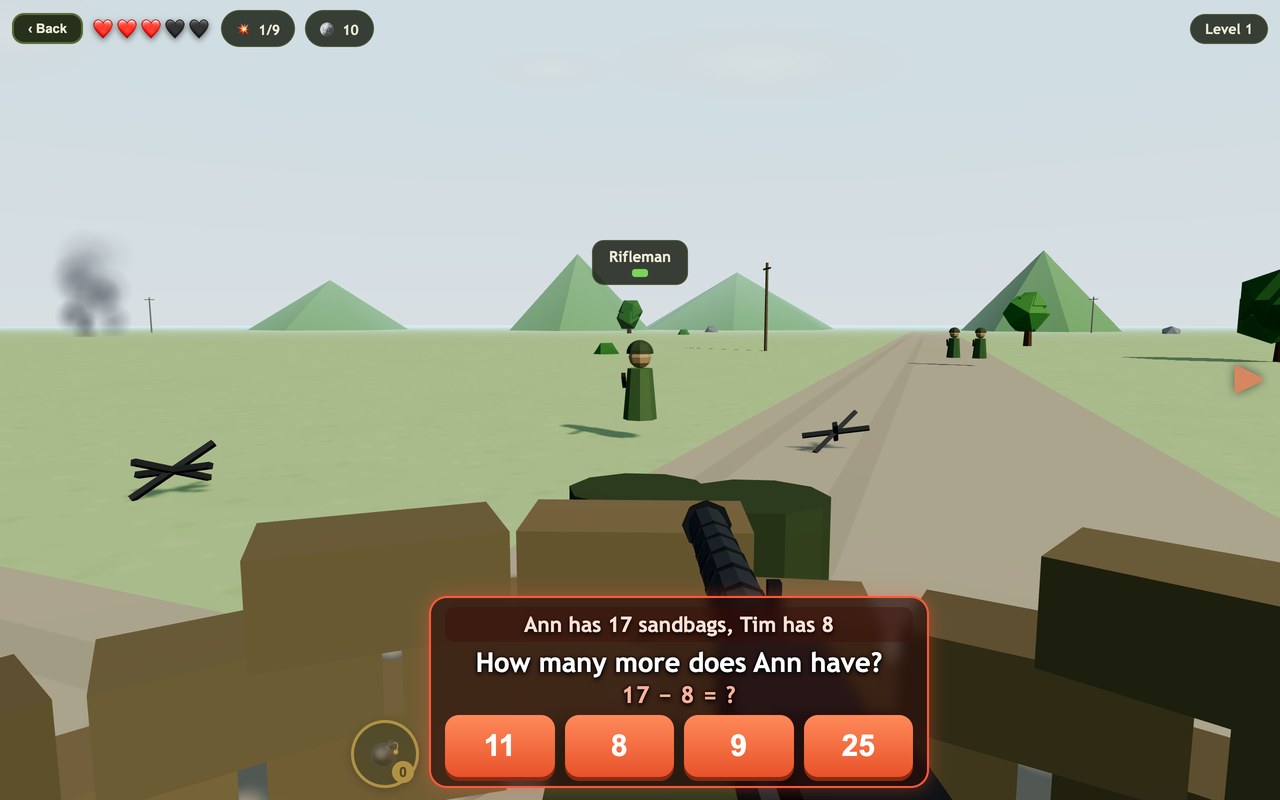
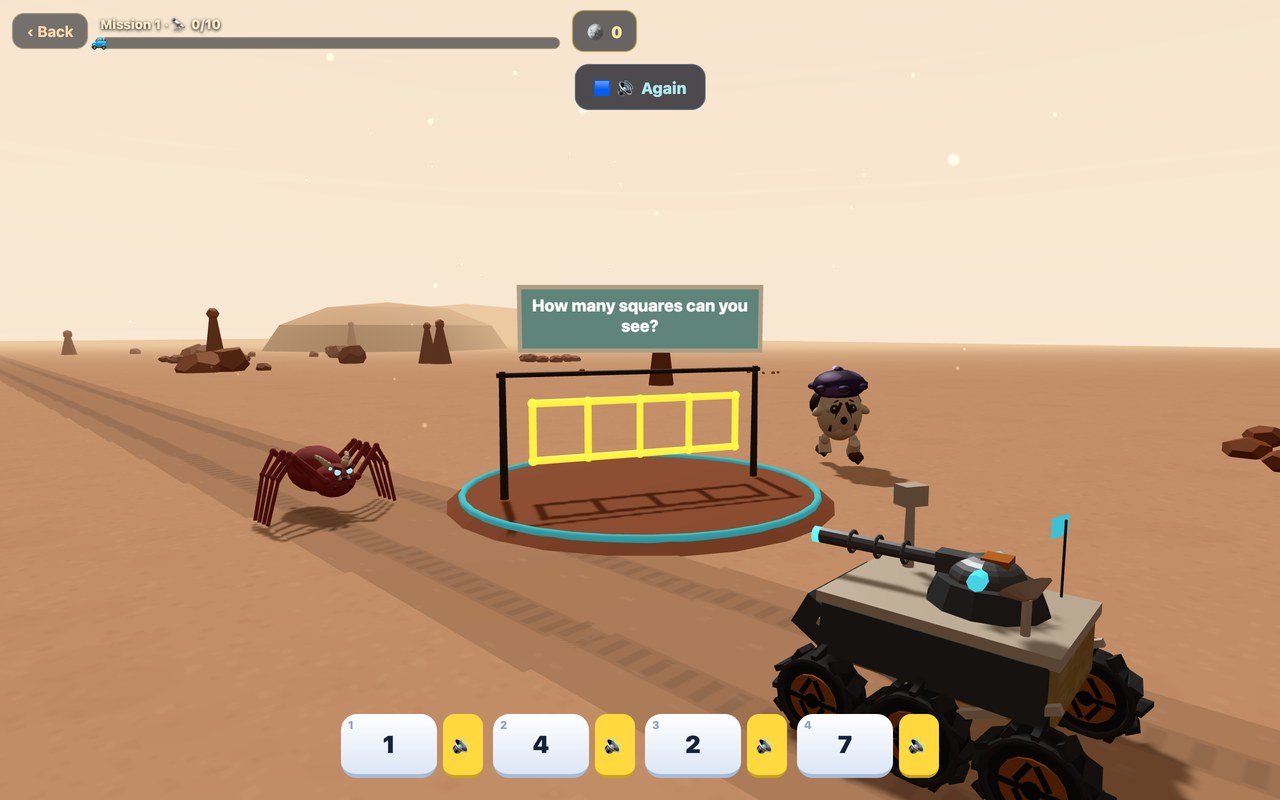
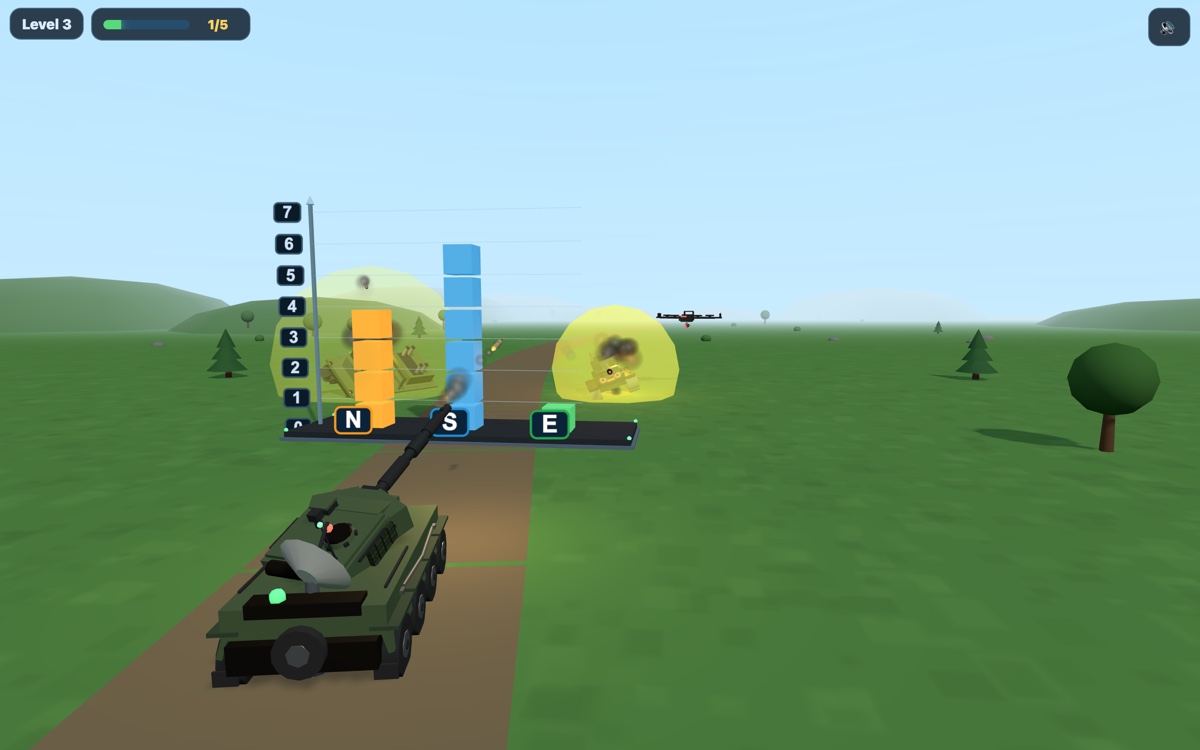
Column Mech: Ruined City Protocol is a long division game for kids in mech form: the child does the arithmetic, and the war-robot Aegis Prime walks, aims and fires by itself. The city lies in ruins and unmanned machines prowl the streets; a correct answer lands a spectacular hit, a wrong or skipped one is the only thing that lets an enemy volley take an armor cell. While you think, you are safe: there is no reaction-speed pressure, only the math.
The written methods are physically visible on screen — digits align by place value in the column, ten unit-blocks regroup into the next place, borrowing crosses through zeros, partial products load onto the weapon rails, and long division runs stage by stage. Ten campaigns walk the whole school arithmetic path, 50 machine variants built on 14 behaviors, 10 bosses.
How to play
Six sectors per level, five scored problems each — exactly thirty. Read the problem, build the answer with the keypad or options, commit, and Aegis Prime auto-fires the matching weapon. Commit is deliberate and distractors come from real arithmetic slips, so tapping every option cannot win; falling below the mastery threshold triggers a remixed replay rather than an easy pass.
What your child learns
The course climbs in strict order: ADDITION (single digits, two-digit without and with carrying, three-digit), SUBTRACTION (no borrow, borrowing, borrowing across zero, four-digit), MULTIPLICATION (by one digit, big numbers, by two digits with partial products), LONG DIVISION (by one digit, with remainders, big numbers, by two digits) and a mixed battle at the end. Equivalent correct answers are accepted; a parent dashboard tracks each strand and flags common place-value mistakes.
The science behind the games
Every Dad4Kids game is built on one simple truth: children want to play, not study — so we turn learning into a game worth replaying. The method draws on peer-reviewed research in game-based learning, motivation, and how memory works.
- Tokac et al. (2019). Effects of game-based learning on students' mathematics achievement: A meta-analysis. Journal of Computer Assisted Learning.
- Alotaibi (2024). Game-based learning in early childhood education: a systematic review and meta-analysis. Frontiers in Psychology.
- Lampropoulos & Sidiropoulos (2024). Impact of gamification on students' learning outcomes and academic performance: a meta-analysis. Education Sciences.
- Taylor & Boyer (2019). Play-based learning: evidence-based research to improve children's learning experiences. Early Childhood Education Journal.
- Gottfried (1990). Academic intrinsic motivation in young elementary school children. Journal of Educational Psychology.
- Yang et al. (2018). Enhancing learning and retrieval of new information: a review of the forward testing effect. npj Science of Learning.
FAQ
Does my child need fast reflexes?
No. The mech walks, aims and fires automatically; the child only solves the arithmetic. A correct answer fires — reaction speed never matters, so a slower, careful thinker is never punished.
Is the combat violent?
All enemies are unmanned machines; destruction is sparks, gears and armor plates. No people are ever shown.
More free games for kids
By Evgeny Arsentiev, PhD · Last updated: September 2026