1st Grade Math Games — Free Online
First grade is the year math facts start to matter: addition and subtraction within 20, fact families, and the first two-digit numbers. These math games for 1st graders turn that practice into quick battles and adventures, so the facts a 6–7-year-old needs become automatic without a single flashcard.
What 1st graders practice here
Addition and subtraction within 10, then within 20 crossing ten (8 + 5, 13 − 6), missing-number equations like 7 + ▢ = 12, comparing numbers, and early place value with tens and ones — the core of a typical US 1st grade curriculum. Our games introduce these skills in order and adapt in real time, so your child always gets problems pitched just right.
Fluency through play, not pressure
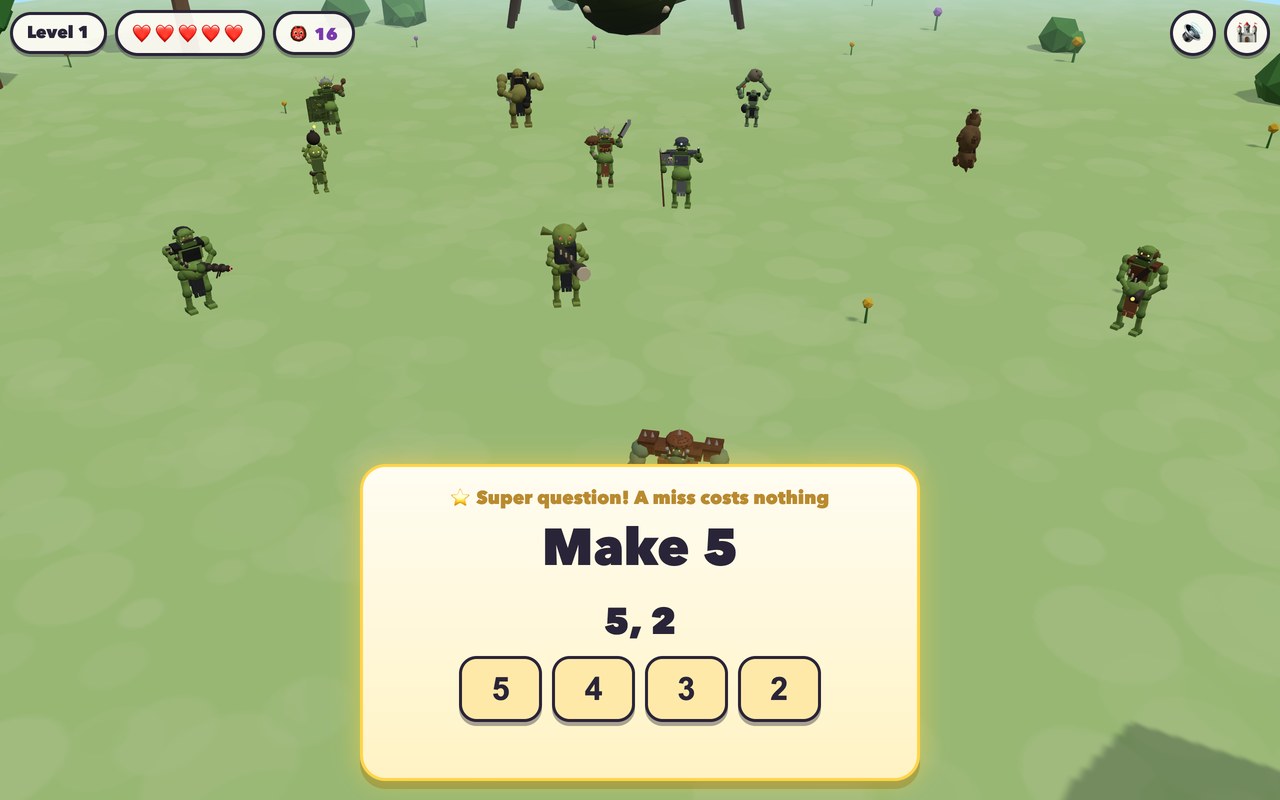
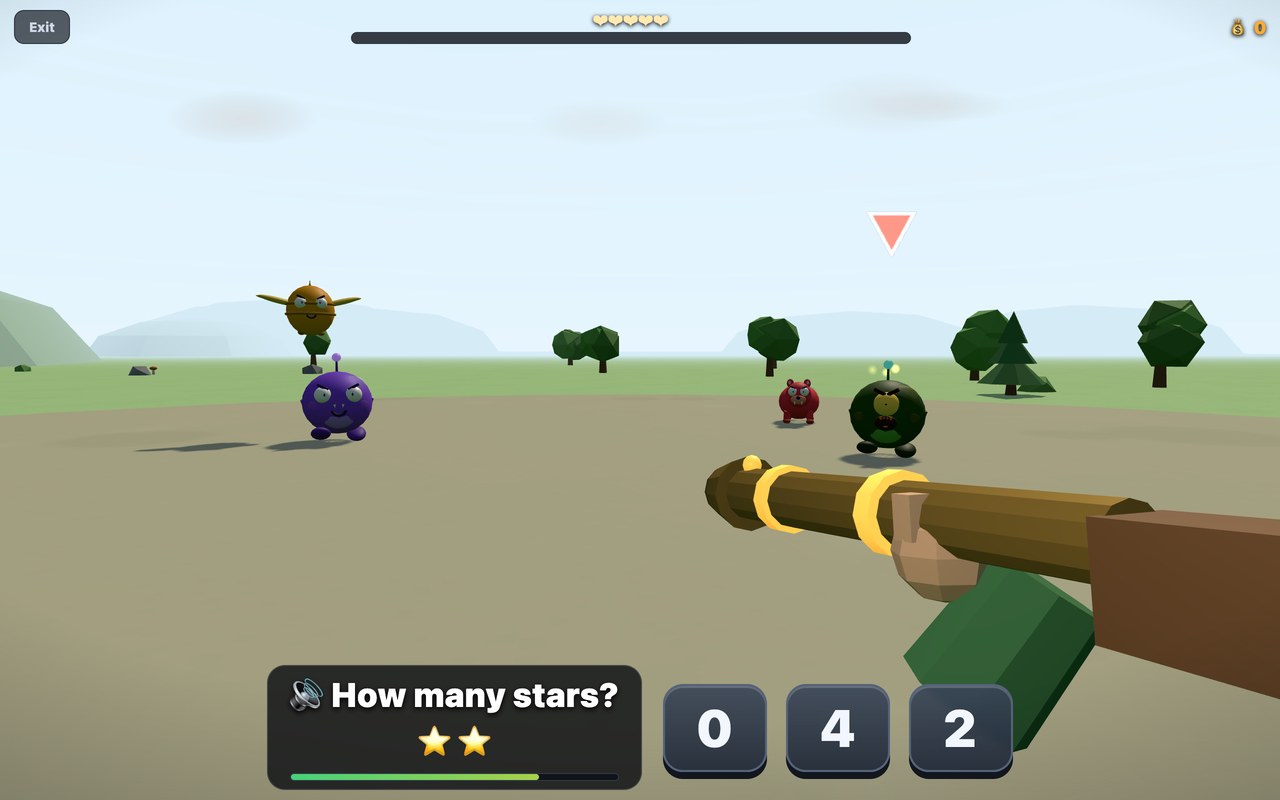
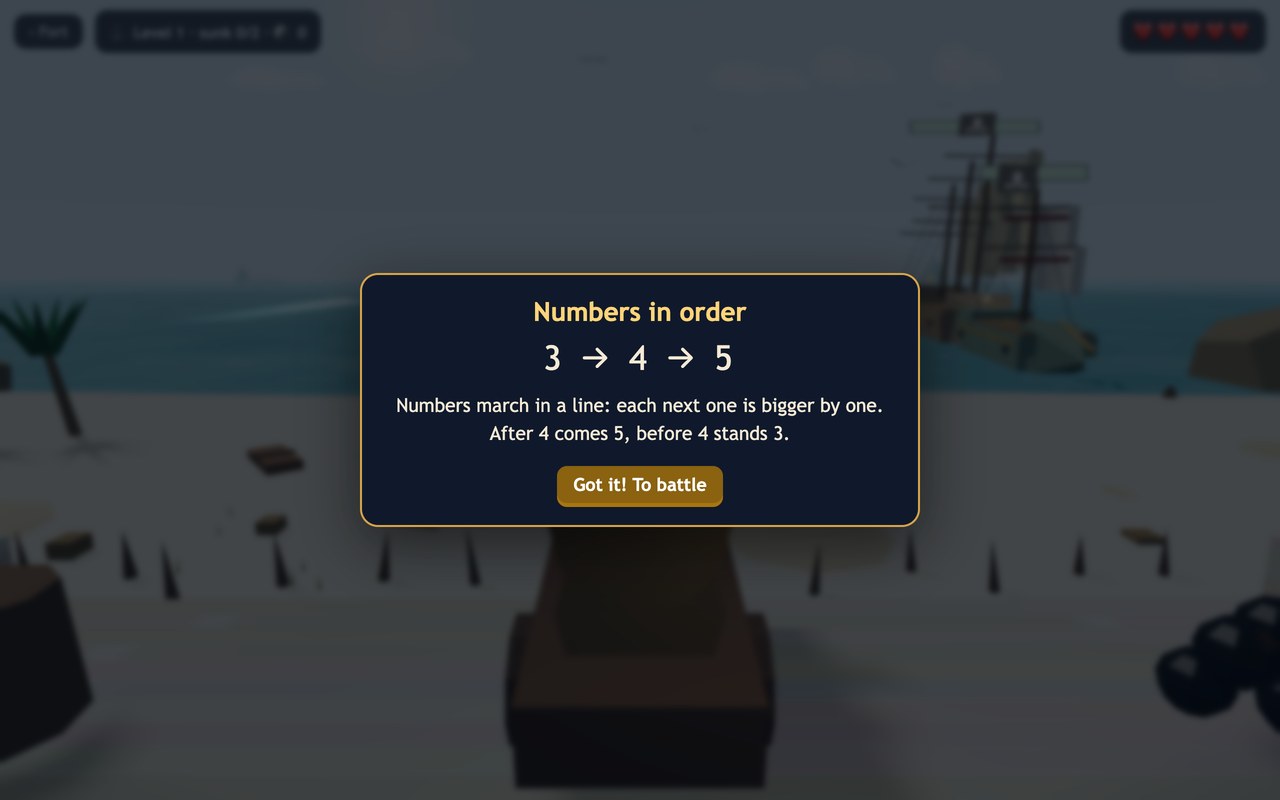
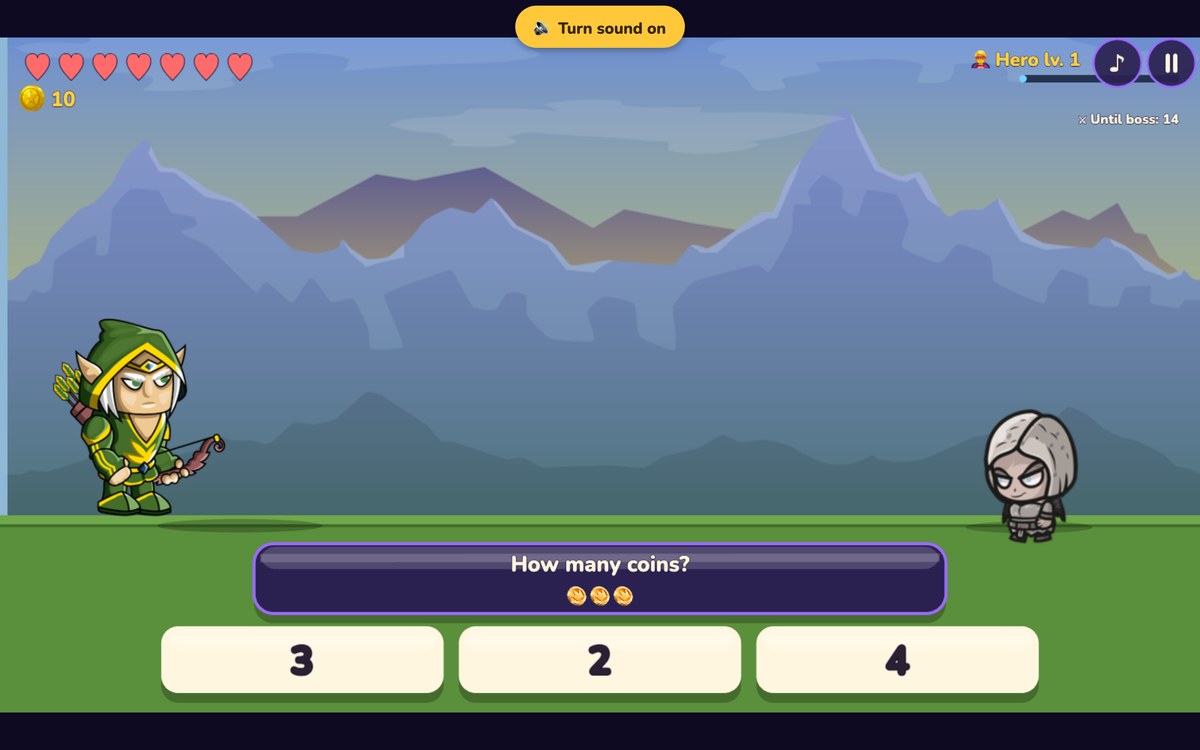
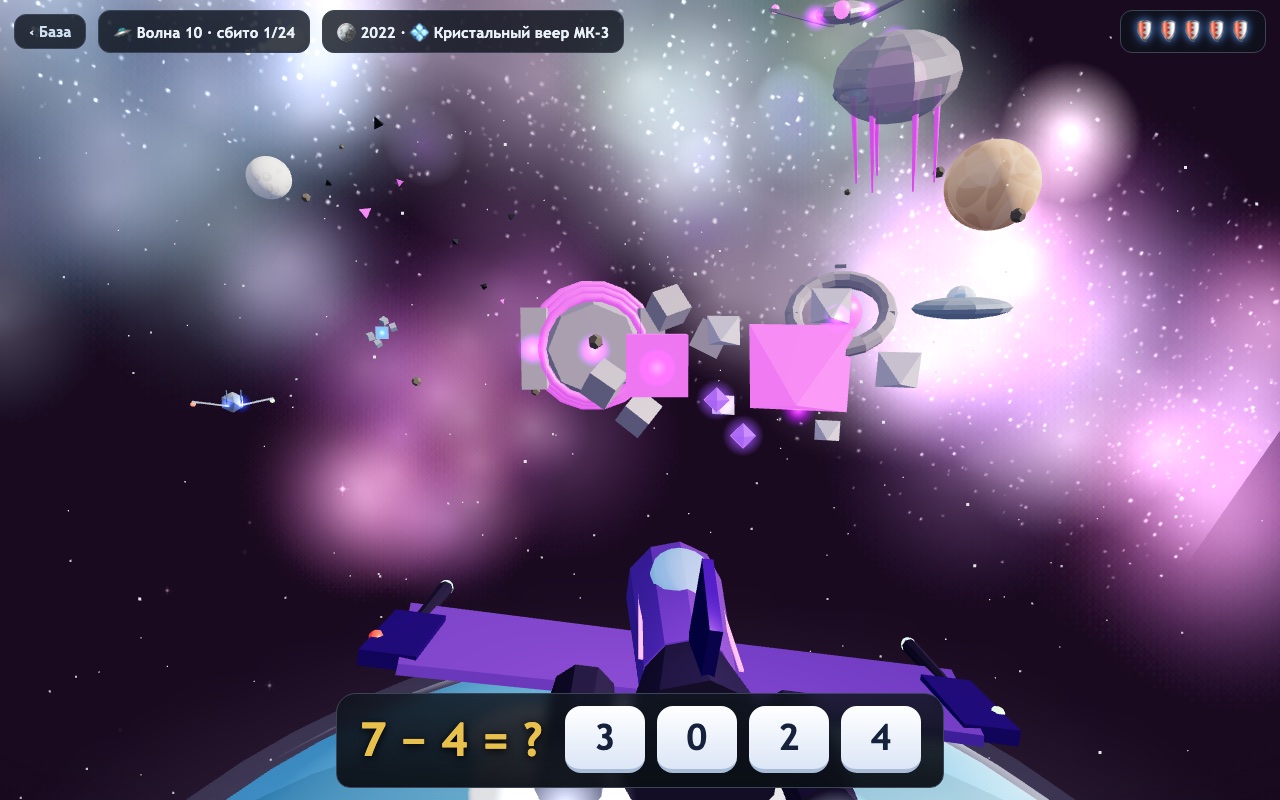
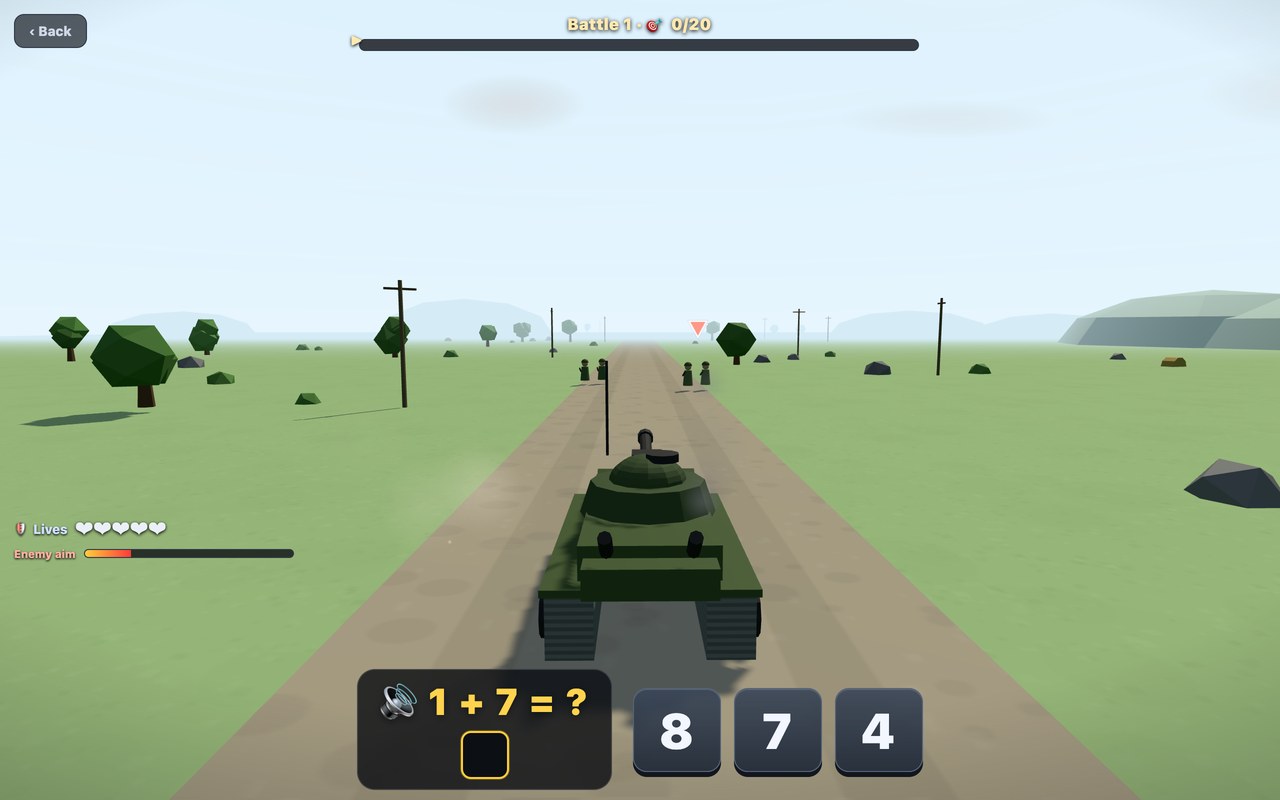
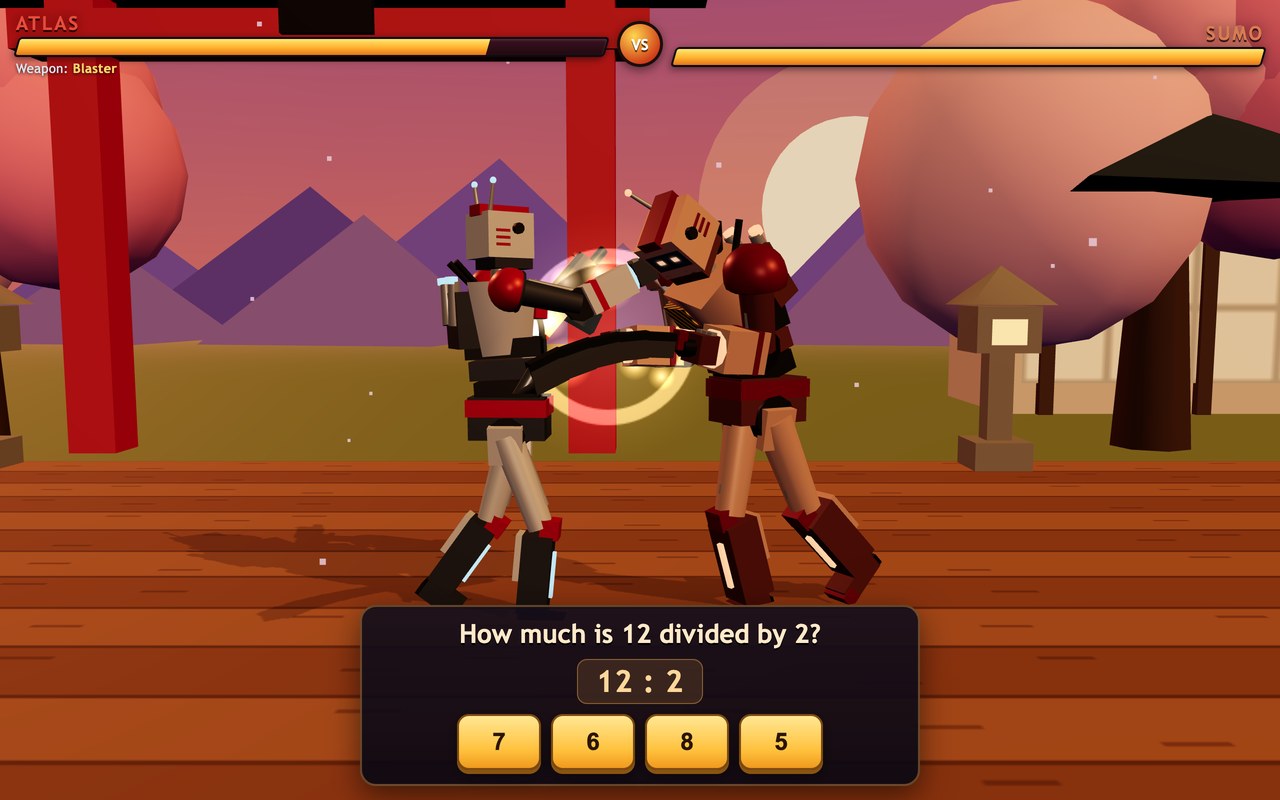
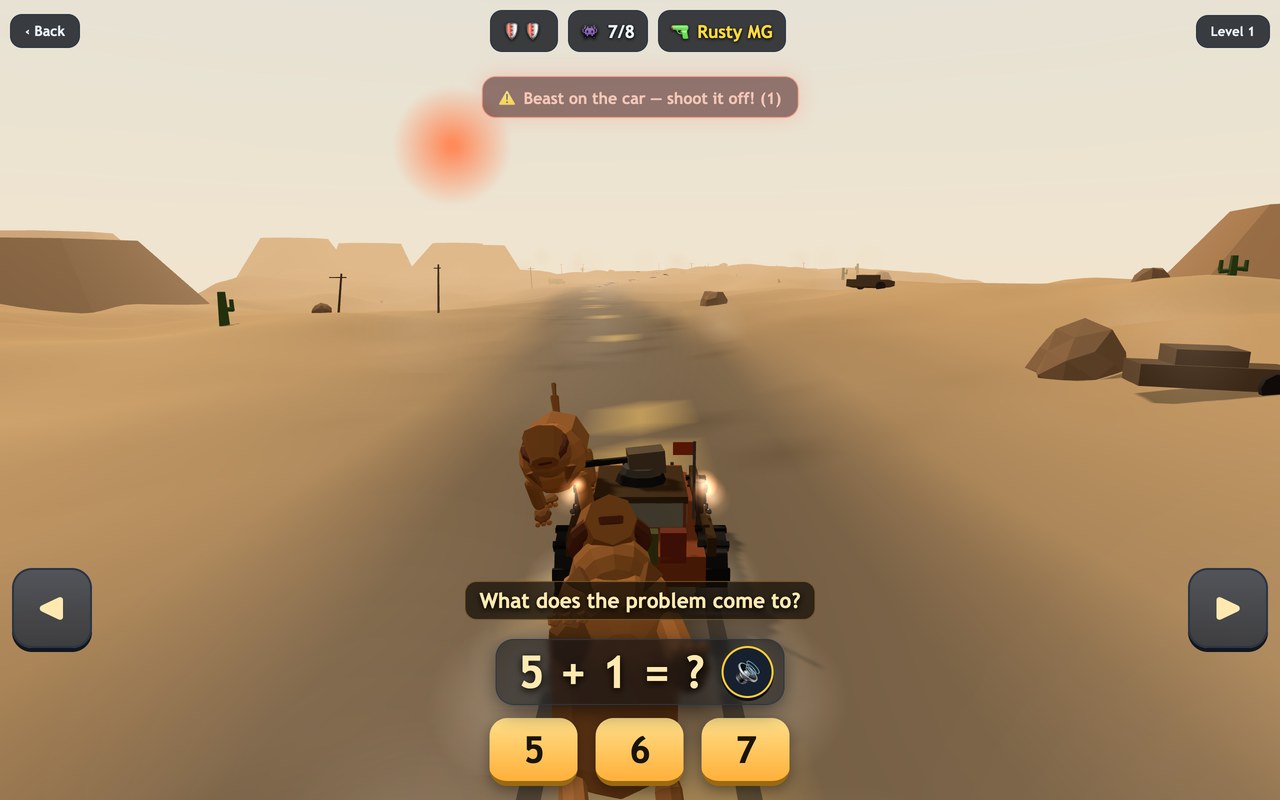
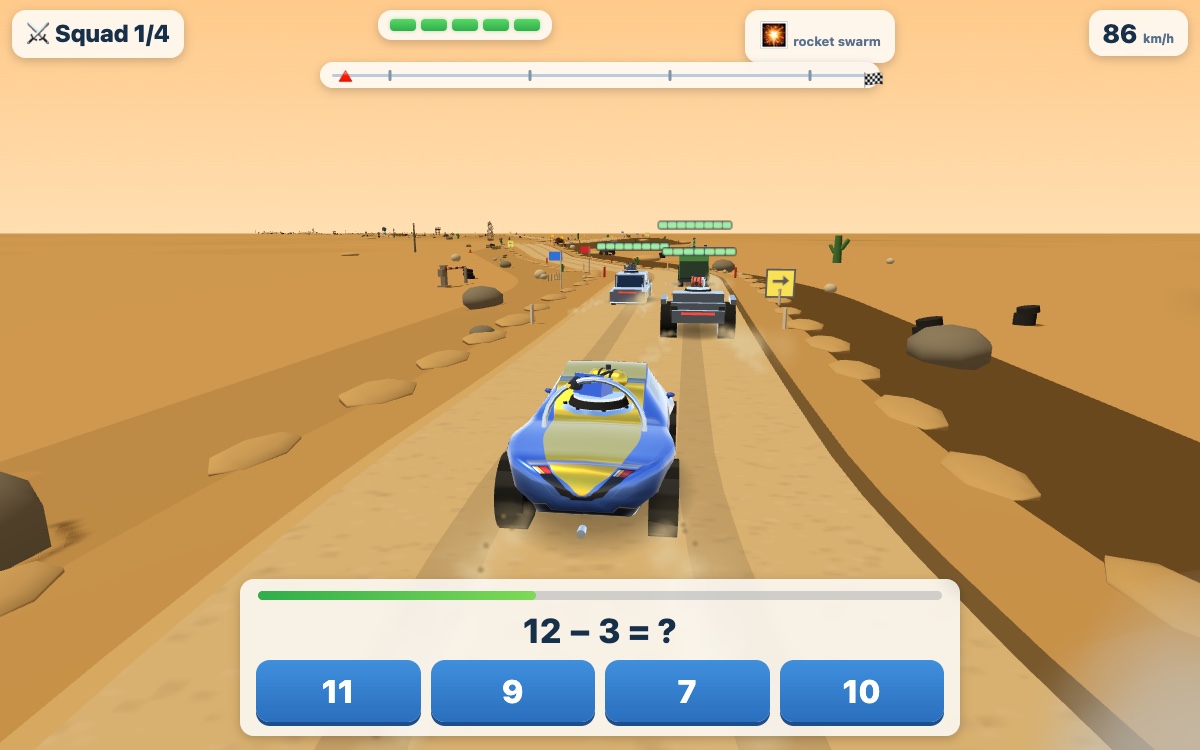
In our games, a solved problem is how you fire the cannon or shoot the arrow — and damage only comes from wrong answers, never from thinking slowly. That keeps careful thinking safe while the game gently rewards speed as facts become solid. A few minutes a day builds the quick recall that makes 2nd grade math feel easy.
The right level, always
Starting out? Warm up with our kindergarten math games. Racing ahead? The same games grow into two-digit sums and even the times tables whenever your first grader is ready.
The year of the number bond
First grade has one big job hiding inside all the others: knowing, instantly, the pairs that make ten and then the pairs that make twenty. Everything the child will be asked to do for the next three years leans on it. Regrouping leans on it. Mental subtraction leans on it. Even the multiplication they meet in second grade is faster for a child who is not spending attention on the sums inside it.
What "fluent" looks like at six
Not fast, exactly — reliable. A first grader who answers 6 + 7 in two seconds by thinking "6 and 6 is 12, one more is 13" is fluent, even though they reasoned. A child who counts thirteen fingers is not, even if they get it right. The games here keep the numbers small on purpose so the child has room to build strategies rather than just survive.
Word problems, one sentence long
Six-year-olds can do far harder word problems than they are usually given, provided the sentence is short and the situation is one they can picture. The trouble is almost always reading load, not mathematical load. The problems in these games are read aloud, which removes that confound and lets you see what your child can actually do.
Shapes and measuring belong here too
Comparing lengths, naming flat shapes, spotting which figure is the odd one out — first grade geometry is mostly about vocabulary and careful looking, and it gives a child who finds arithmetic hard somewhere to succeed in the same lesson. That matters more than it sounds at six.
If your child is ahead or behind
Neither is unusual, and the ladder in each game moves without asking permission. A confident six-year old will be into two-digit work within a week; a child still counting on will get more support and smaller steps rather than a harder screen. Compare with kindergarten math and 2nd grade math, or browse all games for 1st graders.