Times Tables Games for Kids — Free Practice
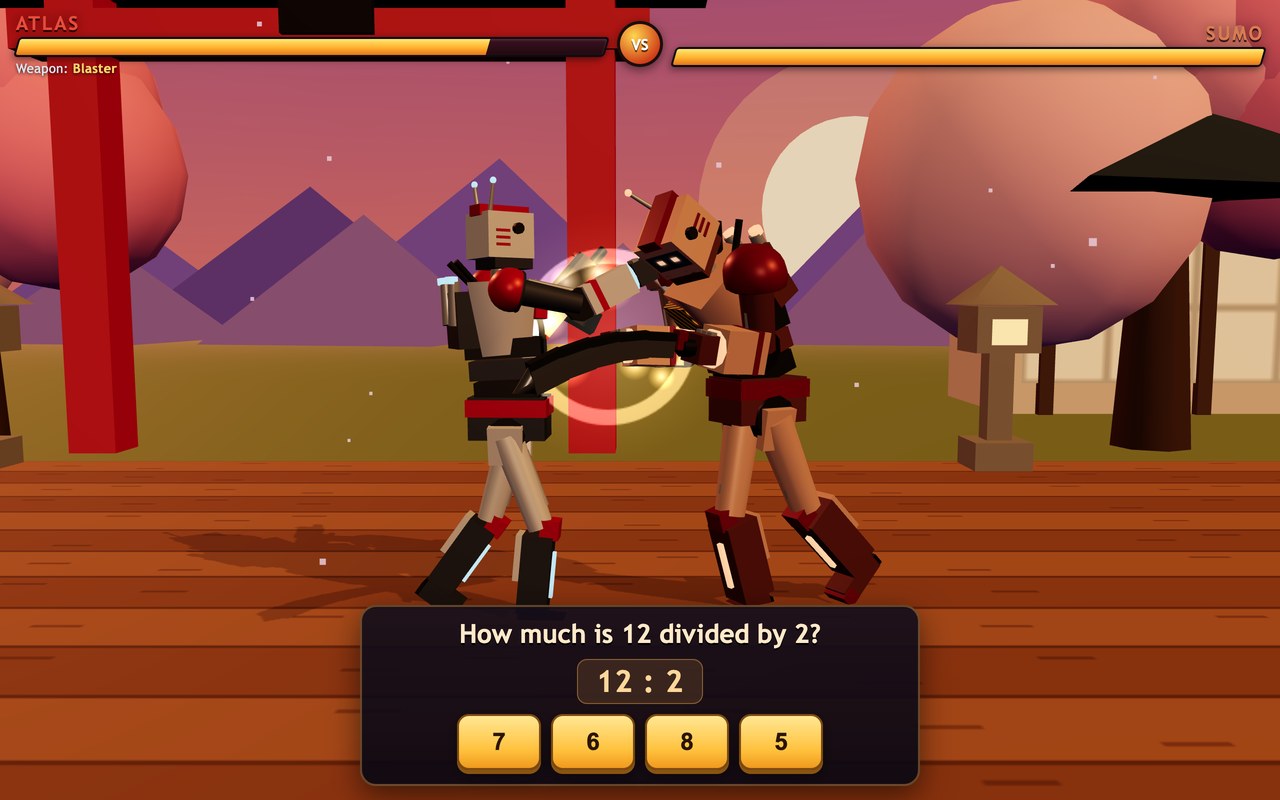
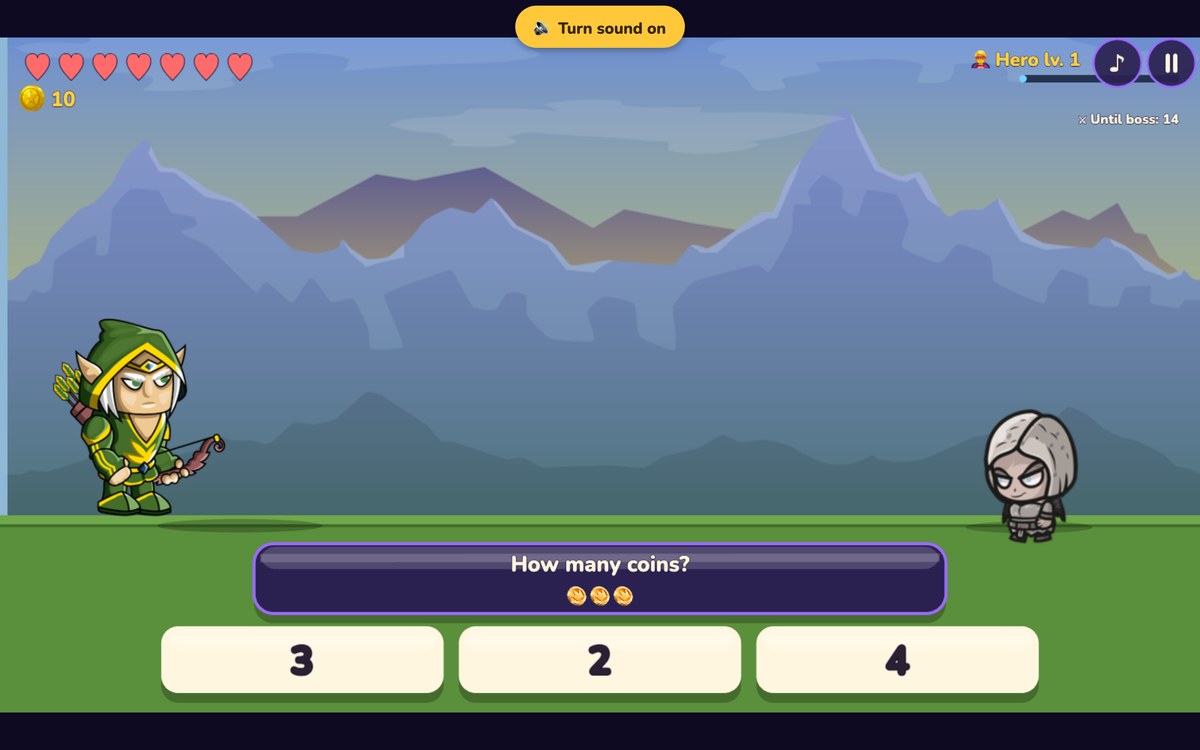
The times tables are the one set of math facts that pays off for years — but learning them by rote is nobody's idea of fun. These times tables games turn the 2× to 12× facts into fast, playful rounds, so recall becomes automatic without a single flashcard. A correct answer does something — crushes a car, fires the artillery — so drilling 7 × 8 feels like winning, not homework.
Times tables games your child can play right now
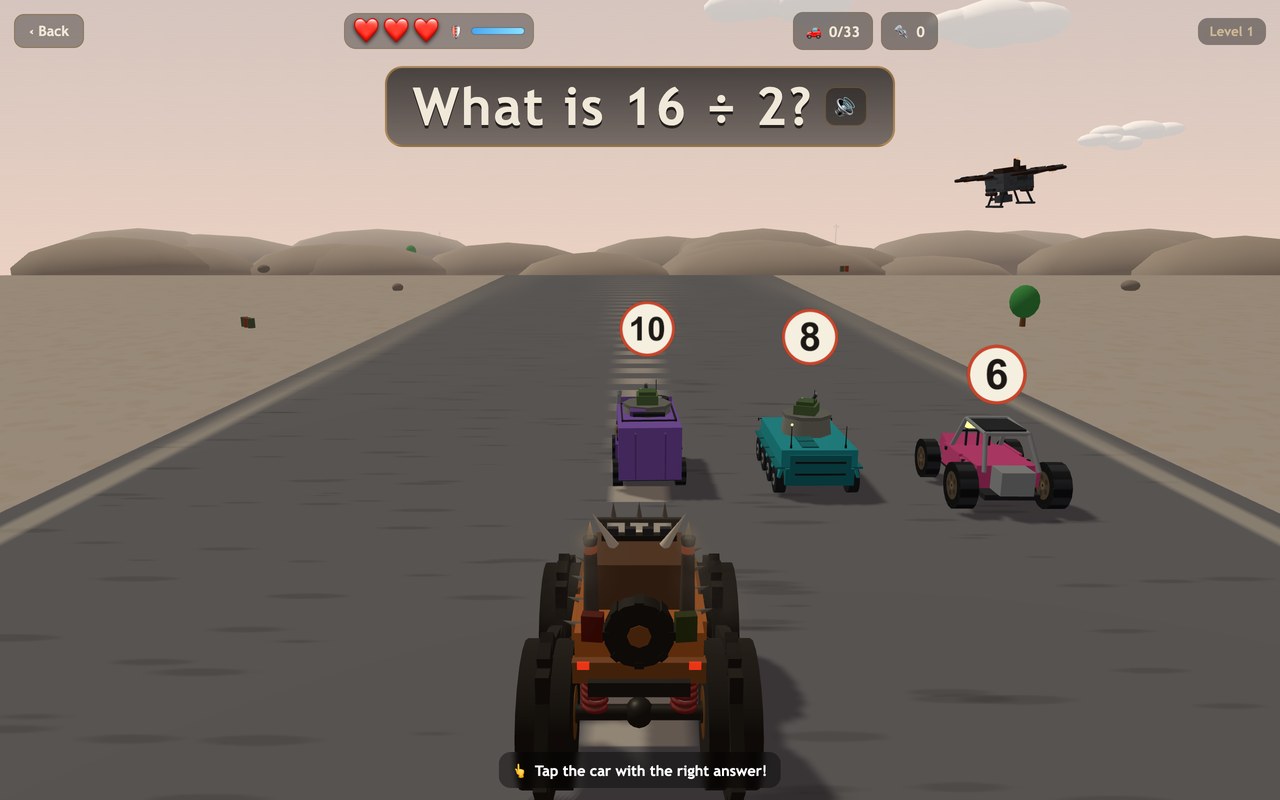
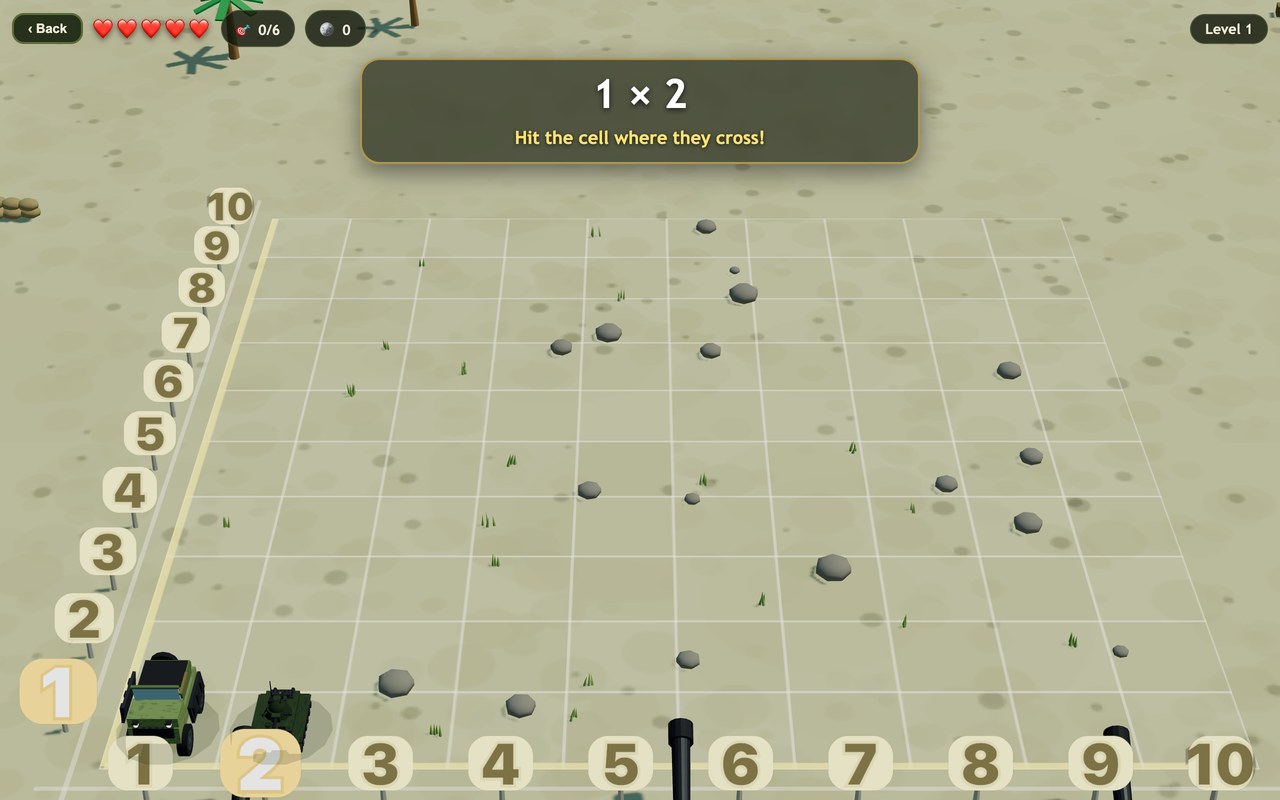
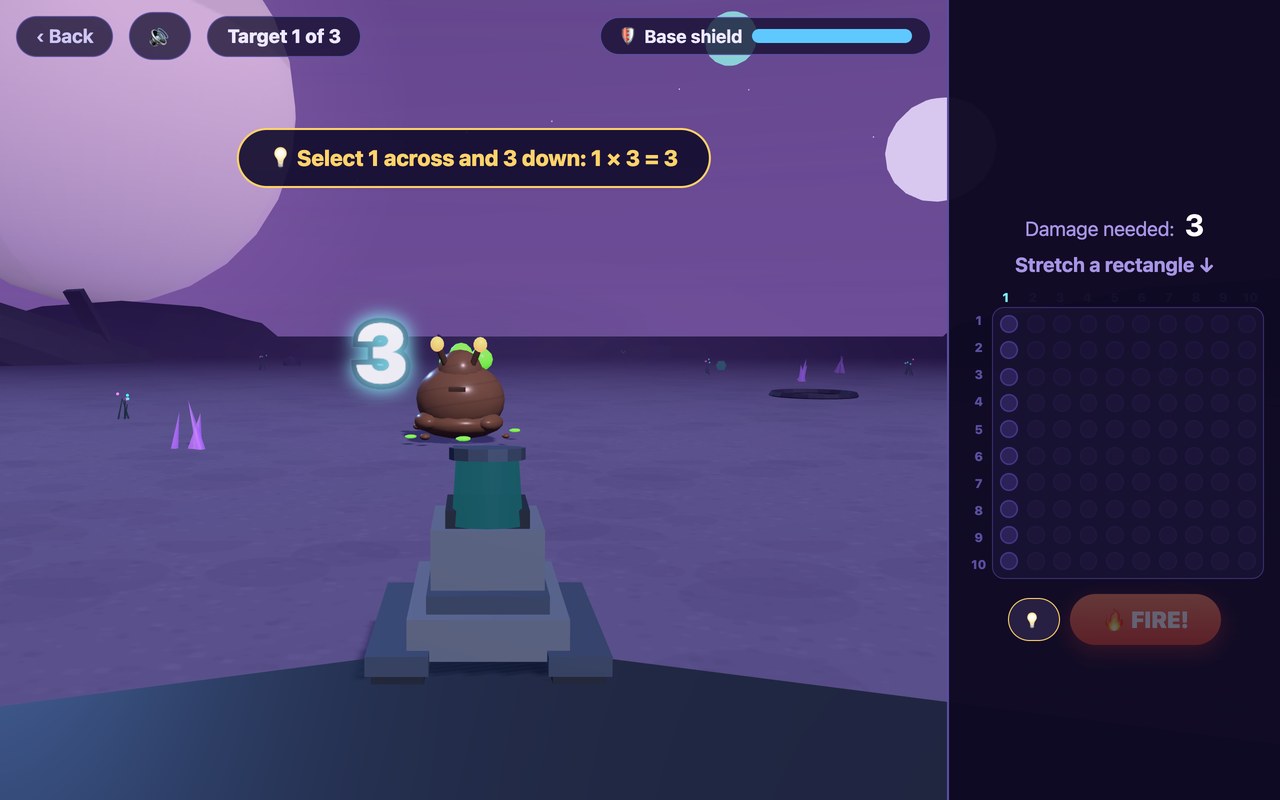
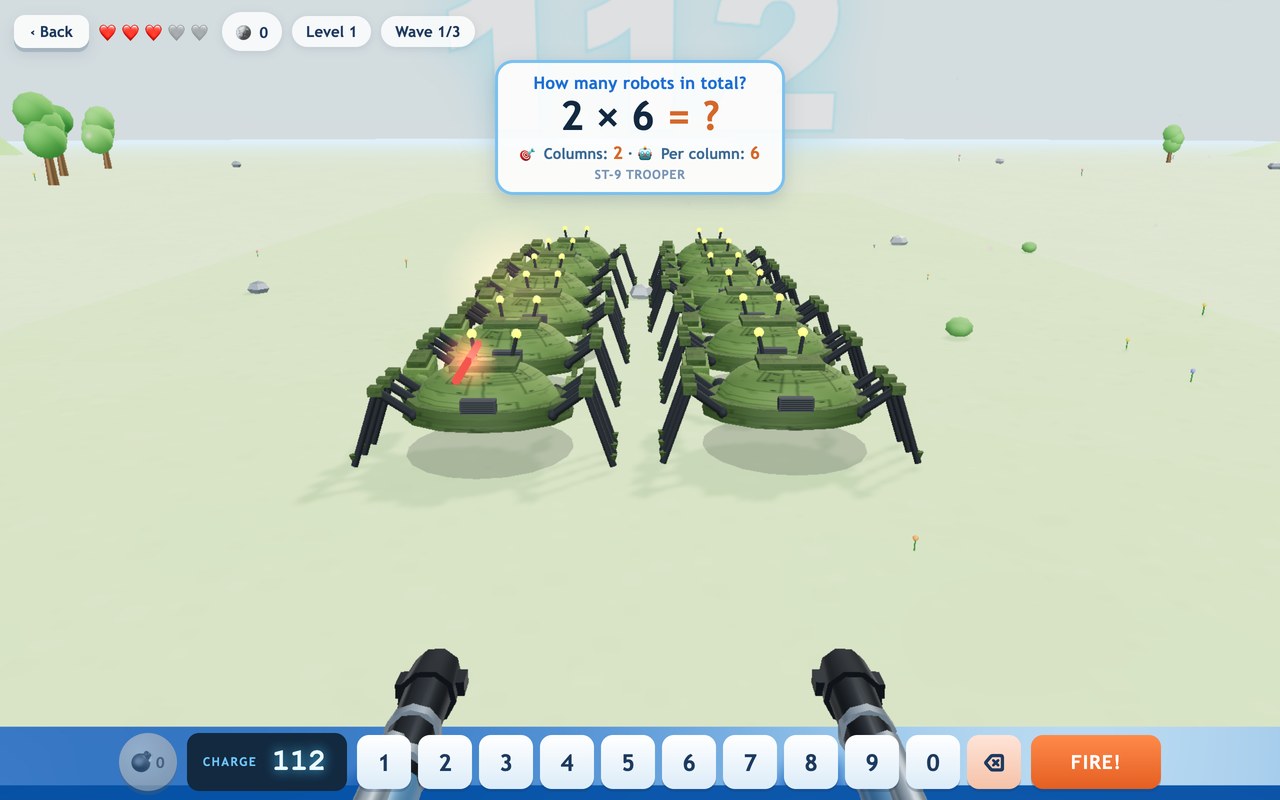
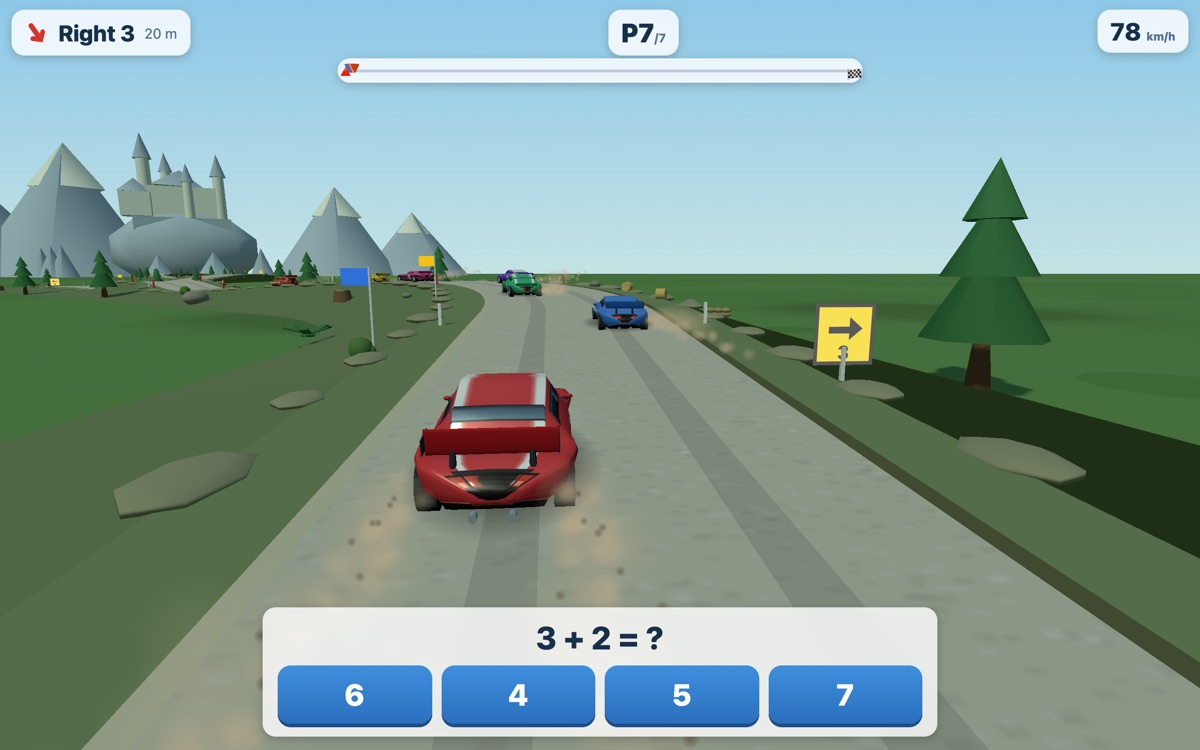
In Bigfoot Arena the child drives a monster truck and crushes the car carrying the right answer — the times tables built family by family, with division woven in. Math Artillery shows each fact as an array on a 10×10 grid, so a child sees why 6 × 4 is 24 before it becomes instant recall, and True Aim sharpens speed on the trickier tables under a gentle timer. All three sit inside our wider multiplication games collection.
The smartest order to learn the times tables
Don't march 1 to 12 in a line. Start with the tables children half-know already — the 2s, 5s and 10s — for an early win, then layer in the 3s and 4s, and only then the genuinely tricky 6s, 7s and 8s. The 9s have a neat finger trick, and the 11s and 12s fall into place once the rest are automatic. Short, frequent sessions — five focused minutes a day — build recall far faster than a weekly marathon.
From working it out to just knowing it
Good times tables practice moves a child from counting up (4 × 3 = 4 + 4 + 4) to instant recall. Our games reward speed gently, so confident facts become automatic while brand-new ones still get all the thinking time they need — you're only ever slowed by a wrong answer, never punished for it. Once the tables are solid, the same skills carry straight into division, fractions and beyond.
A learning order that works
Do not go 1, 2, 3, 4 in order. Start with the tables that are patterns rather than facts: tens, then fives, then twos. A child who can already skip-count them is not memorising anything, they are noticing. Next take the squares — 3×3, 4×4, 6×6, 7×7 — because children hold them unusually well and they act as anchors for the neighbours: if 6×6 is 36, then 6×7 is that plus one more six. Only then attack the awkward middle.
Speed, but honest speed
The point of a timer is not pressure, it is diagnosis. A fact recalled in under three seconds is known; a fact that takes six is being rebuilt from something else, and it will fall over as soon as the child needs it inside long division. The games here keep the clock visible but never end a run on a wrong answer — a miss simply comes back sooner, which is spaced repetition wearing a costume.
Five minutes a day, four weeks
That is genuinely the whole recipe, and it is faster than most families expect. What ruins it is marathon sessions: twenty minutes of tables produces a child who can recite for ten minutes and has forgotten by Thursday. Short and frequent wins because forgetting is the mechanism being fought, and forgetting runs on a calendar.
When it still will not stick
If one table resists after weeks, the problem is usually the fact underneath rather than the table itself. Check that the child is fluent in doubles and in adding within twenty; a shaky 7 + 7 makes a shaky 7 × 2, which makes everything in the seven column expensive. Drop back, rebuild, come forward — it is quicker than pushing.
Nearby: multiplication games, division, games for 8 year olds.