5th Grade Math Games
Fifth grade is the year elementary arithmetic is supposed to be finished, and it is also the year the gaps left behind start to cost real marks. Decimals arrive as a full system rather than a money notation. Fractions have to be added with unlike denominators, which is impossible without confident multiples. Volume, the coordinate plane and the order of operations all appear, and each of them assumes fluency with everything from the four years before.
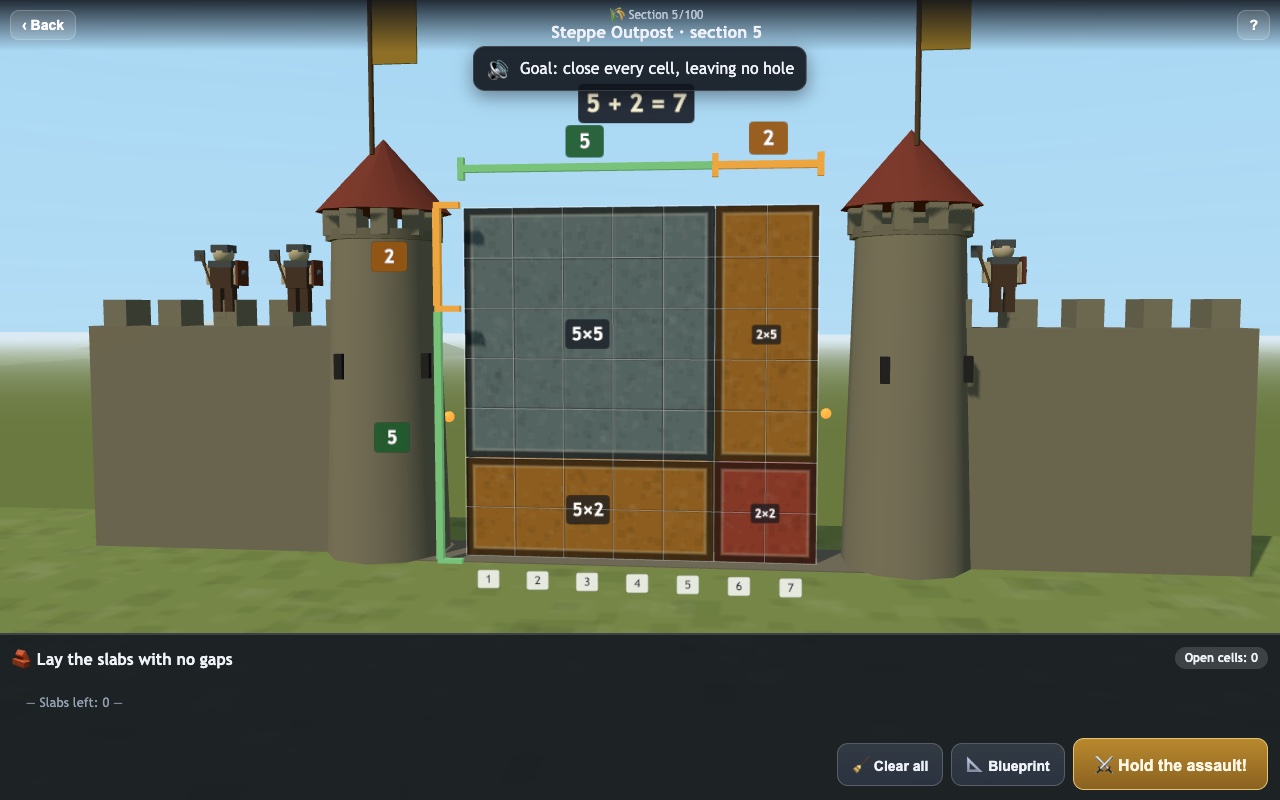
That is why the games on this page are less about introducing ideas and more about making them automatic. A ten- or eleven-year-old who understands equivalent fractions but takes fifteen seconds to produce one will still fail a page of them — not from misunderstanding but from running out of attention. The fast games here exist to close that gap; the slower ones ask for reasoning, estimation and multi-step work.
Everything is free, plays in the browser, and adapts as your child works. Nothing punishes a wrong answer: a miss simply comes back sooner and with more support, which is how the level finds the child without you standing over it.
Decimals are place value, again
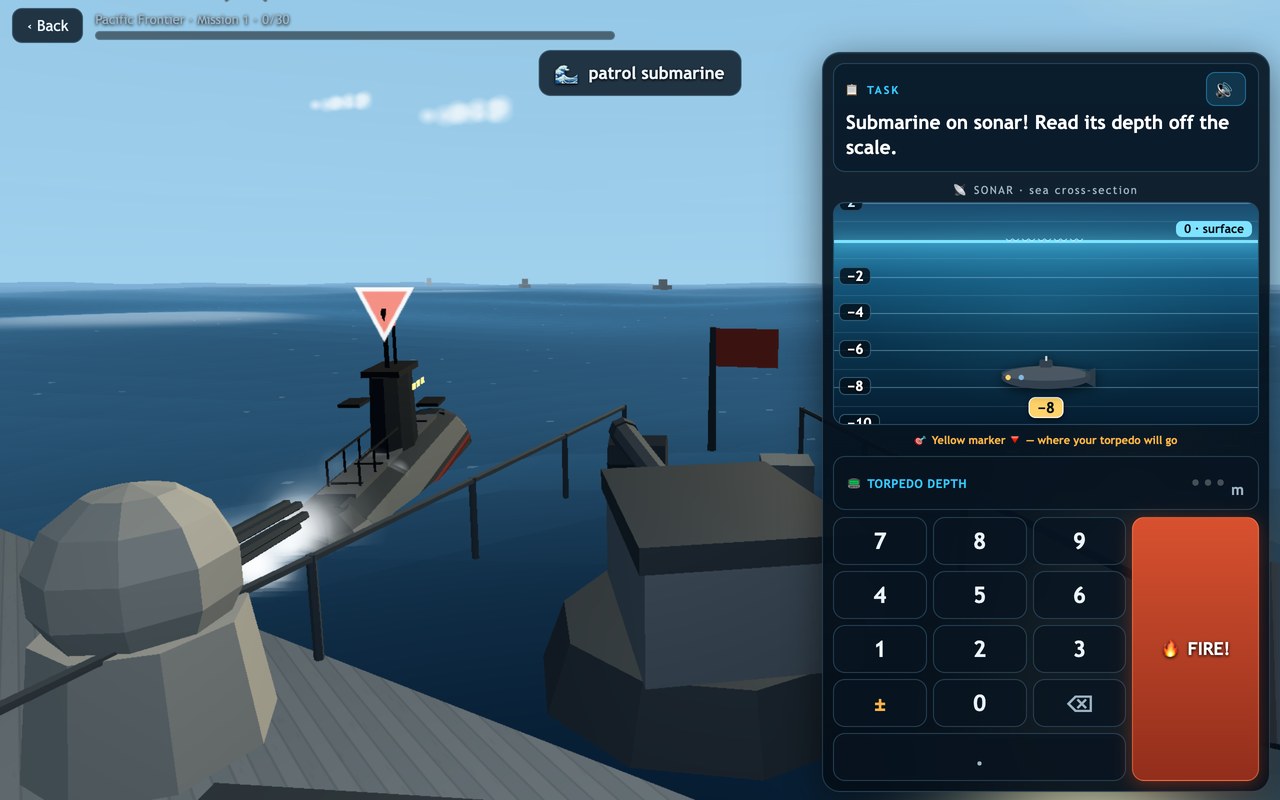
Most decimal errors are not decimal errors. They are place-value errors wearing a dot: a child who thinks 0.5 is smaller than 0.25 because 25 is bigger than 5 has not misunderstood decimals, they have never been made to see the columns to the right of the point as the same system continuing. Games that put the number on a scale or a gauge fix this faster than rules do, because the ordering becomes visible.
Fractions with unlike denominators
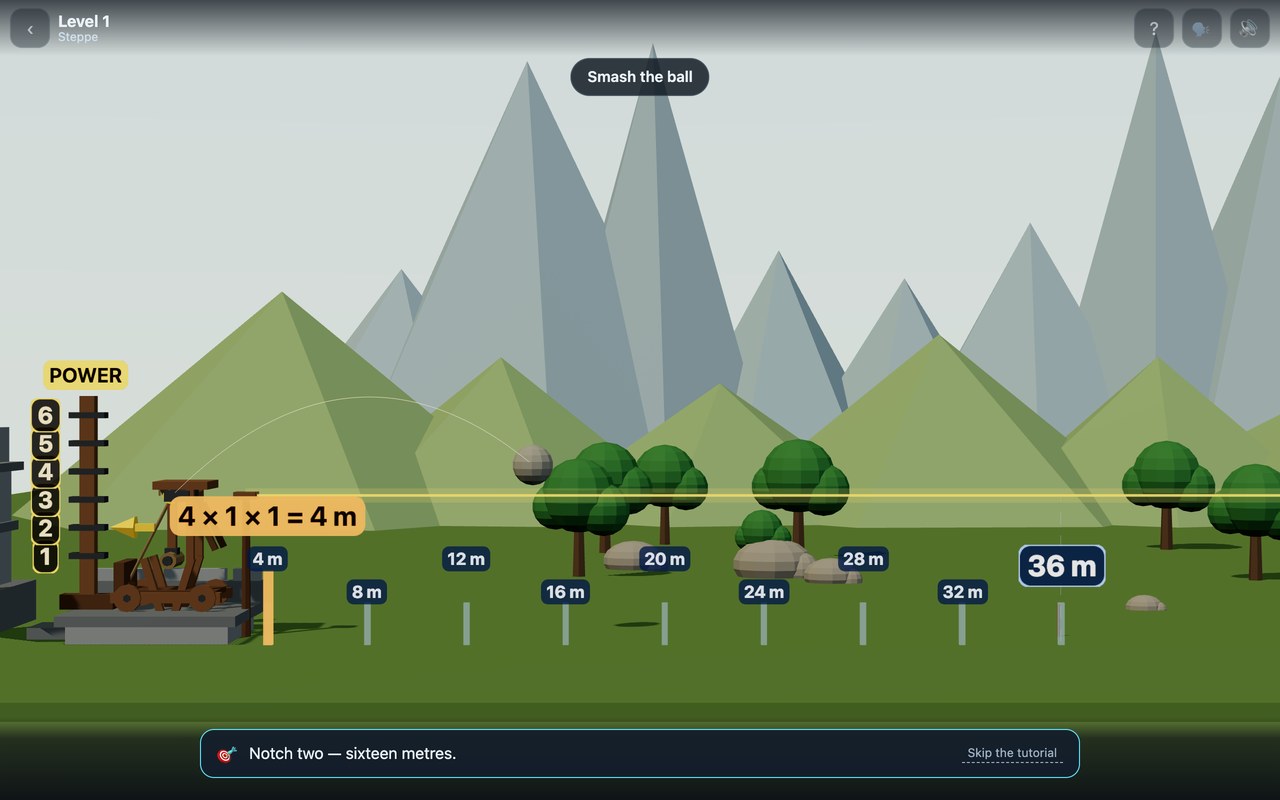
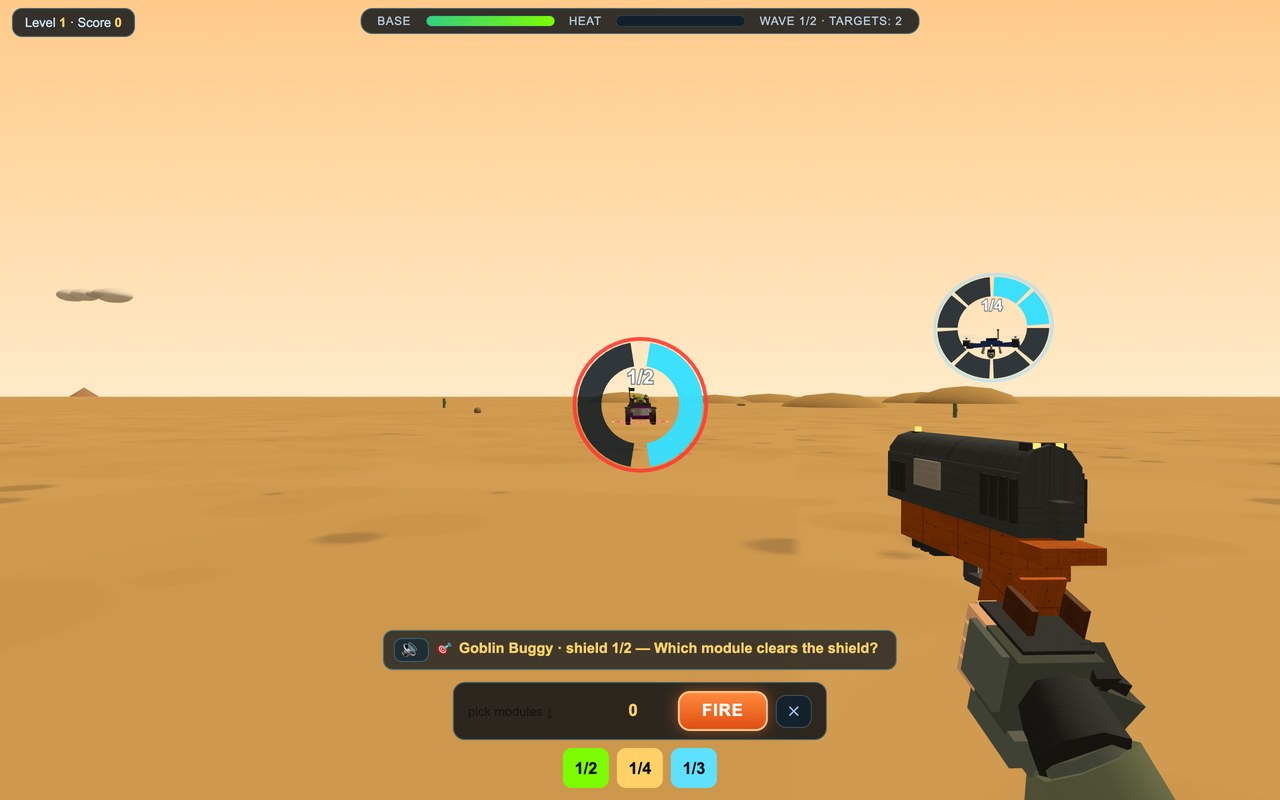
Adding thirds to quarters requires finding a common multiple, which requires knowing multiples, which requires the times tables. This is the single most common place a fifth grader gets stuck, and the fastest route out is usually backwards — a fortnight of multiplication fluency, then the fraction work, rather than more fraction worksheets.
The coordinate plane and the first taste of algebra
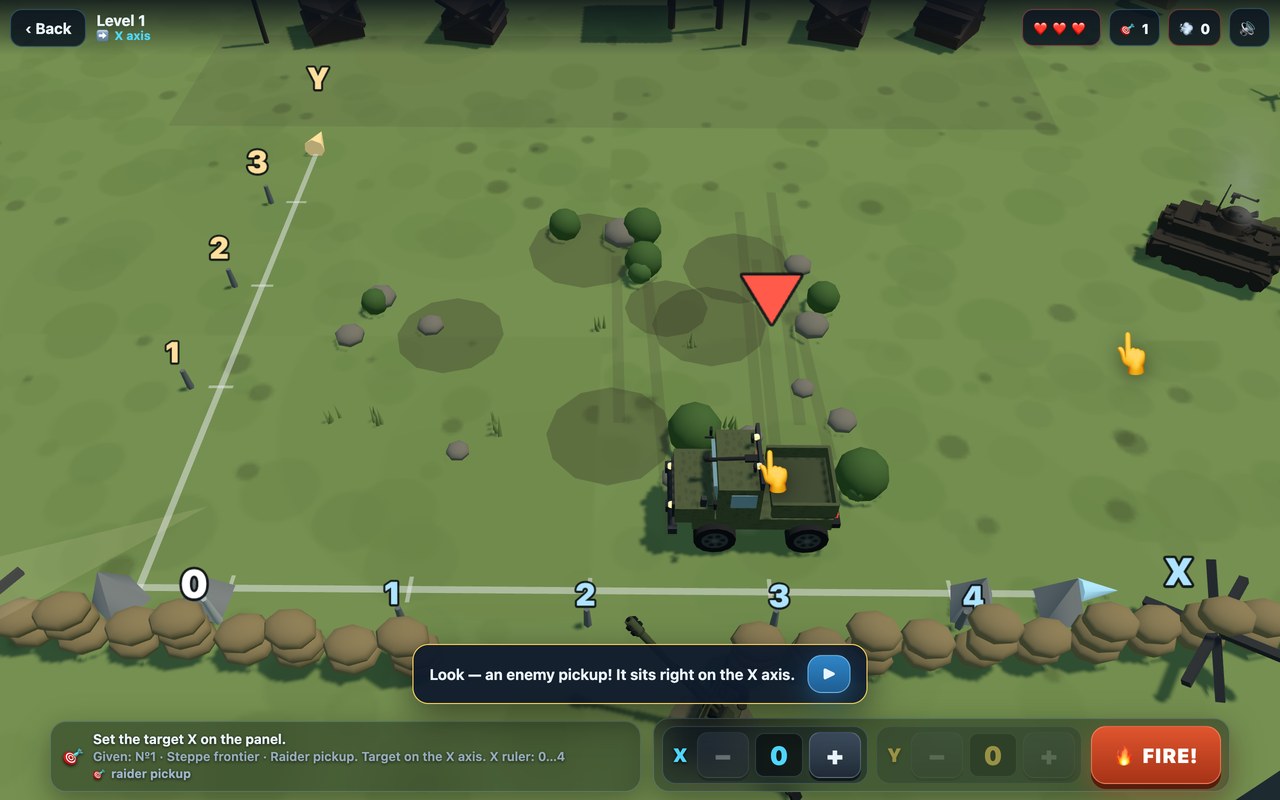
Plotting ordered pairs looks like a small skill and is not: it is the first time a child represents a relationship as a picture, and it is where functions, graphs and eventually parabolas will live. Games that ask a child to hit a target by naming its coordinates give the notation a purpose before the vocabulary arrives.
Order of operations, estimation and multi-step problems
Fifth-grade word problems are rarely hard arithmetic; they are two or three easy steps that must be kept in the right order. Estimation is the safety net — a child who can say "about 240" before computing catches their own misplaced digits, and that habit is worth more than any single topic on this page.
If your child is ahead
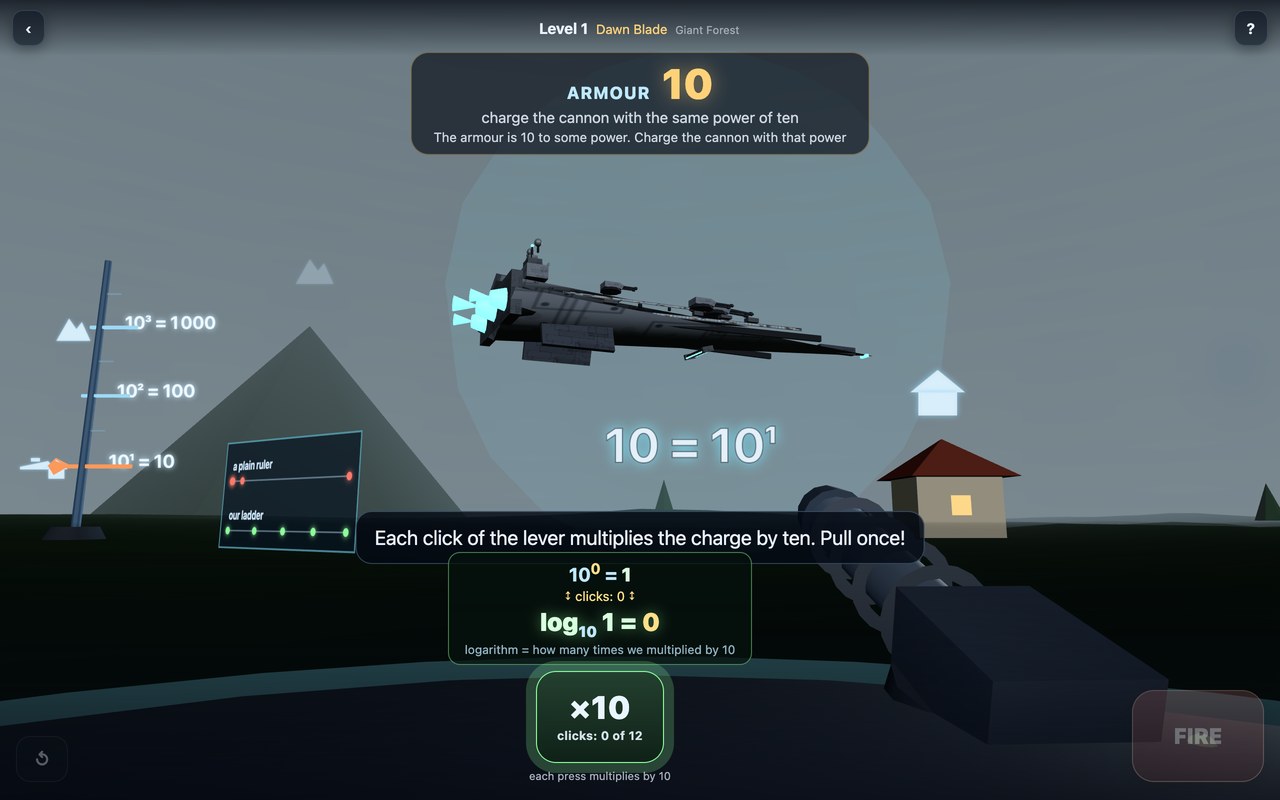
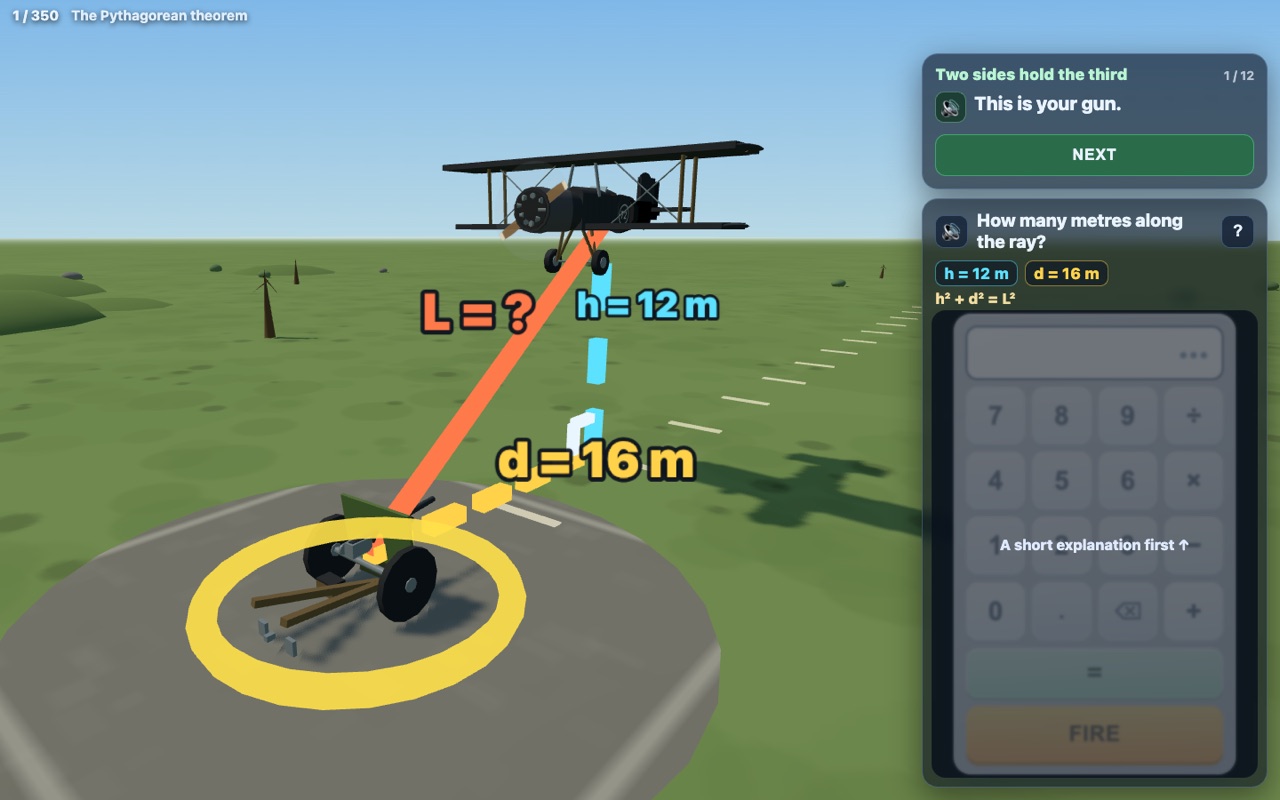
Several games here run past fifth grade on purpose: difference of squares, parabolas, logarithms and the Pythagorean theorem all appear for children who want somewhere to go. See also 4th grade math games, ratio games, algebra games and games for 5th graders.